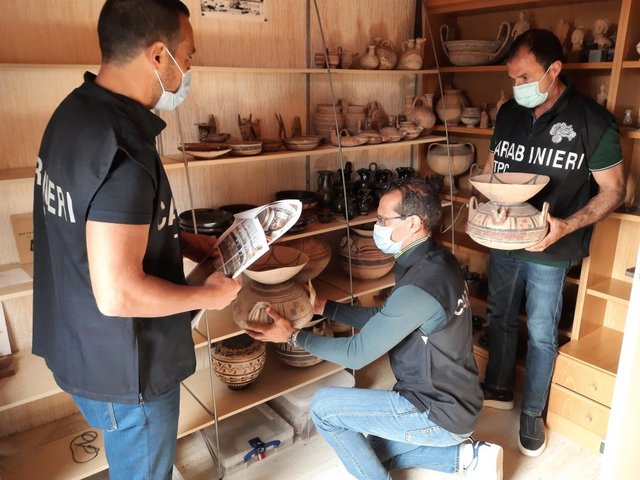
“Wounded Archaeology” at the Archaeological Museum in Palestrina (until 30 April) is the first show in Italy to explore the tombaroli’s damage to the archaeological heritage.
A selection of artefacts confiscated from the homes of small-scale Italian collectors and on view for the first time, makes the point that Italy is not only a “source” country for the illicit trade, stolen artefacts being routinely exported to the US and Europe, but also home to a thriving national market for illicitly excavated goods (pictured here a late seventh-century BC anfora decorated with two spirals and a fish). However, the recovery of the works, now totally stripped of their original burial context, does little to compensate for the enormous loss of archaeological information caused by illicit excavation, which is the real legacy of the tombaroli, but which is all too often, considered, secondary to the material loss of the artefacts themselves. The small exhibition, organised by the Soprintendenza Archeologica del Lazio, aims to demonstrate that what is at stake is nothing short of archaeologists’ ability to reconstruct the history of past civilizations. By smashing into burial chambers, tombaroli cut through a sequence of archaeological strata, each one corresponding to a different historical era, the careful analysis of which can reveal the history of the site. The loss of information relating to the deceased by the looting of tombs is equally immense (see below). The tombaroli are destroying entire chapters of our history. Once gone, they are lost forever.
What we could have learned
1. Dental analysis can reveal the diet of the deceased, the age at death, and, in the case of, leather tanners, the profession for the deceased.
2. The earth recovered from vases is analysed to determine what substances they contained at the time of burial.
3. A microbiotic analysis at the foot of the tomb will help reconstruct the funerary ritual: fragments of wood may suggest the presence of a coffin. The study of pollens can help reconstruct ancient landscapes.
4. The study of artefacts enables archaeologists to date the burial, to identify workshops for the production of burial goods, and to study the movement of goods in antiquity. The arrangement of the artefacts gives clues to the reconstruction of burial rituals.
5. The study of bones can reveal the presence of various diseases, fractures, hereditary illnesses, vitamin deficiency, parasites, tumours.
6. Study of the pelvis in conjunction with the analysis of the bones allows the determination of the gender of the deceased.
Originally appeared in The Art Newspaper as ‘Wounded archaeology'