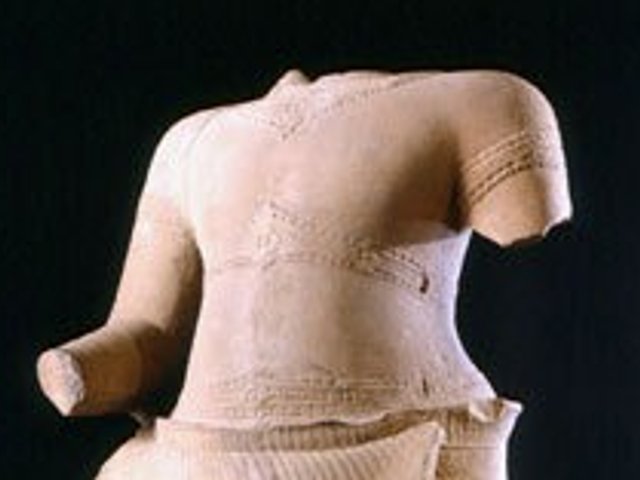
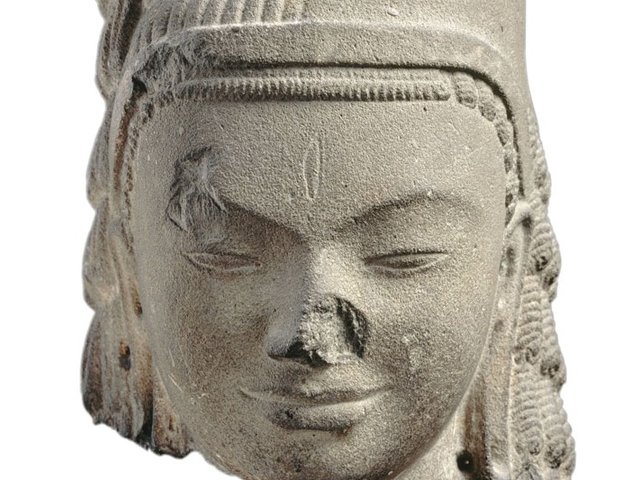
A Buddhist ceremony was held in Phnom Penh yesterday, 12 May, to celebrate the return of Hanuman, the Hindu monkey-god, handed over to the national museum by the director of the Cleveland Museum of Art, William Griswold.
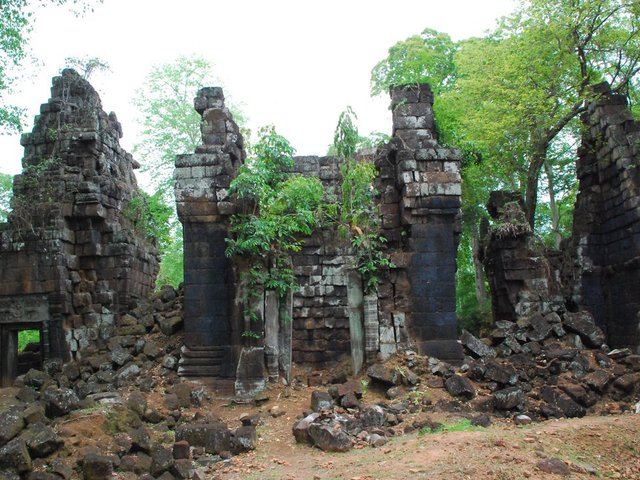
The Ohio museum acquired the one-metre high statue in 1982. But it now believes that it was “in all likelihood” looted from the capital of the Khmer kingdom, Koh Ker, in the tenth century. Other statues from the same Prasat Chen temple in the ancient city have already been restituted to Cambodia by the Metropolitan Museum, the Simon Norton Foundation in Pasadena as well as Sotheby’s and Christie’s, following stories published in The New York Times and The Art Newspaper reporting that they probably came from the looted site. These reports, first published in 2013, were based on a study by the French archeologist Eric Bourdonneau, working for the Ecole Française d’Extrême Orient (EFEO), who recreated the epic scenes depicted in the temple.
The 400 kg monkey-god was one of the figures from two unique “theatres” made of sandstone statues, placed at each gate of the temple to depict episodes from Hindu epics, the Ramayana and the Mahabharata. The Cleveland museum said it voluntarily decided to return the statue after its own investigation led by the curator on Indian and Southeast Asian art, Sonya Quintanilla.
Late last year, Quintanilla uncovered evidence that the work’s head and body were sold separately in Bangkok in 1968 during the Vietnam War, and in 1972 during the civil war. In February this year, the Cambodian authorities provided evidence that the statue matched a pedestal excavated by French archeologist Dominique Soutif, from the EFEO, in the east gate of the Prasat Chen temple. They found fragments in situ, including the right earring, missing from its head.
The museum bought the god from the estate of the late financier and collector Robert Ellsworth. He had bought it from Christian Humann, whose “Pan-Asian collection” was widely exhibited. The Hanuman for instance was reproduced in the 1977 catalogue of a travelling exhibition in US museums, Sensuous Immortals.
The Cleveland museum also signed a “memorandum of understanding” with Cambodia to provide technical assistance and undertake joint projects, including the loan of Khmer art for shows in Cleveland.
William Griswold indicated that the date of the sale of the body (1972) was important in the decision, because it came two years after the Unesco convention against looting and illicit trafficking. The museum has already given back 13 antique sculptures and a Renaissance cross to Italy. But it is also facing pressure from Greece, Turkey and Guatemala for other restitutions. The Hamunan story is not an indication that the museum is ready to return a large Mayan stele, which was removed from a site in Guatemala before being purchased in 1967, says the director.