Thorny topics such as post-colonialism, immigration, national identity, and the limitations of our burgeoning network of electronic communications, are the focus of the 13th Biennale de Lyon, which opens to the public tomorrow, 10 September (until 3 January 2016). The French-Algerian artist Kader Attia focuses on issues raised by the Charlie Hebdo terrorist attack in Paris in January. For his site-specific project, Traditional Repair, Immaterial Injury (2015), Attia has repaired the cracks in the floor of the contemporary art venue la Sucrière with staples.
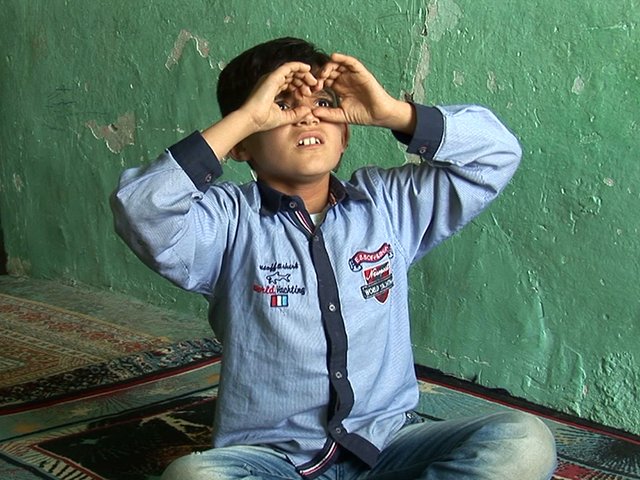
His other work, Reason’s Oxymoron (2015), is an 18-channel video installation featuring interviews with ethnopsychologists about the experience of immigrants adjusting to life in a different culture. Attia says that young disaffected Muslims in Europe often “find grounds for their despair, among other things, in the immaterial injuries caused by their ancestors’ colonisation (dispossession, oppression, and humiliation)”.
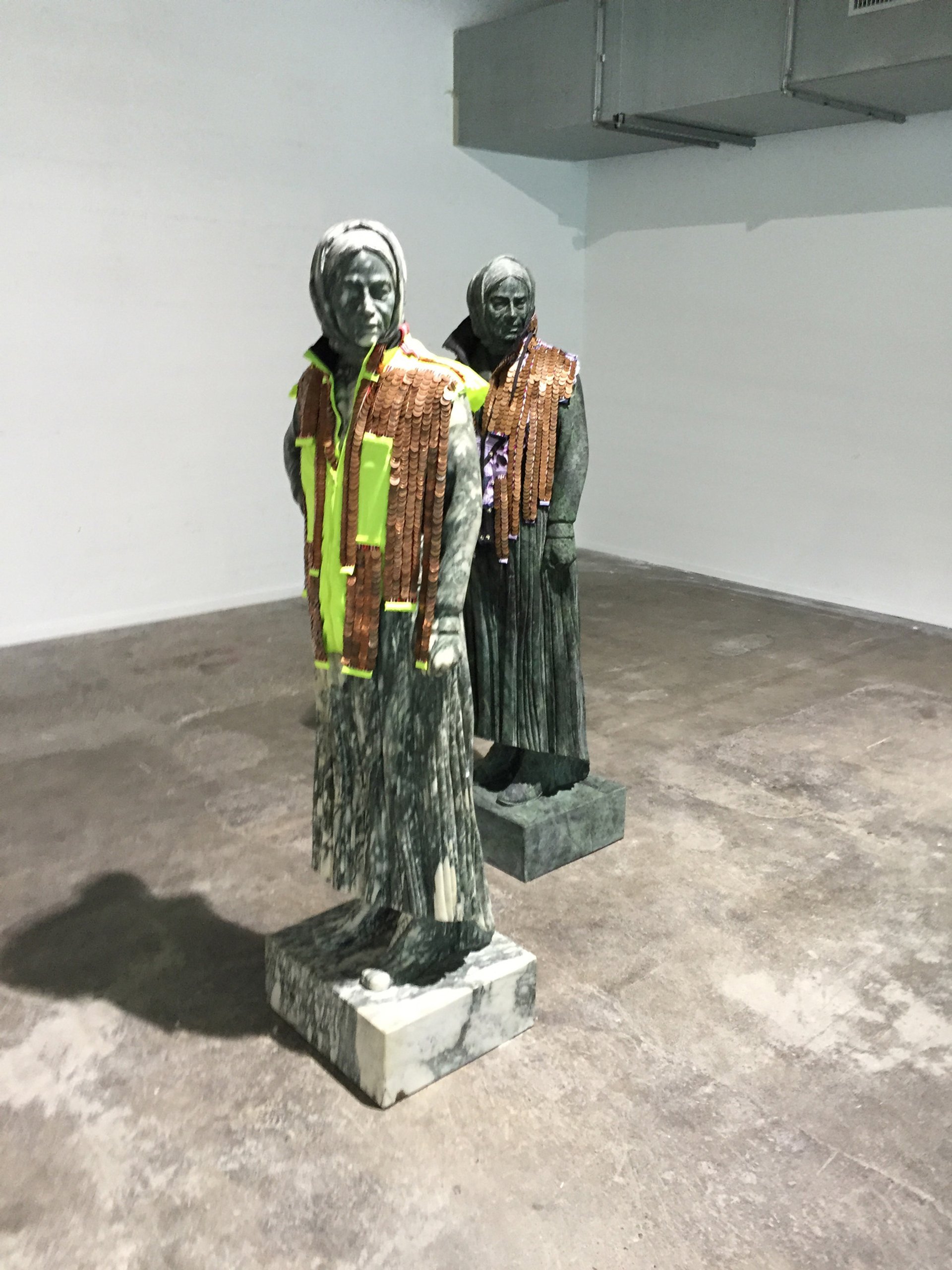
Another potent piece is Commerce Exterieur Mondial Sentimental (2012) by the Romanian artist Andra Ursuta; the sculptures, which depict a pair of Romanian women, are based on a photograph of gypsy travellers awaiting deportation from France.
But there is light relief in the biennial. The French artist Camille Blatrix is showing a talking cashpoint machine (ATM) that laments the sorry state of the world (Ciao, 2015). New York-based Camille Henrot, who won the Silver Lion at the 2013 Venice Biennale for her film Grosse Fatigue, has created a new, interactive sculpture entitled XYZ. The piece is a new commission (another defining factor of the biennale is that around two-thirds of the works in the show are new). Henrot’s sculpture invites visitors to dial hotlines that relay inane information and questions such as: “How could you wake yourself up in the morning without an alarm?”
Ralph Rugoff, the director of the Hayward Gallery in London, has taken on a challenge as guest curator of this year’s edition of the biennial: to re-brand and re-interpret the term “modern”. The gauntlet was laid down by the biennial’s artistic director, Thierry Raspail, who instructed Rugoff to shape his curatorial vision around the heavily loaded concept.
Rugoff says that he has subsequently focused on work that is “timely and pointed”, selecting 60 artists from 28 countries for the biennial’s main exhibition, La Vie Moderne, which runs across five venues including la Sucrière, a former sugar warehouse. Established artists and biennial staples, such as Jeremy Deller and Ed Ruscha, feature alongside lesser-known names such as Anna Ostoya of Poland and the German playwright Hannah Hurtzig.
“The exhibition features work that explores the social and cultural landscapes of our time. So the ‘modern’ in the title is not a reference to modernism, but to the word’s meaning as ‘recent’ or ‘new’. The biennial focuses on works that explore the present moment as a kind of palimpsest in which various histories and trajectories come together,” Rugoff says.