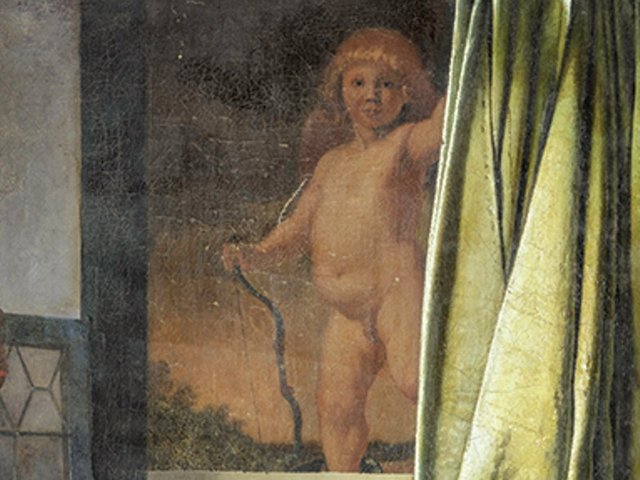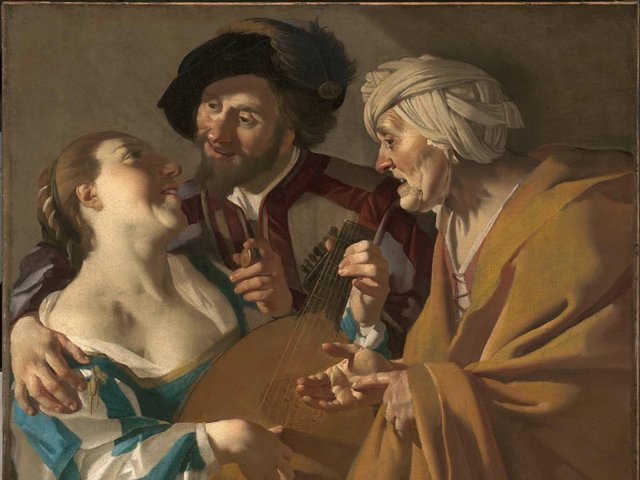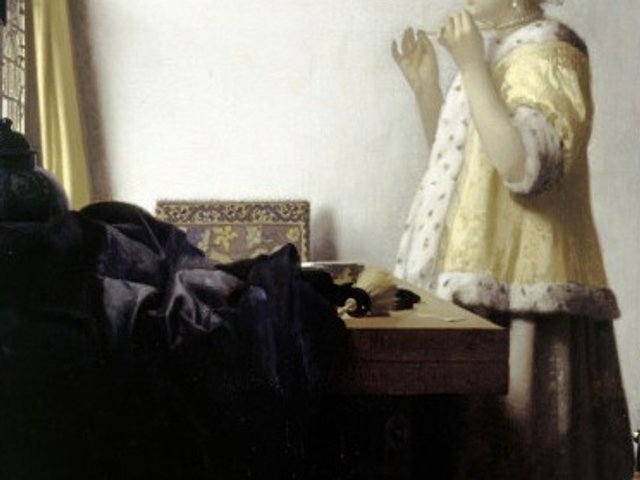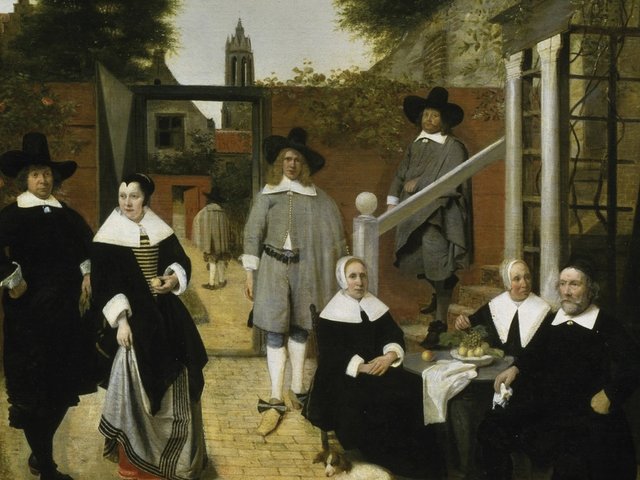
The myth of Johannes Vermeer as an isolated artist, confined to his home city of Delft, looks set to be shattered. A new exhibition, opening at the Louvre on Wednesday (22 February), emphasises that he was deeply influenced by other Dutch genre painters of his time.
Vermeer and Delft have until now been firmly linked in the history of art. There is little documentary evidence that the painter travelled far. Scholars (and novelists, such as Tracy Chevalier) have studied the ties between him and his fellow Delft citizens. He is often called “Vermeer of Delft”, to differentiate him from the landscape artist “Vermeer of Haarlem”. All this reinforces the idea that he was an isolated genius, only occasionally leaving his birthplace.
Blaise Ducos, the Louvre’s co-curator of Vermeer and the Masters of Genre Painting, says that although he has been working on the exhibition for five years, it is only now with the paintings hanging that the full extent of links between Dutch genre artists has become apparent. “Vermeer must have travelled and seen the work of other genre painters, otherwise he would not have been so apprised of what was going on. Like Rembrandt, he never went abroad, but he was not an artist secluded in Delft, working in his small studio,” Ducos says.
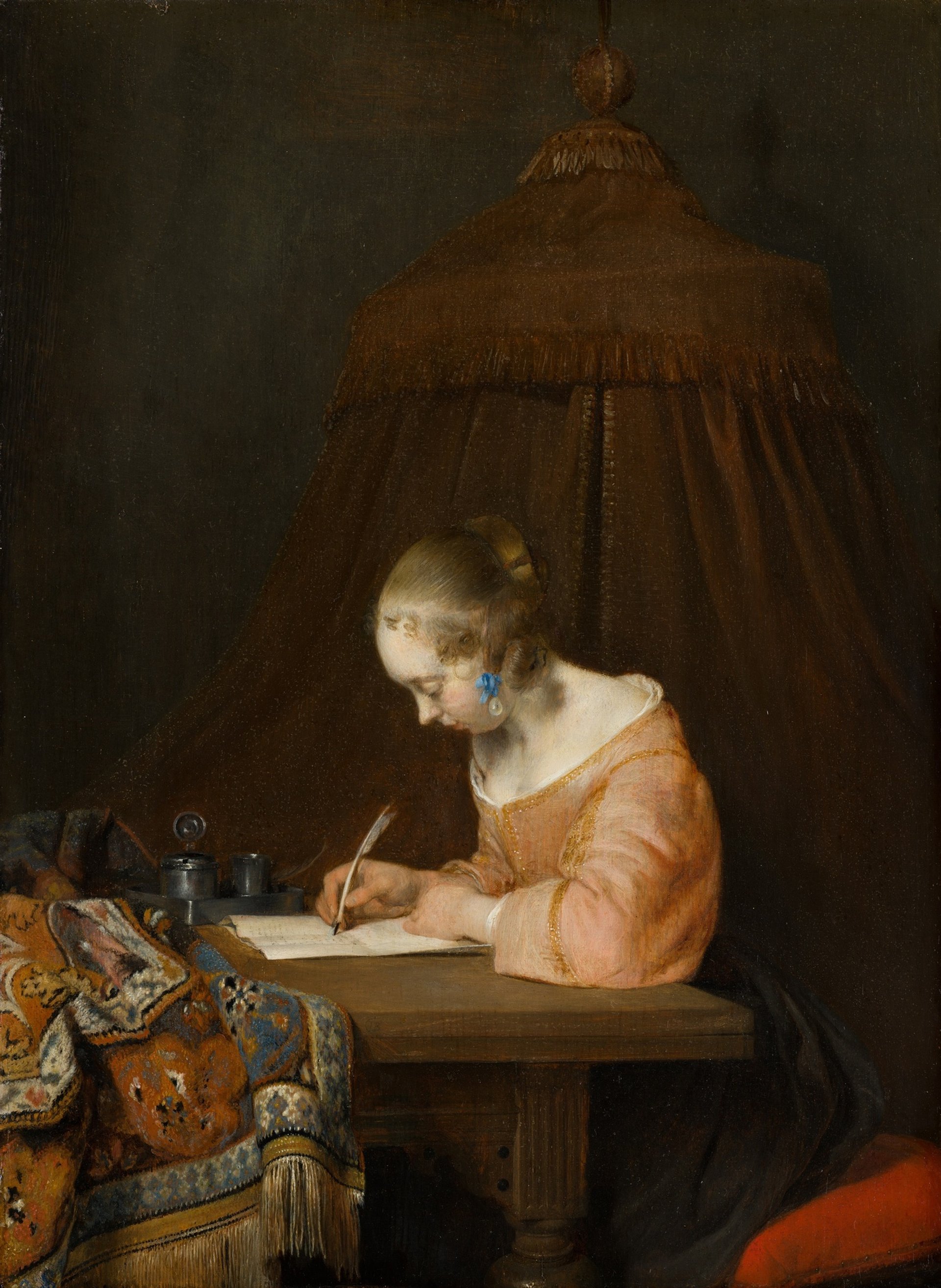
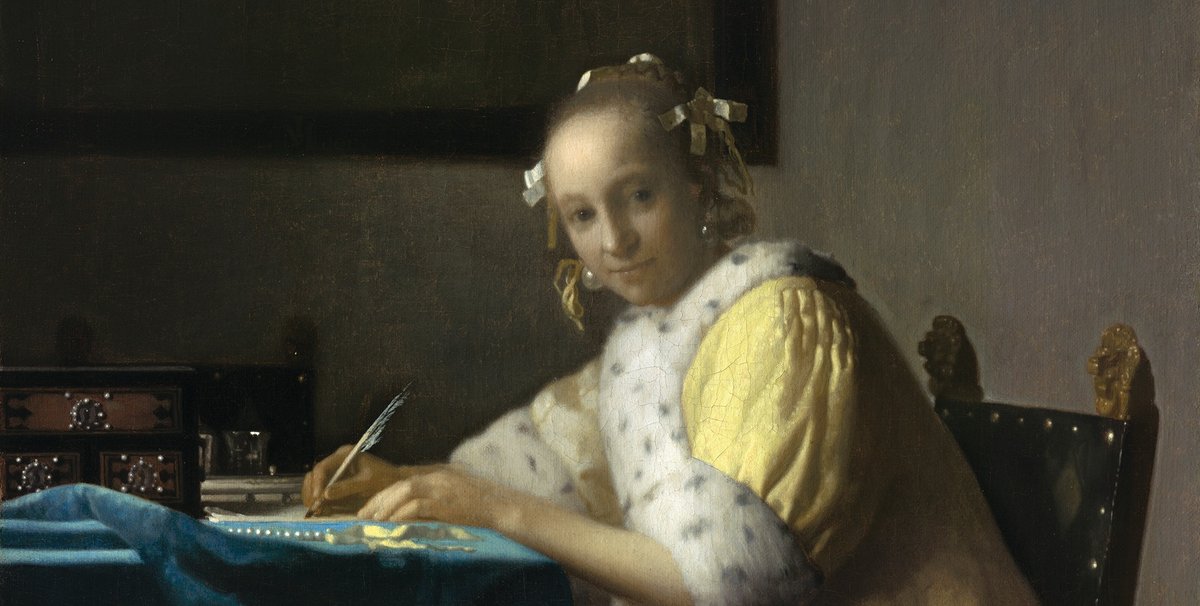
One of the examples presented in the show is Gerard ter Borch’s Woman Writing a Letter (around 1655-56, now Mauritshuis, The Hague), which hangs in the Louvre exhibition next to Vermeer’s Lady Writing (around 1665-67, now at the National Gallery of Art, Washington, DC). The concept of a woman writing (presumably a love letter) in a darkened room appears to come from Ter Borch’s painting, the first-known example of this subject in Dutch art.
Vermeer, Ducos argues, must have seen the earlier work, probably in Ter Borch’s studio in Deventer or with a Rotterdam collector. But Vermeer has developed the theme, bringing his letter-writer to life by having her turn towards us with a powerful gaze. What the exhibition also proves is that although Vermeer may have adopted ideas and poses from slightly earlier works, in his hands they take on qualities unmatched by his rivals.
• Vermeer and the Masters of Genre Painting, Musée du Louvre, Paris, 22 February-22 May; National Gallery of Ireland, Dublin, 17 June-17 September; and National Gallery of Art, Washington, DC, 22 October-21 January 2018. An English edition of the catalogue, published by Yale University Press, is available now.