

Digital Editions
Newsletters
Subscribe
Digital Editions
Newsletters
Art market
Museums & heritage
Exhibitions
Books
Podcasts
Columns
Art of Luxury
Adventures with Van Gogh
Venice Biennale
Art market
Museums & heritage
Exhibitions
Books
Podcasts
Columns
Art of Luxury
Adventures with Van Gogh
Venice Biennale
Exhibitions
preview

Thomas Cole's Old World roots and art-world inspirations examined in transatlantic show

Exhibition on US painter opens at New York's Metropolitan Museum of Art before travelling to London

Donald Lee
29 January 2018
Share
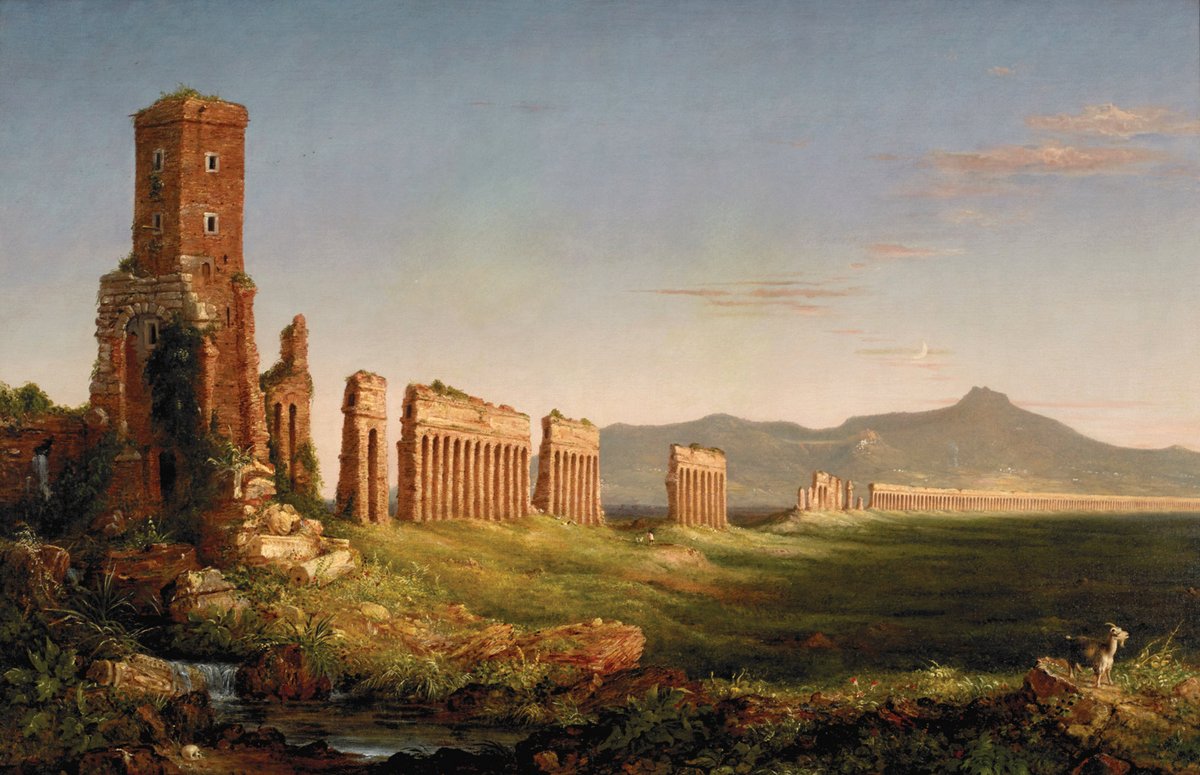
Aqueduct near Rome (1832) by Thomas Cole, inspired by his visit to Italy Mildred Lane Kemper Art Museum, Washington University, St Louis

Aqueduct near Rome (1832) by Thomas Cole, inspired by his visit to Italy Mildred Lane Kemper Art Museum, Washington University, St Louis

The landscape and history paintings of Thomas Cole (1801-48) are well known to US viewers, but mostly unknown to Europeans. This exhibition—a collaboration between New York’s Metropolitan Museum of Art and London's National Gallery—juxtaposes Cole’s paintings and those of other artists, to draw Americans’ attention to his debt to European art and to acquaint viewers on the eastern side of the pond with this remarkable artist.

Cole made three fruitful transatlantic crossings. Born in Lancashire, he emigrated to the US in 1818. After studies at the Pennsylvania Academy of the Fine Arts, Philadelphia, he moved to New York in 1825. A trip up the Hudson River inspired him to paint an echt-American “wilderness”, a landscape subject never before attempted. These pictures, the subject of the first of the four sections of the show, secured his fame and a succession of wealthy patrons.

In 1829 he returned to England and then travelled to Italy. He met the art-world luminaries of the day: Thomas Lawrence, Constable, Turner and, significantly, John Martin, the inspiration behind Cole’s Cecil B. DeMille-style historical fantasies. The second and third galleries show the ways in which his exposure to Claude Lorrain and Salvator Rosa, as well as the English artists, helped him to reformulate his Picturesque and Sublime landscapes, and how his time in Rome and the Campagna supplied him with images of antiquity and ruins. He returned to continued success in New York, and after his third and final European tour (1841-42), his work took a religious turn, incorporating domestic scenes. He died suddenly in 1848.

The show’s final section reviews Cole's influence on the next generation, assessing his retrospective elevation as the “founder” of the Hudson River School of painters.

The exhibition is sponsored by the Peter Jay Sharp Foundation.

• Thomas Cole’s Journey: Atlantic Crossings, Metropolitan Museum of Art, New York, 30 January-13 May; National Gallery, London, 11 June-7 October
Subscribe to our daily newsletter

ExhibitionsPreviewMetropolitan Museum of ArtPaintingThomas ColeLandscape
Share
Subscribe to The Art Newspaper’s digital newsletter for your daily digest of essential news, views and analysis from the international art world delivered directly to your inbox.
Newsletter subscribe
Information
About
Contact
Cookie policy
Data protection
Privacy policy
Frequently Asked Questions
Subscription T&Cs
Terms and conditions
Advertise
Sister Papers
Sponsorship policy
Follow us
Instagram
Bluesky
LinkedIn
Facebook
TikTok
YouTube
© The Art Newspaper

Related content

Exhibitionspreview
12 March 2025

As Tate marks Turner’s 250th birthday, his visions of a wild world still elevate, soothe and harrow the soul

A year-long event bonanza will mark the birthday of perhaps the greatest British artist ever

Gareth Harris
Exhibitionspreview
9 April 2018

Romanticism show surveys landscapes of northern Europe

First major exhibition of its kind includes Turner and Friedrich as well as less familiar “Romantics”

Jane Morris
Exhibitionsarchive
1 February 2003

Constable to Delacroix: British art and the French Romantics

Now on at Tate Britain

Donald Lee