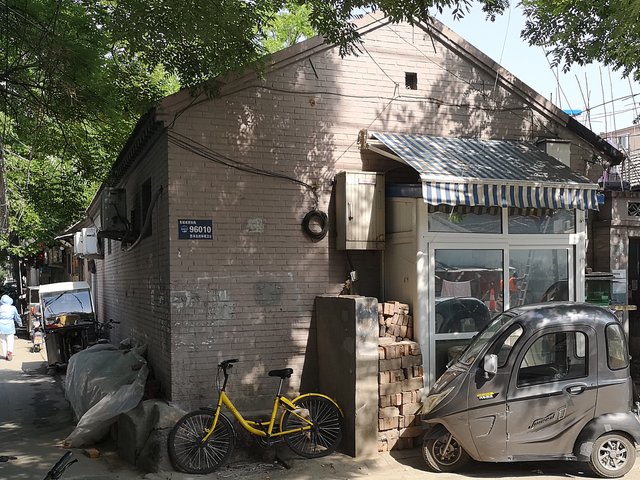
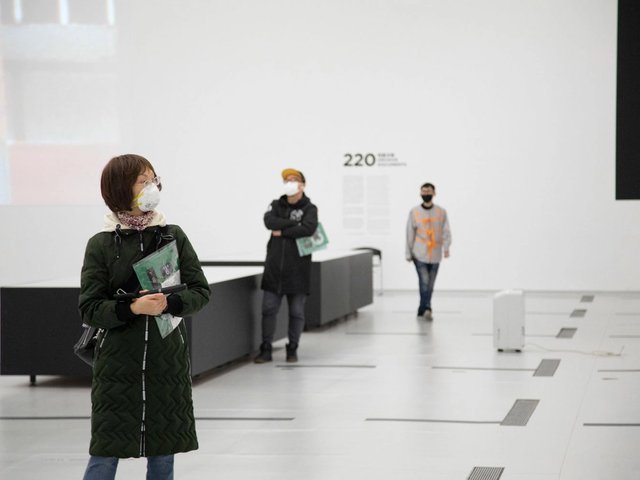
Security guards at Beijing’s 798 Art District on Sunday afternoon beat two young women for wearing rainbow pins in support of LGBTQ rights. A video of the attacks, circulated widely on social media including a since censored post on WeChat blog Zakki Jiji, shows the uniformed guards pushing one woman to the ground and then punching another in the face. An activist using the web handle Piaoquanjun, who was handing out the pins by 798’s north gate to publicise the International Day against Homophobia, Transphobia and Biphobia on 17 May, told state media the Global Times that he had visited the women in the hospital and one had sutures in her mouth and the other facial bruises.
“[The management of 798] has a right to stop illegal activity,” a staff member of the property management department of the Beijing Administrative Committee of 798 Art District told the Global Times. “Wearing a rainbow badge is illegal to me, and they, the homosexuals, have distorted sexual orientation—it is terrifying,” he said. “God created humans as they are.”
“I'm at a loss for words really,” an openly gay staff member of a 798 art institution said on condition of anonymity. “The 798 person that I know said that it was ‘malicious propaganda’, but videos clearly show two girls being beaten by security guards. The comments made by governing bodies of 798 in the Global Times are disgusting and offensive to LGBTQ groups. I think that is adding more insult to the situation.”
Despite the state media coverage, social media posts discussing the incident have mostly been rapidly “404-ed”—Chinese slang for when an online page is censored and deleted. That has not prevented an outcry from China’s art world, where many dealers, curators, and fair and museum directors, if few artists, are openly gay—but reluctant to advocate for rights and representation. Sunday’s incident, however, has been widely denounced on WeChat by the art community.
“Even if 798 is known for its deeply rooted relationship with Chinese contemporary art, it has a reputation for being conservative on almost every public topic,” says Raf Hu, the managing director of MMS2 Berlin and MMS3 Chengdu. “I don’t really think security hates the LGBTQ community; they are just ignorant when their superior asks them to stop anything out of their comfort zone."