

Digital Editions
Newsletters
Subscribe
Digital Editions
Newsletters
Art market
Museums & heritage
Exhibitions
Books
Podcasts
Columns
Art of Luxury
Adventures with Van Gogh
Venice Biennale
Art market
Museums & heritage
Exhibitions
Books
Podcasts
Columns
Art of Luxury
Adventures with Van Gogh
Venice Biennale
Turbine Hall
news

Anicka Yi—who uses bacteria and animatronic insects in her work—to make 'unforgettable' installation for Tate Modern's Turbine Hall

Korean-born artist’s multisensory work draws on scientific concepts to explore gender and race

Gareth Harris
13 March 2020
Share
The Korean artist Anicka Yi has been selected to take over the Turbine Hall at Tate Modern this autumn Photo credit: David Heald

The Korean artist Anicka Yi has been selected to take over the Turbine Hall at Tate Modern this autumn Photo credit: David Heald

For her "largest and most ambitious project to date”, the Korean artist Anicka Yi will take over the Turbine Hall at Tate Modern this autumn (6 October-10 January 2021), bringing her brand of experimental, cross-disciplinary art to London’s Bankside.

Yi uses unconventional materials to examine what she calls “a biopolitics of the senses”, melding science with socio-political issues such as migration and gender. At the 2019 Venice Biennale, she created giant pods made of kelp filled with animatronic insects for an installation called Biologising the Machine. Last year, she also created a series of “feminist” fragrances in collaboration with the perfumer Barnabé Fillion.

Detail from Yi’s Lifestyle Wars diorama (right) at the Guggenheim: ants circulate through pathways reflected in mirrored glass Courtesy of the artist and 47 Canal, photo David Heald, © Solomon R. Guggenheim

In 2016, Yi was awarded the Hugo Boss Prize; the corresponding exhibition was held the following year at the Guggenheim Museum in New York. In the show, she unveiled a scent using bacterial samples collected from Asian-American women in Manhattan’s Chinatown and Koreatown and from carpenter ants.

She told The Art Newspaper: “For me to use bacteria in my work is to create access to our discomfort… My hope is to allow for some kind of acknowledgement of our anxieties around hygiene, around the body, around a cultural conditioning of what is considered negative, as something that we should expel.”

Frances Morris, the director of Tate Modern, says in a statement: “Yi’s installations are unforgettable, using the latest scientific ideas and experimental materials in unexpected ways. The results not only engage the senses, but also tackle some of the big questions we face today about humanity’s relationship to nature and technology.”

The current Turbine Hall commission was created by the US artist Kara Walker, whose monumental 13m-high fountain (Fons Americanus, until 5 April) is modelled on the grandiose Victoria Memorial unveiled in front of Buckingham Palace in 1911.
Subscribe to our daily newsletter

Turbine HallCommissionsTate ModernHyundai Commission
Share
Subscribe to The Art Newspaper’s digital newsletter for your daily digest of essential news, views and analysis from the international art world delivered directly to your inbox.
Newsletter subscribe
Information
About
Contact
Cookie policy
Data protection
Privacy policy
Frequently Asked Questions
Subscription T&Cs
Terms and conditions
Advertise
Sister Papers
Sponsorship policy
Follow us
Instagram
Bluesky
LinkedIn
Facebook
TikTok
YouTube
© The Art Newspaper

Related content

Olafur Eliassonarchive
30 September 2003

The Unilever Series: Olafur Eliasson now on display at Tate Modern

Could the commission for Tate's Turbine Hall create its own climate

The Art Newspaper
Commissionsnews
22 February 2023

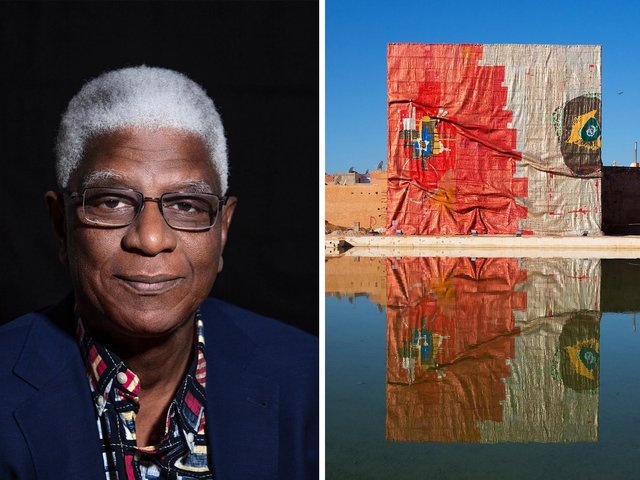
Tate announces El Anatsui as next artist for vast Turbine Hall commission

Ghana-born, Nigeria-based artist—known for his signature bottle-cap sculptures—will unveil the work in London in October

Gareth Harris
Commissionsnews
1 October 2018

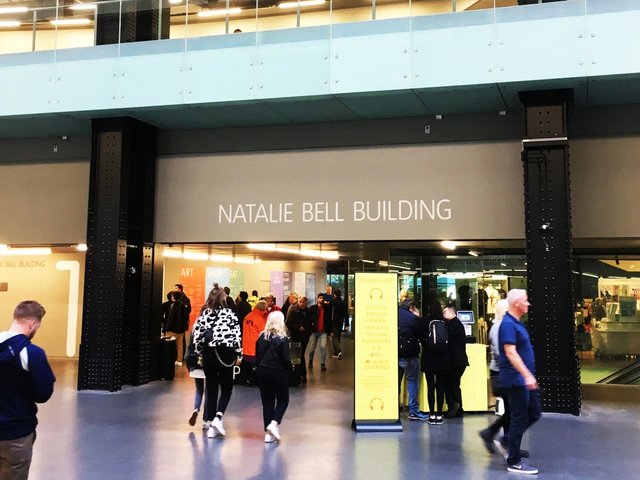
Tania Bruguera renames Tate Modern after local London activist as part of Turbine Hall commission

Heat-sensitive floor work and crying room part of “stealth” piece pushing positive aspects of migration

Gareth Harris and José da Silva