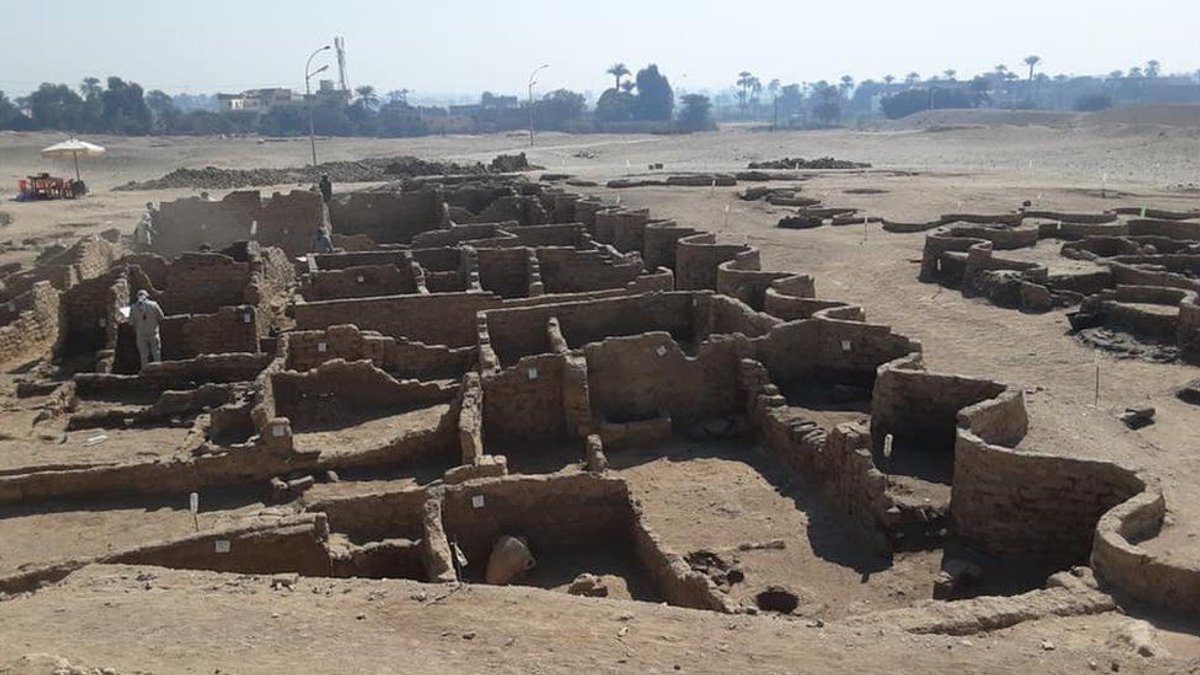
Archaeologists in Egypt have found what they believe is the famed 3,000-year-old “lost golden city of Luxor”. The ancient site is also being called the “Egyptian Pompeii” because of its remarkable preservation, and has been cited by Egyptologysts as the most significant discovery since the unearthing of King Tutankhamun’s tomb in 1922.
Excavations began in September of 2020, when a team of archaeologists were searching for a mortuary temple near the site. Within weeks, they had stumbled upon a vast network of ancient mudbrick walls that they believe were a part of the lost city. Jewellery, pottery, scarab beetle amulets, small statues, ritual items, and bricks bearing the seal of the pharaoh Amenhotep III, who ruled between around 1386 and 1353 BC, have all been discovered on the site. Remarkably preserved human and animal remains have also been unearthed in the ancient city, as well as ovens and kilns. “What they unearthed was the site of a large city in a good condition of preservation, with almost complete walls, and with rooms filled with tools of daily life" says Zahi Hawass, the head of the Egyptian excavation, in a statement.
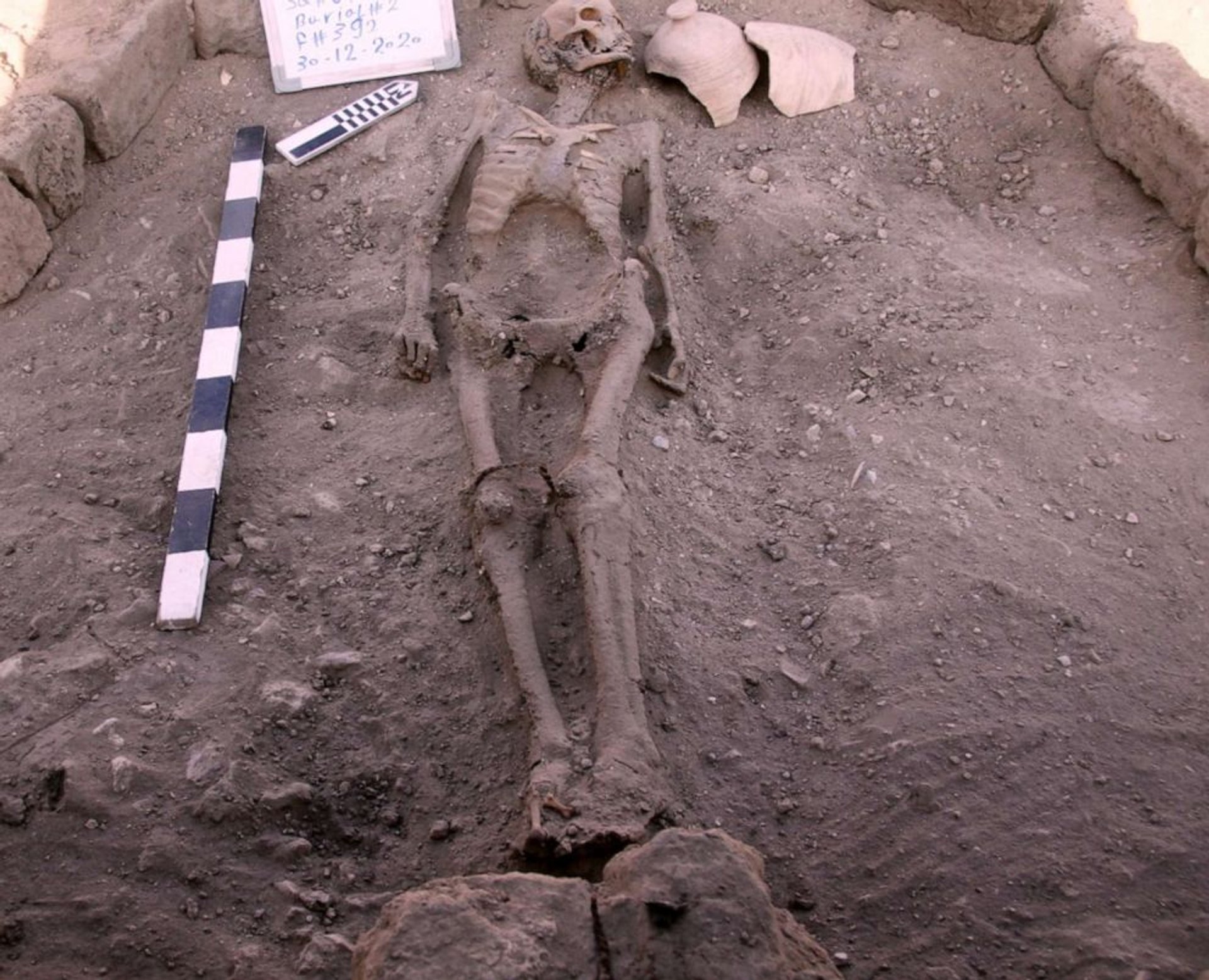
Remarkably preserved human and animal remains have also been unearthed in the ancient city Zahi Hawass Center For Egyptology
The city was built more than 3,400 years ago during the opulent reign of pharaoh Amenhotep III, whose dominion was known as one of wealth and luxury. Although it was the largest administrative and industrial centre of the Egyptian empire in its time, the pharaoh’s son Akhenaten abandoned it when he took the throne, founding a new capital at Amarna, around 400 km north of Luxor, in the current province of Minya.
“It’s extraordinarily beautiful,” Salima Ikram, the head of the American University in Cairo’s Egyptology unit, told National Geographic. “I don’t think you can oversell it. It is mind-blowing.” Betsy Bryan, Professor of Egyptology at John Hopkins University, said in a statement that “the discovery of this lost city is the second most important archeological discovery since the tomb of Tutankhamun”.
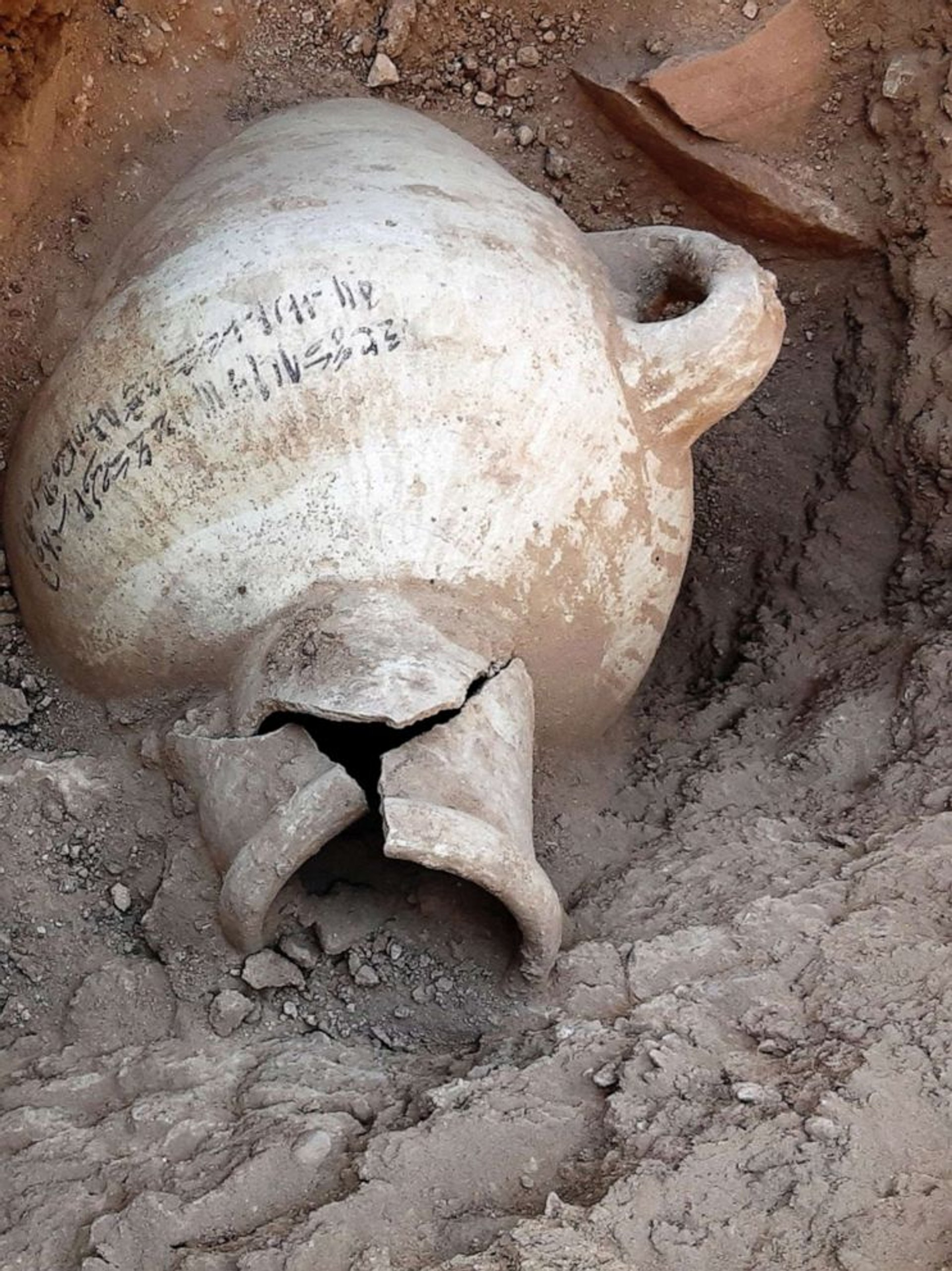
Jewellery, pottery, scarab beetle amulets, small statues, ritual items, and bricks bearing the seal of the pharaoh Amenhotep III, who ruled between around 1386 and 1353 BC, have all been discovered on the site Zahi Hawass Center For Egyptology
“The discovery of the Lost City not only will give us a rare glimpse into the life of the Ancient Egyptians at the time where the Empire was at his wealthiest,” she adds, “but will help us shed light on one of history's greatest mysteries: why did Akhenaten and Nefertiti decide to move to Amarna?”