On her first night in New York in 1955, the Greek-born artist Chryssa found herself surrounded by the riotous glow of Times Square, the blinking signs advertising Admiral appliances and Anheuser-Busch beer. The lit-up letters left a deep impact on the artist, who registered an enigmatic beauty—a particular vulgarity she described as “extremely poetic”. Working in a range of media, she became an early experimenter in using neon in art to explore language, colour and light.
Yet while Chryssa achieved prominence in her lifetime, her pioneering career is today little-known. That is changing with the first major survey of her work in the US since 1982, which debuts at Dia Chelsea before travelling to the Menil Collection in Houston and Wrightwood 659 in Chicago.
Titled Chryssa & New York, the exhibition gathers dozens of rarely seen neon sculptures—many restored for the occasion—as well as plaster, marble and cast-metal pieces, and works on canvas and paper that demonstrate Chryssa’s interest in the communicative possibilities of typographic forms. It will take an in-depth look at how New York’s urban and creative landscape, and the growing Pop and Minimalism movements, influenced her between the late 1950s and early 1970s.
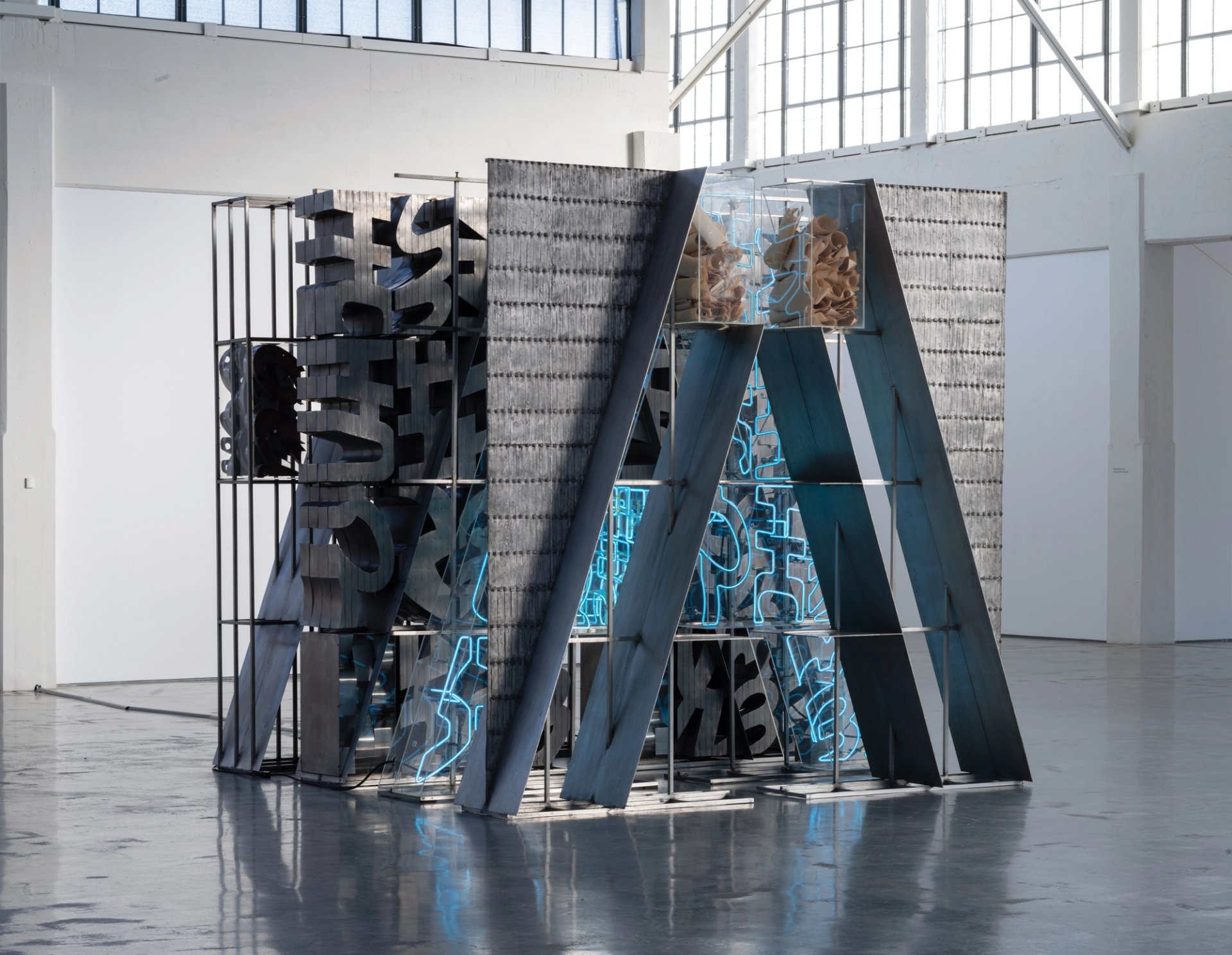
Chryssa’s magnum opus, The Gates to Times Square (1964-66), is the show’s centrepiece, a monumental work in welded stainless steel, neon and plexiglas © Estate of Chryssa. Photo: Bill Jacobson Studio, NY; Courtesy of Dia Art Foundation
“Chryssa was very much a part of that scene of artists in 60s and 70s New York, but she had essentially been forgotten,” says Dia’s external curator Megan Holly Witko, who co-curated the exhibition with the Menil’s Michelle White. “This was something we wanted to bring to New York because it was an important place to Chryssa—a lot of her artistic career and community was here.”
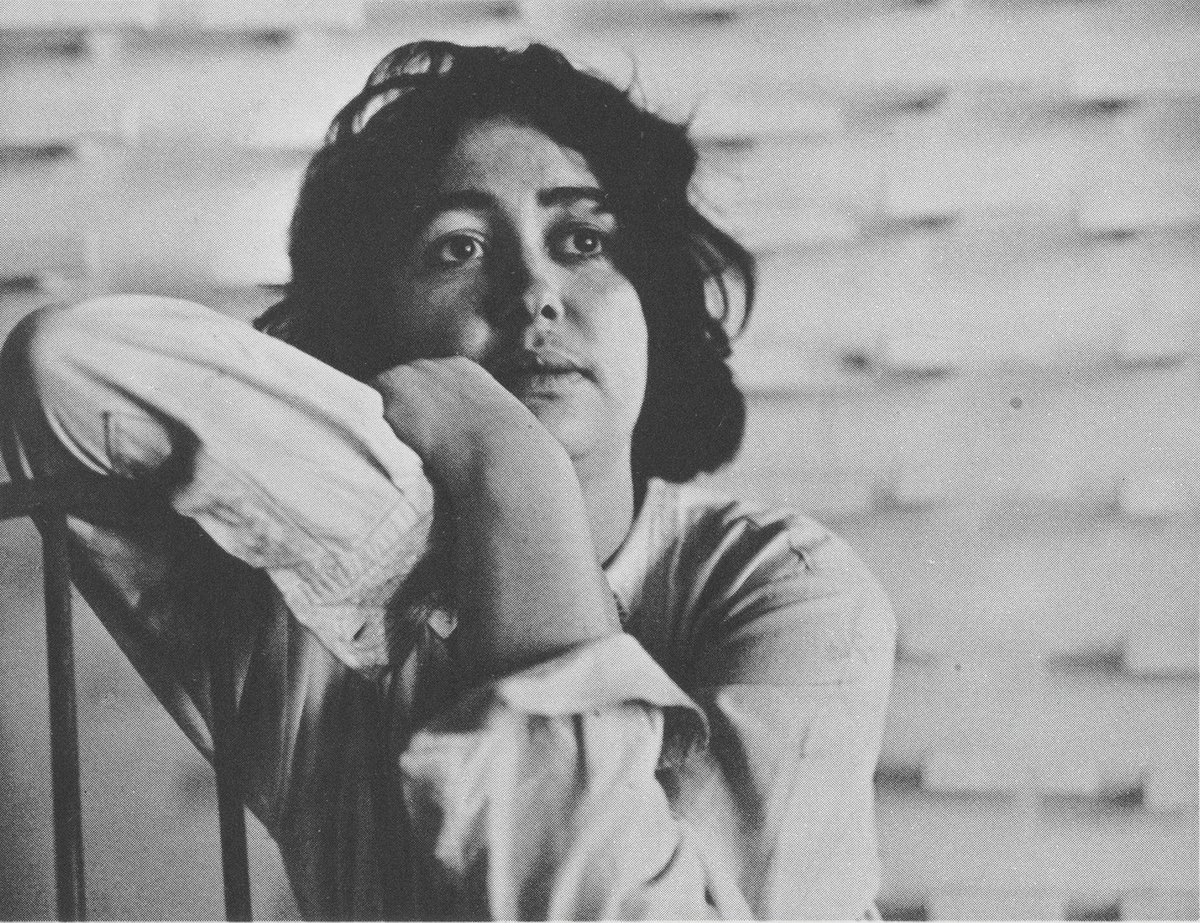
Born Chryssa Vardea-Mavromichali in 1933 in Athens, the artist grew up in Nazi-occupied Greece. She worked briefly as a social worker before pursuing drawing and painting. In 1954, she visited Paris, engaging with Surrealist circles, before travelling to the US the following year. After a short stay in New York, then San Francisco, she moved to Manhattan in the late 1950s, where her ascent was swift: in 1961, she had her first solo show at the Betty Parsons Gallery followed by one at the Solomon R. Guggenheim Museum, and in 1966 began showing at Pace gallery. The city provided much of her material, from newspapers she tore and made into paintings and sculptures, to old signs she scavenged from scrapyards.
The centrepiece of the exhibition, a sculpture titled The Gates to Times Square (1964-66), provides entry into this formative period. At 10ft high and wide, it fuses layers of aluminium, steel and plexiglass-encased neon, presenting forms suggestive of script but denying legibility. “She’s exploring the dimensionality of signage fragments and combining them with neon,” Witko says. “It’s her absolute magnum opus that is a through line to the show. A lot of the work leads to that moment, and then comes of it.”
Planned since 2016, the exhibition borrows works from museums, including the Buffalo AKG Art Museum, New York’s Museum of Modern Art and the Whitney Museum of American Art. This institutional representation may seem difficult to square with Chryssa’s lack of visibility. But there is the practical problem of neon’s challenging conservation, and the fact that Chryssa did not attain consistent gallery representation. “She bounced around a lot,” Witko says. “And towards the end she fully returned to Athens. There wasn’t as much of a network left in the US.” Chryssa died in Athens in 2013, eight years after she returned to Greece full-time. Her plans to establish a foundation were never realised.
The exhibition has taken several years to come to fruition, in part because its organisers had to trace down works and people who knew Chryssa. The exhibition and accompanying catalogue will fill gaps in her story, while inviting deeper inquiry into her life and work. “We really tried to leave no stone unturned,” Witko says.
• Chryssa & New York, Dia Chelsea, New York, 2 March-23 July; Menil Collection, Houston, 29 September-10 March 2024; Wrightwood 659, Chicago, 1 May-15 August 2024