Digital Editions
Newsletters
Subscribe
Digital Editions
Newsletters
Art market
Museums & heritage
Exhibitions
Books
Podcasts
Columns
Art of Luxury
Adventures with Van Gogh
Venice Biennale
Art market
Museums & heritage
Exhibitions
Books
Podcasts
Columns
Art of Luxury
Adventures with Van Gogh
Venice Biennale
Diary
blog

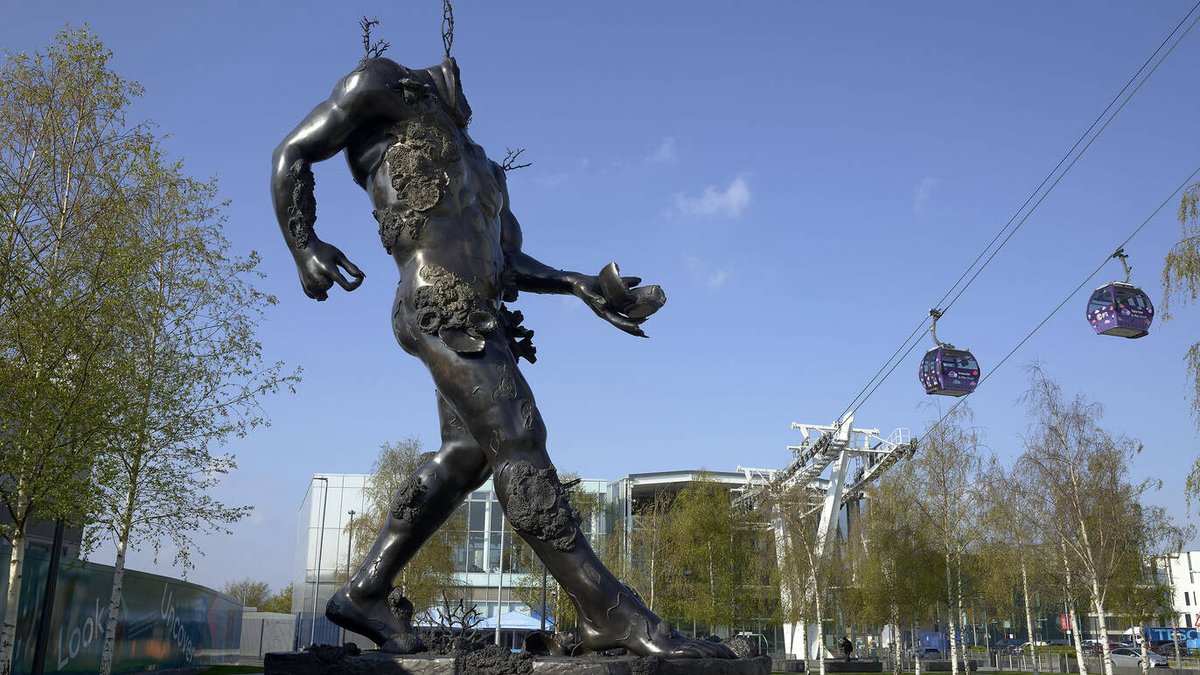
Damien Hirst’s humongous headless demon dominates the skyline on London's Greenwich Peninsula

The gargantuan piece, which looks up to the Thames cable car, is part of Hirst’s Treasures from the Wreck of the Unbelievable series

The Art Newspaper
24 April 2023
Share
Mega art: Damien Hirst's Demon with Bowl (2014)

Photo: Prudence Cuming

Mega art: Damien Hirst's Demon with Bowl (2014)

Photo: Prudence Cuming

They say that wherever you go in London, you’re never more than four feet away from a Damien Hirst sculpture (that is little bit of a fib to be honest). Nevertheless, his works keep popping up in the capital. Last year we reported that the property developer Knight Dragon planned to install Hirst’s 18-metre-high bronze sculpture Demon with Bowl (2014) by the Thames on the Greewnich Peninsula. The massive headless effigy is now in place, towering over the Thames cable car and dwarfing the O2 arena. The gargantuan piece is part of Hirst’s Treasures from the Wreck of the Unbelievable series and was first presented in the courtyard of Palazzo Grassi during the 2017 edition of the Venice Biennale. Hirst already has other works on the peninsula from the same series, including The Mermaid and Hydra and Kali, making this part of town a smorgasbord of art by the Young British Artists (YBAs).

Meanwhile across town, Hirst devotees can see the artist’s dramatic depiction of St Bartholomew, one of the original 12 disciples who was skinned alive, in London’s oldest parish church. Hirst’s polished gold version of the doomed disciple, titled Saint Bartholomew, Exquisite Pain, stands in the south transept of the 900-year-old St Bartholomew the Great church, near Smithfield market in the City of London.
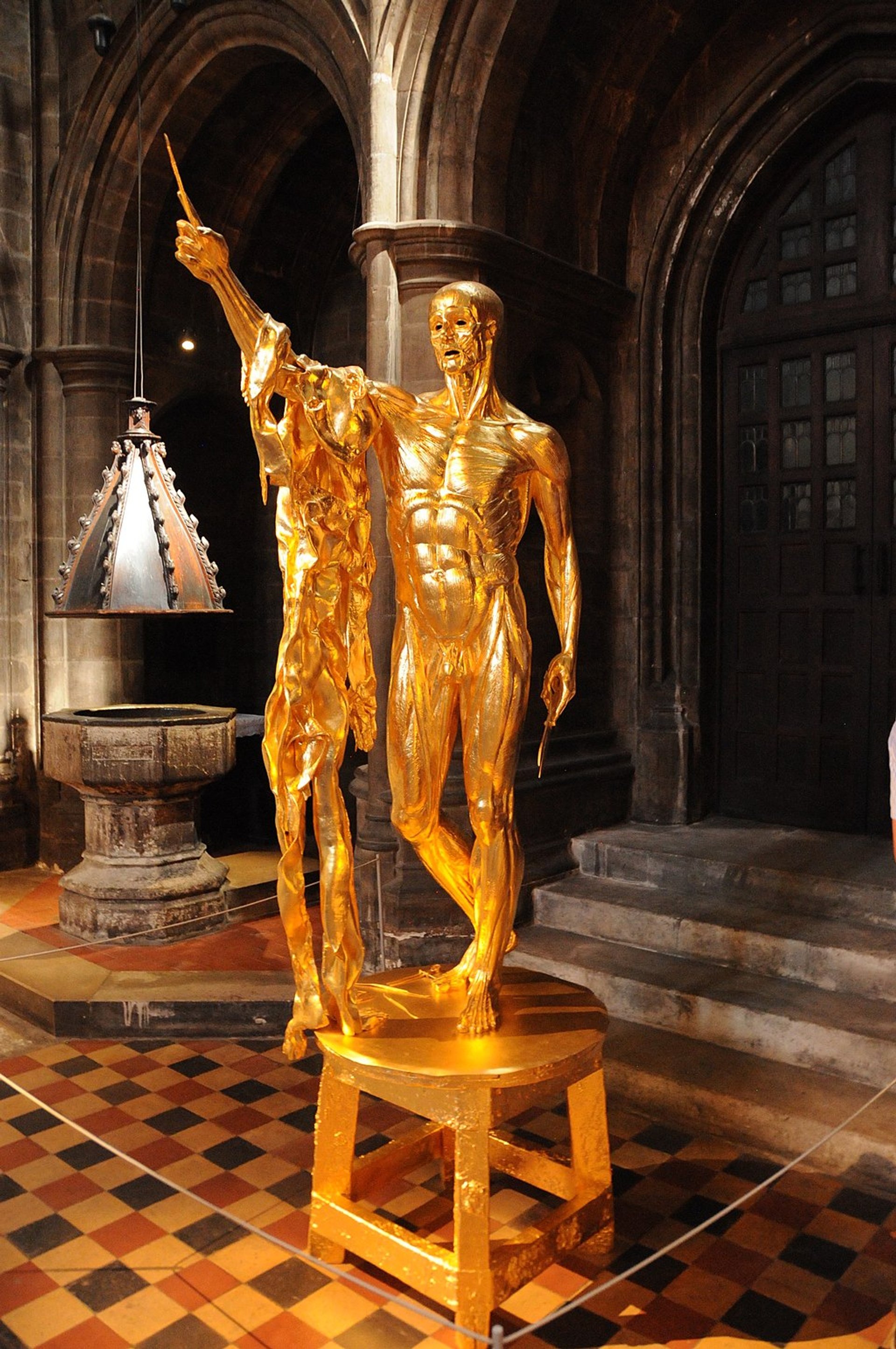
Hirst's Saint Bartholomew, Exquisite Pain (2008) in London's St Bartholomew the Great church, West Smithfield

Photo: Davepastor

The church website points out that “the instrument in [the statue’s] hand is not a standard knife, but a scalpel, used in the hospital across the road which also bears the saint’s name”. Hirst’s take is slightly more prosaic. “I added the scissors because I thought Edward Scissorhands was in a similarly tragic yet difficult position,” he told The London Dead blog.
Subscribe to our daily newsletter

DiaryDamien HirstVenice Public art
Share
Subscribe to The Art Newspaper’s digital newsletter for your daily digest of essential news, views and analysis from the international art world delivered directly to your inbox.
Newsletter subscribe
Information
About
Contact
Cookie policy
Data protection
Privacy policy
Frequently Asked Questions
Subscription T&Cs
Terms and conditions
Advertise
Sister Papers
Sponsorship policy
Follow us
Instagram
Bluesky
LinkedIn
Facebook
TikTok
YouTube
© The Art Newspaper

Related content

Diaryblog
12 April 2020

Stratospheric diamonds, rotting sharks and buying Jeff Koons: Damien Hirst answers 100 questions on Instagram

The Art Newspaper
Diaryblog
23 September 2022

'He’s burning his art why can’t I?': Artist smashes plates and sets fire to book at Damien Hirst’s NFT show opening

The Art Newspaper
Diaryblog
23 October 2023

Claridge’s new rooftop penthouse is filled with 75 works by Damien Hirst

Works are largely drawn from the artist's 2017 Venice show

The Art Newspaper
Diaryblog
20 April 2020

On the block at Sotheby’s: David Bowie’s wallpaper featuring Lucian Freud nude—and emasculated minotaurs

The Art Newspaper