Old Masters are on the up. Collectors of contemporary works are disillusioned by the losses they have made on young artists and are looking back in time for value.
This is a narrative currently doing the rounds of the art world. Certainly some contemporary collectors paid attention in July when Canaletto’s Venice, the Return of the Bucintoro on Ascension Day sold for a record £31.9m (with fees) at Christie’s. But for the new entrant, the Old Master market continues to be a challenge. After centuries of intensive trading, fresh material rarely comes up for sale. It is an arcane market with only a handful of widely known “brand” artists. Canaletto might not have had a Ninja Turtle named after him, but at least most educated people have heard the name. Moreover, though Old Masters might often look relatively good value, they, just like contemporary works, are not always the most lucrative investment.
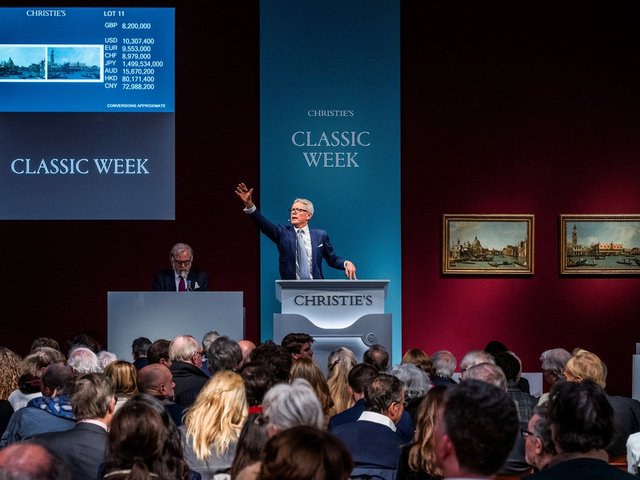
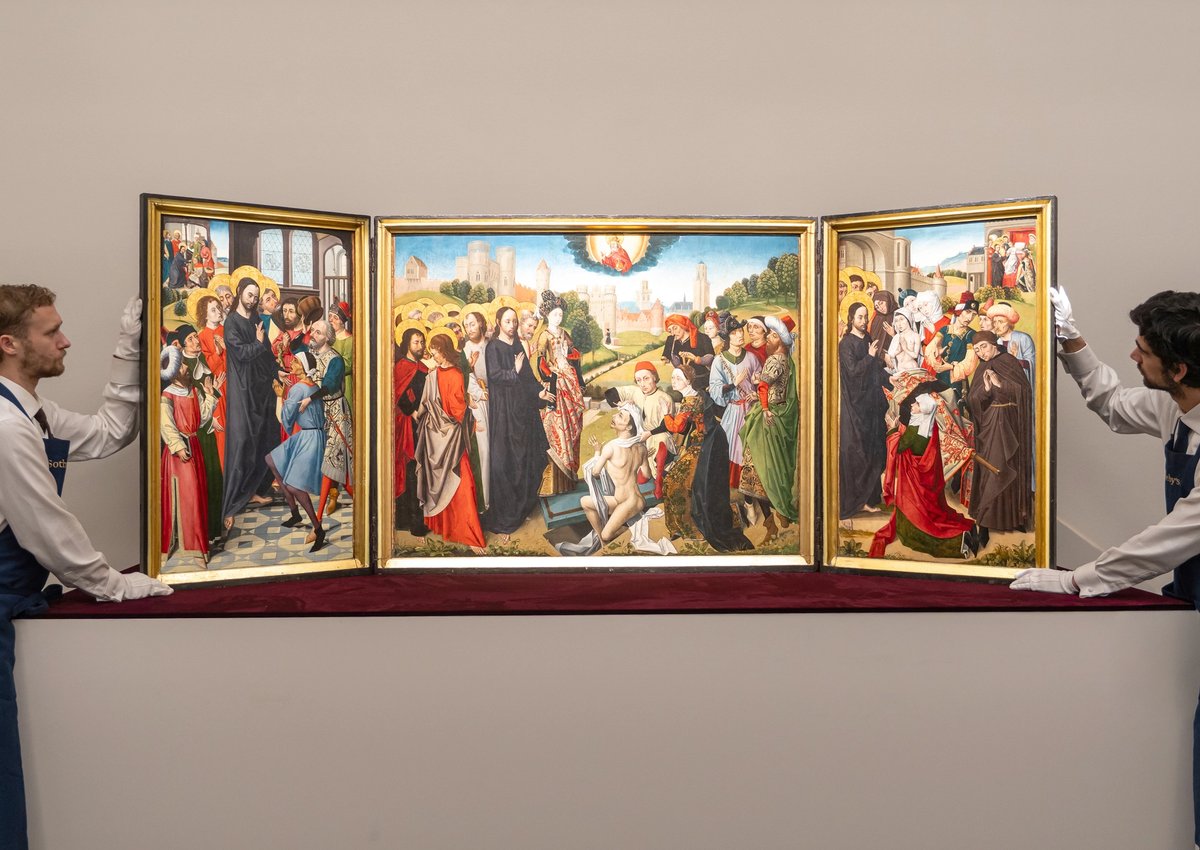
These familiar issues were once again plain to see in the latest December round of Old Master auctions in London as the Art Basel Miami Beach fair opened in Florida. As is usual in London, only one of the two main houses was able to put together a sale with a serious group of highlights. This season it was Sotheby’s, whose Wednesday evening auction included an exceptional late 15th-century Netherlandish triptych that had never been seen on the market.
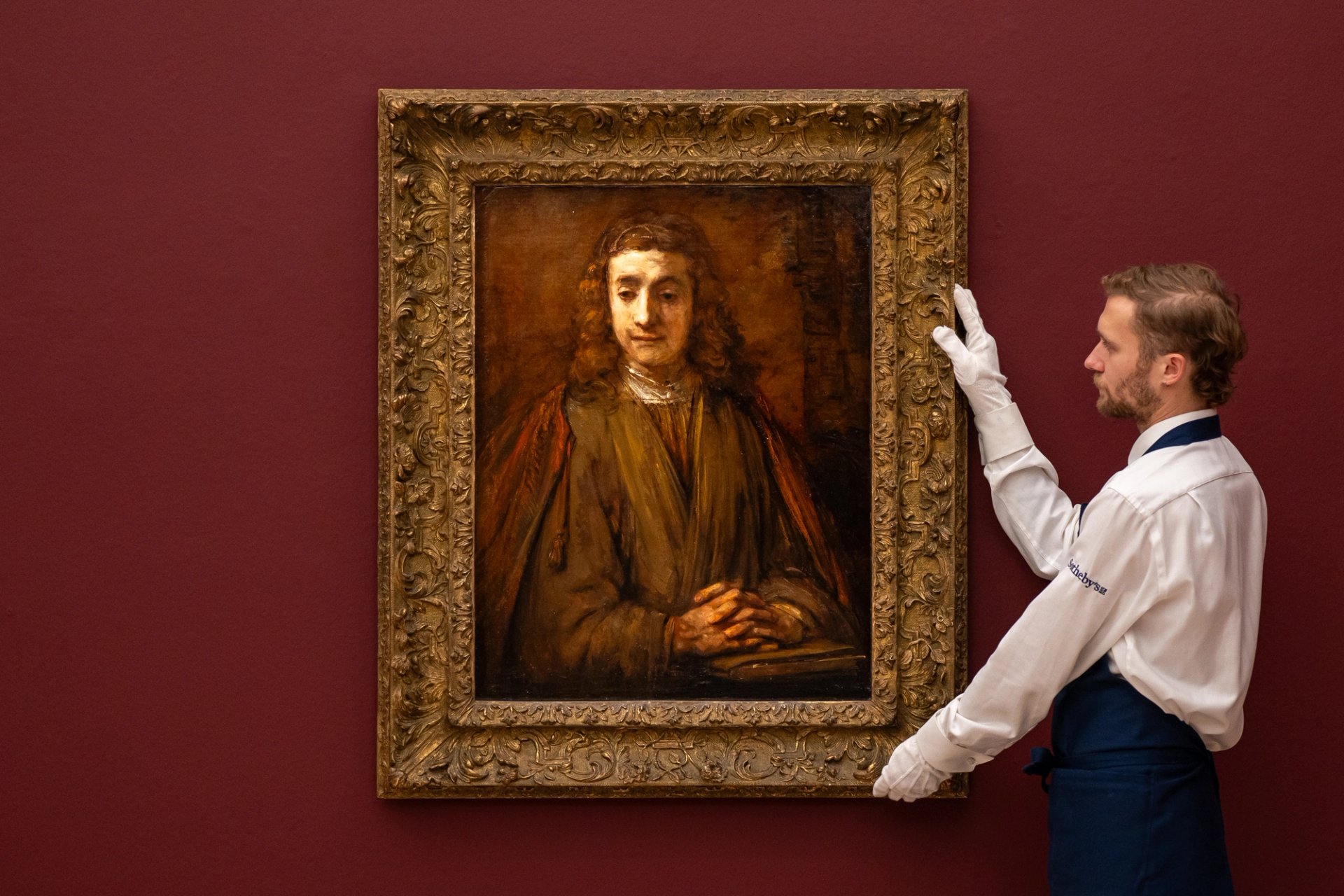
Saint John on Patmos, recently attributed to Rembrandt, sold for £6.8m at Sotheby’s Courtesy of Sotheby’s
There has been talk that the expressionistic qualities of Medieval painting are more in tune with contemporary tastes than later Old Masters. Sotheby’s dramatic, vividly coloured 8ft-wide triptych of The Five Miracles of Christ, dating from around 1480, had been kept for centuries in St. John’s Almshouse in Sherborne, Dorset. No other works by the unidentified Flemish artist are known. Having recently had the painting valued by Sotheby’s at as much as £3.5m, the Dorset charity realised it could not afford the insurance and security costs of keeping the work, and so decided to sell, appropriately enough, to fund affordable housing.
The emergence of a large, late-Medieval triptych fresh from its historic setting is highly unusual. Two telephone bidders contested the painting, the hammer eventually falling at £5.7m (with fees). After the sale, Sotheby’s announced that the buyer is an unnamed Christian charitable foundation that has an existing relationship with the Sherborne Almshouse and that wishes to make the painting available for public view in the town. The underbidder, perhaps significantly, was Ottilie Windsor, Sotheby’s head of contemporary art in London.
“This was the painting of the evening. The quality was fantastic, and it had come straight from its original location. It had everything you want from an early Netherlandish painting,” says the Geneva-based Old Master dealer Salomon Lilian.
Sotheby’s says there was also bidding from a contemporary art collector for a 1562 portrait of Thomas Howard, the 4th Duke of Norfolk, who was executed in 1572 for high treason, following his involvement with Mary Queen of Scots and the Catholic cause. A signed work of the renowned Flemish painter Hans Eworth, this had also never been offered at auction before. It was bought by the current 18th Duke of Norfolk and the Arundel Castle Trustees for £3.2m (with fees) against an estimate of £2m-£3m, a record for an Elizabethan portrait, according to Sotheby’s.
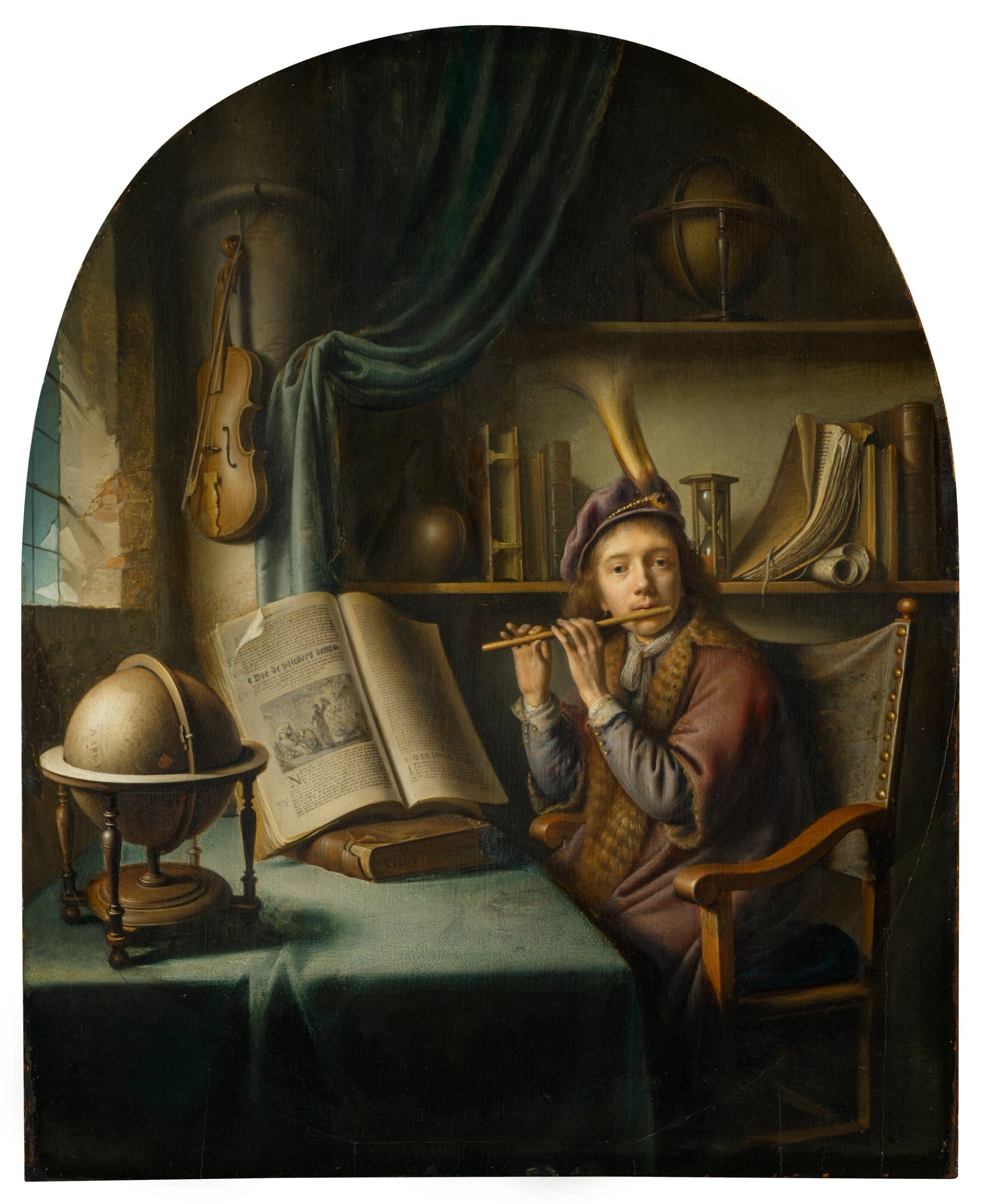
Gerrit Dou's The Flute Player sold for £3.8m Courtesy of Christie's
Rembrandt was the one Old Master “brand” name on offer at Sotheby’s. His little-known, reattributed canvas, Saint John on Patmos, showing the prophetic Evangelist half-length, was identified by some scholars in the early 20th century as an autograph painting of the artist’s son, Titus. More recently, most Rembrandt authorities have regarded this as a work by a follower or imitator. However, after 14 months of painstaking research and technical analysis, George Gordon, Sotheby’s co-chairman of Old Masters, felt confident enough to reattribute the work to Rembrandt and add it to the artist’s 1661 cycle of paintings of Apostles and Evangelists. The attributional upgrade was met with scepticism by some members of the trade, but this seemingly unprepossessing painting, estimated at £5m-£7m, was bought in the room by the prominent London dealer, Johnny van Haeften, for £6.8m (with fees). “Great artists yield their secrets slowly,” Gordon said after the sale.
Pieter Brueghel the Younger’s The Census at Bethlehem, copying a celebrated 1566 painting by Brueghel the Elder in the Musée des Beaux-Arts, Brussels, was the evening’s other main highlight. Held in the same private collection for almost 40 years, this attractively seasonal 5ft 8in-wide panel painting of some 200 individually characterised figures in a snowbound Flemish village sold to a telephone bidder for £5.2m (with fees).
Sotheby’s auction raised £30.7m (with fees) from 31 lots with eight unsold, a 27% increase on the £24.2m (with fees) it achieved last December.
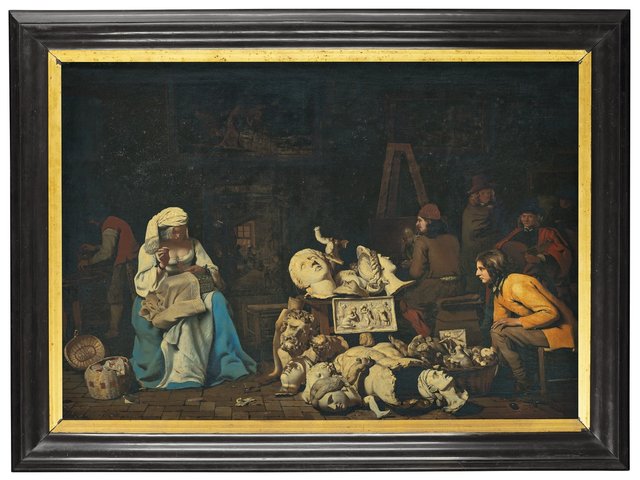
Coincidentally, Christie’s had also offered 31 lots at its Old Masters sale the previous evening, but quality levels were thinner. The exquisitely detailed panel painting The Flute Player, by Gerrit Dou, a Leyden artist who was a pupil of the young Rembrandt, was the clear stand-out here. Owned by the same English family since 1900, this finely preserved, jewel-like oil of a young man playing a flute in book-lined study dates from about 1632-35, when Dou was an established independent artist, but had yet to develop his mature style. It had been estimated at £2m-£3m.
“I truly love this painting. It’s not quite Dou, but it’s quite a masterpiece, it has to be said,” said the New York-based dealer Otto Naumann, one of the many seasoned Old Master experts who admired the picture. On the night it attracted three telephone bidders, selling for £3.8m (with fees). The result was some way below the record $7.1m (with fees) achieved for the artist in 2023.
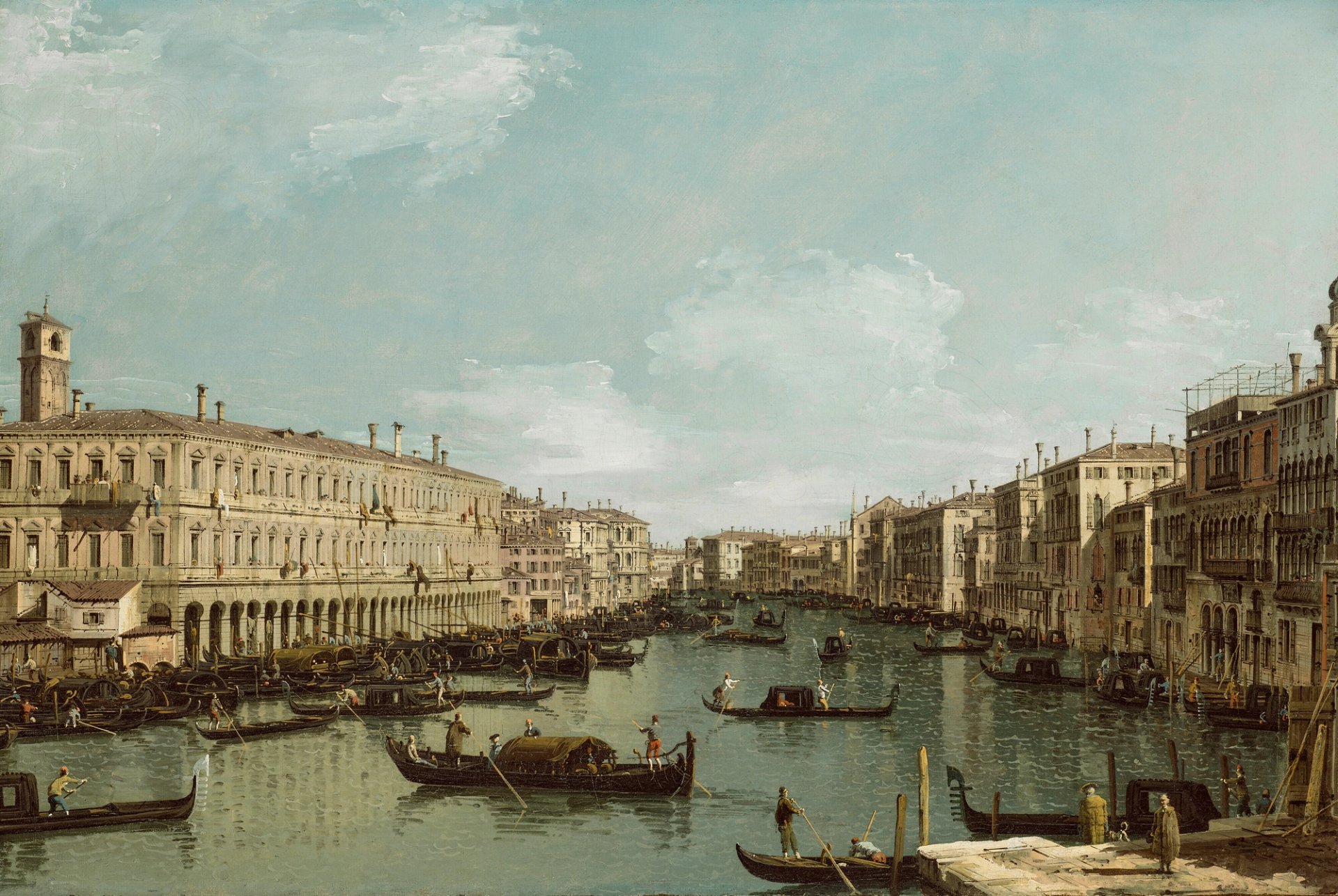
Bernardo Bellotto's Venice, The Grand Canal looking North from the Rialto Bridge sold for less than it had been bought for eight years ago
Courtesy of Christie's
Dou represents the apogee of the sort of Old Master art that has for decades dominated the Tefaf Maastricht fair. But here at Christie’s—as at Sotheby’s the following evening—it was noticeable how the sort of decorative Dutch and Flemish pictures in the £100,000-£300,00 range that used to be routinely bought by dealers for the fair are now failing to sell. A Jacob Jordaens panel, showing four studies of a man’s head, estimated at £150,000-£250,000, one of a run of four such lots that had no takers at Christie’s.
A typically lively Rubens oil sketch, The Martyrdom of St. Paul, did sell to the London dealer Milo Dickinson for an upper estimate £1.3m (with fees) and a view of the Grand Canal in Venice by Bernardo Bellotto, the nephew of Canaletto, fell to a low estimate telephone bid of £1.2m (with fees). The latter had been acquired by its seller at auction in 2017 for £2m (with fees), demonstrating the sobering losses that investments in Old Master paintings can incur.
Christie’s auction raised £12.7m (with fees) from 31 offered lots, of which a third failed to sell. Despite the excitement generated by that £31.9m Canaletto in the summer, this total was 10% down on the proceeds of Christie’s equivalent Old Masters sale last December in London.
“This is a swings and roundabouts market,” says Morgan Long, a London-based art adviser who has three clients who have collected contemporary art, but who are now looking at Old Masters. “This isn’t the season to judge if contemporary collectors are getting involved,” adds Long, who regards the much bigger forthcoming February season of Old Master auctions in New York as the more significant test of market crossover.
But will contemporary collectors not be put off by the losses that Old Masters can make? “Buyers have lost plenty of money in the contemporary sector too,” Long says.