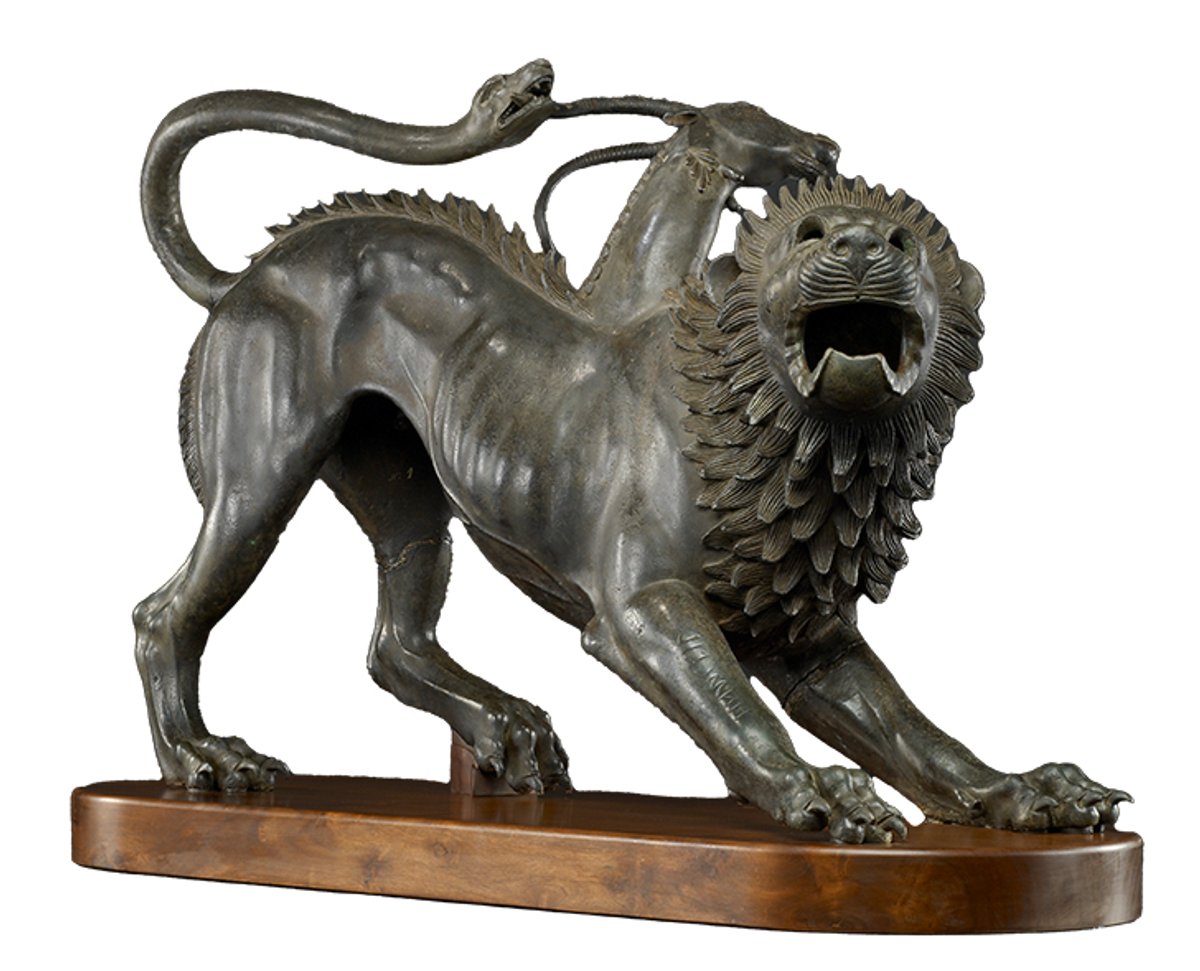
It is as fierce as it is fearsome. The mythic Chimaera was as captivating to the Etruscans who crafted the beast in bronze over 2,400 years ago as it was to the Tuscans who unearthed the sculpture in 1553. Its fire-breathing furor was matched only by its monstrous composition—a lion’s face and frame, a goat’s head protruding from the back, and a snake in place of the tail.
Etruscan artisans cast the 4ft-by-2.5ft bronze with a prickly mane and a defiant stance in the face of blood-spurting injuries. An inscription to the god Tinia and clay residues inside the work hint at its meaning and suggest its origins are around 400BC. Its rediscovery in Arezzo, around 50km south-east of Florence, under the reign of Cosimo I fuelled wonder in ancient civilisations.
And now this ancient monster has a new state-of-the-art home. The Chimaera of Arezzo was reinstalled in a dedicated gallery at the Museo Archeologico Nazionale di Firenze (MAF) in November. As well as displaying the bronze itself, the hall reconstructs the Chimaera’s rediscovery with artefacts unearthed at the same site in the 16th century.
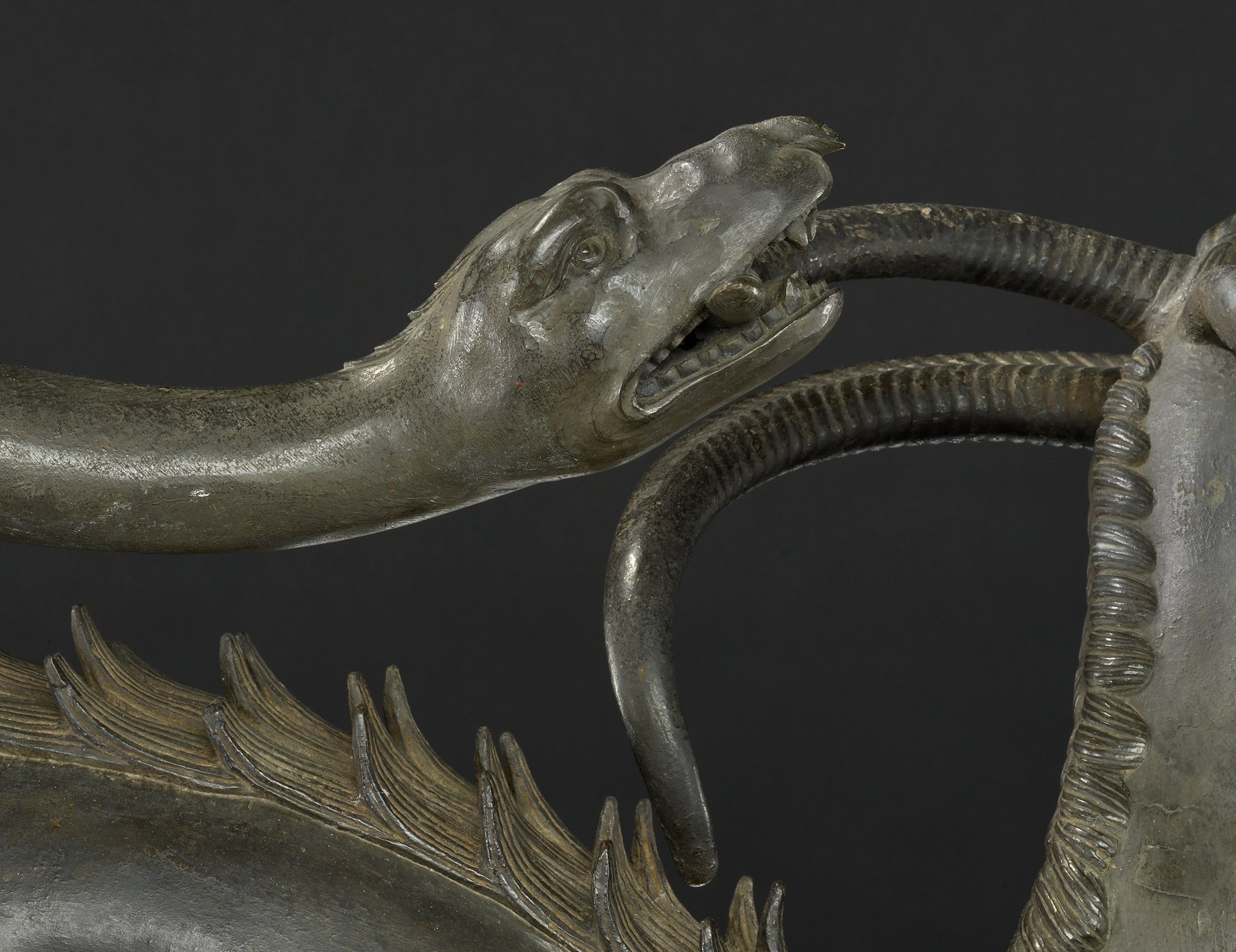
The Chimaera's snake tail biting the antlers of the goat coming out of its back Italian Ministry of Culture, National Archaeological Museum of Florence
The new gallery is part of a major redesign of the museum and its exhibitions—the first since the catastrophic Florence flood in 1966. That November, heavy rains caused the Arno River to burst its banks: raging and contaminated waters devastated the museum and its collections.
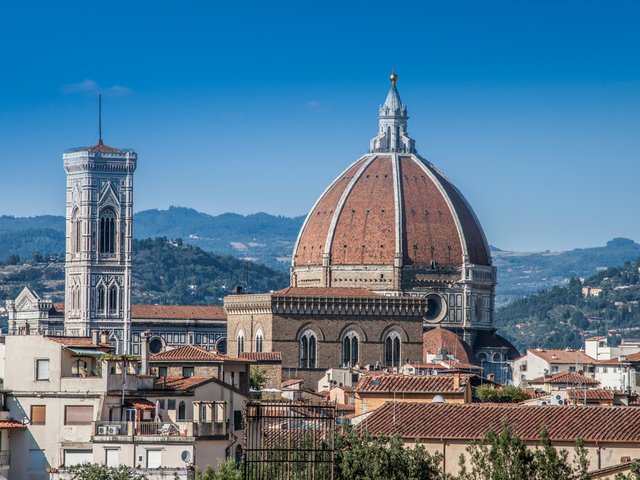
Conservators have spent years restoring the artefacts; now the museum, too, is undergoing a comprehensive renovation with refitted galleries, a new conservation lab and a new visitor experience. Its director, Daniele Federico Maras, says the improvements will not only protect and conserve the holdings for future generations, but also bring this world-class collection new relevance for visitors to Florence.
“It’s always a matter of people,” Maras says. “We are not thinking about objects. We are using the objects to get in contact with people of the past, to take a message from the past to the people of the present.”
Connecting people to artefacts
Cristiana Zaccagnino, a Florentine and professor of classics and archaeology at Queen’s College, Kingston, Ontario, remembers visiting MAF as a child and being fascinated by the Chimaera’s visceral presence, which helped spark the curiosity that shaped her career. Zaccagnino says Maras’s approach to storytelling will bring the collection closer to the museum’s visitors, because “he’s explaining more of what the artefacts represented in the ancient world, but also after the ancient world, which is very important to connect people to these artefacts”.
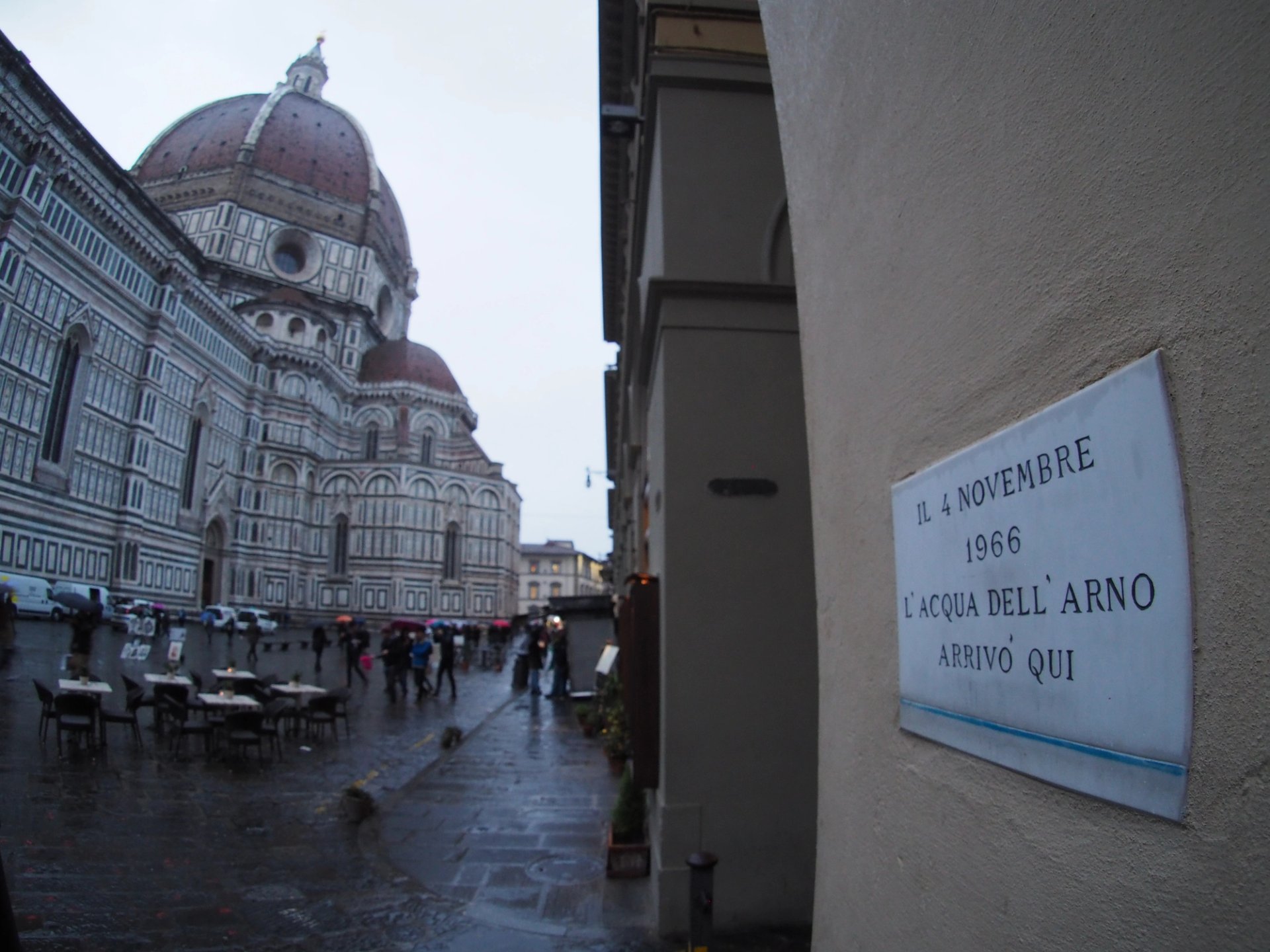
A plaque close to Florence's Cathedral of Santa Maria del Fiore shows the water levels reached during the flood on 4 November 1966
Photo: PetroliniVideo
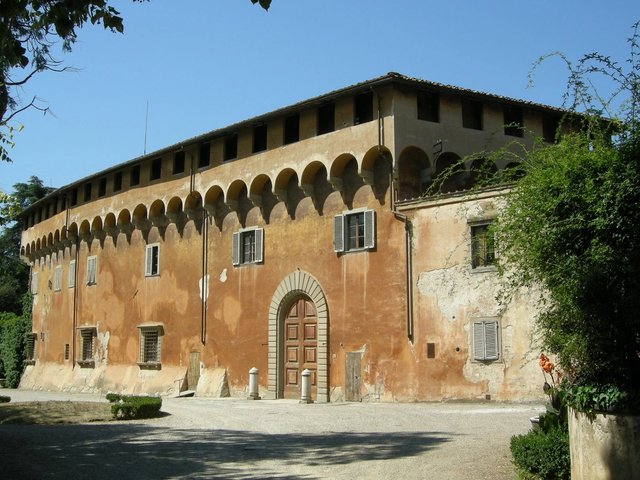
Much of the work is scheduled to be completed in 2026, in time for the 60th anniversary of the Florence flood. The plans, which Maras points out were largely in place before his appointment in 2024, will include a new entrance, improved accessibility, a reconfigured layout across the sprawling 17th-century Palazzo della Crocetta, and a newly designed great hall to orient visitors to the museum’s offerings.
The renovation will also include upgraded lighting, electrical, heating and air-conditioning systems, and earthquake protections. Much of the project’s financial support came from the European Union-funded PNRR (National Recovery and Resilience Plan) and associated project for the removal of physical and cognitive barriers.
“The museum is a living theatre. It is a neverending enterprise,” Maras says, adding that he hopes this reinvention of the museum will expand appreciation for Florence’s cultural heritage beyond its iconic Renaissance offerings.