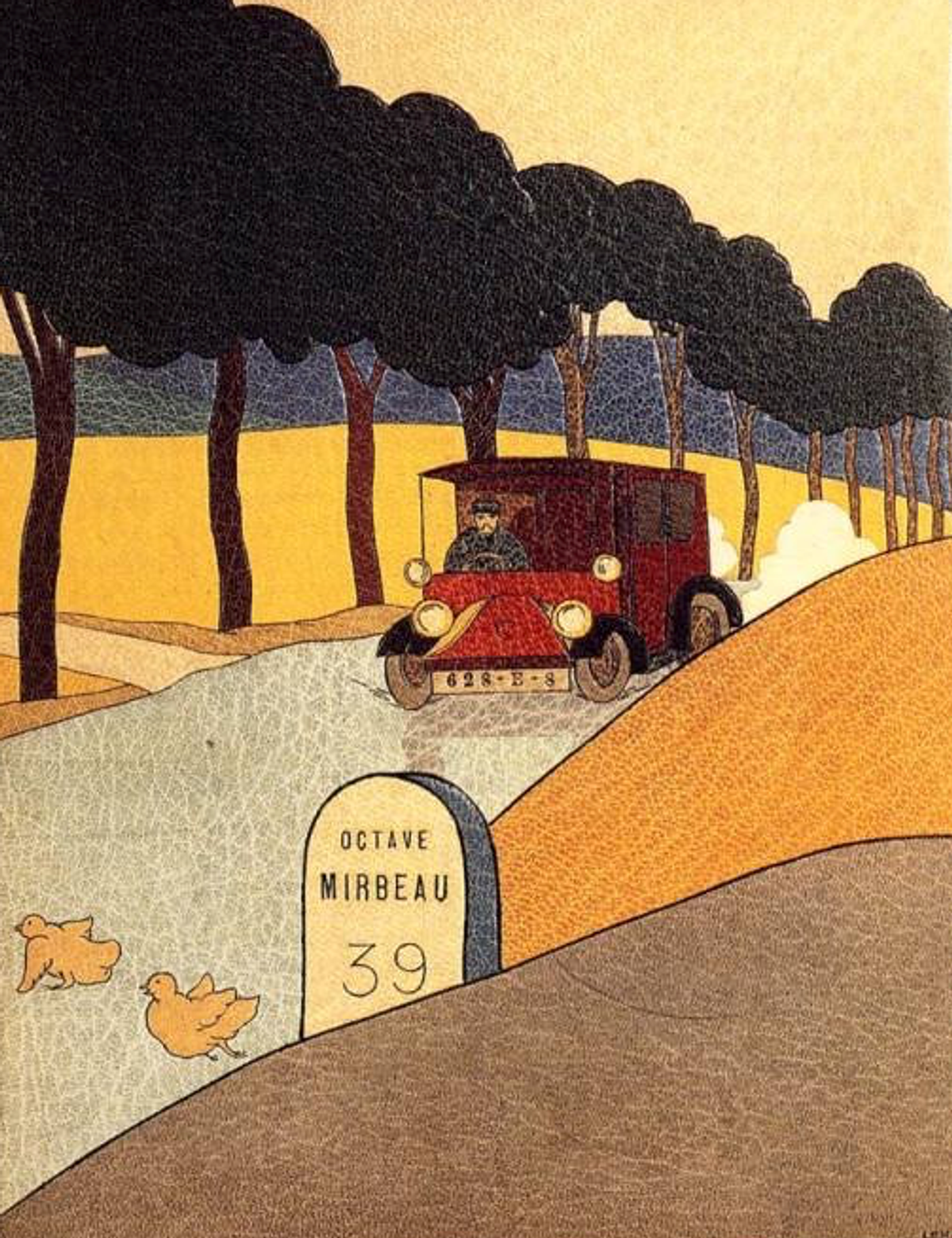

In 1907 Octave Mirbeau, a Parisian avant-garde writer, published a fictional travelogue about a drive through northern Europe, which included a Van Gogh pilgrimage. This was well before the artist had achieved fame.
Mirbeau entitled the book La 628-E8, after the licence plate of his own car. Automobiles were then still a rarity on French roads, with only around 25,000 vehicles in the entire country.
The writer, a passionate art lover, was devoted to Van Gogh’s work, having been the first person to buy his paintings after the artist’s death. In 1891 he had paid 600 francs (then £24) for Three Sunflowers (August 1888) and Irises (May 1889).
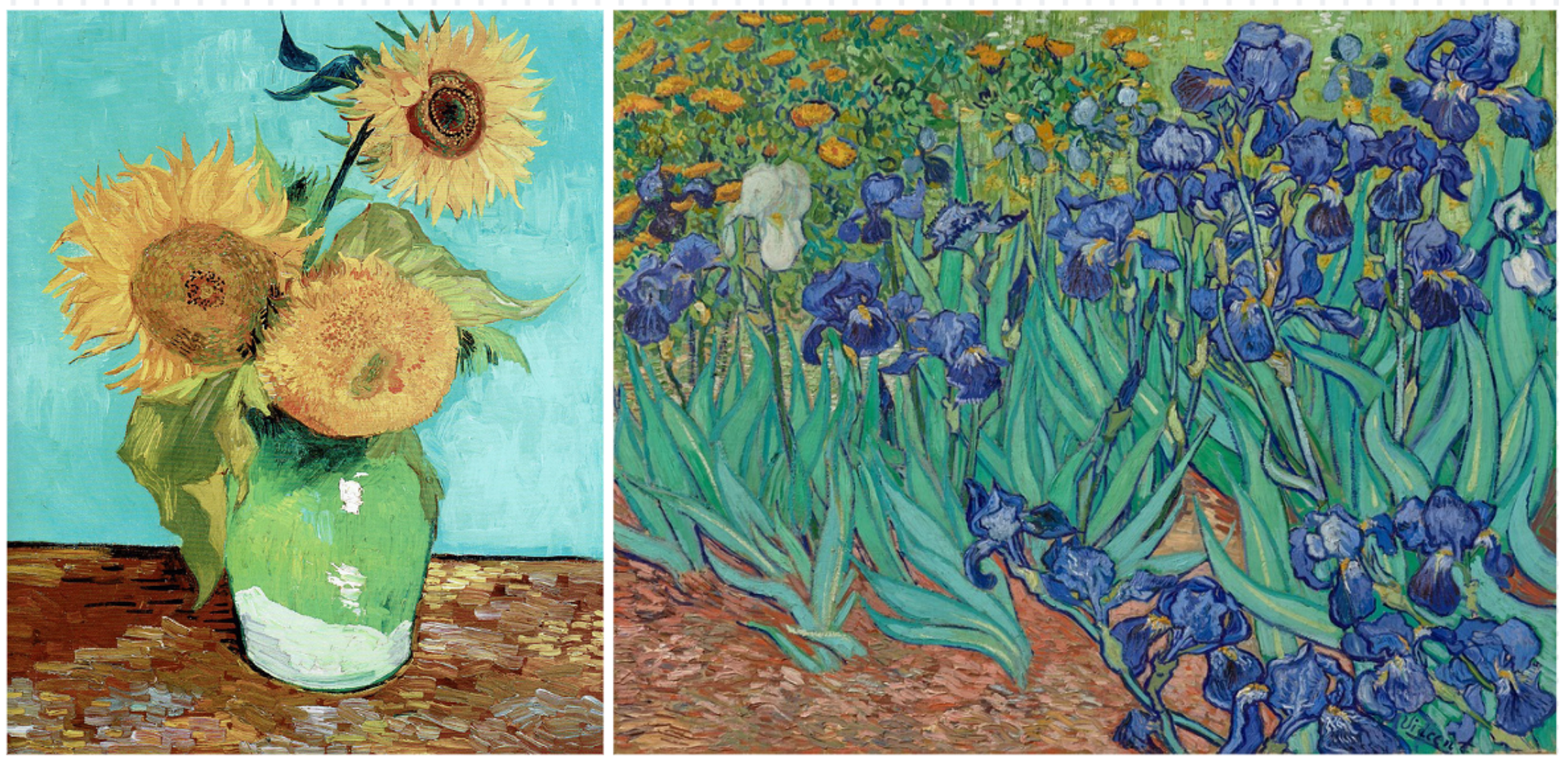
Van Gogh’s Three Sunflowers (August 1888) and Irises (May 1889) Private collection and J. Paul Getty Museum, Los Angeles
Soon afterwards Mirbeau was visited by his friend Claude Monet, who on seeing the two floral paintings commented: “How could a man who has loved flowers and light so much and has rendered them so well, how could he have managed to be so unhappy?”
Driving in Van Gogh’s footsteps
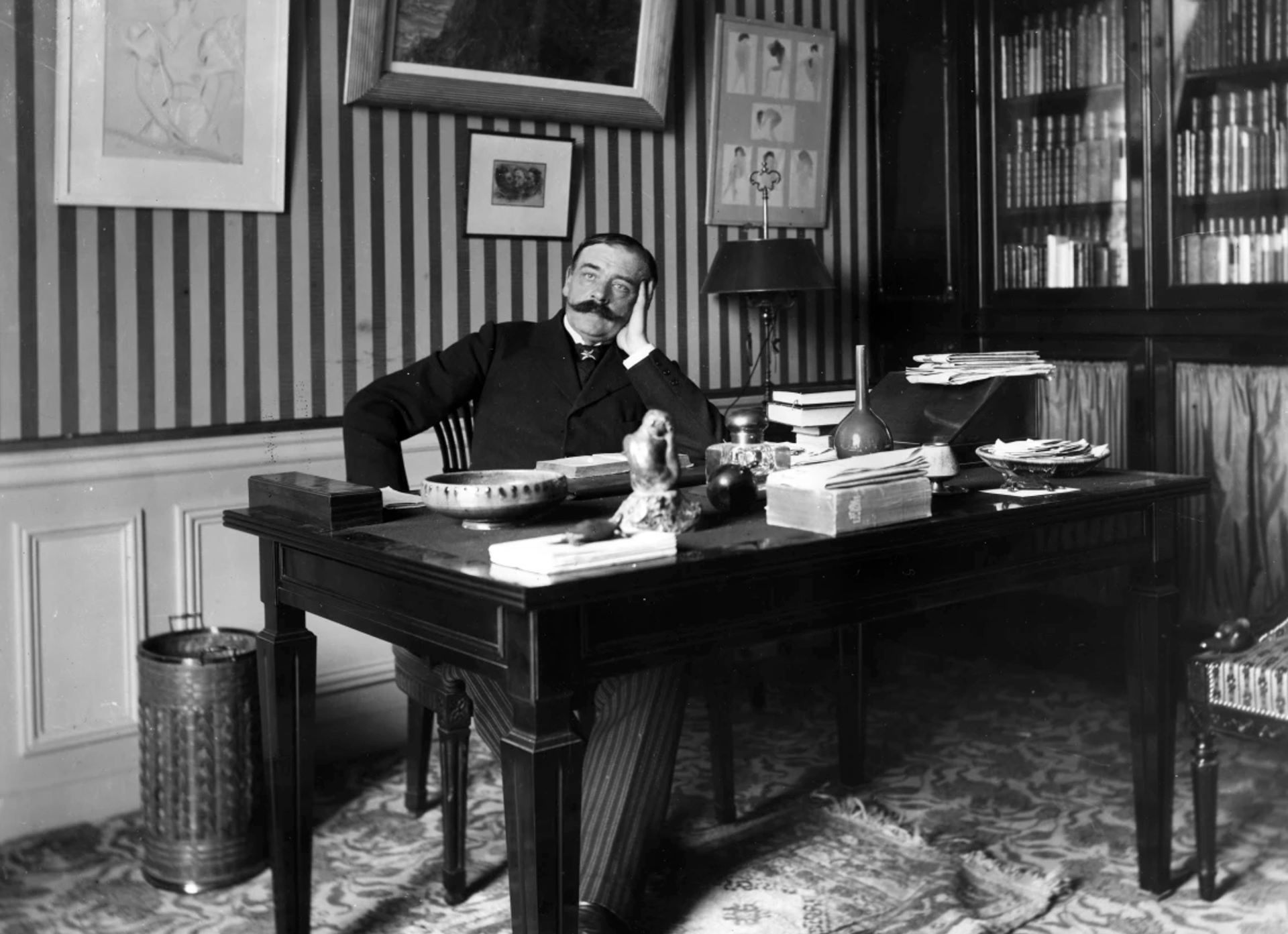
Mirbeau at his writing desk (1897) Photograph by Paul Cardon
Mirbeau wrote widely—as a novelist, critic and playwright—and in 1907 he published a fictional travelogue, La 628-E8. In the book, which includes much cultural commentary, the traveller drives from France through Belgium and the Netherlands to northern Germany. For Mirbeau, the automobile represented the idea of speed.
En route, the traveller sets out to discover Van Gogh’s birthplace—and tries to track down people who had known the artist. His car, licensed as 628-E8, was the same model as that actually owned by Mirbeau, manufactured by the Charron company.
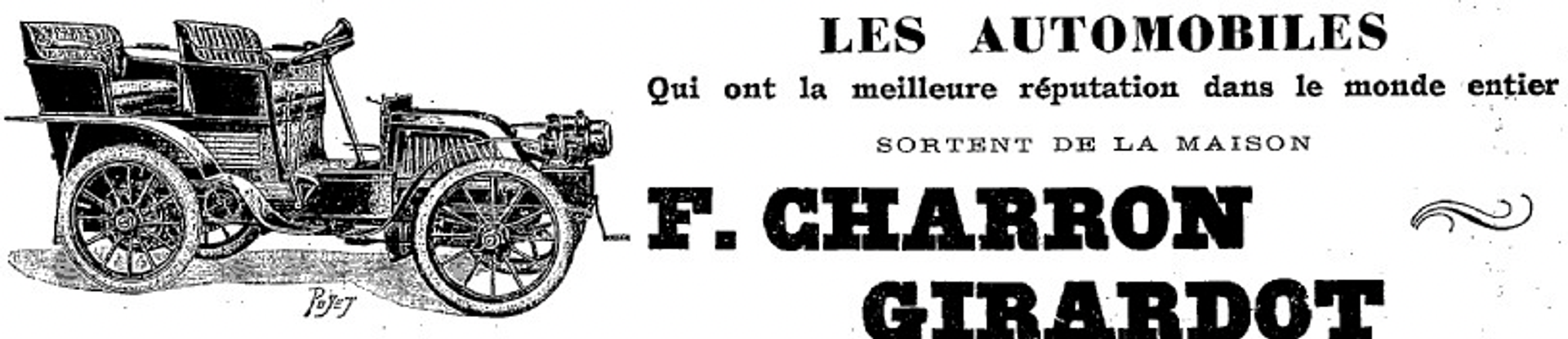
Advertisement for a Charron car Le Journal Amusant, 5 March 1904
In La 628-E8, the traveller stops in Breda, in the south of the Netherlands, described by Mirbeau as “the town where Vincent van Gogh was born”. When the traveller asks people about the artist, “people merely gaped at me… nobody knew him”.
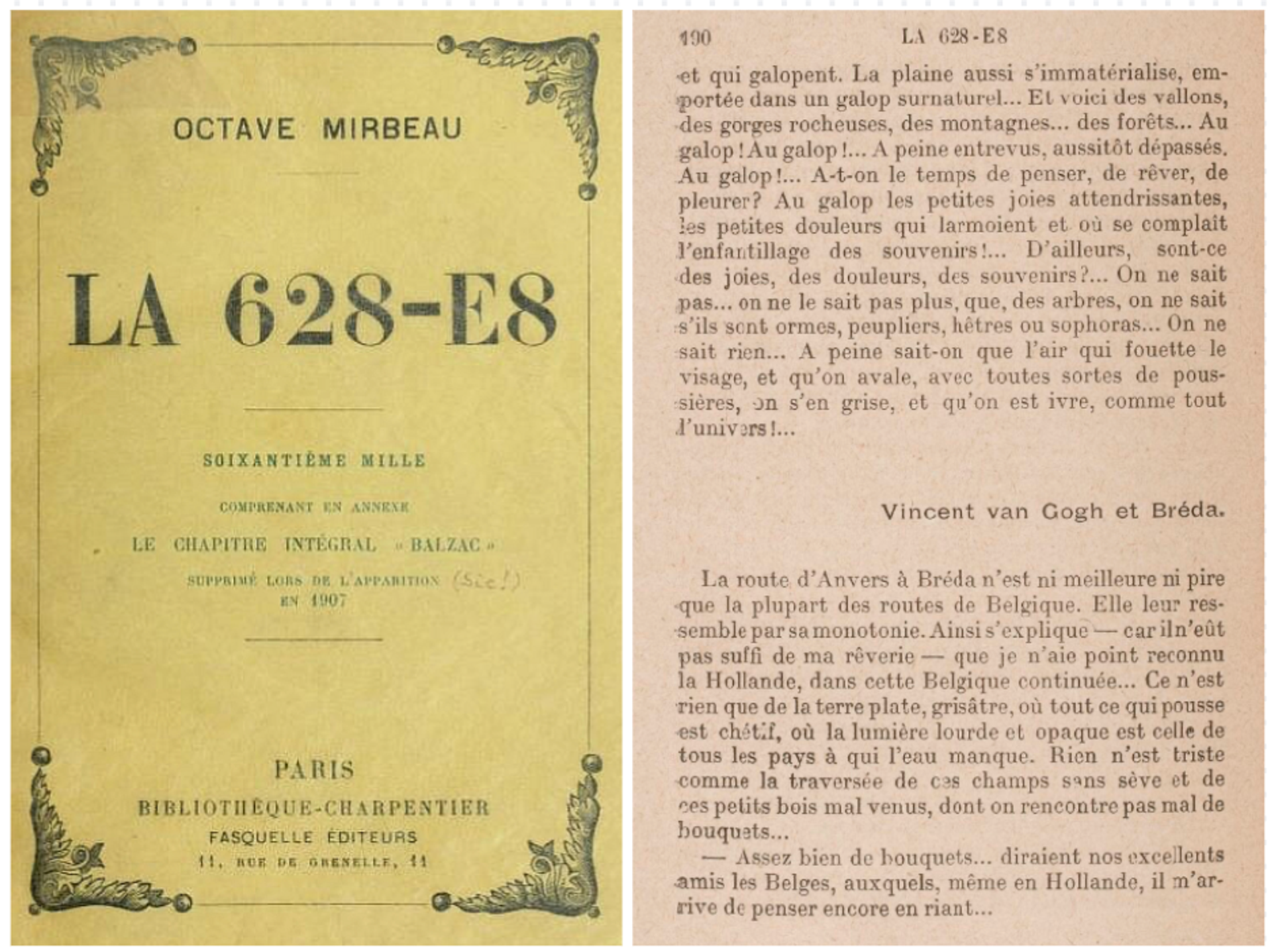
The original edition (1907) of Mirbeau’s La 628-E8, with the title page and the start of the Van Gogh section Published by Charpentier, Paris
The traveller patiently told those that he encountered in Breda that Van Gogh was “a great, pain-ridden artist who died, still young, not all that long ago”. He reminded them of the artist’s “tragic face, his stubborn forehead, his frenzied gaze, his short fair beard”. There was still no sign of recognition from the people of Breda.
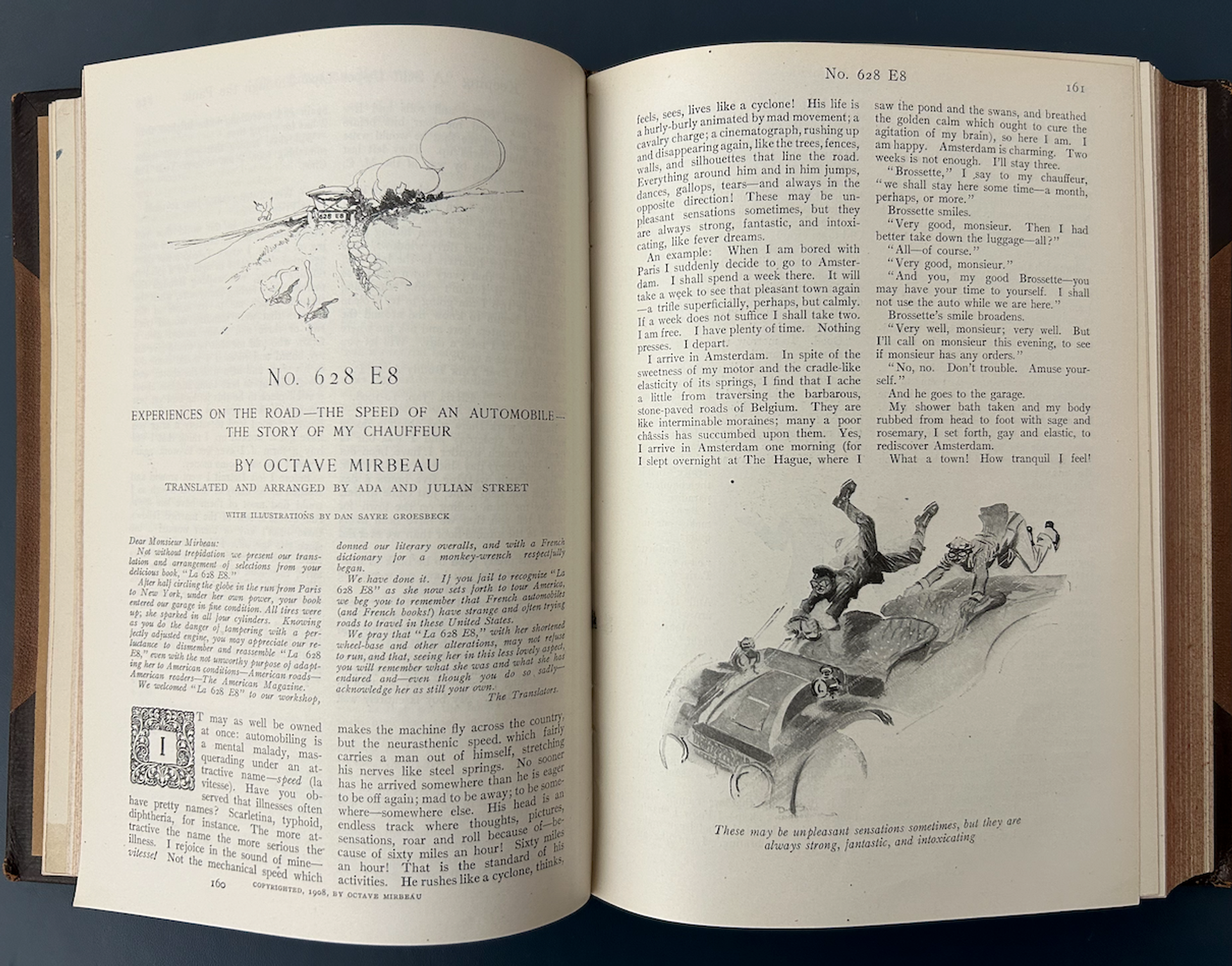
English translation of extracts of No. 628 E8 The American Magazine (June 1908)
The problem was that Mirbeau’s pilgrim had ended up in the wrong place. His traveller drove to the town of Breda, which is 15km north of Van Gogh’s actual birthplace, the village of Zundert.
Perhaps Mirbeau was confused, since Van Gogh’s mother and sister Wil later lived in Breda. Maybe it was simply a mistake, since at this time so little had been published about Van Gogh. Or possibly Mirbeau chose Breda because it was larger and would have been more well known to his readers than Zundert.
In 1908, a year after Mirbeau’s original publication, the artist Pierre Bonnard drew over 100 illustrations for a deluxe edition of La 628-E8. Bonnard had been a member of the Nabis (Prophets) group, followers of the Post-Impressionists—and admirers of both Paul Gauguin and Van Gogh.
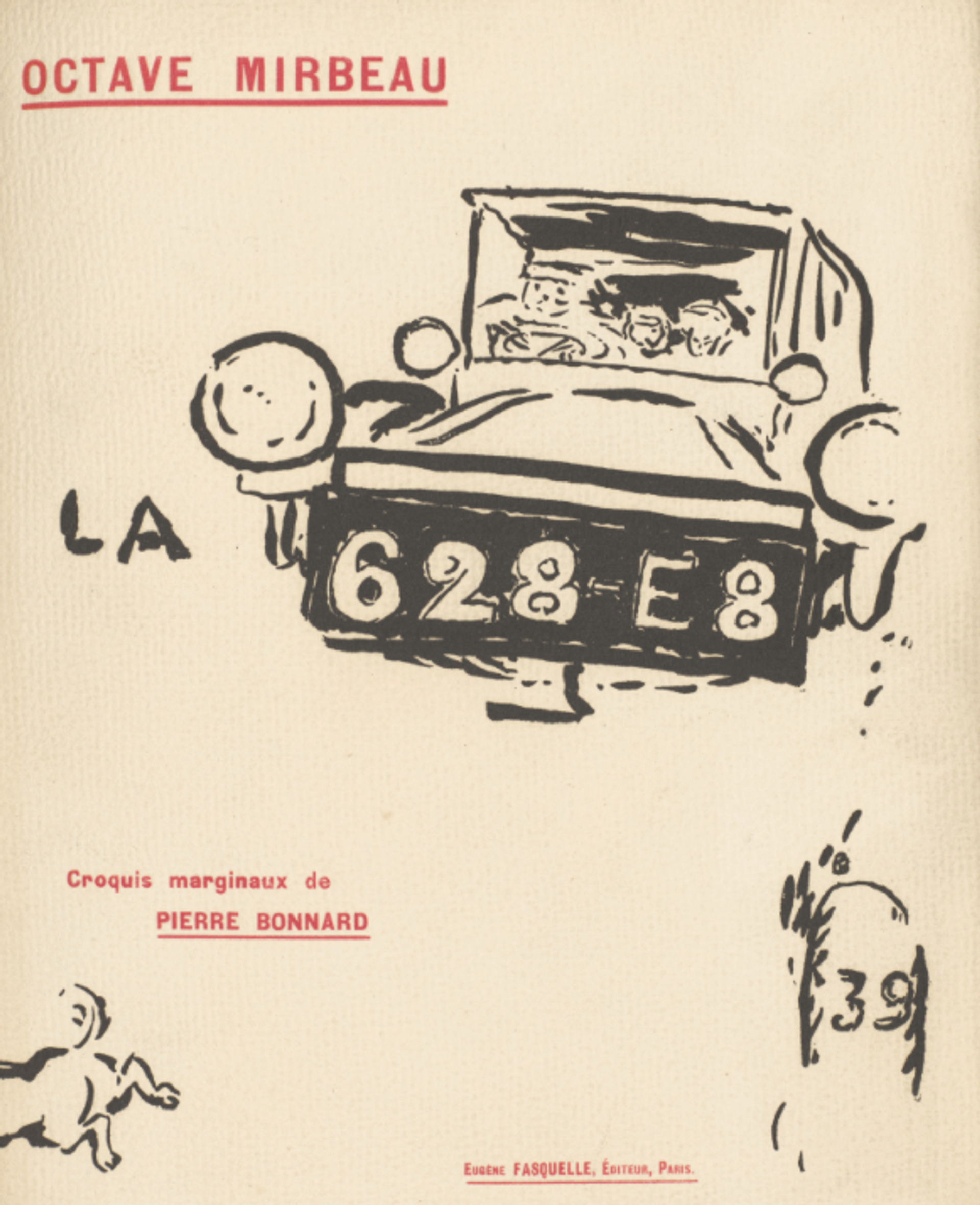
Pierre Bonnard’s cover for his illustrated edition (1908) of La 628-E8 Charpentier and Fasquelle, Paris
Other Van Gogh news
Van Gogh’s drawing of The Sower (September-October 1881) is to be auctioned by Ketterer Kunst in Munich today (5 December). The estimate is €80,000-€120,000, a very modest sum for a Van Gogh work, but this is an early drawing, done at his parents’ home in Etten. The sower was a motif which would frequently reoccur in his later art.
The Sower was sent to Van Gogh’s fellow artist, Anthon van Rappard. After Van Rappard sold the drawing it went to H.P. Bremmer, a critic and early admirer of Van Gogh, and remained with his family for nearly 70 years. It has only been exhibited once, in 1961, and is now being reproduced in colour for the first time.
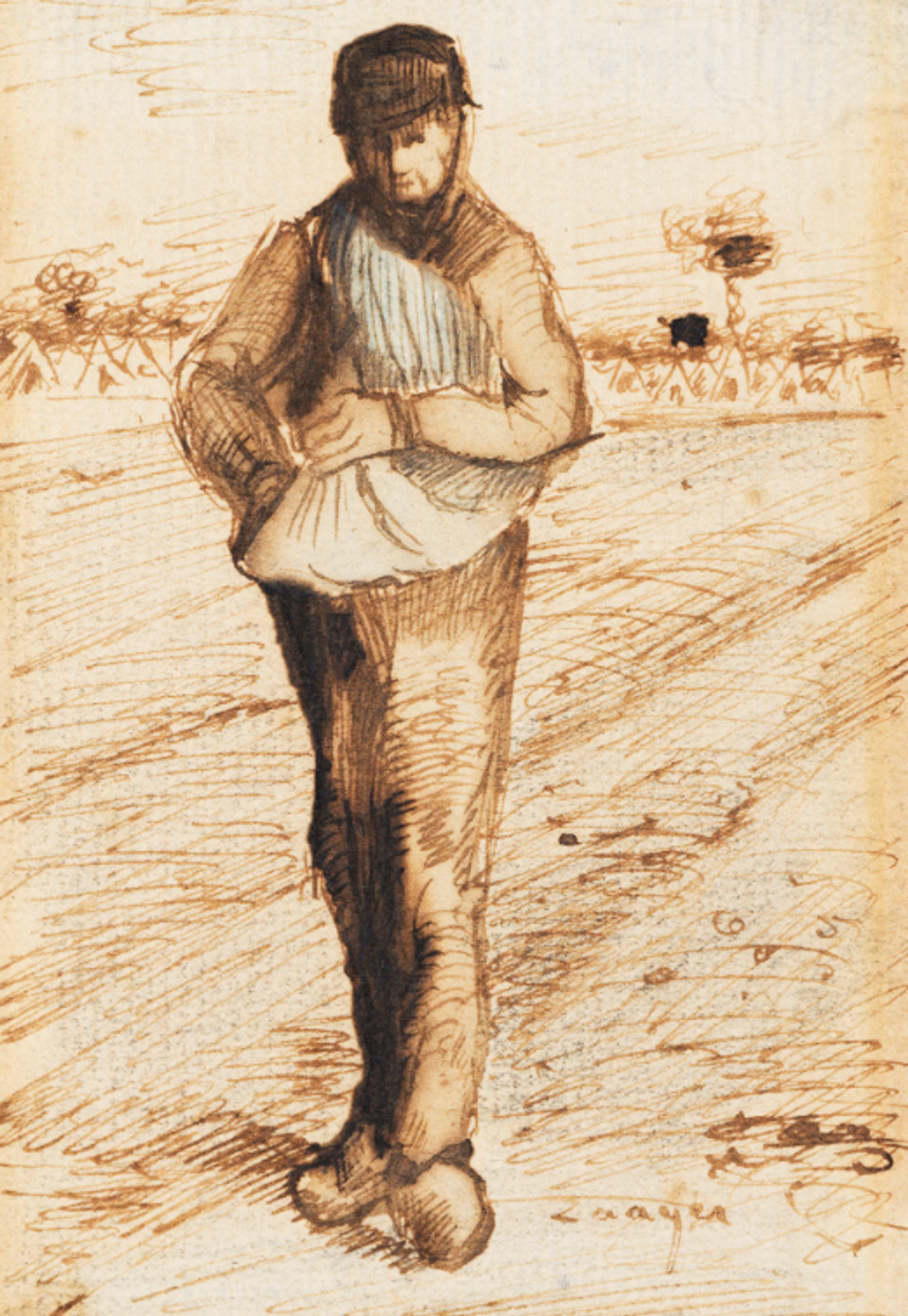
Van Gogh’s The Sower (September-October 1881) Ketterer Kunst, Munich