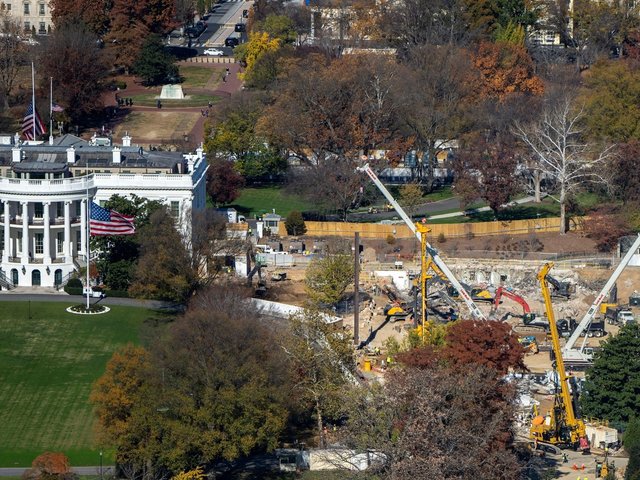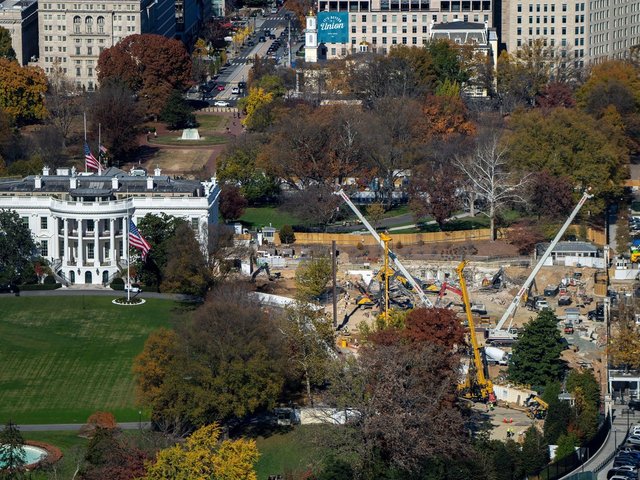
On Tuesday 16 December, after hearing oral arguments from the National Trust for Historic Preservation, a federal judge chose not to halt construction of US president Donald Trump’s controversial White House ballroom.
The National Trust had filed a lawsuit on 12 December against the National Park Service (NPS), seeking to stop the project at least temporarily. The National Trust argued that the ballroom’s construction was illegal, as the government had not gone through lawfully mandated review processes—including congressional approval—nor had it sought public comment before tearing down the entire East Wing of the White House to make space for Trump’s privately funded, $400m pet project.
“We are fully committed to upholding the interests of the American people and advocating for compliance with the law,” said Carol Quillen, president of the National Trust, in a statement following the hearing, “including review by the National Capital Planning Commission and an opportunity for the public to provide comment and shape the project.” The National Trust was created by Congress in 1949 to aid in the preservation of historically significant sites across the country.
Minimal basement aesthetics
The presiding judge in the case, Richard Leon of the US District Court for the District of Columbia, was appointed to the bench in 2002 by George W. Bush. While Leon declined to halt the project, arguing that the current below-ground construction is less of a concern than the aesthetics above ground, he said he would hear arguments in January before making a decision on whether to issue a preliminary injunction. Leon added that the Trump administration must deliver on its promise to submit finalised plans for the project to federal review panels by the end of December.
This judge’s decision may have been influenced by the government’s contention that the construction of the ballroom was a matter of national security. Although the documents provided to the judge have not been made public, it is a known fact that there has been a presidential bunker located under the now demolished East Wing since the 1940s.
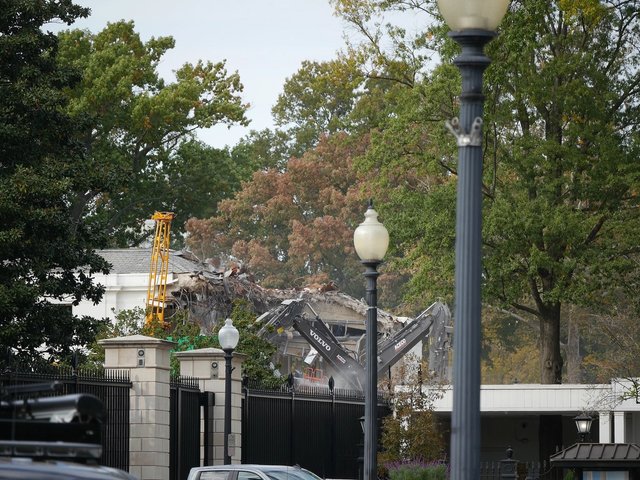
On the same day the judge heard arguments in the case, the Maryland congressman Jamie Raskin introduced legislation to “protect the historic character of the White House, requiring a public review process for renovations to the building”. Written with help from the American Institute of Architects, the bill seeks to extend the jurisdiction of the National Historic Preservation Act to the White House and its grounds, which are currently exempt.
The NPS estimates that the 90,000 sq. ft ballroom will be completed in summer 2028, some months before Trump leaves office. Superstructure work is scheduled to begin in the spring of 2026, although the architectural plans have not yet been finalised. Trump fired the project's original designers, McCrery Architects, and brought on a new firm, Shalom Baranes Associates.