UK museums are asking members of the public to help them define future policy and direction—even encompassing funding decisions—as part of a growing trend towards embracing citizens’ assemblies.
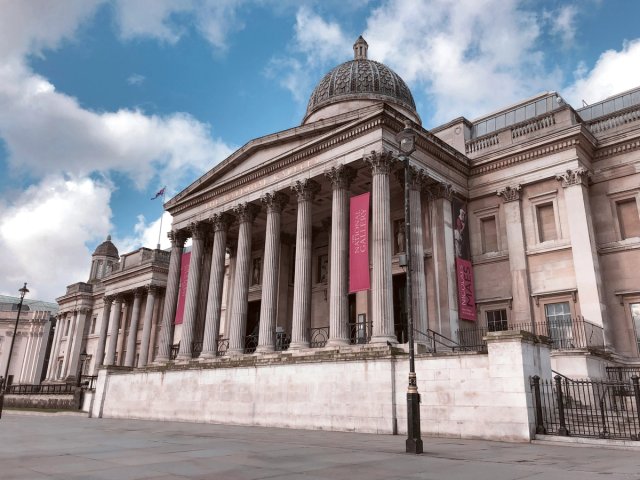
The National Gallery in London launched its NG Citizens panel last year, aiming to put audiences at the heart of its decision making. It follows other institutions, including Birmingham Museums Trust (BMT), which launched a “citizens’ jury” comprising 26 local residents in 2024. The Imperial War Museum and London’s Migration Museum have also announced plans to set up assemblies.
To the National Gallery, “it is a culture-shaping step that deepens our relationship with audiences across the UK and ensures we remain relevant, inclusive and genuinely reflective of the public we serve”, Jane Knowles, the museum’s director of public engagement, said in a statement. “This isn’t a consultation, it’s a collaboration.”
Citizens’ assemblies have been gaining momentum in countries around the world, making decisions on issues ranging from national constitutions to electricity supply, from public transport to municipal budgets. Advocates say they can help raise awareness of policy-making in the general public, increase the public’s sense of democratic agency, build bridges between diverse communities, and give institutional policy-makers greater insight into the views of informed citizens, representing a cross-section of society, after debate.
Lucy Reid at Democracy Next, a Dutch research and advocacy group, says that museums can play a particularly important role in advancing the use of such panels. “Museums are relatively trusted compared to many institutions, which means they have a responsibility—and an opportunity—to model what democratic decision-making can look like,” says Reid, whose organisation has advised BMT and two German museums, the Bundeskunsthalle in Bonn, and the Decorative Arts Museum of the Dresden State Art Collections, in setting up assemblies.
“When a museum demonstrates that randomly-selected ‘ordinary’ citizens can grapple with complex trade-offs and produce thoughtful recommendations, it challenges assumptions about who is seen to be capable of making decisions,” she says. “We need to see major cultural institutions like museums, funders and, for instance, the BBC following Birmingham’s lead. These are publicly-funded institutions—and the public should have genuine power in shaping their future, for all of us.”
But the trend has alarmed some. “I do not want the National Gallery to be asking a selection of individuals including those with no knowledge of art or who lack cultural formation of any kind to be deciding on the exhibitions I go to or on acquisitions,” the cultural commentator Melanie McDonagh wrote in The London Standard newspaper last year.
Shaping principles, guiding decisions
The National Gallery assembly will not directly select exhibitions or individual works, a spokesperson says. “Instead, it will help shape the principles that guide the gallery’s decisions: its purpose, priorities and approach to public value.”
To form the National Gallery panel, invitations were sent out to 15,000 households across the UK. More than 50 participants were then selected via a “civic lottery” run by the Sortition Foundation, which used a selection technique to draw a representative sample of citizens.
The first session of NG Citizens took place at the gallery last November, bringing together 51 people from across the UK. “In the first session, assembly members spent time getting to know one another and beginning to connect with the gallery itself,” the spokesperson says. Themes explored include “Can art ever be open to everyone?” and “What is the social value of art?”.
The assembly is due to meet from November 2025 to March 2026, hearing from experts, artists, staff, and community representatives during five sessions, and will work collaboratively to develop a set of final recommendations. The Citizens’ Panel, a smaller, long-term group of around 20 members, will be formed after the assembly concludes in March this year, the gallery spokesperson says.
“I think this is a welcome approach to better understanding audiences’ and citizens’ interests,” says Maurice Davies, a UK museums consultant. “Public museums are funded from taxes paid by everyone, so it is appropriate that systems are in place to hear a version of everyone’s views.”
The interesting question is the extent to which the museum then acts on the opinions and decisions of the citizens’ juries and panels, he concludes.
Reid at Democracy Next agrees. “The limitation isn’t citizens’ capacity—it’s whether institutions are brave enough to genuinely share power,” she says. “Birmingham Museums Trust was willing to ask genuinely difficult questions at a critical moment: what do the people of Birmingham need and want from their museums? How should they prioritise resources when the museums are in real peril?”
BMT’s co-chief executives, Zak Mensah and Sara Wajid, have described the jury as“critical in developing a strategy and plan”. Its recommendations included continuing to drive for corporate sponsorship—a Netflix-sponsored exhibition based on the TV series Peaky Blinders was suggested—along with challenging the city council’s planning rules that prevent the museums from carrying out promotional activities at its entrances.
Input into funding allocation
Crucially, the citizens’ jury also had an influence on how funding was allocated. Last October, BMT received £995,000 from the Museum Renewal Fund aimed at UK museums most at risk from acute financial pressures caused by rising operating costs. The jury’s recommendations helped shape how the funding was allocated, a trust spokesperson says.
The New Art Exchange gallery (NAE) in Nottingham was also a forerunner in this field, claiming its “Voice Assembly is the first permanent citizen-led assembly embedded into a cultural institution globally”. The assembly met over ten months starting in May 2024. Its recommendations, which included developing an international artist residency programme, are incorporated into NAE’s strategic plan with 65% delivered, a spokesperson says.
Meanwhile in Germany, museums have used citizens’ assemblies as a way of exploring how to be more democratic. The Bundeskunsthalle in Bonn, and the Decorative Arts Museum of the Dresden State Art Collections launched a joint “social forum” in 2023. The citizens’ assembly for each institution comprised about 30 people, selected by lottery and broadly representative of local communities, who met over four days. Recommendations for the Bundeskunsthalle included inclusivity training for staff and simpler jargon-free language in exhibitions.
The National Gallery has also pledged to give its assembly real weight in decision-making. “It’s a collaborative process where participants play an active role in shaping ideas,” the spokesperson says.