A researcher has developed a cipher that might provide insights into how medieval scribes produced the Voynich Manuscript’s unreadable writing.
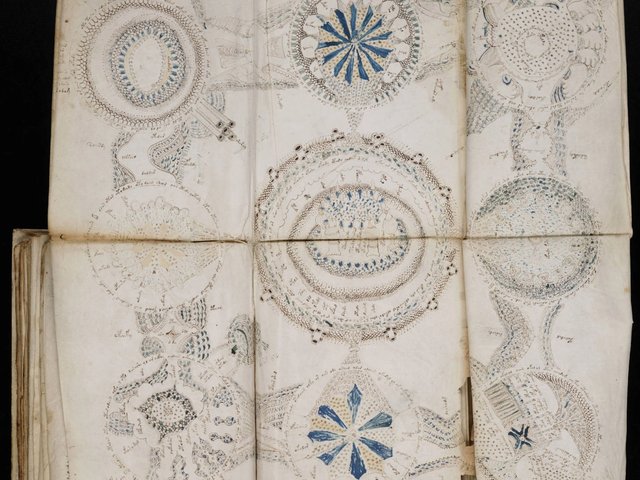
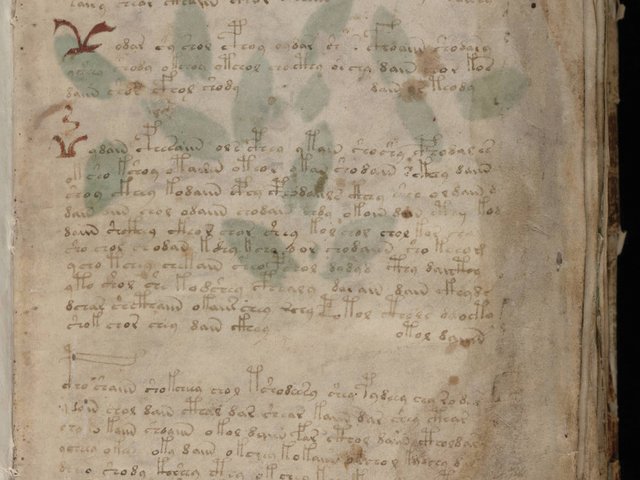
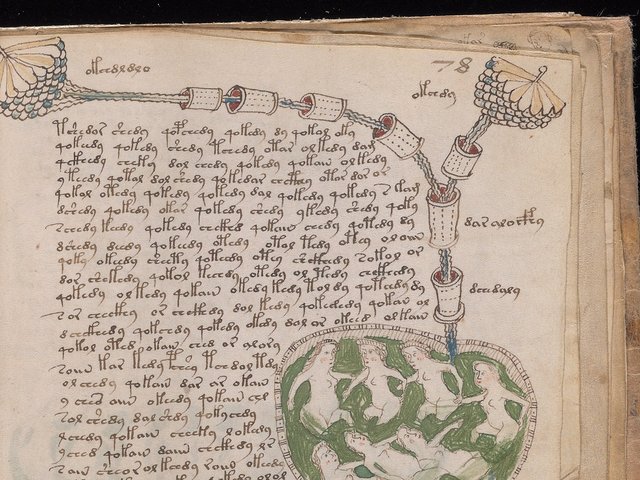
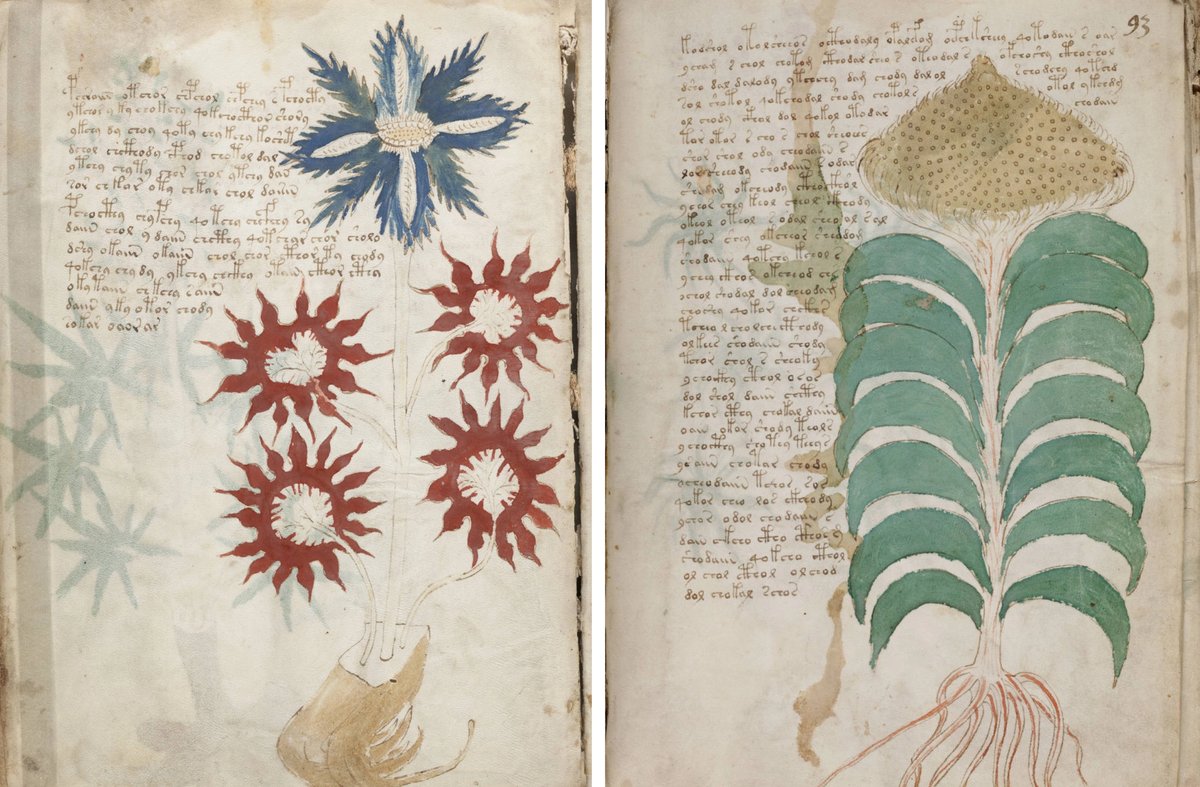
Created in the early 15th century, and often called the world’s most mysterious manuscript, the Voynich Manuscript bears unusual illustrations and illegible writing in a unique script. When statistically analysed, “Voynichese”—as the script is known—reflects some characteristics of a typical language, but in other ways, behaves strangely. This has led experts to argue that its text could be an unknown or artificial language, gibberish, or a cipher.
Now, the science journalist Michael A. Greshko has developed an encoding method that replicates some of the unusual features of “Voynichese”. He has called this the Naibbe cipher, after a card game known in Italy in 1377.
“This encoding method leads to a decipherable secret message consisting of ‘words’ whose internal structures, lengths, and frequencies replicate what is observed within portions of the Voynich Manuscript,” says Greshko, the author of a research paper published in the journal Cryptologia.
“The Naibbe cipher is my attempt to find a way to encode something like Latin by hand as text that partially mimics the Voynich Manuscript's strange properties. The cipher works by randomly breaking a text into chunks that are one or two letters long.
“The cipher then disguises these chunks as Voynichese words, by encoding individual letters as groups of Voynichese glyphs through the use of six different substitution tables. To reliably ensure that these tables are chosen in certain average proportions, the Naibbe cipher uses a draw from a deck of playing cards to determine which table encodes a given letter.”
When Greshko experimented with his new encipherment method—for example, encoding the start of Julius Caesar’s De bello Gallico—he found that the resulting ciphertexts reproduced some of the Voynich Manuscript’s unusual features.
Nonetheless, he emphasises that the Naibbe cipher cannot be exactly how the Voynich Manuscript was made. It doesn’t replicate all of the manuscript’s important properties, and doesn’t conclusively prove that the Voynich text must contain meaning.
The Naibbe cipher does, however, provide a way to encode Latin and Italian in a Voynich-like way, and it may help experts to narrow down how medieval scribes might have created the Voynich Manuscript’s text.
“Linguistically speaking, the Voynich Manuscript is as far from most natural languages as London is from Sydney,” Greshko says. “Extending this analogy, the Naibbe cipher is like mapping one of the Silk Road's many possible land routes: a demonstration that at least some of that vast linguistic distance could be navigable.”