A supposedly haunted palazzo on Venice’s Grand Canal that was once painted by Claude Monet and celebrated by the English art historian John Ruskin has returned to the market, after being cleaned up to appeal to prospective buyers.
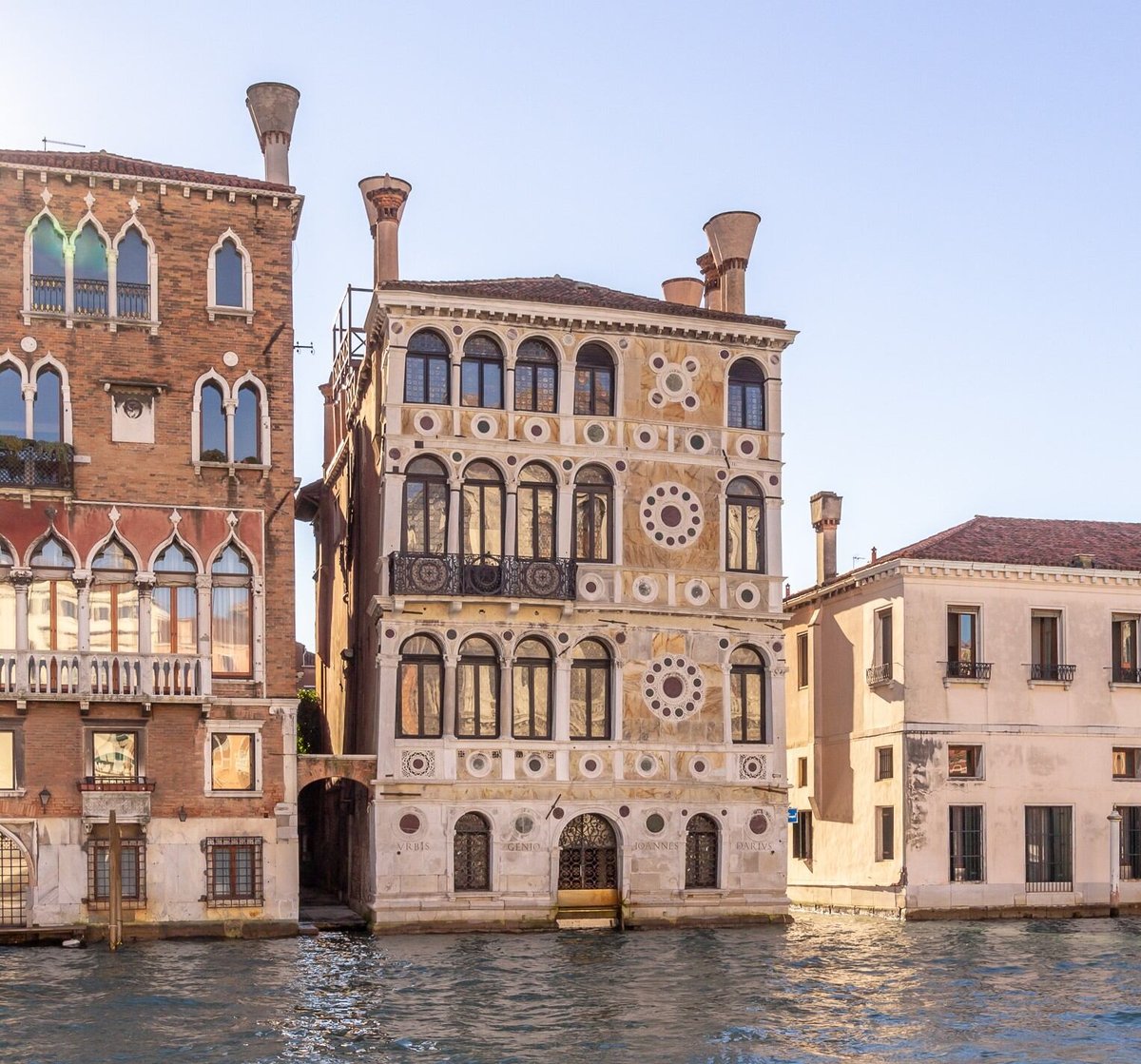
Built in 1486 for Giovanni Dario, a patrician and former ambassador of the Venetian Republic, Ca’ Dario spans five floors and boasts pillared marble bathrooms, an internal Moorish fountain, grand halls and internal decorations carved in Istrian limestone. Its most distinctive feature is its façade, patterned with circular designs in polychrome marble. The building, meanwhile, stands just metres from the Modern art-filled Peggy Guggenheim Collection, one of the city’s most visited attractions.
Monet painted the palazzo during his only trip to Venice in 1908, depicting it with the same hazy fluidity as the waters of the canal it overlooks. Ruskin sketched its façade in The Stones of Venice, his three-part study of Venetian architecture published between 1851 and 1853, praising the design as “Renaissance engrafted on Byzantine”. The British-American writer Henry James described the building in his 1909 travelogue Italian Hours as resembling a house of cards that “would be fatal to touch”.
The lavish residence has been spruced up before being put up for sale. Arnaldo Fusello of Christie’s International Real Estate, which is overseeing the sale, tells The Art Newspaper that the gardens have been tidied, as has the courtyard, and trees and overgrown shrubs have been pruned. The listing indicates that the price is available on request. Fusello declined to disclose a figure but says interest from potential buyers had been “very high”.
Even so, the palazzo’s eerie reputation may complicate the sale. The operatic tenor Mario Del Monaco reportedly abandoned plans to buy Ca’ Dario after having a serious car accident while on his way to visit it in 1964—becoming convinced the building was cursed. In the 1970s, the then manager of The Who, Kit Lambert, purchased the property, though reportedly spoke of staying elsewhere to “escape the ghosts that haunted him” there. Raul Gardini, the industrialist who owned it in the 1980s, became embroiled in a corruption scandal and took his own life in 1993. Later, in 2002, another figure from The Who—John Entwistle, the band’s bassist—died of a heart attack in a Nevada hotel just a week after reportedly renting the palace for a holiday.
Anna Somers-Cocks, The Art Newspaper’s founder editor and a former chair of the Venice in Peril Fund, says of the property: “An infinitely desirable palazzo, at least for its exterior. Would I accept it even as a present? Probably not—I might begin to think that every bit of bad luck I suffered was the fault of its black legend.”
Fusello says those who had viewed the property were aware of the stories of its allegedly cursed past, but denied that it had put them off buying it, claiming the tales were all false.
Ca’ Dario, owned by unnamed individuals since 2006, was briefly offered for sale two years ago before being withdrawn from the public market. Italian media had reported an expected asking price of €18m, though Fusello says the figure was never official.
Since then, Fusello says, the property has obtained a “certificate of conformity”, confirming compliance with technical standards and Italian law. The building has also undergone major restoration: the façade, for example, underwent extensive conservation between 2011 and 2015, Mario Massimo Cherido, who led the project, tells The Art Newspaper. Iron rods stabilising the building were replaced, marble slabs and multicoloured discs were removed, consolidated and cleaned, and a protective coating was applied to shield the façade from corrosive rain. “Now it’s in good shape,” Cherido says.