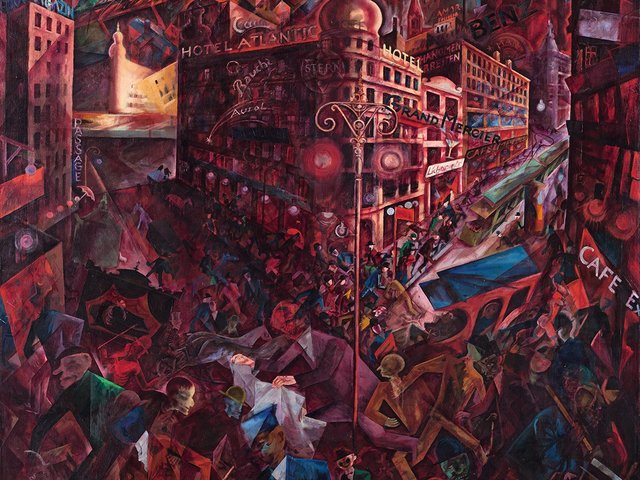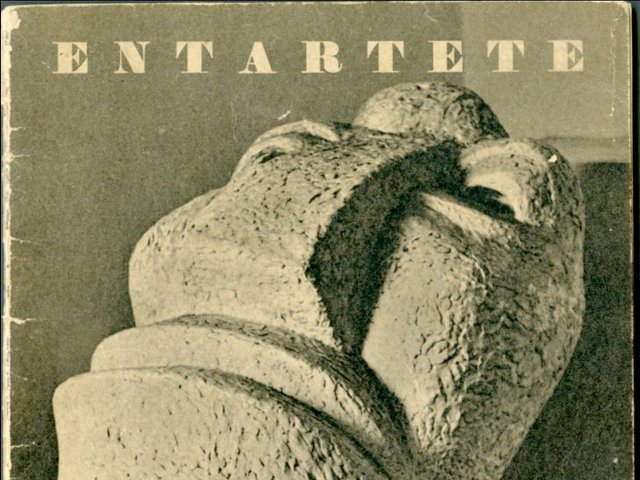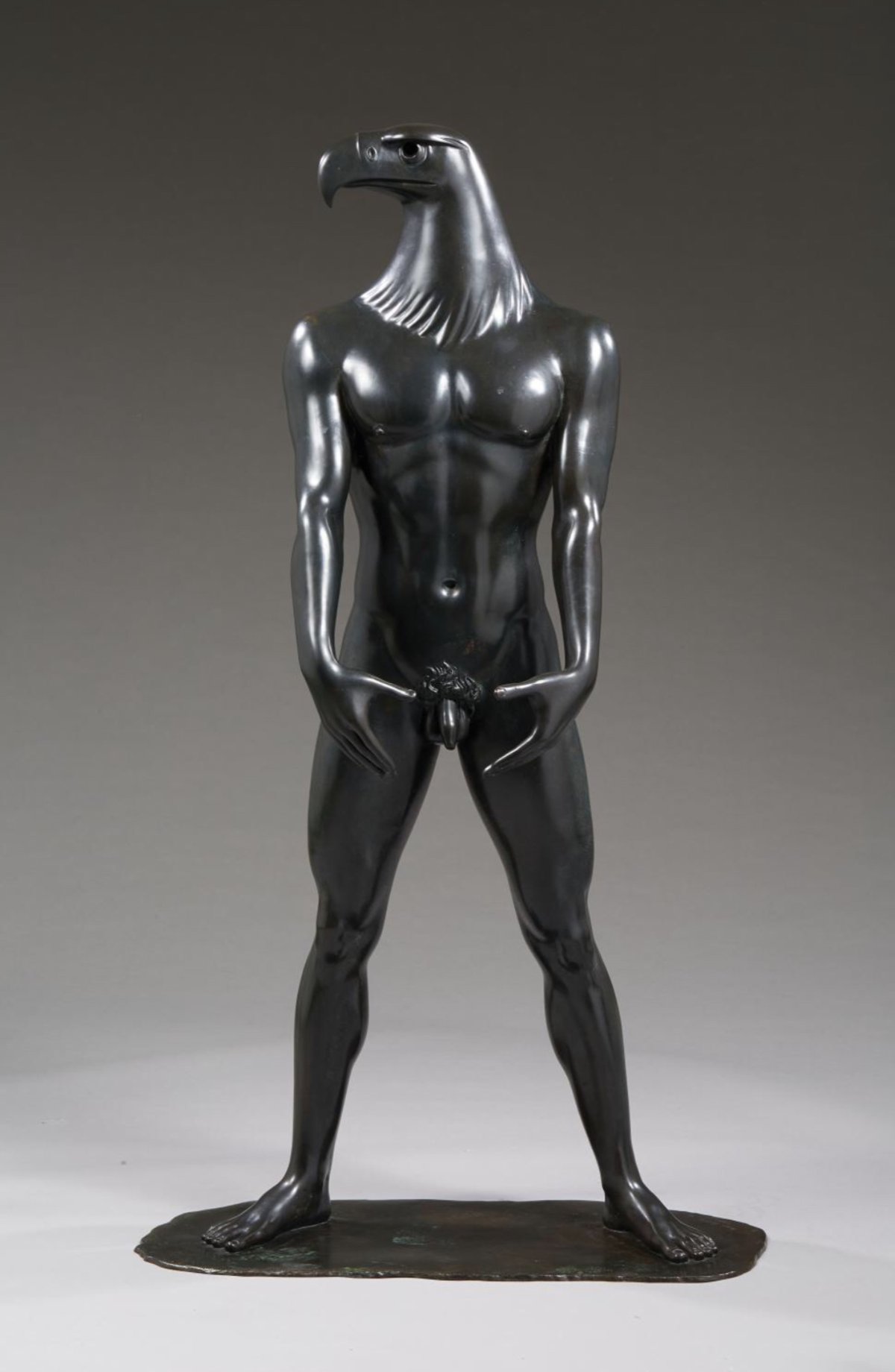
A gallery specialising in art once owned by members of the Third Reich’s leadership, including works personally owned by Adolf Hitler, has prompted conversations about how Nazi-era art circulates, how it should be contextualised and who engages with it. Recent criticism over the gallery’s decision to advertise on Truth Social, the right-wing social media platform founded by US President Donald Trump, has also sparked concerns that its marketing choice aims to appeal to proponents of Nazi ideology.
The founder of the German Art Gallery (GAG), a Dutch national who uses the pseudonym Marius Martens and spoke to The Art Newspaper on the condition of anonymity, says that the backlash to his gallery’s activities is unwarranted, myopic and reflects the current “highly reactive” atmosphere. He emphasises that he does not have nor want ties with the “far-right, and especially the neo-Nazi scene”, and that advertising on Truth Social is cost-effective and yields results, allowing his gallery to reach people from all parts of the political spectrum.
‘Creative, provocative, bold’ choice
The choice of advertising platform is a “creative, provocative and controversial, yet bold and deliberate” tactic, Martens argues, given that “around half of Americans are conservative and they voted for Trump—so if you advertise here then you’re reaching around half the US”.
But some observers have noted that the GAG’s ad seems to very directly celebrate Nazism, including the text: “Art of the German Elite, 1933-1945.” An American Truth Social user reached out to The Art Newspaper with his concerns about the ad, claiming that he is not a Trump supporter but regularly browses the platform. “There was one day that I saw a slew of the ‘German elite’ ads and I thought that was strange,” he says. “I don’t know anything about art, but I wanted to get eyes on this.”
Martens says that the use of the word “elite” in the ad is “exclusively in the sense of ‘German leadership at that time’, [and] may in no sense be falsely interpreted as ‘high morality’, ‘preferred culture’ or that nonsense”. He says the disclaimers and terms and conditions on the gallery’s website reinforce this.
Gregory Maertz, a curator, historian and author of the book Nostalgia for the Future: Modernism and Heterogeneity in the Visual Arts of Nazi Germany (2019), says there are “no compelling restitution matters associated with the works the [GAG] is offering for sale”.
“I don’t want to seem apologetic for [the GAG] but the situation is complex,” Maertz says. “On one hand, I think [Martens] thought he was trolling the Trump administration because these are interesting parallels. I see the complexity of offering a critique on the Trump administration’s aesthetic taste; on the other hand, he is, of course, advertising to a group that may well find his wares attractive.”
The GAG holds perhaps one of the most complete and impressive private collections of paintings and sculptures associated with the Third Reich that is out thereGregory Maertz, curator and historian
The GAG, Maertz adds, holds “perhaps one of the most complete and impressive private collections of paintings and sculptures associated with the Third Reich that is out there”, with “no comparable single collection outside of those that are held in museum depots and basements”. The 2023-24 exhibition Art in the Third Reich: Seduction and Distraction at the Museum Arnhem in the Netherlands, for which Maertz served as a consultant and contributed to the catalogue, was “perhaps the most well-executed show of its kind”, primarily because of extensive loans from the GAG.
However, the rising market for Nazi art is perhaps related to “the revival of right-wing sentiment around the world”, Maertz says, acknowledging that shows like Art in the Third Reich do risk attracting people who “unfortunately see the occasion of such an exhibition as an opportunity to give a full expression of their views”.
Over the past 15 years, Martens says the GAG has purchased almost all Third Reich works that have come on the market, amassing more than 350 sculptures and paintings, including 60 works featured in Große Deutsche Kunstausstellung (great German art exhibition), the show series that ran from 1937 to 1944, which Hitler patronised to showcase the top works of the regime.
US Army’s German War Art Collection
The dealer claims his collection rivals the US Army’s German War Art Collection at Fort Belvoir, Virginia, which holds around 450 works seized at the end of the Second World War that continue to raise moral, political and legal debates, with some arguing that the holdings violate the 1907 Hague Convention and the 1970 Unesco Convention. Martens says the US government, as well as museums and public art collections of Nazi art, hide these holdings “far away from daylight”, rarely accepting loan requests and offering minimal information on the works. Sarah Forgey, the chief curator of the Army Center of Military History, did not respond to requests for comments on the collection’s loan and accessibility policies.
While the GAG’s collection may be disquieting to some, Martens argues that the aesthetic and historical value of these works is being overlooked. He is foremost an entrepreneur and investor with no background in the art world. He says he initially had no interest in selling his collection, but claims that the price for Third Reich works has increased tenfold over the past decade, and that the GAG has sold works for prices ranging from €2,000 to €200,000.
Martens speculates that the establishment in 2011 of Die Große Deutsche Kunstausstellung, an online database of works and sales records exhibited under the Nazi regime, helped propel some collector interest, but that the market is still growing. “Totalitarian art was the second major art style of the 20th century,” he says. “The prices are higher now but we’re still nowhere near where it will be in the future.”
The GAG’s clients are mostly private European collectors, Martens says, but increasingly include buyers from the US, the UK and Australia, including a gay rights activist, a researcher focused on restitution and others who are categorically “not right wing”, he emphasises.
The GAG has loaned works to museums across Europe, including the Museum unter Tage in Germany in 2017 and the Museum of Contemporary Art Antwerp in 2020. The gallery has also worked with one US museum, the Grohmann Museum in Milwaukee. The Grohmann’s director, James Kieselburg, confirms that the museum “brokered the purchase of a painting from the GAG about ten years ago”, but the work “is not part of the museum collection, nor was it exhibited”.
Martens claims he has contacted institutions including the Yale University Art Gallery and the Metropolitan Museum of Art with concerns about Third Reich art in their collections that he believes are not properly contextualised, particularly works by the artist Carl Paul Jennewein (1890-1978). Representatives for Yale University had not responded to The Art Newspaper’s enquiries by the time we went to press. A representative for the Met, which has had a department focused on the restitution of Nazi-era art since 2000, says it could not find any correspondence from the GAG.
Martens says he also reached out to representatives of the US federal government and the White House, which has works by Jennewein prominently installed. He says he only received a response from Michele Cohen, the curator for the Architect of the Capitol, who he claims said: “Thank you. We’ll put it in our files.”
While the GAG’s marketing on Truth Social appears contradictory and controversial to some, Martens says the response from the public, and the lack of response from US institutions, is telling and that openness and transparency about this dark part of history is a better way forward. The GAG, he argues, contributes to the “public discussion of the Second World War” and “helps citizens to get a better understanding of the art of this troubled, dark and tragic period in European history”. It also presents “museums and collections with an opportunity to purchase historical art, [leading to] a better understanding of the period and helping prevent similar events from happening again”.