A vast Roman villa discovered three feet below a park in Port Talbot, south Wales, has potential to be the town's very own Pompeii, the archaeologists behind the find have said.
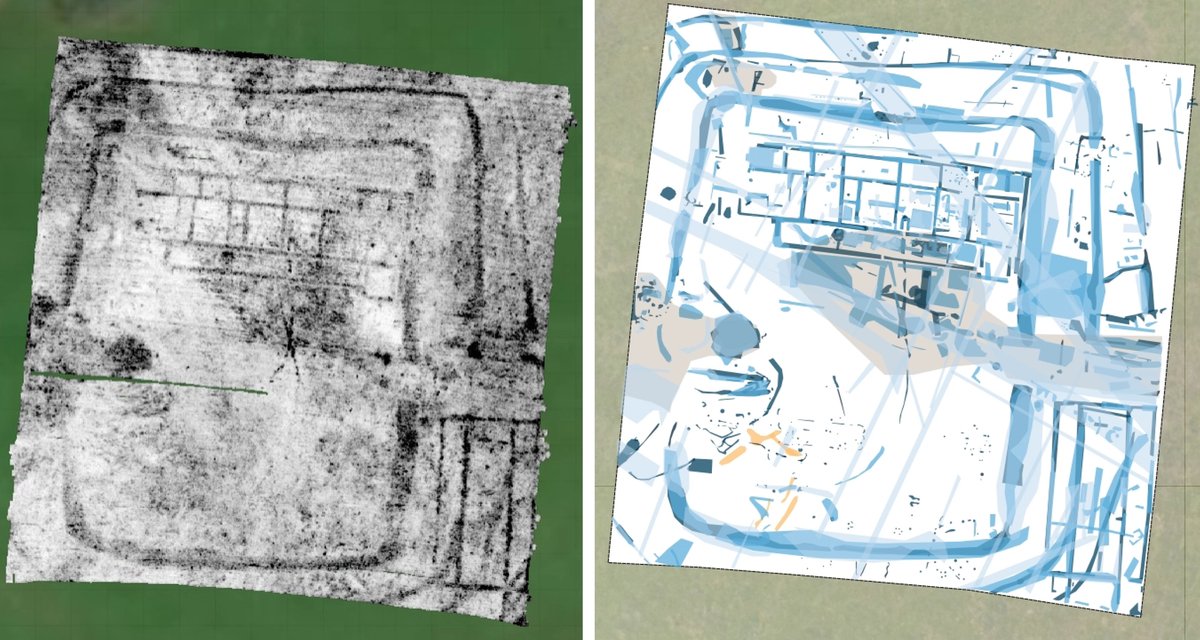
The team, comprising representatives from Swansea University centre for heritage research and training, Neath Port Talbot council and Margam Abbey Church, found the footprint of the villa in Margam Country Park, a popular visitor attraction. It appears to be set within an enclosure measuring 43m by 55m.
The team says it “struck gold” with the discovery of the “huge structure”, which is the largest Roman villa ever found in Wales. “My eyes nearly popped out of my skull”, the project's leader Alex Langlands told the BBC, adding that the site could be “Port Talbot’s Pompeii”.
In a statement Langlands says: “It is too early to speculate about the date range of the building, its architectural features, who constructed it, and how it fell out of use. But from the geophysical survey alone we can start to build hypotheses about how important this site could be.”
According to the associate professor of heritage and history at Swansea University, the villa may have been the home of a local dignitary. He believes the discovery will prompt experts to reassess the history of south Wales during the Romano-British period.
Geophysical surveys have also revealed a substantial aisled building to the south east of the villa, either a large agricultural storage building or possibly a meeting hall for post-Roman leaders and their followers. Further survey work will be carried out following the conservation of the site with excavation yet to begin.
The archaeological project, known as ArchaeoMargam, is funded by Neath Port Talbot Council via the UK government’s Shared Prosperity Fund. Further details of the team's findings will be shared at an open day at Margam Abbey Church on 17 January.