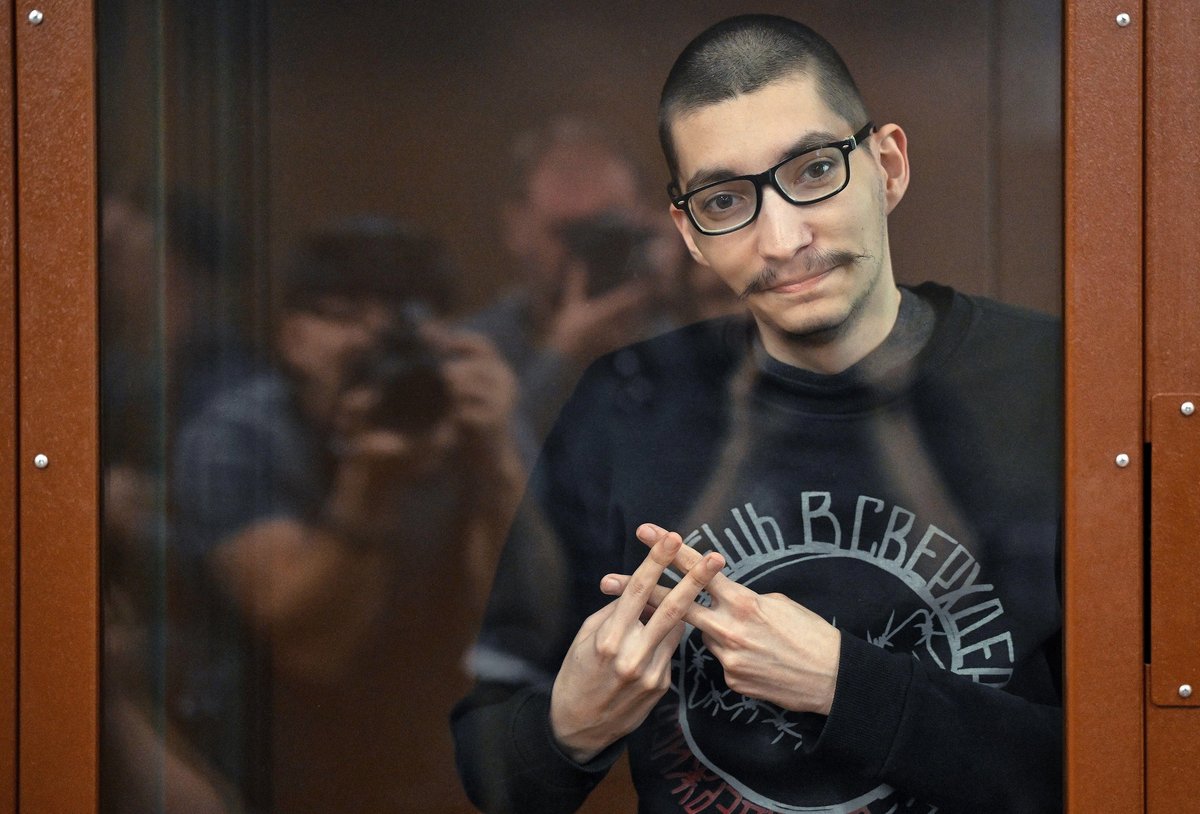
Pavel Krisevich, a political performance artist from St Petersburg, has been forced out of Russia after being re-arrested multiple times, most recently in December, following his release from prison in January 2025.
He had served three years and six months of a five-year prison sentence for staging a mock suicide on Red Square in 2021 in a performance that he said was meant to bring attention to the plight of political prisoners.
Krisevich, who is 25, is the second prominent young cultural figure to leave Russia recently after being threatened by the authorities. Diana Loginova, 18, who goes by the stage name Naoko from a Haruki Murakami novel, fled in November following consecutive arrests for singing banned songs in public performances that went viral online. Krisevich, who had said in May 2025 that he plans to stay in Russia, was added to the government’s list of foreign agents on 7 November.
In an Instagram post on 29 December, paired with a photograph of the Soviet dictator Joseph Stalin and the word “REPRESSION” in bold, Krisevich described how officers of the Federal Security Service (FSB) had intimidated him. “I was called out of my cell in the special detention centre and asked to enter a room with the lights off and stand facing the wall,” wrote Krisevich, who is now in Montenegro. “At that moment, there were two FSB officers standing there, and as soon as I entered, they began to threaten me, saying, ‘We told you’, ‘You and your loved ones will cry', ‘Pack your things and leave, or we’ll put you in jail’.” He described the feeling of euphoria upon “leaving a dictatorship and a place of oppression” as “hard to compare to anything else” and expressed hope for “the future, in a free Russia”.
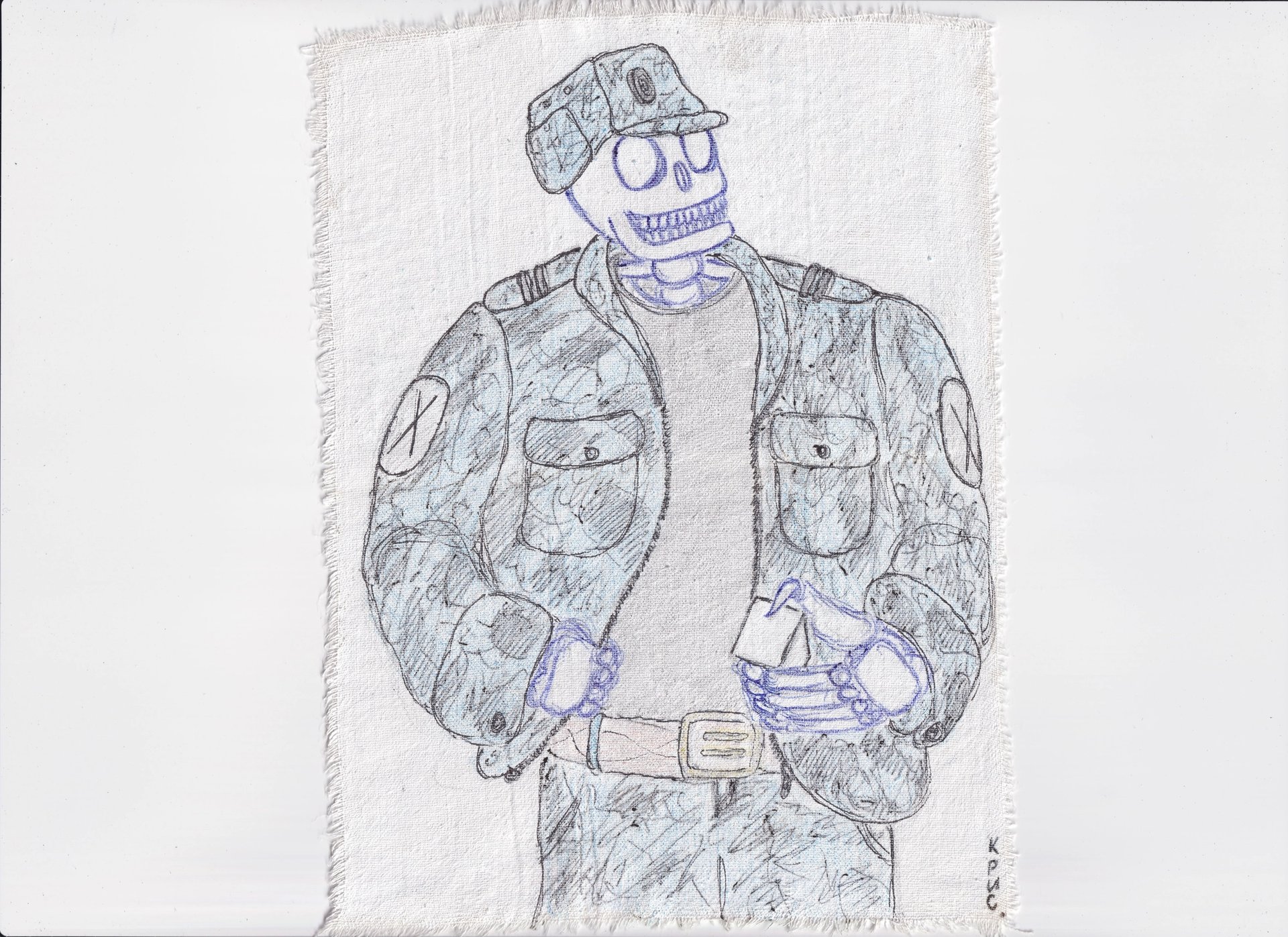
Pavel Krisevich’s Resolutely supporting arrest
© Pavel Krisevich
Artists and curators who openly oppose President Vladimir Putin and Russia’s full-scale invasion of Ukraine are now declared terrorists, even those who have left Russia such as Pussy Riot and the curator Marat Guelman, who left in 2014. Krisevich says that those who remain, even if they remain silent, are in danger, comparing them to Soviet non-conformist artists of the 1970s and 80s.
“Those who create something decorative or detached are not touched yet, but if you express your opinion about what is happening, the security services at art fairs will no longer allow you to participate,” he told The Art Newspaper via Instagram. “More and more people are facing this kind of restriction on their activities. Moreover, the more the dictatorship in Russia worsens, the more blurred the signs of an ‘enemy’ of the state become, and the greater the number of people who fall into this category, even those who are withdrawing into internal emigration from what is happening.”
Krisevich says that even when he was not in prison, “I felt the noose tightening around my neck with each passing month”.
In prison, Krisevich created an art movement that he calls “Repressionism”, inspired by the “noosphere” concept of the Ukrainian philosopher Vladimir Vernadsky. He uses textiles to depict graphic scenes of prison life, “consisting of bloody invisible bars and lines, sometimes oppressing people, sometimes taking the form of their dreams”, which he posts on Instagram. He also portrays prison cats.
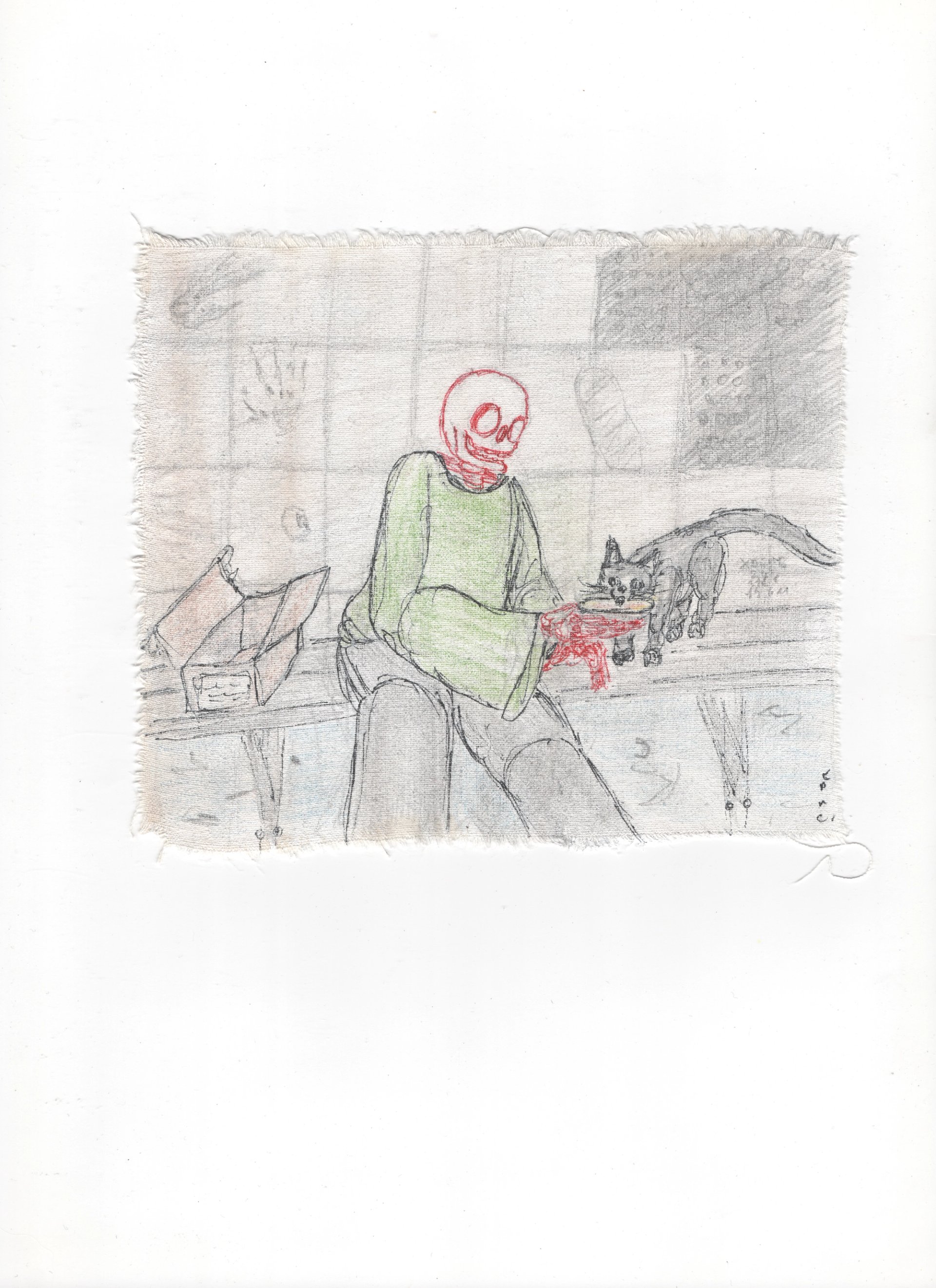
Pavel Krisevich, I'm feeding the cat in the holding facility. The cats the artist encountered in prison are a major theme in his work © Pavel Krisevich
Although he thought initially that the concept “can only exist in the confinement of a prison”, and that “Repressionism” would end once he was released, “I have already realised that perhaps the theory of Repression extends not only to prison cells but also to societies where rights and freedoms are stifled”.