Digital Editions
Newsletters
Subscribe
Digital Editions
Newsletters
Art market
Museums & heritage
Exhibitions
Books
Podcasts
Columns
Art of Luxury
Adventures with Van Gogh
Art market
Museums & heritage
Exhibitions
Books
Podcasts
Columns
Art of Luxury
Adventures with Van Gogh
Archaeology
news

British Museum reports record-breaking year for finding treasure in the UK

Discoveries by metal detectorists account for 94% of recorded finds in 2024

Gareth Harris
20 January 2026
Share
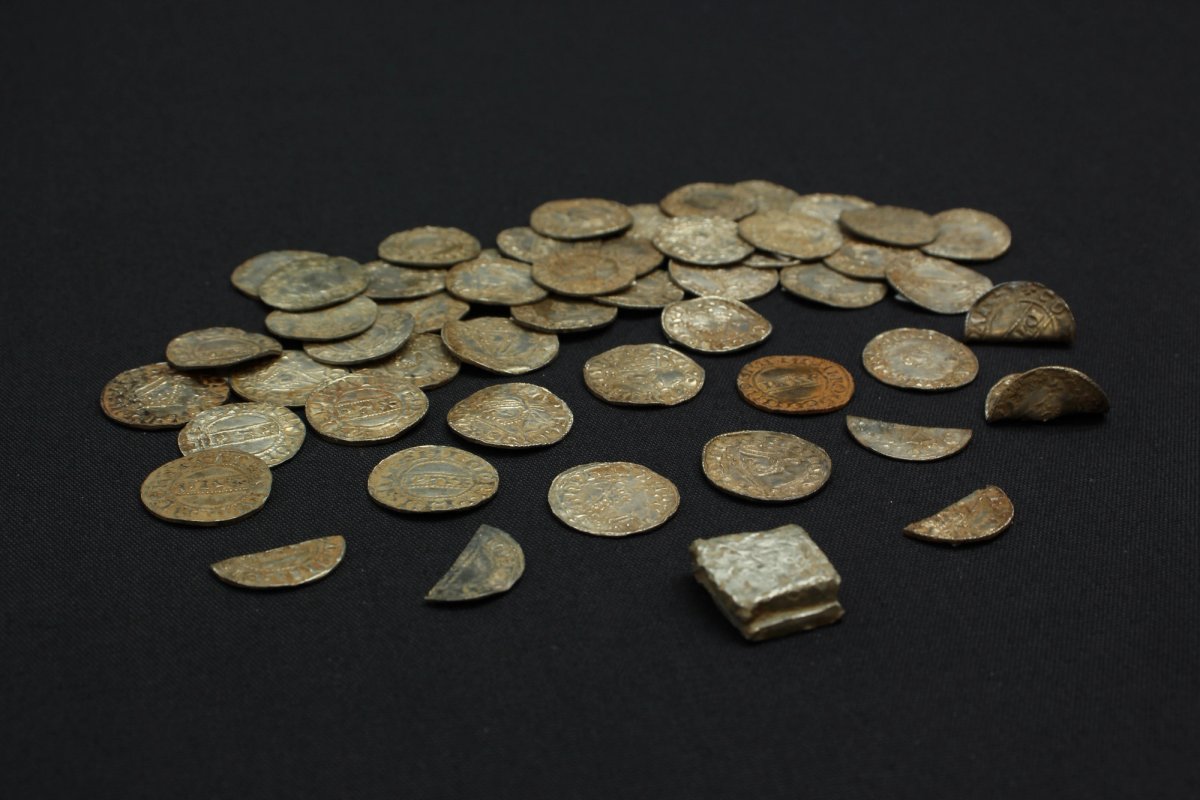
Discovered in 2024, a hoard of 179 coins are believed to have been deposited late in Harold II’s reign © British Museum

Discovered in 2024, a hoard of 179 coins are believed to have been deposited late in Harold II’s reign © British Museum

A hoard of 179 silver pennies, likely buried on the eve of the Battle of Hastings in 1066, and a rare Roman vehicle fitting were among a record number of objects discovered in 2024 by the UK’s army of metal detectorists.

The British Museum (BM) announced today (20 January) that 79,616 archaeological discoveries had been uncovered by members of the public in 2024 while 1,540 of the finds were considered "treasure" (as defined by the UK's Treasure Act 1996). “These record-breaking figures are due in large part to metal detectorists, who account for 94% of recorded finds,” a BM statement says. More than 7,000 items were discovered in Norfolk, in the east of England, alone while North Yorkshire recorded the highest numbers of treasure finds (109).

All of the discoveries are registered under the Portable Antiquities Scheme (PAS), a project that aims to record archaeological objects found by members of the public in England and Wales. Managed by the British Museum in partnership with Amgueddfa Cymru-National Museum Wales, PAS makes discoveries publicly available on an online database.

The hoard of 179 pennies may have been deposited late in Harold II’s reign and could have been buried around the time of the Norwegian invasion of England in September 1066 by King Harald Hardrada, museum officials say. A complete copper-alloy Roman vehicle fitting that was likely attached to the body of a carriage or wagon or to the yoke of an animals, which was recently declared treasure, was found in Essex by a dectorist and dates to AD43–200.

Nicholas Cullinan, the director of the British Museum, says: “The British Museum is proud of its role in managing the Portable Antiquities Scheme and the treasure process. Together, they are vital tools for preserving and recording Britain’s past, ensuring that remarkable discoveries made by the public are protected, studied and made accessible to everyone.”
ArchaeologyMuseums & HeritageBritish MuseumDiscoveries
Share
Subscribe to The Art Newspaper’s digital newsletter for your daily digest of essential news, views and analysis from the international art world delivered directly to your inbox.
Newsletter sign-up
Information
About
Contact
Cookie policy
Data protection
Privacy policy
Frequently Asked Questions
Subscription T&Cs
Terms and conditions
Advertise
Sister Papers
Sponsorship policy
Follow us
Instagram
Bluesky
LinkedIn
Facebook
TikTok
YouTube
© The Art Newspaper

Related content

Heritagenews
23 January 2024

Striking gold: 2022 was a record year for treasure and antiquities finds, with more than 50,000 items reported

From gold coins to ivory carvings, many pieces were found by amateur metal detectorists, according to latest report by British Museum’s Portable Antiquities Scheme

Maev Kennedy
Museums & Heritagenews
8 July 2025

Bayeux Tapestry to return to UK for first time in almost 1,000 years

The tapestry will be displayed at the British Museum from September 2026, as part of a bilateral season of culture between the UK and France

Gareth Harris
Museums & Heritagenews
28 December 2025

UK government insures Bayeux Tapestry for £800m during loan to British Museum

Historic embroidery will be protected from damage or loss under taxpayer-backed scheme

Gareth Harris
Museums & Heritagenews
28 August 2023

Parthenon Marbles deal still on the table despite British Museum theft scandal

Other Greek treasures would come to London in exchange for a loan of the contested sculptures

Gareth Harris