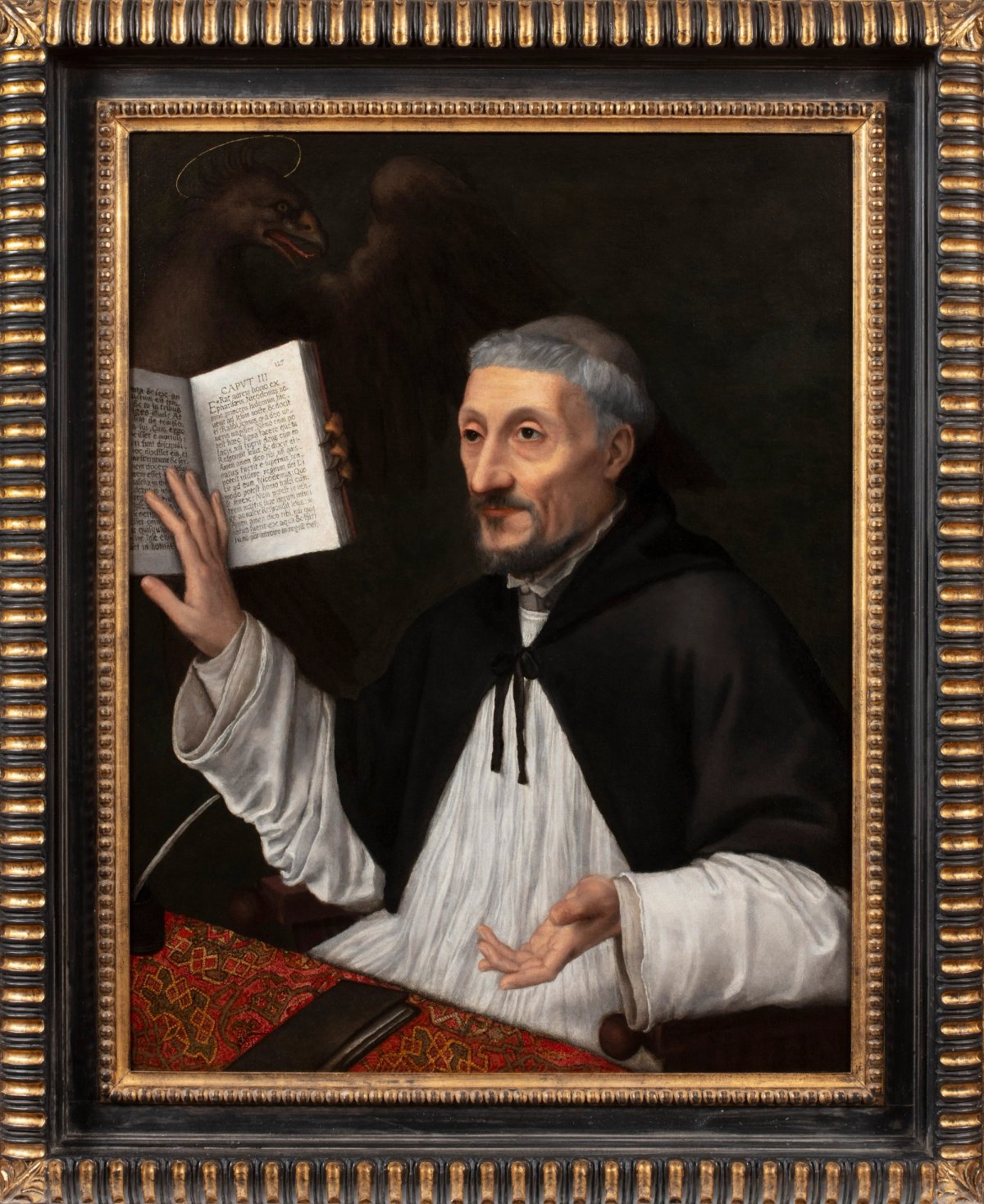
A rediscovered portrait by a groundbreaking Renaissance artist is on public display for the first time in more than a century at the Winter Show in New York. Robert Simon Fine Art presents Portrait of a Canon Regular (1552) by Sofonisba Anguissola, one of the most celebrated woman artists of the Italian Renaissance.
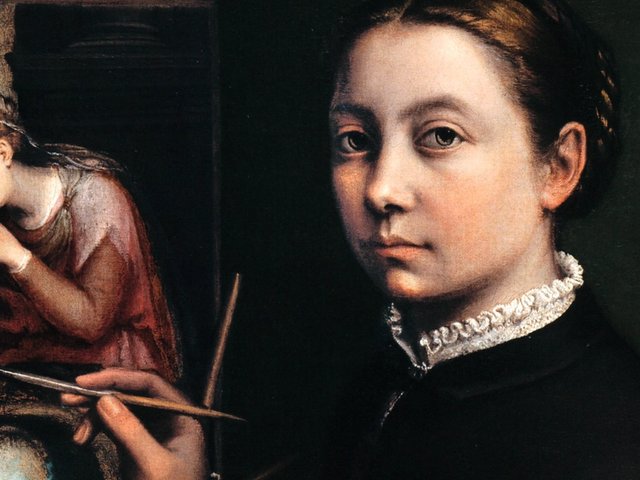
Anguissola was the rare woman painter in the Renaissance who was not the daughter of an artist. Born to Northern Italian nobility around 1532, she and her siblings received a comprehensive education that included art. After moving to Rome as a young woman, she was taken under the wing of Michelangelo and also became acquainted with Giorgio Vasari, who wrote that Anguissola “has laboured at the difficulties of design with greater study and better grace than any other woman of our time”.
In 1559, Anguissola joined the court of King Philip II of Spain as a court painter and lady-in-waiting to the teenage Queen Elisabeth of Valois, to whom she provided art lessons. While it was considered a well-respected position, her portraits completed during that time conform more with the style of the Spanish court when contrasted with her paintings from the previous decade. Her early portraits from Italy tended to be more intimate and engaging, according to the dealer Robert Simon.
“In Spain, every portrait had to look kind of alike, so she lost a lot of the inventiveness,” Simon tells The Art Newspaper. “But for this ten-year period, she's an amazing figure.”
Portrait of a Canon Regular is Anguissola’s earliest signed-and-dated painting, and for decades it was considered lost. A footnote from an exhibition catalogue from 1976 pointed out that the Frick Collection’s research library contained a photograph ostensibly showing a lost painting by Anguissola, of a religious official; the photograph is dated from a 1925 auction. Based on that, Portrait of a Canon Regular was included in a 2019 monograph on Anguissola. After its publication, Portrait of a Canon Regular was rediscovered in a private collection in North Carolina.
Anguissola’s inclusion of rich details—like an imported Turkish rug, quotations from the Gospel of John and an eagle, a symbol of the saint—contribute to the painting’s importance. These also addressed contemporary issues of the day; that section of the Bible tells the story of a secret follower of Jesus, often referenced by Protestant reformers when speaking of Catholics who privately agreed with Martin Luther. Over the past six years, Anguissola’s work has been the subject of retrospectives at the Prado in Madrid and the Rijksmuseum Twenthe in Enschede, the Netherlands, as the works of women artists from centuries past are re-evaluated.
“Despite certain aspects of our country that don't like diversity, museums very much do,” Simon says. “You can't find a mediocre woman artist [from this time], as they would not have had a career, right? They had to be really good.”
- The Winter Show, until 1 February, Park Avenue Armory, New York