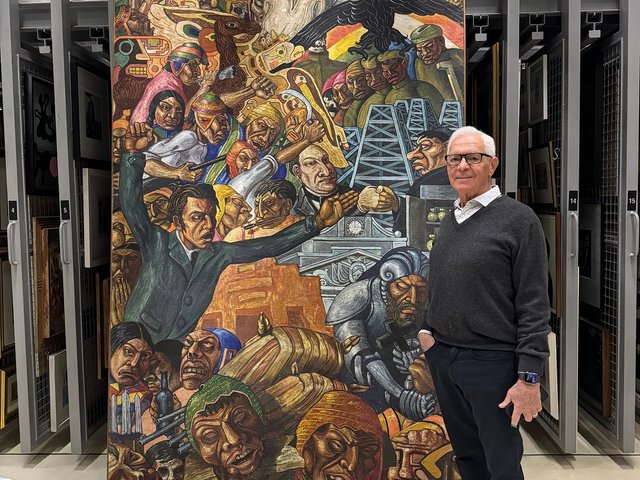
After just one year as artistic director of Argentina’s Museo de Arte Latinoamericano de Buenos Aires (Malba), Rodrigo Moura will step down next month. The Brazilian curator served in the role during the museum’s most significant institutional expansion in two decades.
Moura’s exit comes just weeks after the museum announced the acquisition of the Daros Latinamerica Collection, whose more than 1,200 works doubled Malba’s holdings. The purchase marked a turning point in the institution’s history and set in motion an ambitious operational, architectural and curatorial transformation.
According to a statement released by the museum, the incorporation of the Daros collection “has led to a substantial change in institutional priorities” and requires “a new phase aimed at supporting its growth and future prospects”. A central part of this restructuring is the creation of a new position of chief executive, who will be responsible for operational management and strategic planning. The museum did not announce a replacement for Moura, and its artistic direction will be reconfigured around an expanded curatorial team.
While some large-scale Latin American museums operate with distinct curatorial and executive leadership, the formal figure of a chief executive remains unusual in the region. Malba’s decision introduces a more corporate governance structure, in line with models common in larger international institutions.
“Suddenly, it feels like being in charge of a different museum,” Moura told The Art Newspaper in December, when the purchase of the Daros collection marked one of the most significant acquisitions of Latin American art in decades. “This is spectacular. It changes everything.”
In a recent statement, Moura said it has been “a great privilege to work at Malba at this moment, as this important institution approaches its 25th anniversary”, adding that he hoped “to remain connected to the museum as it develops its next chapters”.
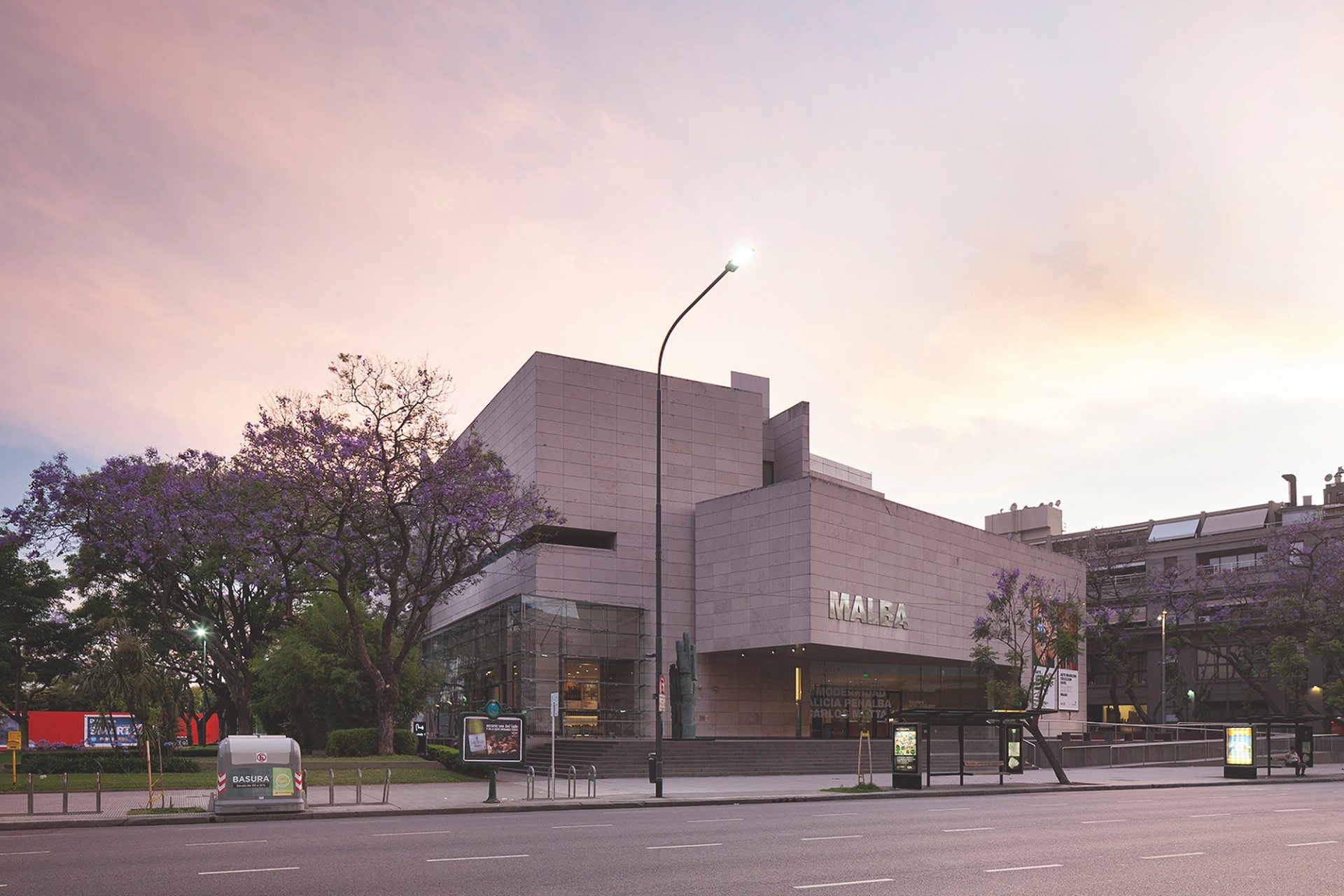
Museo de Arte Latinoamericano de Buenos Aires, Argentina Photo: Javier Agustín Rojas, courtesy Malba
Eduardo F. Costantini, the museum’s founder and president, said in a statement: “On both a personal and institutional level, we recognise Rodrigo’s undeniable professional and personal qualities, as well as his extensive experience, and we wish him the greatest success in the future.”
Costantini also outlined the immediate impact of the Daros collection's integration, which doubles the museum’s collection and significantly strengthens its contemporary holdings. “This represents a true re-founding of Malba, a stage of growth that requires expanding the executive structure to support this new institutional scale,” he tells The Art Newspaper. The creation of a chief executive position, he adds, “is intended to ensure that this institutional growth is aligned with an organisational structure suited to this new phase”.
The announcement comes at a time when the institution prepares to celebrate its 25th anniversary, with plans to expand the museum to twice its current capacity and to build a new collections storage facility. “It represents an entirely different operational scale for Malba,” Costantini says.
Earlier this month, Malba unveiled its 2026 exhibition programme, featuring Moura as curator or curatorial coordinator for several key projects—including the new presentation of the permanent collection scheduled for April—which made his departure all the more unexpected. (The programme also includes temporary exhibitions featuring Olga de Amaral in February, Vivian Suter in July and Frida Kahlo in September.)
Moura previously worked as the chief curator at El Museo del Barrio in New York, as well as a curator at the Museu de Arte de São Paulo (Masp) and at the Inhotim Institute, before his appointment at Malba in November 2024.
Malba, founded in 2001, is the region’s leading private institution dedicated to modern and contemporary art. Its collection includes some of the most valuable works in the Latin American art market, including Frida Kahlo’s 1949 Diego y yo (bought for $34.9m in 2021) and Leonora Carrington’s 1945 Las distracciones de Dagoberto (purchased for $28.5m in 2024).