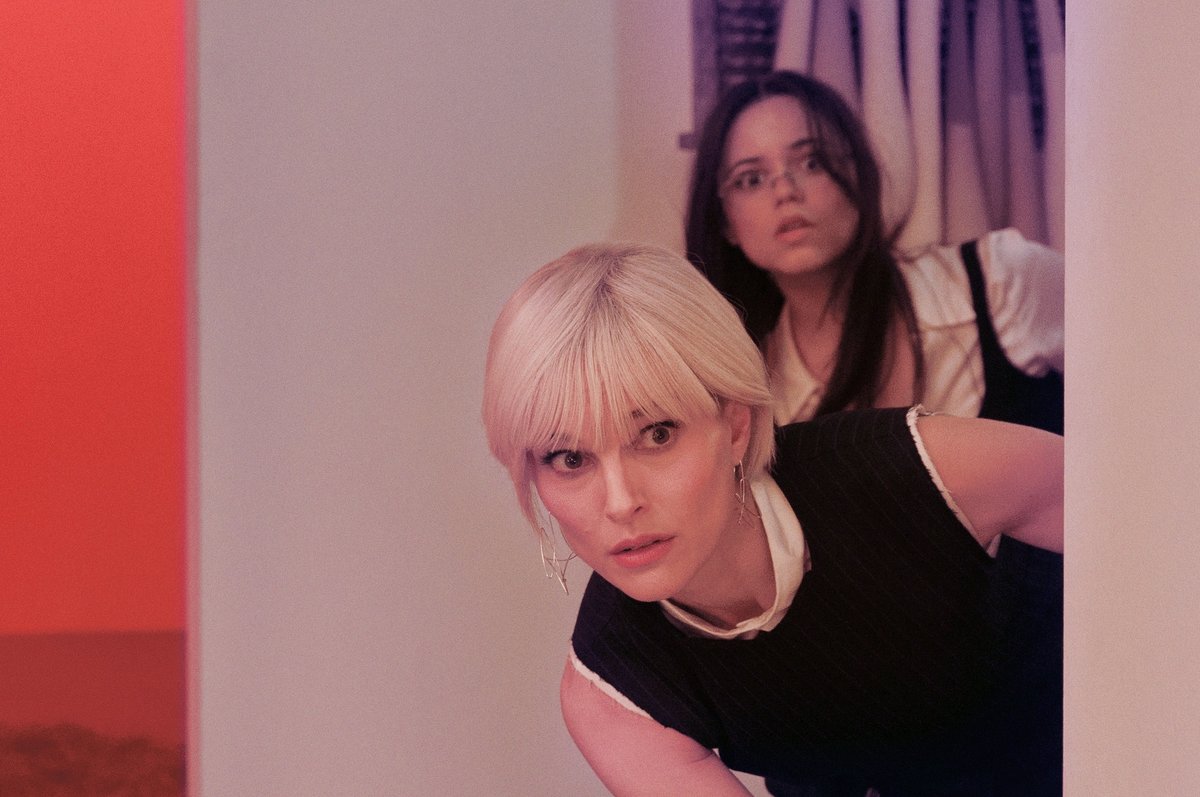
Marshall McLuhan said that art was whatever you can get away with. The new black comedy caper directed by Cathy Yan, The Gallerist—which premiered Saturday at the Sundance Film Festival—tests the degree to which some art dealers might manage to, as the saying goes, get away with murder.
The film careens through a gallery’s participation in Art Basel Miami Beach, where it is trying to hide and sell a corpse in plain sight. Polina Polinski (Natalie Portman) is a Miami-based dealer enriched by a divorce settlement and promoting the solo debut of an African American woman artist (Da’Vine Joy Randolph). One of the works in her exhibition is a pointed and pointy sculpture called “Daddy’s Shears”, described by Polina as “an enlarged cast of her father’s emasculator, a tool used to cut off the genitals of male livestock so they can’t reproduce”.
A pompous local art influencer (Zach Galifianakis) stops by the gallery and questions Polina’s taste and competence, after she turns down his offer to lease her space for a pop-up event—real estate in Miami being more coveted than art. “You don’t matter. I simply forgot you existed,” she tells him. “It’s amazing what you can do with a sponsored post.” Leaving, the man slips on water dripping from the ceiling, falls on the sharp point of the emasculator and dies skewered on the sculpture.
There is no time to mourn the influencer or even acknowledge that he’s dead, as visitors crowd the gallery before Polina can detach the body. Instead she does what any ambitious person of her profession might do with inventory: she tries to sell it “as is”, body included, and stages an auction in her gallery. Bidding climbs past $4m and the local cognoscenti call the sale a revival for hyper-realist sculpture. Polina hopes it will disappear in the oubliette of Miami’s freeport.
Yan, who co-wrote the snarky script with James Pedersen, is not going for verisimilitude. The comedy of errors plays for laughs and can feel like a vaudeville show as characters enter and exit to get their hands on the exquisite corpse. Jenna Ortega plays a downtrodden assistant struggling to manage the chaos. Charli xcx plays the impaled influencer’s incredulous girlfriend. Catherine Zeta-Jones, as a shady veteran dealer fresh out of jail named Marianne Gorman, has spasms of sheer greed. Eager to snatch the body from her younger colleagues, she tells the artist behind the emasculator: “You’re lucky enough to be well-curated, even if it is a dead man on a stick.”
If The Gallerist sounds full of stereotypes, it is. Everything is for sale, and dealers are poised to exploit and overcharge the credulous. Arguments using all the right adjectives can be concocted to justify almost anything. The value of a work of art is measured entirely in cash.
Yet the art world farce seems aimed at an audience of gawkers, for whom art intrigues are framed tabloid-style. Everyone here has an angle, and art crooks and rich collectors elbow for space with other villains. Grand Guignol comedy is built on exaggerations, and this film is a parade of them.
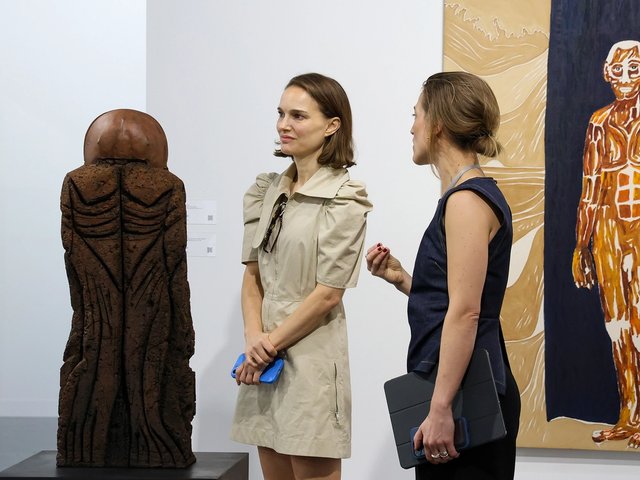
Not much is original in The Gallerist, including its plausible deployment of contemporary art-speak. Passing off an accidentally slain body as art also has a history in comic and horror cinema. In 1959, Roger Corman, a legend for his no-budget movies, directed A Bucket of Blood, set among beatniks devoted to art and poetry. A timid café busboy, desperate to be noticed, accidentally kills a cat in his rented room. The scared young man covers the cat in plaster and gives the resulting “sculpture” a solemn title, “Dead Cat”. The beatniks at the café swoon, and a collector snaps it up for a fortune. “Dead Man” and “Dead Woman” follow, earning praise and money, until the busboy-turned-killer is exposed.
Made in five days for $50,000, A Bucket of Blood spoofed the art world, barely a business then, reaching satire-hungry young audiences raised on MAD Magazine. In The Gallerist, the gallery’s spare, white-walled interiors call to mind minimally appointed spaces that might appear in Architectural Digest.
Will The Gallerist do anything for the art market, other than remind us that its clichés tend to be bulletproof? Probably not, but it might attract gaggles of young fans to the next Art Basel Miami Beach, searching for the stands for Ortega and Portman.
- The Gallerist is screening at the 2026 Sundance Film Festival in Park City, Utah, until 1 February