

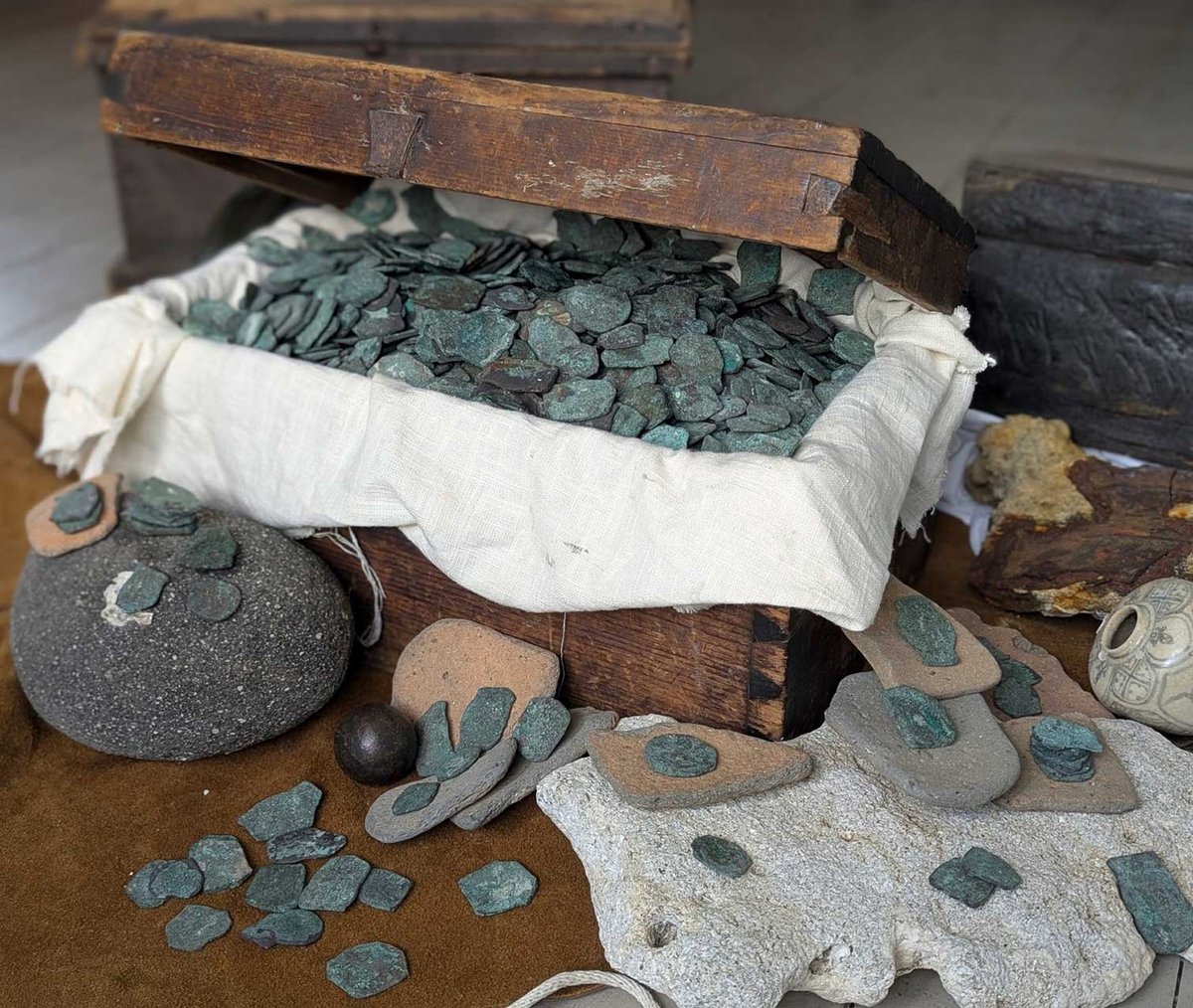
Divers uncovered more than 1,000 late 17th- and early 18th-century Spanish coins worth $1m off the coast of Florida last summer. The area, roughly 100 miles north of Miami, is known as the Treasure Coast—named for the cargo aboard the Spanish flotilla that sank there in 1715. Its 11 ships were filled to the brim with an estimated $400m in gold, silver and jewels. Treasure hunters have been on the prowl for their sunken riches ever since. This latest discovery marks the most significant find since the 1990s.
The Florida-based shipwreck-salvage company that discovered this latest trove of coins, 1715 Fleet-Queens Jewels, has exclusive rights to the remains of the 1715 fleet. Over the summer, its divers discovered not only 1,051 silver and five gold coins but also artefacts like a lead royal seal. But Queens Jewels is a for-profit company, and its jurisdiction in waters that contain important historical artefacts raises the problem of conflicting visions in exploration between treasure hunters and underwater archaeologists.
From hurricane to treasure battle
The 1715 fleet set sail from Havana after years of conflict during the War of the Spanish Succession, which had ended the previous year. The flotilla’s cargo comprised silver and gold coins, thought to have been minted in the empire’s American colonies, along with other commodities like tobacco, which was as valuable as the precious metals. One ship also carried the legendary “queen’s jewels”—a gift for the new queen of Spain, Elisabeth Farnese—which have yet to be found.
Economic interests outweighed the perils of hurricane season, and the fleet departed Havana on 24 July. Seven days later, a hurricane hit the vessels with full force. Some ships were crushed on the jagged reefs. Only one of them survived the 31 July storm—it had wisely changed course. At least 1,000 of the 2,500 people aboard the ships died, and survivors were stranded in hostile territory.
The fleet had an unusual composition, formed by a combination of ships from the Nueva España Fleet—which sailed between Veracruz and Seville—and the Tierra Firme Fleet, covering the South American trade routes out of Cartagena. “Ships from a wealthy merchant joined the fleet to compensate for vessel shortages caused by the war,” Jorge Proctor, an independent researcher who has long studied the 1715 fleet, tells The Art Newspaper.
The battle for the treasure started almost immediately. The location of the wreckage in shallow waters greatly eased initial salvaging efforts, with chests and jewels recovered soon after the ships sank. But in 1716, the pirate Henry Jennings and his crew looted the rescue camp. “Pirates were more successful on land,” says Flor Trejo Rivera, a maritime historian at Mexico’s National Institute for Anthropology and History. “Ships often perished in storms rather than because of pirate attacks.”
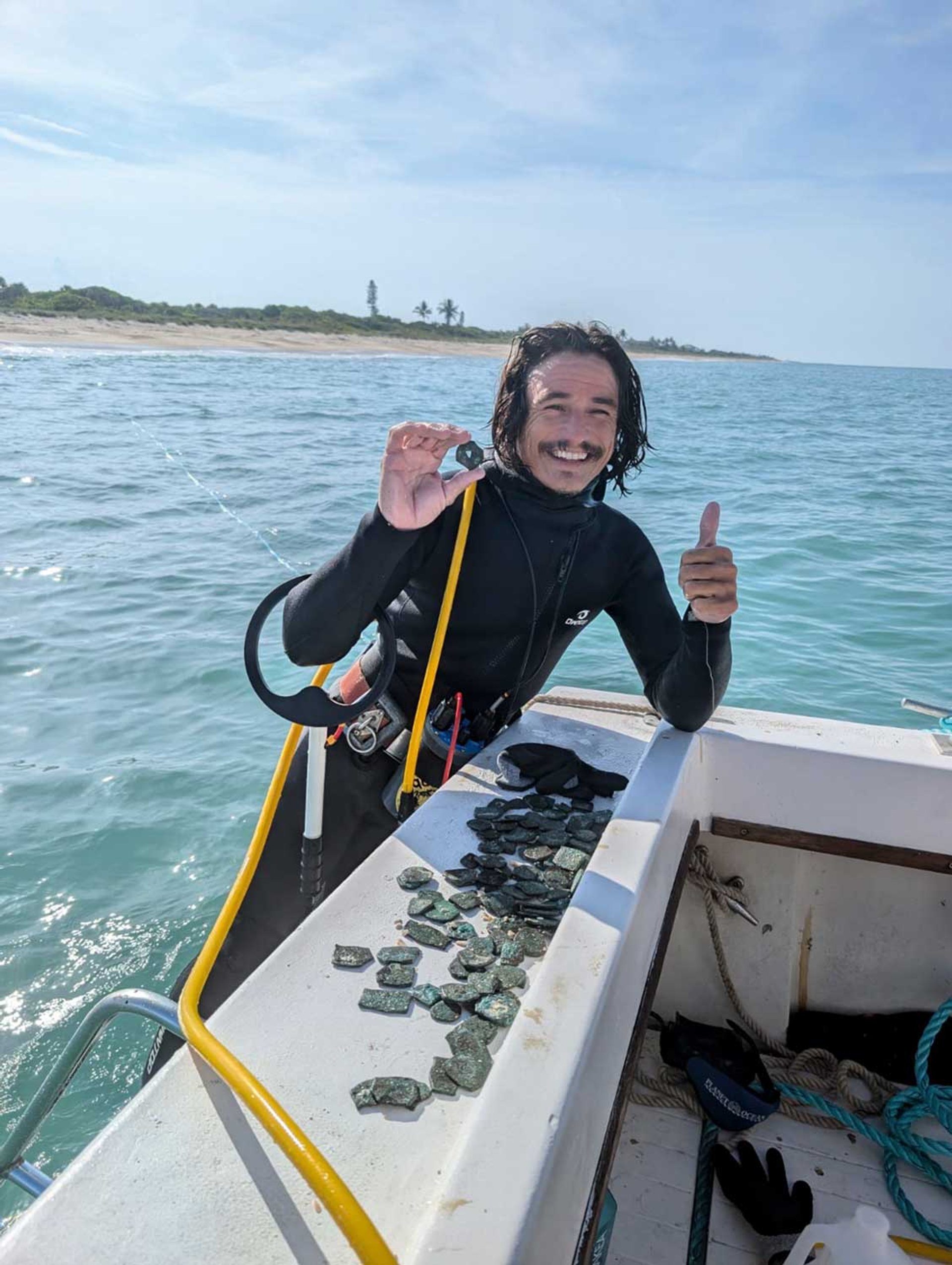
Levin Shavers, from 1715 Fleet-Queens Jewels, with coins recovered off the coast of Florida in 2025
Courtesy 1715 Fleet-Queen Jewels
While the Spaniards fled the camp, merchant ships continued searching for treasure. But over time and with little more found in the depths, the wreckage was forgotten. In the 1960s, treasure-hunting reignited. In the early years, divers were known to unearth numerous coins and other items daily, but larger finds were increasingly becoming rarer.
Over the past few decades, the 1715 fleet has attracted collectors and shipwreck enthusiasts alike. The 1715 Fleet Society is a non-profit created in 2008 to do research and educate the public about the fleet. “The 1715 fleet has a special appeal due to romantic notions of sailing and its location close to shore,” says Ben Costello, the society’s co-founder and chairman of the board.
“Many myths surround the fleet, but the 1715 Fleet Society intends to deepen its historical knowledge,” says Proctor, who is also a member of the group.
Findings and controversies
In 2010, 1715 Fleet-Queens Jewels obtained exclusive rights to salvage operations in the area. The recent discovery of the Spanish coins may be the company’s most significant to date, but it comes with challenges. “These wrecks occurred close to shore and, as such, recovery can be difficult and dangerous,” says Sal Guttuso, the Queens Jewels operations director. “Poor sea conditions and visibility, and a short season are among the most challenging things we face.” (Underwater searches take place only in the summer months as a result.)
Florida law stipulates that the state is entitled to 20% of what is found aboard shipwrecks, with the company keeping the rest. “Some of the coins will go to the state of Florida, others to the owners and the finders, so they will go their separate ways,” Guttuso said at a September press conference. The state also oversees the fleet’s remains, with many pieces of the ships exhibited at the Museum of Florida History in Tallahassee.
But the recent coin discovery brings up conflicting views of underwater exploration around the globe. Eighty countries, including Spain, adhere to the 2001 Unesco Convention on the Protection of the Underwater Cultural Heritage, which prioritises in situ preservation and views the commercial exploitation of underwater cultural heritage and its dispersal as “incompatible with its protection”. However, the US chose not to sign onto the convention, citing concerns over coastal-state jurisdiction and national-security implications for sunken ships.
“Treasure hunters are not archaeologists,” says Mariano Aznar, a professor of public international law at Jaume I University in Castellón de la Plana, Spain. “They are merchants who profit from heritage coming from a shared history.”
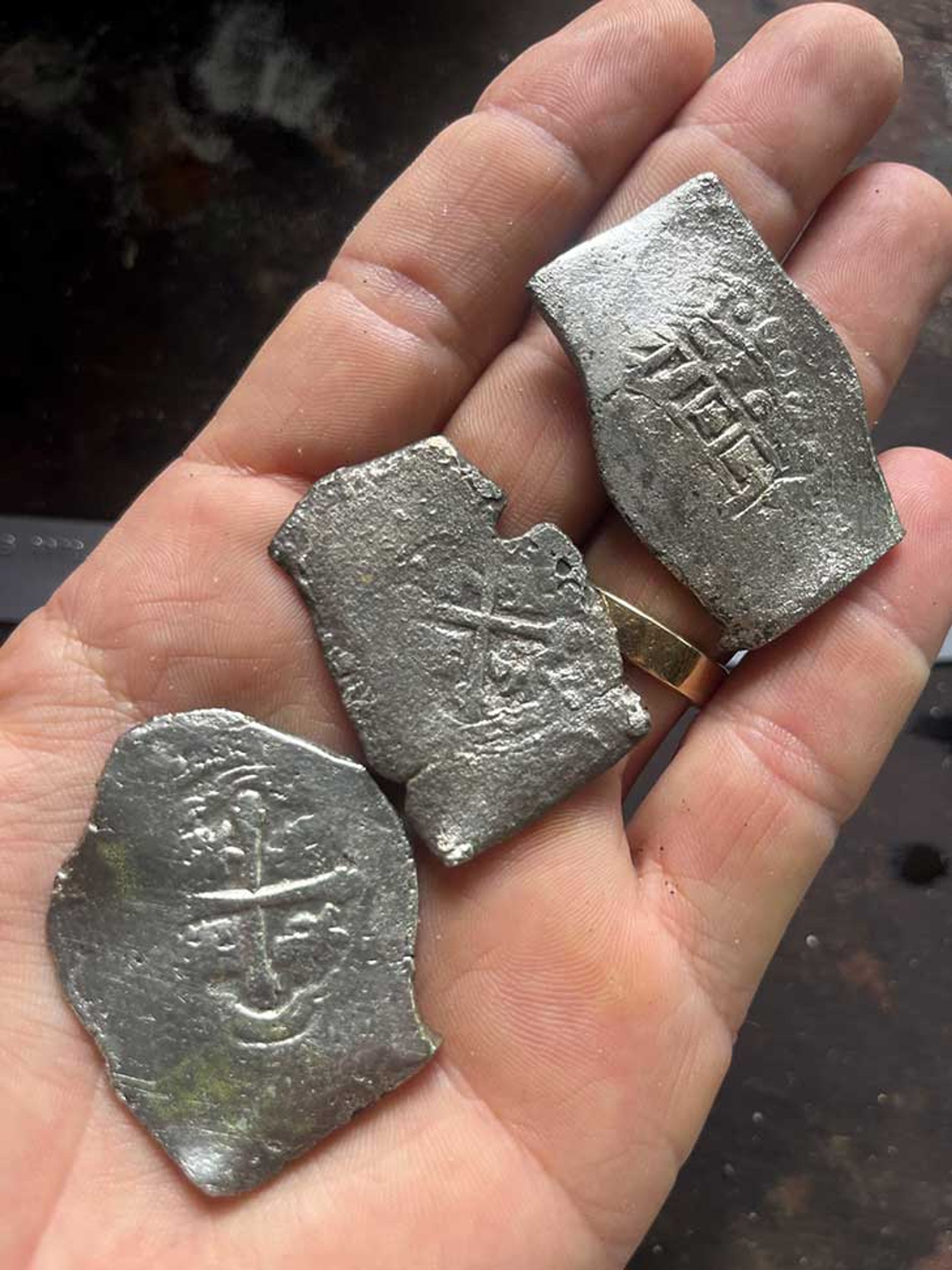
Three silver coins from the haul after they were cleaned
Courtesy 1715 Fleet-Queen Jewels
In the past, this debate has sparked legal action. One example is the dispute between the US-based company Odyssey Marine Exploration and the Spanish government over an estimated $500m worth of gold and silver coins recovered in 2007 from the wreck of the Nuestra Señora de las Mercedes, which sank in 1804 off the coast of Portugal. Spain successfully argued that the naval vessel and its contents were sovereign property. Spain was granted full ownership in 2012.
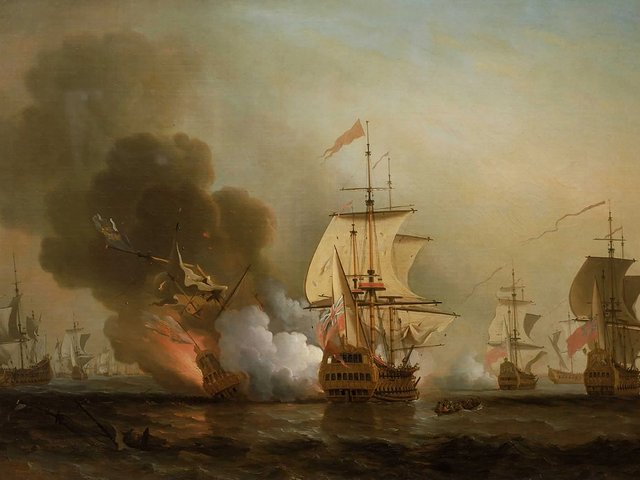
An ongoing case before the Permanent Court of Arbitration at the Hague further shows the complexity of underwater legislation. It involves Colombia, Spain, Indigenous groups in Bolivia and Peru and the US salvage company Sea Search Armada battling for ownership of the wreck of the Spanish ship San José, which sank in 1708 off the Colombian coast while hauling an estimated $17bn worth of gold, silver and emeralds.
Colombia, like the US, is not a signatory to the 2001 Unesco convention. Furthermore, Colombian president Gustavo Petro has made it a priority to surface the ship before his term ends in August 2026, despite an outcry from archaeologists saying that the act could destroy what is left of an important historical artefact. In November 2025, the Colombian government announced that the first objects had been recovered from the wreckage: a cannon, a porcelain cup and three coins.
Spanish ownership has not been argued in the case of the sunken 1715 fleet off the Florida coast—at least not yet—even though at least two vessels were Spanish warships. “This may also relate to the difficulty of identifying the specific provenance of the findings, given repeated excavations since the 1960s and insufficient documentation,” Proctor notes.
Meanwhile, the 1715 Fleet-Queens Jewels team claims to be doing right by the shipwreck and its artefacts. It employs a marine biologist, an archaeologist, lawyers, boat captains, divers, surveyors, mappers and conservation experts working in a state-approved lab. The company plans to document in detail the naturally well-preserved coins that were buried under the sand for centuries. “The historic relevance of the discovery is what it can teach us,” Guttuso says. “The finding can give insights into the make-up of shipments and Spanish colonial coins.”
But historians remain sceptical. “Treasure hunting has evolved, yet it is still focused on retrieving artefacts for a profit,” Trejo says, “while underwater archaeology preserves heritage and facilitates research.” This extends to registering each finding before extraction, with private operations often keeping records confidential.
In the meantime, exploration of the 1715 shipwrecks shows no sign of stopping. “The team will continue on the trail to determine if these coin discoveries were part of a larger deposit,” Guttuso says. He adds that they plan to restart their search as early as May of this year.