The art trade has always believed it represents a special relationship between culture and money. After all, acquiring an original work by a well-regarded visual artist is, in relative terms, an expensive business. You can buy a physical copy of a masterpiece of world literature, like Dostoevsky’s Crime and Punishment, for less than $10. Thanks to subscription streaming apps, it costs even less to “own” Beethoven’s Ninth Symphony or an Oscar-winning movie. Admittedly, you will have to pay quite a bit more to attend a well-produced live Shakespeare play or an opera, or a Taylor Swift or Oasis concert, but these are fractions of what you would have to stump up for an original work by an on-trend contemporary artist. Want to own an oil painting by Flora Yukhnovich? One of her charming little postcard-sized oil sketches will currently set you back around $40,000 at auction, according to Artprice.
Owning good art has for centuries been a badge of cultured affluence. But what if the affluent stop caring about culture? What happens if the Hegelian dialectic of civilisational progress reaches a point where all that matters to human beings, or at least to the human beings that matter, is power and money?
“Iron laws“
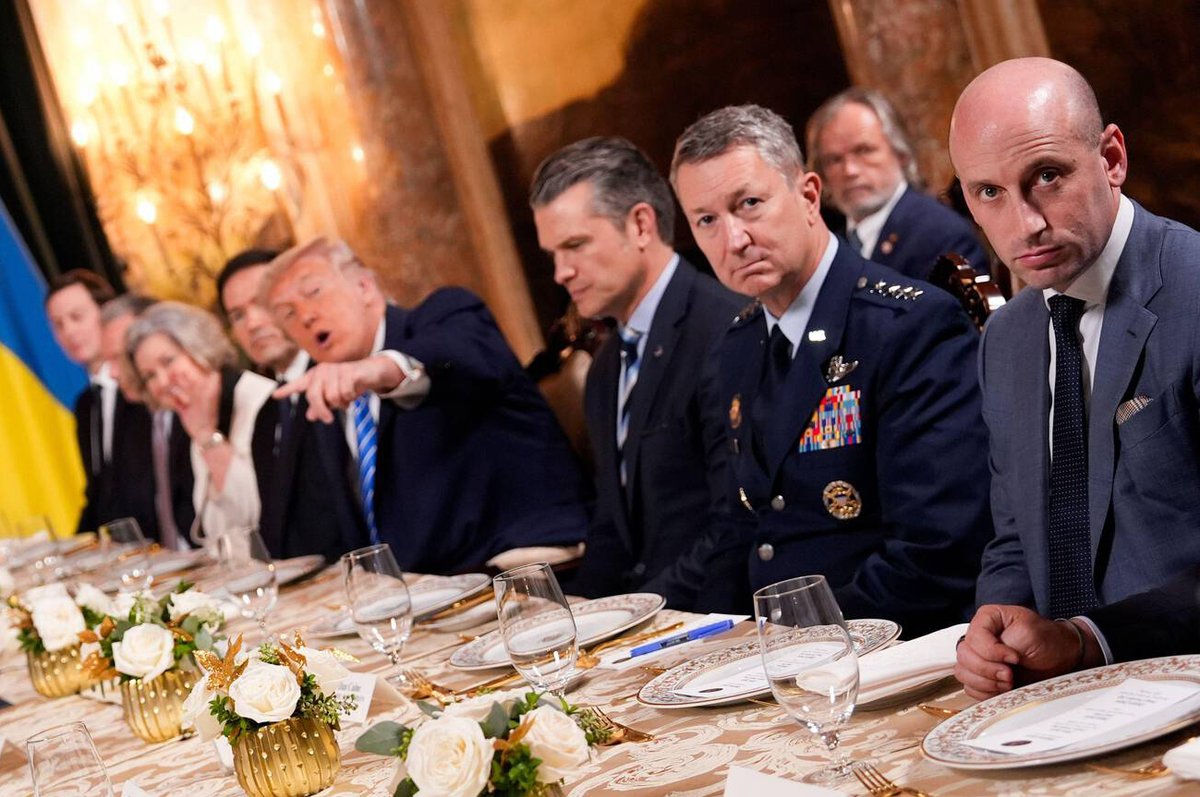
According to Stephen Miller, an influential senior adviser to Donald Trump, president of the US, the planet’s biggest art market, we now live in a world “that is governed by strength, that is governed by force, that is governed by power”. Speaking to CNN shortly after the US military had abducted the president of Venezuela, Miller added that “these are the iron laws of the world since the beginning of time” and reiterated America’s intention to annex Greenland.
Miller’s words are eerily reminiscent of a speech given 103 years earlier by an up-and-coming German politician who had formerly been an unsuccessful artist copying picture postcards. “The whole world of nature is a mighty struggle between strength and weakness, an eternal victory for the strong over the weak,” proclaimed Adolf Hitler, prior to his own campaign of imperial annexation.
What has this got to do with the impermeable, apolitical bubble that is the international art market? Well, while capital markets might be at all-time highs, cultural life in the US and elsewhere is coming under serious pressure from those with political and financial power in ways that are beginning to bear ominous comparisons with the rise of fascism in the 1920s and 30s.
Guns before culture
The White House has demanded that the US government-funded Smithsonian Institution, the world’s largest museum group, present a more positive image of American history or face budget cuts. Reduced federal and state funding for culture in the US has resulted in artists increasingly having to pay for the production of their own institutional projects. Meanwhile, Trump has called for a 50% increase to the US defence budget, raising it to $1.5tn. Government funding for culture is also shrinking in Europe, as is the number of young people studying humanities subjects like art history. Right-wing administrations in Slovakia, Hungary and Serbia have restricted artists’ freedom of expression.
Yet recent data indicates that, after a two year slump, art sales are on the up, at least at the top end of the auction market. Sotheby’s reported consolidated global sales of $7bn in 2025, a 17% gain on the previous year, while Christie’s reached $6.2bn, 7% up on 2025. The influential Baer Faxt trade newsletter has pronounced there is “less volatility in the art market” and at least four collections valued at more than $200m will come to auction this year. More galleries will close, others will open.
The power of cultural prestige
The top end of the art market might often seem to be more about lifestyle, luxury, fashion and financial speculation than the profundities of the creative process, but this small sub-sector of the global economy has always depended on a degree of cultural prestige to justify exceptionalist price points. Works by “trophy” artists like Leonardo, Van Gogh, Picasso, Giacometti and Rothko are all meant to embody, in their own different ways, some kind of universal, life-enhancing truth. Their works will have a timeless value for humanity that fully justifies an eight- or nine-figure investment, the trade assures its ultra-wealthy clients. As with real estate, huge prices paid at the top of the market trickle down to make even entry level purchases difficult to afford.
This value system depends on its adherents a) believing that they are part of a wider something called “humanity”, and b) taking some kind of interest in creative culture. But as income inequality continues to widen and the politics of more and more countries lurch towards authoritarianism, the more the rich and powerful reject the idea of inclusive societies and free creative expression, which they regard as “problem” features of outmoded liberal democracies.
Mine, all mine
Eoin Higgins, the author of Owned: How Tech Billionaires on the Right Bought the Loudest Voices on the Left, recently pointed out in an interview with the Nobel Prize-winning economist Paul Krugman that today’s technogarchs, unlike the Robber Barons of America’s Gilded Age, who built museums, libraries and concert halls for the wider community, “don’t think that they owe anybody anything”. Higgins added: “They don’t appreciate that they live in a society, and they don’t think that they have any obligation to the rest of society, or the rest of the country.”
A myriad of asset classes are a lot more sexy than art
For tech barons and most other members of the billionaire class, art no longer has that special status it once enjoyed. “The rise of tech, the rise of crypto, the rise of truly excessive amounts of liquidity the likes of which we’ve never seen have given the wealthy a myriad of asset classes that are a lot more sexy than the art asset, which has this trophy saying, ‘I’m a fancy art collector,’” says the California-based collector and dealer Stefan Simchowitz. “Collectors have lost so much money at the galleries,” he adds. “Art no longer provides that centrality.”
Insiders who monitor the performance of the art market tend to fixate on how much art is being sold by the ultra-rich and how share prices and interest rates affect the confidence of the ultra-rich people who buy art. As is so often repeated, money isn’t a problem. But the political and cultural context in which art is transacted has changed. To be sure, there will always be enough super-wealthy people in the world to buy trophy works by brand-name artists. Canaletto is one of these brands. Christie’s, having sold the 18th-century artist’s figure-packed Venice, the Return of the Bucintoro on Ascension Day for $43.9m in July last year, was confident enough to guarantee the sale of another big, decorative Canaletto of this timelessly commercial subject for at least $30m this month in New York.
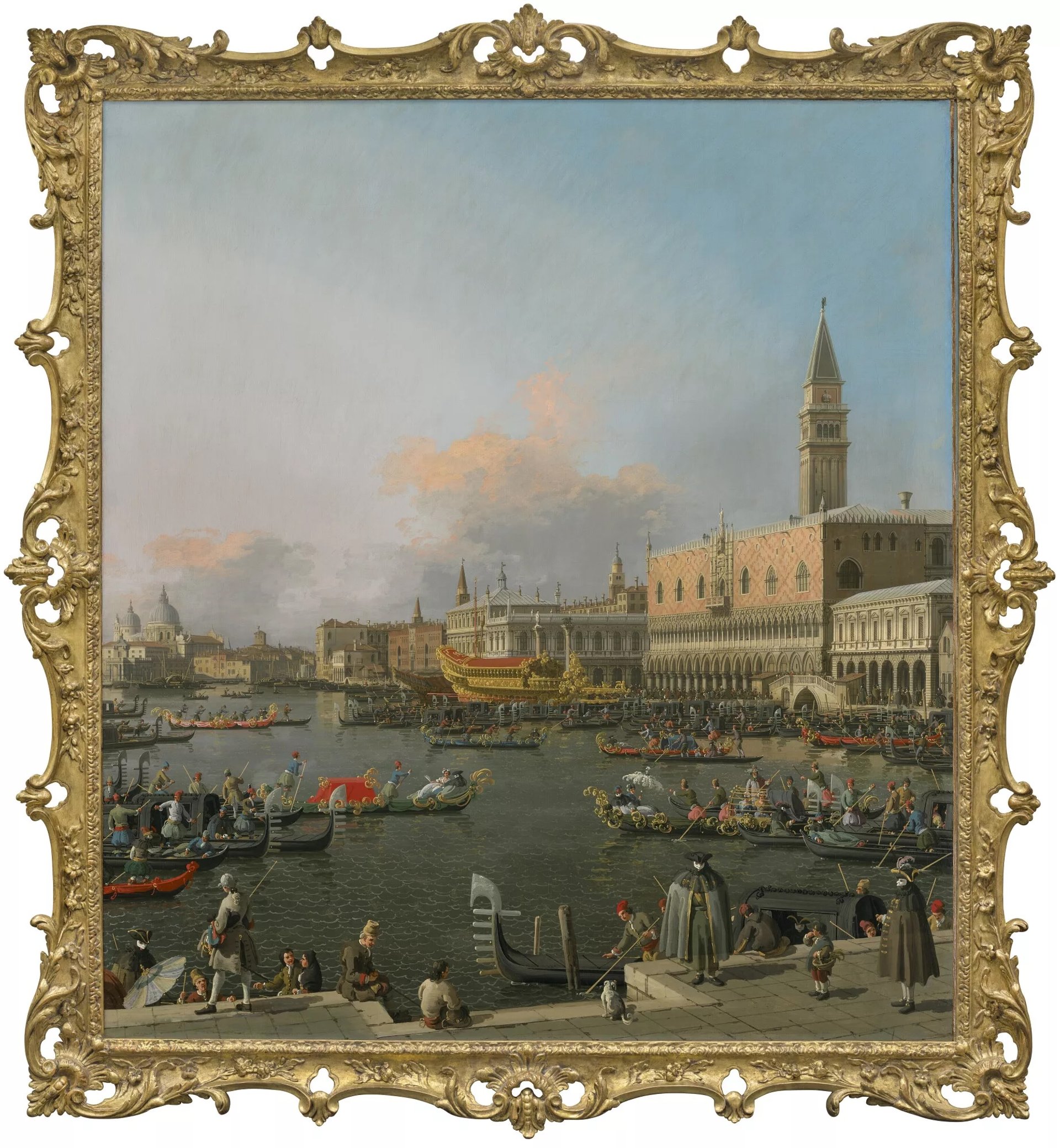
Canaletto’s Venice, the Bucintoro at the Molo on Ascension Day (around 1754) is on sale at Christie’s New York on 4 February
Courtesy Christie’s
Consequences of a volatile world
But if the rich and powerful lose interest in humanity and the humanities, is there a danger that the art market will become all about transacting in proven brands? Are there enough of these brands and people interested in art to sustain a global trade in unique objects offered by thousands of individual dealers? This is the concern that makes new events in the Gulf, like this month’s inaugural Art Basel Qatar, so consequential.
Critical re-evaluation has turned Philip Guston into big-ticket art world brand—Hauser & Wirth are taking a 1978 self-portrait priced at $14m to the fair—but is this kind of art of interest to a wider audience in the region? Can the fossil fuel-wealthy Gulf, which so many in the art trade are hoping will be an El Dorado of new buyers, sustain a stable art "ecosystem" if the most powerful nation in the world keeps sending armadas of warships to the region to intimidate governments it doesn't like?
When gallerists are asked when the recent slump started, many point to the Hamas attacks in October 2023 and the retribution that followed from the Israeli military. Things have stabilised (if that is the word) in the Middle East since then. But the wider world still matters. And that world is getting a lot more volatile in ways that can affect the composure and concentration levels of participants at every level of the art market.
Inevitably, Germans have the right compound noun for it—Weltschmerz, meaning “world-pain”. Spending hundreds or thousands or millions on an original work of art can be a pretty big ask when you’re waking up every morning thinking, “What the hell is going to happen next?”