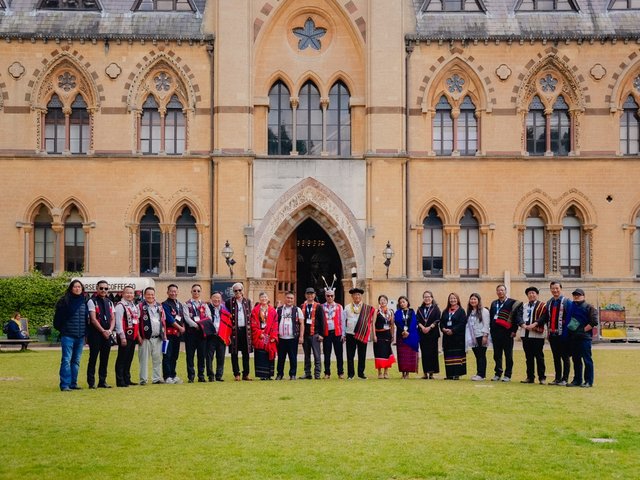
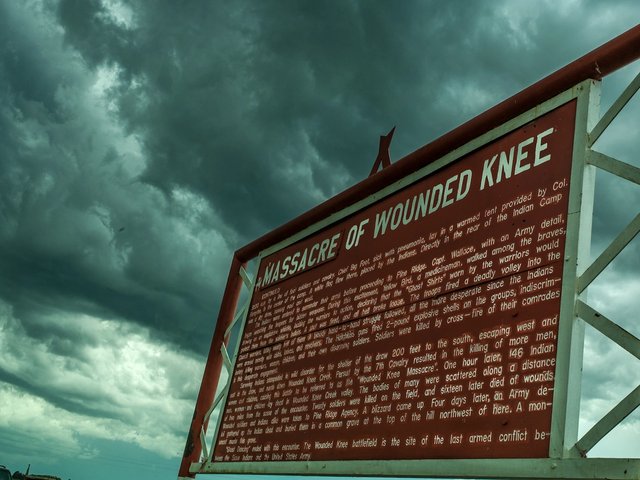
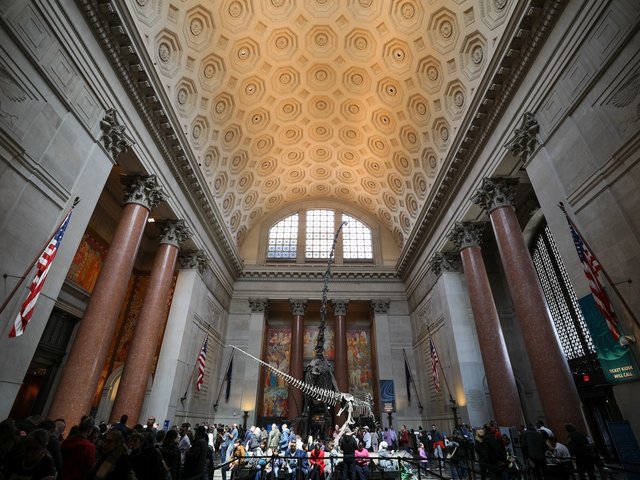
![A scene from the documentary film Aanikoobijigan [ancestor / great-grandparent / great-grandchild] (2026) Courtesy Ozhitoon Films](https://cdn.sanity.io/images/cxgd3urn/production/21c27a591d5c702c2eebca0588eebeda0b809913-2000x1125.jpg?w=1200&h=675&q=85&fit=crop&auto=format)
“When I enter a museum, I’m not looking for what’s on the walls, I’m looking at what’s behind them,” says a Native American woman in the documentary Aanikoobijigan [ancestor/great-grandparent/great-grandchild](2026), which recently screened at the Sundance Film Festival. “I wonder if people know that they’ve paid $20 to enter a museum that’s holding our ancestors hostage.”
In the United States, a growing number of repatriation claims involve the remains of ancestors rather than art. Aanikoobijigan, directed by Adam Khalil and Zach Khalil,opens with a dispute between Michigan State University and the Michigan Anishinaabek Cultural Preservation and Repatriation Alliance (Macpra)—and foresees many more similar struggles to come across the US. It ends with a re-burial of ancestors, as the remains are called, a ritual that few have likely seen before.
The documentary reaches back to the time of Thomas Jefferson, who has been dubbed “the first American archaeologist” for his decision in 1784 “to indulge his curiosity and unearth human remains from an Indian burial mound”. That is not a legacy to honour, says one tribe member seeking his ancestors’ remains in the film. The only difference between an archaeologist and a grave robber, he notes, is that the archaeologist has an academic degree. Sydney Martin, a tribal historic preservation officer from the Gun Lake Potawotami Tribe, puts it more bluntly: “I don’t care how you got ‘em—if you stole ‘em, dug ‘em up, bought ‘em, traded for ‘em. They’re not yours.”
With that perspective, Aanikoobijigan considers the long period during which the remains of Indigenous people were displaced, destroyed and later collected. Many ended up at universities and museums that displayed them in exhibits informed by the discredited pseudo-sciences of eugenics and phrenology as evidence of Native Americans’ supposed inferiority.
“People felt that the solution over the course of the late 19th and 20 centuries was to amass larger and larger collections,” says Sam Redman of the University of Massachusetts in the film. “Indigenous bodies were especially prized. They were perceived to be this rapidly vanishing resource.”
As North America’s Indigenous populations dwindled due to disease and state-sponsored violence, dispossession and displacement, the Smithsonian Institution began assembling the world’s largest collection of human remains, often relying on morgues and foreign countries for supply. The Smithsonian’s secretary Lonnie G. Bunch issued a public apology for those practices in 2023. The Peabody Museum at Harvard University still holds a large collection. Its current director admits in the film that it was a mistake to hold back Native funerary objects when Macpra requested them. Tribal activists say claims and public opinion weigh on those institutions today, but the film shows institutions resisting repatriation demands.
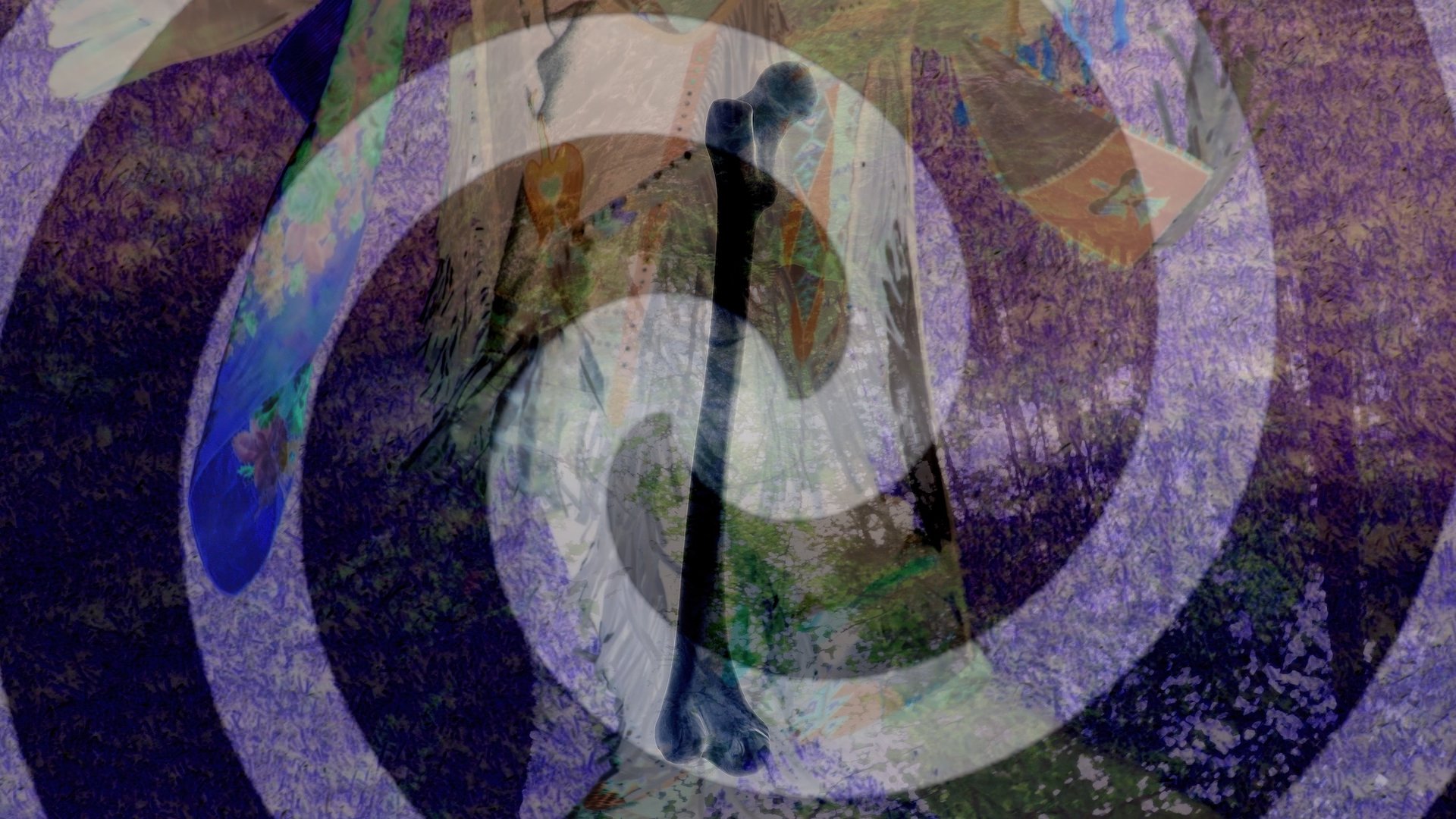
A sequence from the documentary film Aanikoobijigan [ancestor / great-grandparent / great-grandchild] (2026) Courtesy Ozhitoon Films
Making a film about the campaigns for ancestral repatriation can feel paradoxical. Native traditions forbid the depiction (and filming) of ancestral human remains—the film experiments with abstract forms of representation—and the goal in recovering the remains of ancestors is not to exhibit them but to rebury them—from the cold storage of museums back into the soil of their tribal territory.
“We emphasise this notion of relationship rather than our place on some made-up linear timeline,” says Blaire Morseay, a citizen of the Pokagon Band of Potawatomi Indians, archivist and associate professor at Michigan State University.
Even amid these disputes over heritage and historic wrongdoing, the Khalil brothers manage to find some moments of levity. Jonnie “Jay” Sam II, a tribal historic preservation officer in Michigan, cites fears conjured up by vengeful creatures in films, from Westerns to Poltergeist and Pet Sematary.
“Native Americans are bad,” Sam says. “You hear the drum, the drum stops, boom. You have an arrow in your pickle barrel. They’re bad when they’re alive because of that, but they’re worse when they’re dead, especially if you don’t know where they are.”
Over centuries since the first colonists’ arrival, many building projects have disturbed countless Native American burial sites. Native graves had no significant legal protection in the US until the passage of the federal Native American Graves Protection and Repatriation Act (Nagpra) of 1990. With that law’s passage and recent updating, perhaps successful repatriation campaigns like the one chronicled in Aanikoobijigan will become more frequent.
- Aanikoobijigan [ancestor/great-grandparent/great-grandchild] was shown as part of the 2026 Sundance Film Festival in Park City, Utah