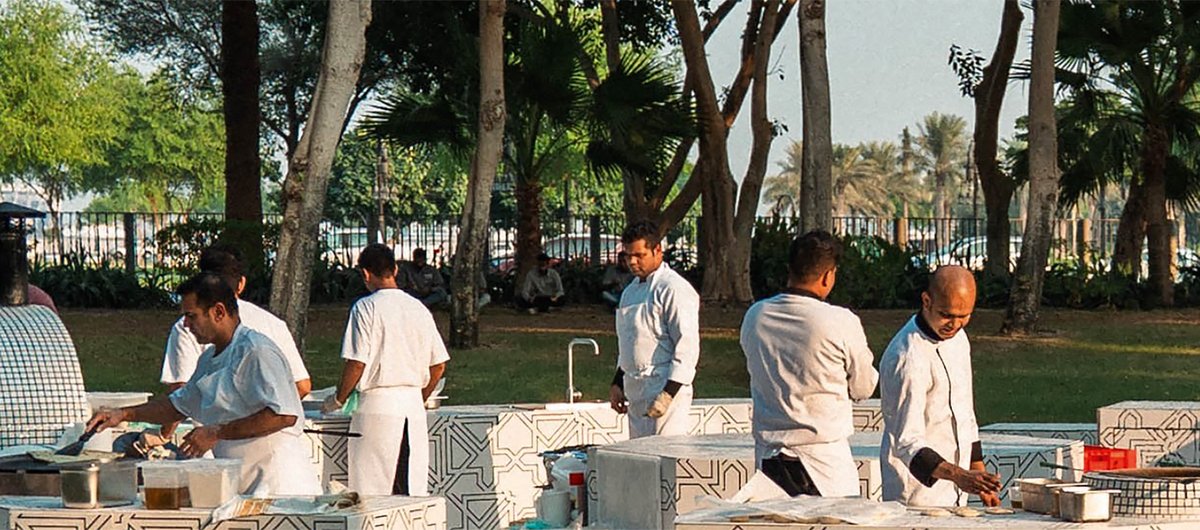
Rirkrit Tiravanija: Untitled 2025 (no bread no ashes)
MIA Park, until 6 February
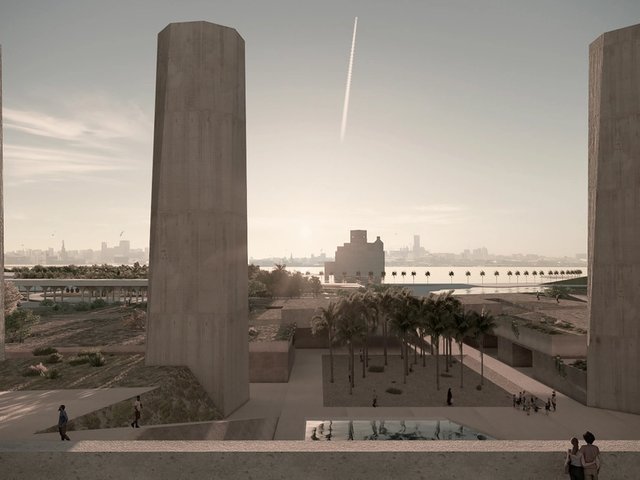
Untitled 2025 (no bread no ashes) is an interactive installation by the Thai contemporary artist Rirkrit Tiravanija, structured around traditional bakery ovens from across the region. The installation (pictured above) is conceived as an open space that allows for both baking and informal gatherings, thus reconfirming its purpose in fostering cultural interconnectedness.
Every Friday, the site hosts several baking sessions that prepare different types of bread from various culinary traditions. During these sessions, Tiravanija is present on site, baking and interacting with the public in an act of participation and connectivity. In line with Tiravanija’s longstanding practice, the installation focuses on cultural proximity and community engagement, with art acting as a catalyst for a shared experience.
The installation was inspired by the Argentine artist Victor Grippo’s 1972 performance in Buenos Aires, during which he built a wood-fire oven and baked bread that was then distributed to the public. Revisiting this gesture, the Doha installation represents Tiravanija’s reinterpretation of the bakery oven and griddle not only as functional objects but as tools for social exchange.
Running until 6 February, the work is part of a broad series of events leading up to the inaugural edition of Rubaiya Qatar in November 2026—a multidisciplinary arts quadrennial that will take place across a number of sites.
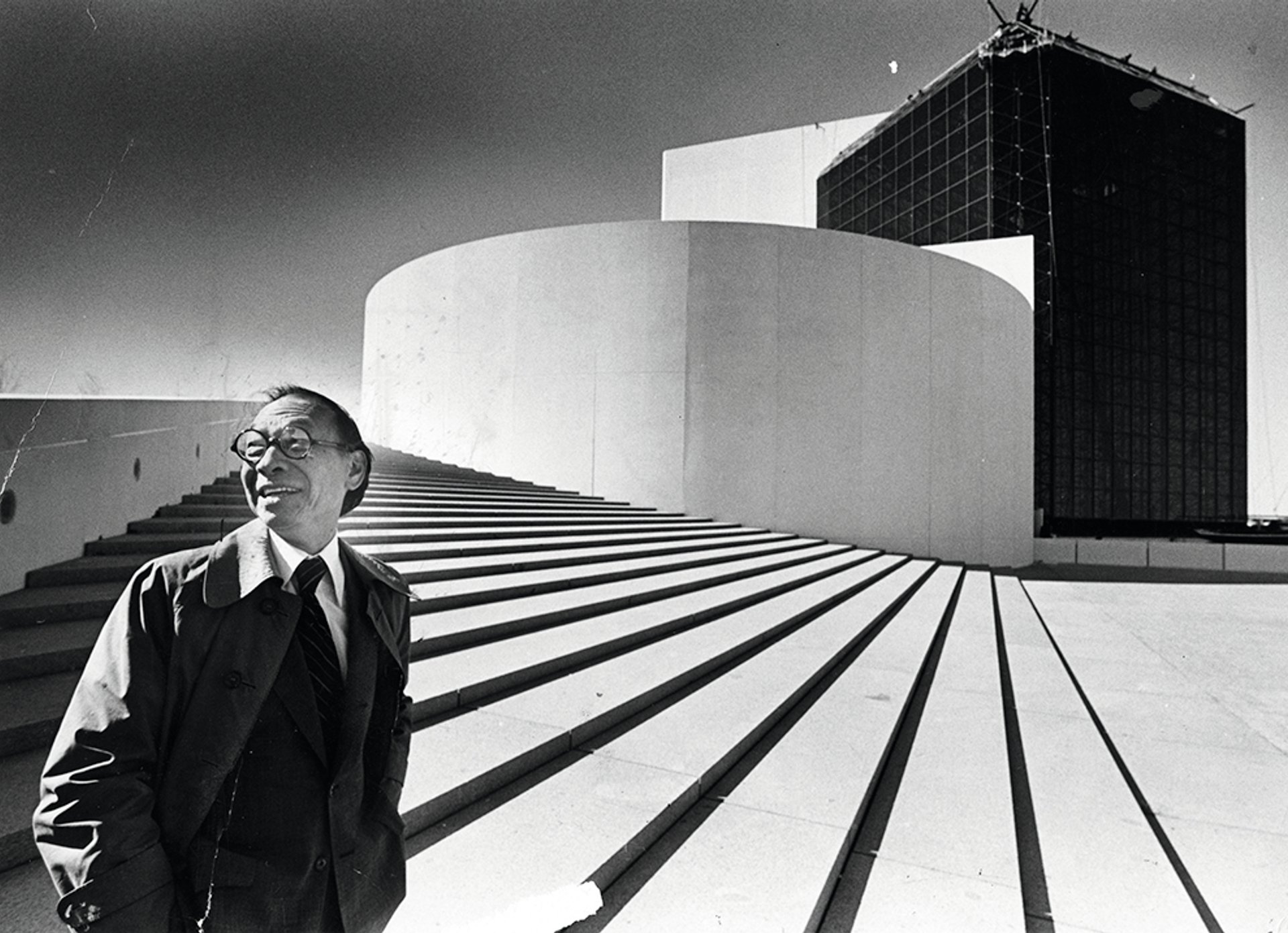
I.M. Pei’s seven-decade career is explored at the ALRIWAQ Gallery, while the Museum of Islamic Art focuses on his journey to create the institution © Ted Dully/The Boston Globe via Getty Images
I.M. Pei: Life Is Architecture
AlRiwaq Gallery, until 14 February
I.M. Pei and the Making of the Museum of Islamic Art: From Square to Octagon and Octagon to Circle
Museum of Islamic Art, until 14 February
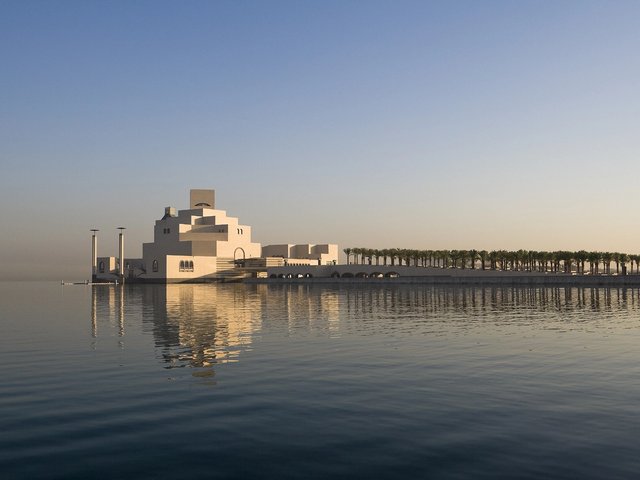
Qatar Museums is currently presenting two exhibitions dedicated to the legacy and vision of the Chinese American architect Ieoh Ming Pei (1917-2019), examining both the breadth of his international career and his journey to realising one of Qatar’s cultural landmarks, the Museum of Islamic Art (MIA).
I.M. Pei: Life Is Architecture brings together more than 400 objects spanning Pei’s seven-decade career, including rare archival materials, architectural models, photographs, and films from institutional and private collections. Organised in collaboration with M+ in Hong Kong, the show explores Pei’s development as an architect and his engagement with cultural context, geometry, and metals such as glass and stone. Newly commissioned photographs of 11 of Pei’s completed projects taken during the Covid-19 pandemic, in addition to five new models of his realised and unrealised projects, offer a contemporary perspective of Pei’s portfolio, which includes landmarks such as the Louvre Pyramid, the MIA and the East Building of Washington, DC’s National Gallery of Art.
Running concurrently, I.M. Pei and the Making of the Museum of Islamic Art: From Square to Octagon and Octagon to Circle focuses on Pei’s process to design the museum, which was commissioned in 1999 by Sheikh Hamad bin Khalifa Al Thani. Jointly organised by MIA and the Art Mill Museum, the exhibition retraces Pei’s journey and extensive research of Islamic architecture traditions, and showcases original sketches, models, newly commissioned films, early photographs and archival documents.
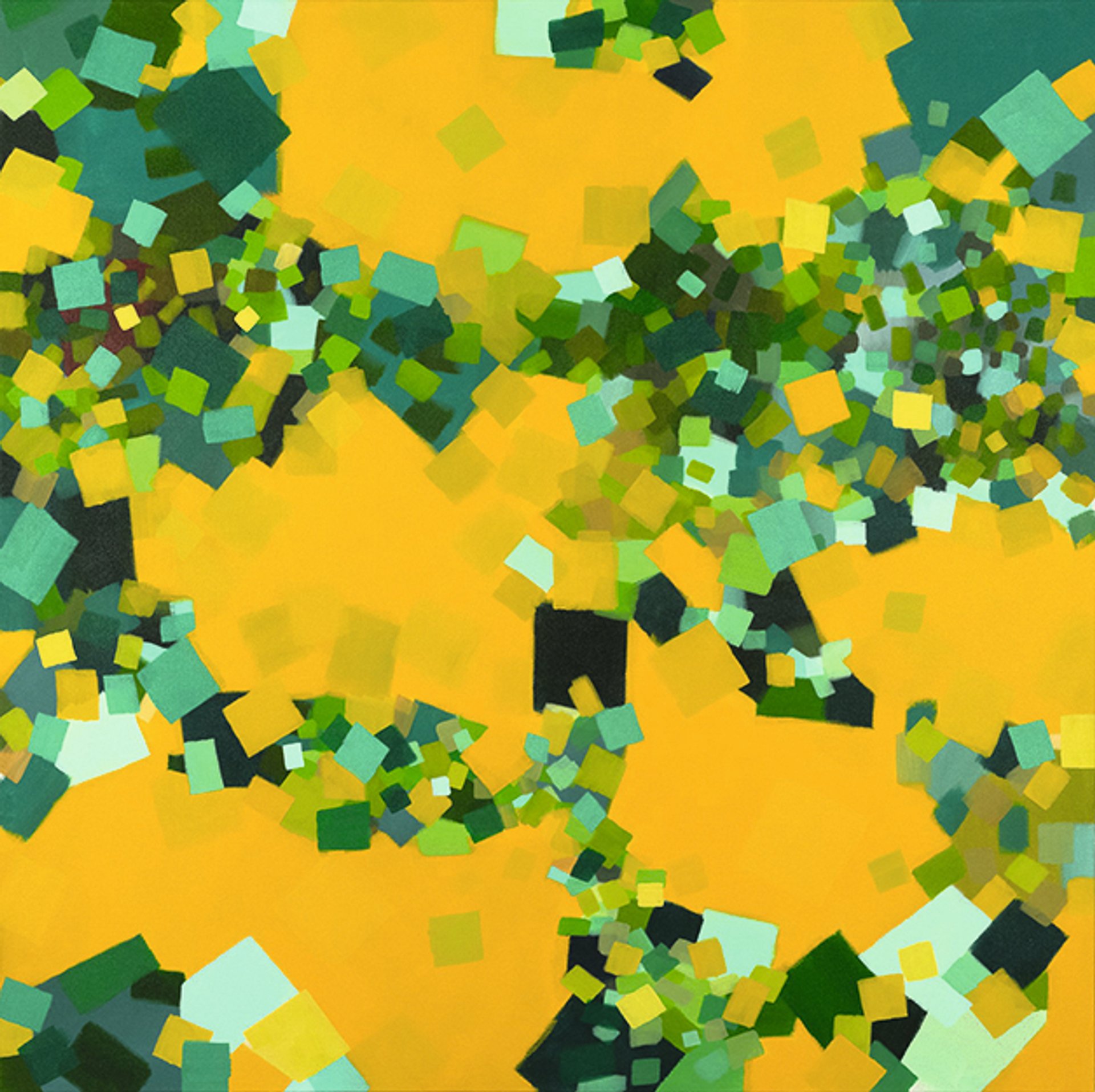
Samia Halaby’s Six Golden Heroes (2021) commemorates a 1979 Israeli prison break Photo: © and courtesy of Mathaf—Arab Museum of Modern Art
we refuse_d
Mathaf: Arab Museum of Modern Art, until 9 February
This group exhibition explores the tensions between refusal, resilience and artistic freedom through works by 15 contemporary regional artists from four generations. The museum describes it as a space of solidarity and a collective statement by artists who believe in the necessity of making art.
The exhibition features works by the artists Taysir Batniji, DAAR (Sandi Hilal & Alessandro Petti), Barış Doğrusöz, Samia Halaby, Majd Abdel Hamid, Emily Jacir, Jumana Manna, Walid Raad, Khalil Rabah, Yasmine Eid Sabbagh, Nour Shantout, Suha Shoman, Dima Srouji, Oraib Toukan and Abdul Hay Mosallam Zarara. Among the highlights is Six Golden Heroes (2021) by the acclaimed Palestinian visual artist, activist and scholar Halaby, commemorating the escape of Palestinian political prisoners from an Israeli prison in 1979. The work was controversially removed from an exhibition at Michigan State University in 2024.
Another key work is Resonance (2025), by the Palestinian visual artist Majd Abdel Hamid, comprising of small-scale embroideries, an album with pictures of a succulent plant and objects displayed in a chest of drawers.
The show is curated by the art historian and curator Nadia Radwan and Vasıf Kortun, a Turkish curator and writer.