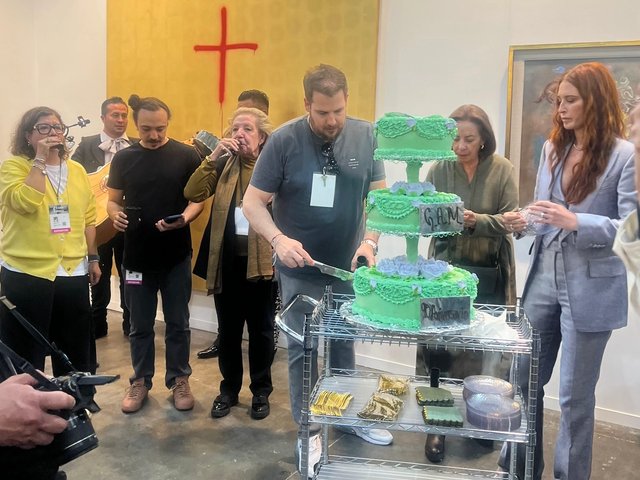
The Museo Experimental El Eco, one of Mexico City’s most unusual buildings from the 1950s, is marking the 20th anniversary of its reopening with an exhibition featuring new commissions and a cross-disciplinary performance. The milestone coincides with last summer’s announcement that the institution—designed by the German Mexican artist Mathias Goeritz (1915-90)—is on the path to national heritage status.
El Eco’s story reflects Mexico’s creative climate in the 1950s, when Muralism was nearing its final phase. By then, Goeritz, who arrived in Mexico in 1949, was part of the city’s progressive scene. “Goeritz was a point of contact between Mexico and the European vanguards, including the Bauhaus and Spain’s Altamira school,” says Pablo Landa, the museum’s director. “He synthesised both into a unique project.”
In 1952, the Mexican gallerist and restaurateur Daniel Mont commissioned Goeritz to create a new venue, including a bar, giving him total creative freedom. Goeritz, primarily a sculptor, envisioned an inhabitable sculpture in which varied disciplines would coexist. The space also embodies his Emotional Architecture Manifesto (1953), centred on the emotion a space inspires, here achieved through steep angles and striking colours.
“El Eco is the first space in Latin America specifically designed to exhibit modern art,” Landa says. “It was controversial as it broke with traditional exhibiting practices, reflecting a different type of architecture.”
A short-lived project reborn
The project did not last long. After Mont’s sudden death in 1953, it was repurposed as a cabaret, bar and theatre. In 2004, the Universidad Nacional Autónoma de México (Unam) acquired the then-abandoned property and restored it. “Every aspect was considered,” Landa says, “from the patio floor to Goeritz’s exact palette, influenced by Luis Barragán, with whom he was close and collaborated on other projects.”
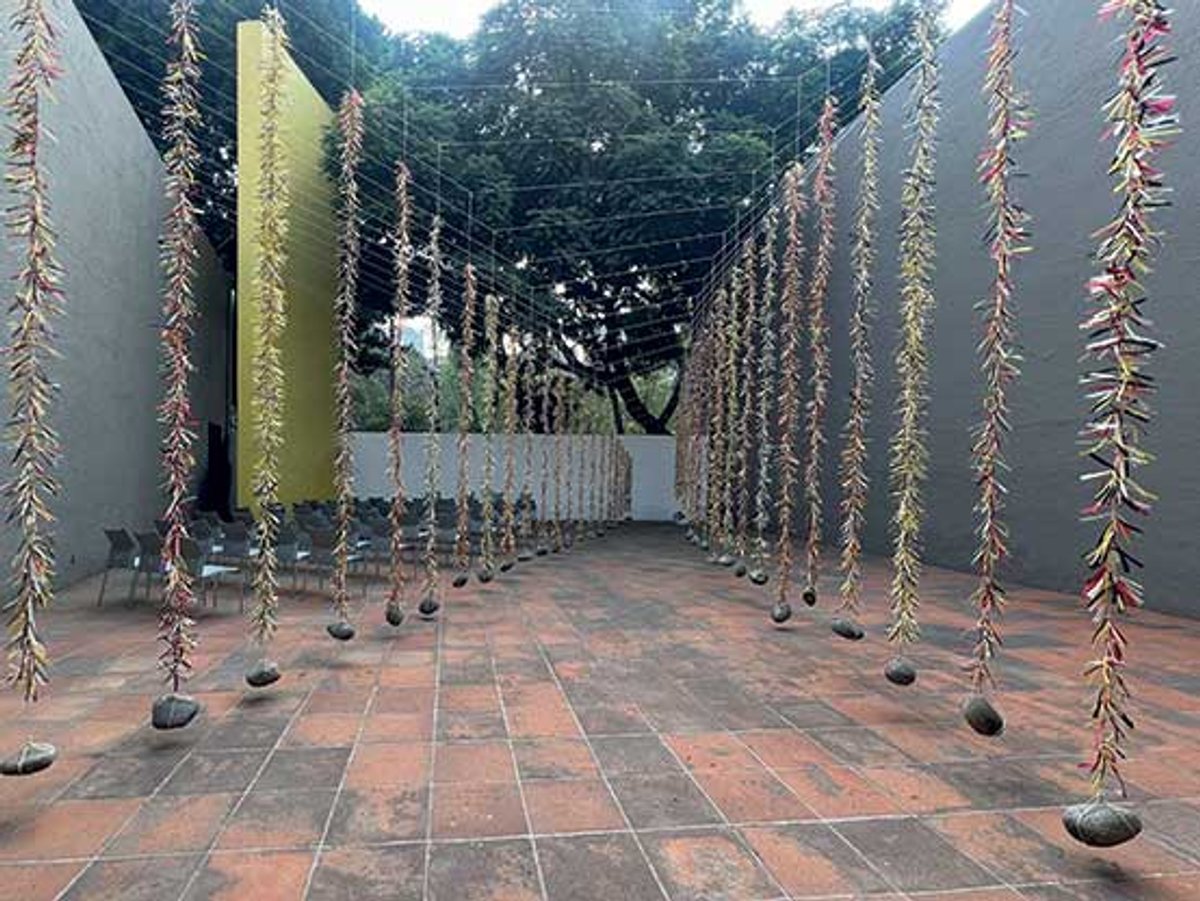
Rather than creating a historic museum, Unam, through its dirección general de artes visuales, sought to revive Goeritz’s vision through temporary programming of site-specific projects in dialogue with the space. The patio—where Goeritz originally installed his steel sculpture Serpiente de El Eco (1953), now exhibited at the Museo de Arte Moderno—is often a protagonist. The original bar counter was kept, in line with Mont’s vision. Since its reopening exhibition, curated by then-director Guillermo Santamarina and featuring Gabriel Orozco’s football installation Balones acelerados (2005), the museum has hosted multiple projects.
The lengthy process for heritage designation, now under official review, would guarantee the site’s longgevity. “We are waiting on a final resolution after working on all the requirements for over two years,” Landa says.
The current anniversary exhibition, Atmósfera Total (until February), includes documentation and images from El Eco’s history as well as new commissions by the Mexican artist Leo Marz and the Spanish Alberto Odériz on the ground floor and patio, framing El Eco as a total artwork.
During Art Week, a newly commissioned performance inspired by El Eco’s opening experimental performance on 7 September 1953, which featured Walter Nicks’s Ballet Negro. The new performance will bring together dance and music by the ballroom collective Sinfonía 007 and the ensemble Piñata en Llama, with costumes by fashion designer Aurea Bucio (5 February, 7pm).