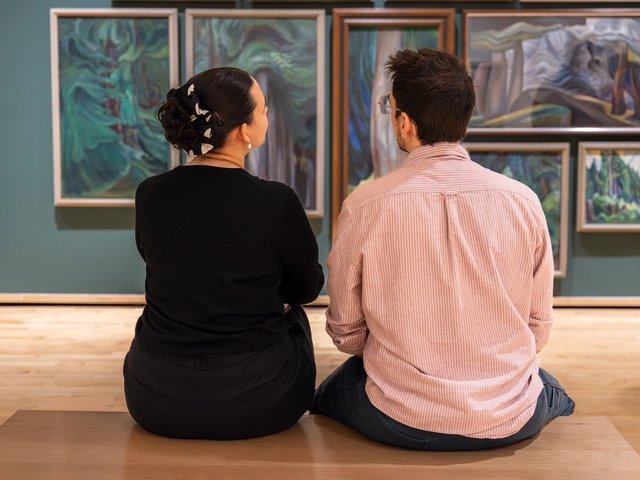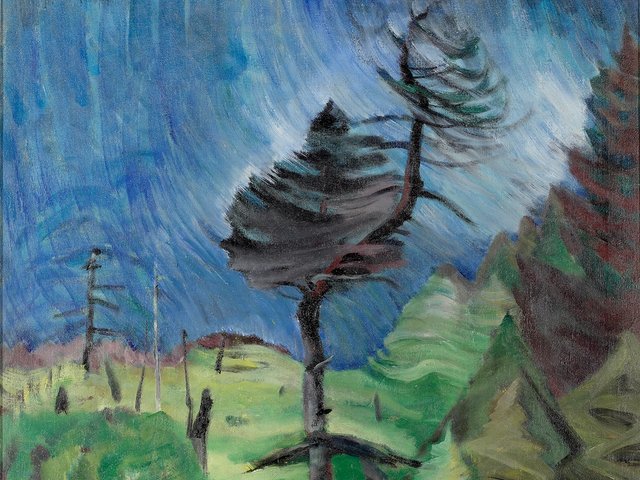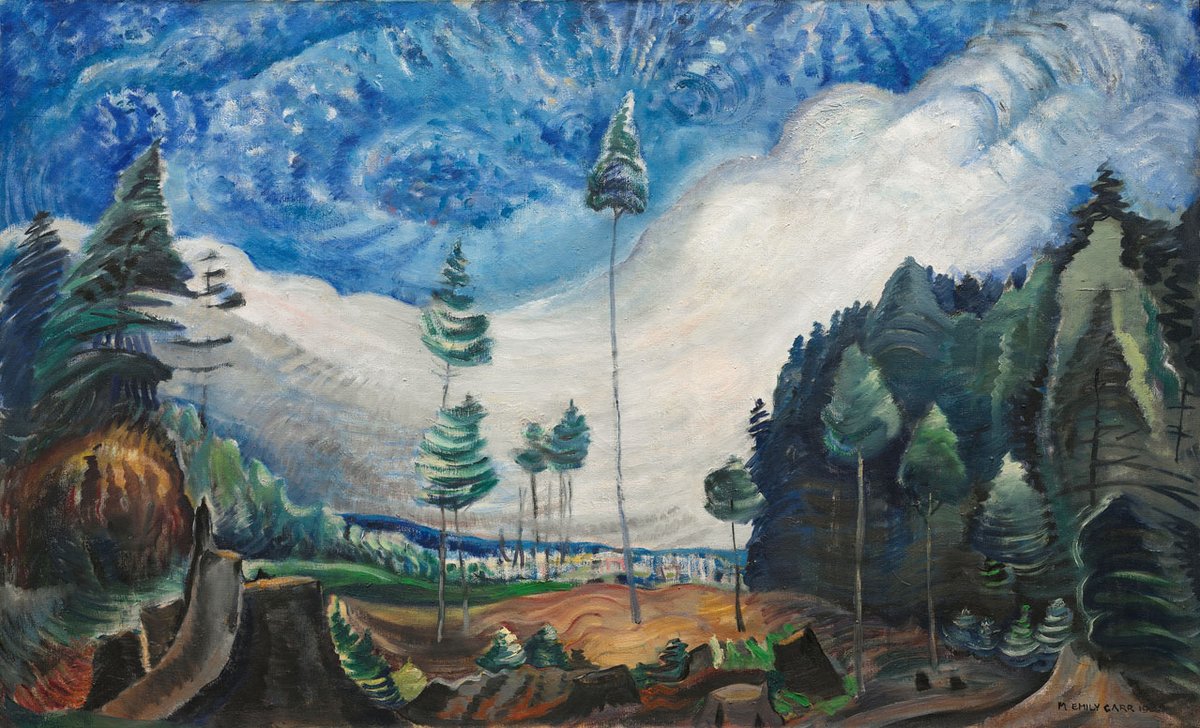
A sweeping exhibition of Emily Carr’s landscapes, depicting her native British Columbia, will open this month at the Vancouver Art Gallery. That Green Ideal: Emily Carr and the Idea of Nature will feature work primarily from the museum’s collection—the most comprehensive holdings of her work in the world—and draw on the strengths of a small exhibition last year curated by the museum’s Richard Hill, which explored spatial metaphor in the Canadian artist’s landscapes.
“I think Carr is a remarkable Modernist landscape painter who has been largely overlooked in the wider history of Modernism,” Hill says. “Her intense commitment to art, despite sexist assumptions about her potential as a woman artist and her geographic isolation from the mainstream art world, are a story I think many people would find fascinating if given a chance to hear it and see the work.”
Carr “was both a careful observer and someone who sought spiritual transcendence in communion with nature”, according to a press statement. The artist once termed it “that green ideal”, which has inspired the show’s title. Carr often wrote about this process in her journals, excerpts of which will be featured in the exhibition.
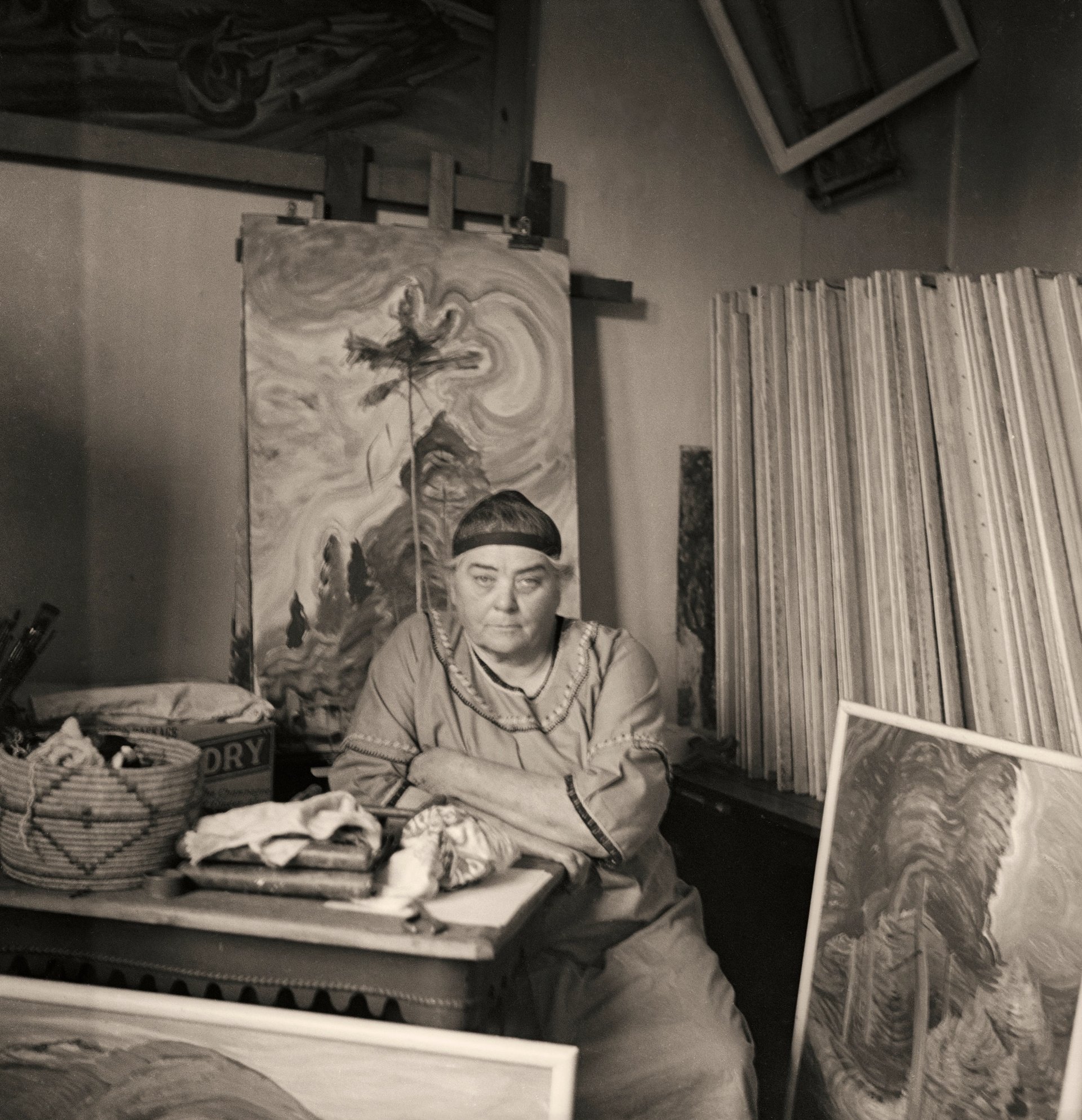
A photography of Emily Carr in Her Studio in 1939 by Harold Mortimer-Lamb Collection of the Vancouver Art Gallery, Gift of Claudia Beck and Andrew Gruft
Fauvist-inspired palette
Born in Victoria in 1871, Carr studied art in both San Francisco and London before later spending time in France, where she developed a distinctive post-Impressionist style with a Fauvist-inspired palette, which would define much of her later work.
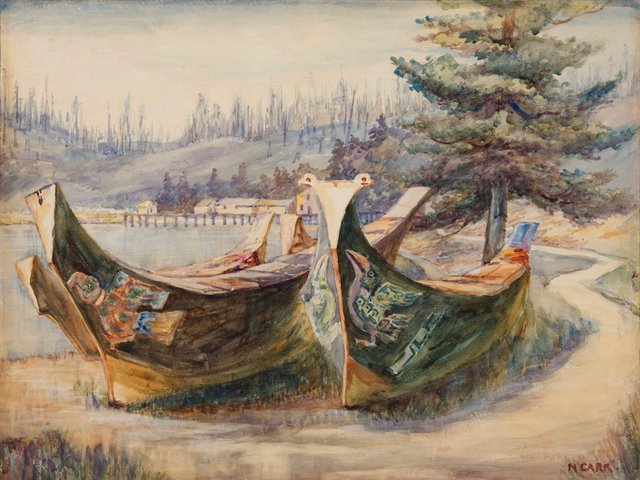
In 1912 Carr undertook an ambitious sketching trip to the Haida Gwaii islands, off the coast of British Columbia, where she created a significant body of watercolours and canvases. According to the museum, these works fused her French training “with her deep engagement with the monumental forms of totem poles and village sites”. But a subsequent exhibition met with a mixed reception and Carr set aside painting for almost 15 years while she ran a boarding house in the city of Victoria. Carr’s professional resurrection came in 1927, after the inclusion of her work in the Exhibition of Canadian West Coast Art: Native and Modern at the National Gallery of Canada and recognition from the Group of Seven, a Canadian collective of landscape painters.
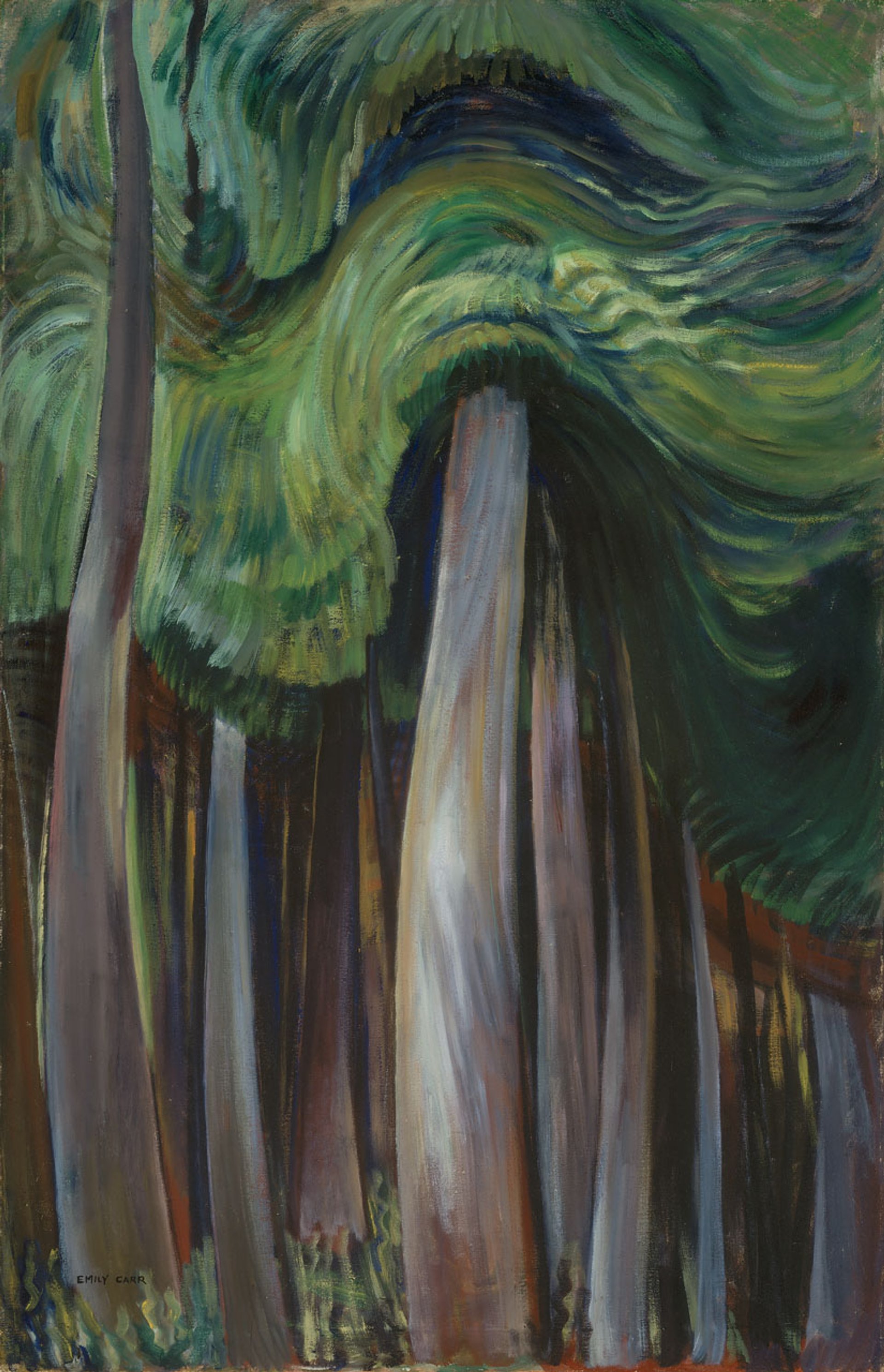
Works such as Forest (1931–33, above) highlight Emily Carr’s affinity with the nature of British Columbia Courtesy of Vancouver Art Gallery
The Vancouver show will also include key works on paper from a period when Carr was developing a new approach after meeting the Group of Seven. “One of the challenges of Carr’s mature practice is how many important works are on paper and have to be limited in their exposure to light,” Hill says. “In particular, we have an amazing collection of charcoal drawings that we don’t often get to show, and over the course of the exhibition we’ll get almost all of them on display.” The gallery will change the display halfway through the run of the show, to limit light exposure. “They are stunning,” Hill adds. “Likewise, the very expressive paintings on paper she did later in her career, mixing oil paint with gasoline to create a very fluid style,” which will also be shown.
Hill says that recent criticism from the Haida scholar Marcia Crosby, of Carr’s conflation of Indigenous culture with nature, will also be included in the exhibition. The show will examine “the sources of this idea in the Modernist primitivism/vitalism that she was exposed to in France and then via [the Canadian artist] Lawren Harris and [the anthropologist] Marius Barbeau”. Hence, Hill says, “the change in her final works from attempting to achieve spatial proximity to nature to imagining herself at one with nature”.
•That Green Ideal: Emily Carr and the Idea of Nature, Vancouver Art Gallery, 6 February-8 November