The Syrian city of Al-Hasakah is suddenly the owner of a handsome archaeological museum that has never opened its doors to the public—a welcome peace dividend that the local government and an NGO are hoping will soon play a role in healing a war-weary society.
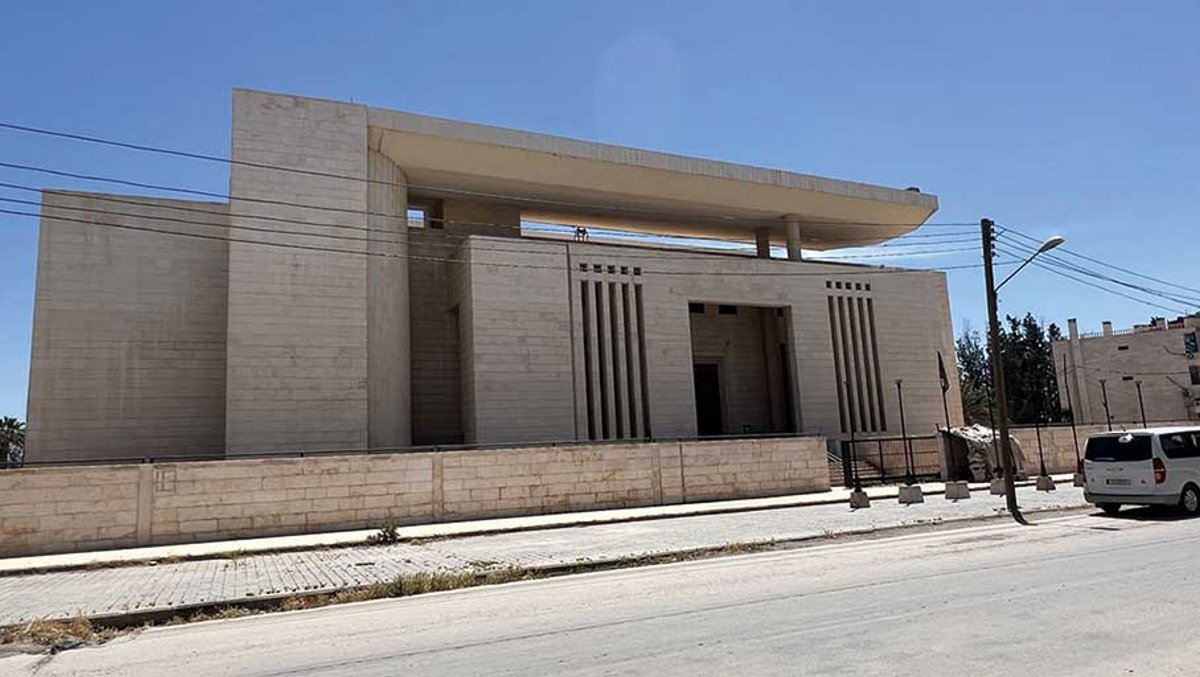
Construction on the Hasakah Museum began in 2002, under Bashar al-Assad’s regime. Designed in a sleek Modernist style, the museum was to house the artefacts found in nearby excavations, such as those at Tell Mozan, home of the fourth millennium BC city-state of Urkesh.
But Syria’s civil war began before the museum was finished or the collection installed. In 2011, according to Montasir Qasim, director of the Antiquities and Museums Department in the Al-Jazira region, Assad’s military forces occupied the building and began using it as a base and weapons depot.
As the war progressed, Al-Hasakah became a flashpoint for the numerous militias fighting in the north. Though the majority Kurdish Al-Jazira area was under the control of Kurdish and Syrian Democratic Forces, the Assad regime occupied part of Al-Hasakah, and in 2016 set up a security perimeter within the centre of the city.
Known as the Hasakah Security Box, the zone included government buildings such as the police and interior ministry offices, a command centre for the army and the mayor’s residence—as well as the Hasakah Museum, which had by then been completed. The security zone lasted until December 2024, when Ahmed al-Sharaa’s forces toppled the Ba’athist regime. Assad’s security forces left Al-Hasakah and non-governmental officials were allowed into the centre of the city.
For many residents, it was the first time they had seen the museum, says Mehmet Balci, who runs the NGO Fight for Humanity.
“It was a wonderful feeling,” Qasim says. “This is the only museum in Al-Hasakah Governorate, and we were waiting for the military forces to withdraw so we could open it and display the artefacts there.”
The museum is spread out over three floors, with two enormous galleries for artefacts and paintings, a tall entrance hall for displaying large pieces and sculptures, and a basement for administrative offices. It is three times larger than the nearby Raqqa Museum, whose own extraordinary collection was looted during the war.
Cleaning up the mess
Over the past year the local government has cleaned up the remains of the museum’s military occupation—a requisition of a cultural site that was a war crime under the 1954 Hague Convention. They dismantled the metal bunk beds that had been set up in the offices, swept away the bullet casings and removed the sandbags that were littered across the floor. Fight for Humanity is now seeking funding for the rehabilitation of the building, as its electricity, plumbing and air-conditioning are all in need of repair. The next step will be to secure the collection.
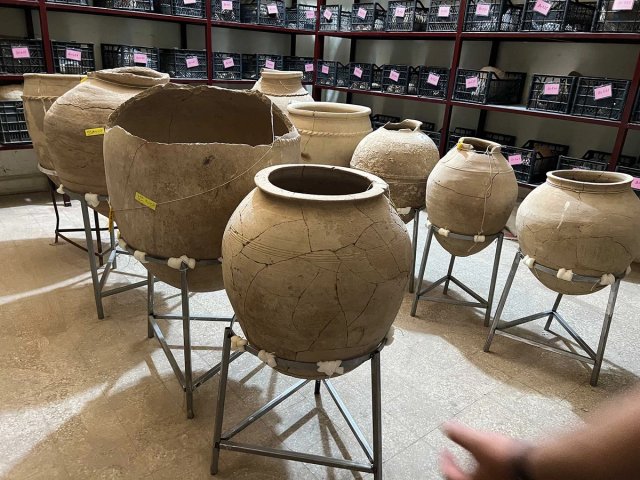
“We, as the Directorate of Antiquities of Northeast Syria, now have warehouses containing approximately 8,000 artefacts,” Qasim says. One of these is the basement warehouse in Rmelan, where archeologists quickly moved artefacts as Islamic State entered the area, and which has been managed by Fight for Humanity. Other objects are being discovered in the ongoing US-led excavation at Tell Mozan and others.
The museum is also significant due to its location and the ethnic make-up of the area. The communities of Syria’s northeastern region, also known as Rojava, or Western Kurdistan, were heavily persecuted by Assad’s regime in Damascus.
Until recently, its three provinces, Al-Hasakah, Raqqa and Deir ez-Zor, were under the control of the Syrian Democratic Forces (SDF) rather than of Ahmed al-Sharaa’s government. An agreement reached at the end of December, however, ceded the control of the region to Damascus. In early January, the BBC reported that 12 died in clashes between the SDF and the Syrian government in Aleppo, around 200 miles away from Hasakah and under government control.
In the context of a divided country emerging from war, the Hasakah Museum has an important role to play, Balci says.
“You have so many communities here—Armenians, Assyrians, Arabs, Kurds—and the area’s heritage is for all of them,” he says. “The museum can bring people together to contribute to the pacification of society. The museum is like church. Once you enter, you change, you go back hundreds, thousands of years, and you forget the present. And then people become silent. We become amazed by all these items.”