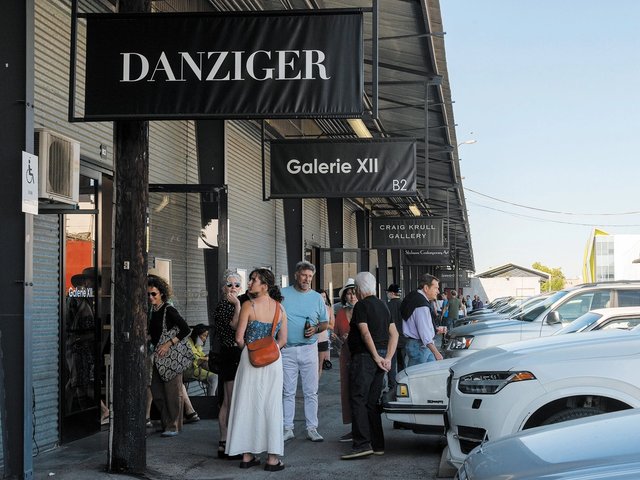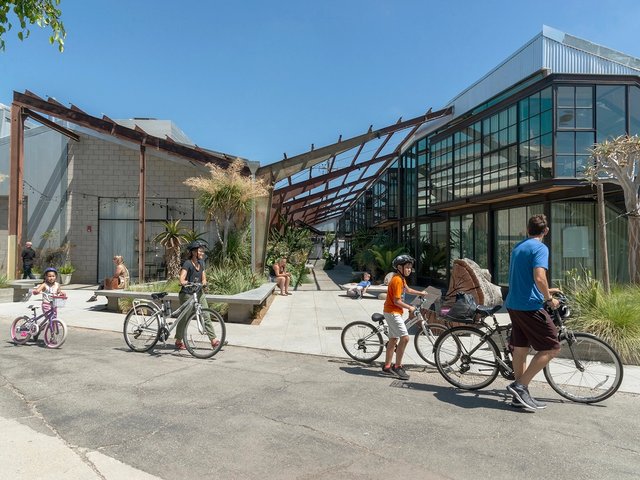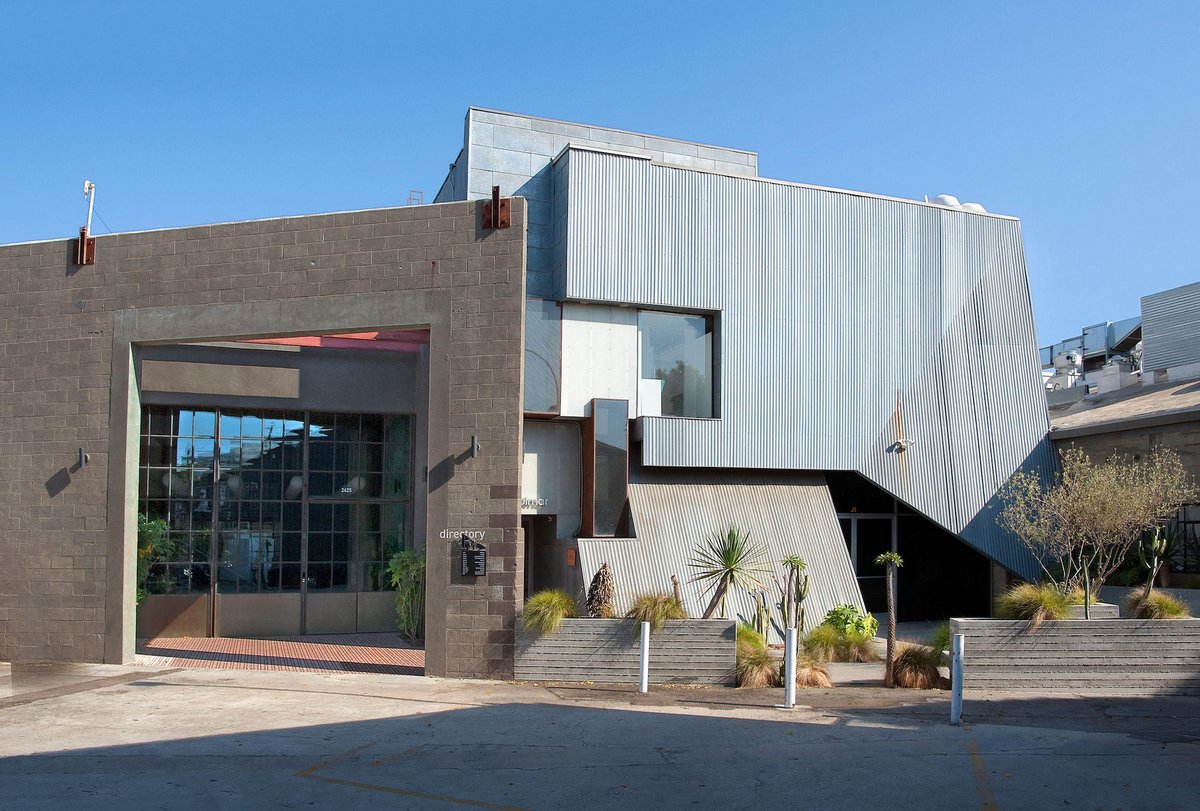
Bergamot Station, a city-owned and tenant-run arts complex in Santa Monica, California is facing possible demolition after decades of tensions between tenants and the municipality of Santa Monica. The 5.6-acre campus is home to 18 art galleries, studios and cultural venues, and has long been considered an important cultural hub in Los Angeles. But many tenants feel the city refuses to recognise it as such and wants to use the land to build a housing project mandated by California Senate Bill 79, legislation aimed at facilitating high-density development in transit-rich areas to help address the state’s housing crisis, which was signed into law by governor Gavin Newsome last October.
Even before the bill passed, the wheels of Bergamot Station’s possible demise were in motion. In February 2025, the city of Santa Monica reclassified the property as “surplus land”. Tenants were informed they would have around two years to vacate the property. In June 2025, the city issued a request for proposals inviting developers to submit plans. The proposals would allow demolition of the existing galleries and replacement with private development. According to tenants, their galleries and spaces have not been included in plans for the development.
The Bergamot Station Arts Center—so named because it was the site of a railroad station from 1875 to 1953—opened 1994 and was organised by Wayne Blank as one of the first gallery-sharing art complexes in the United States. “We created a very special environment which resonated around the world,” says Craig Krull, who has operated a gallery at Bergamot Station since 1994.
The complex became a widely emulated model for a collectively bootstrapped arts destination, offering free public access, parking, non-profit theatre, educational programmig and community events. “We were the first stop for so many people internationally,” Krull says. “They didn’t even go to their hotels. They came to us first.”
Tenants describe a history of failed redevelopment plans, management changes, liens, evictions and rent increases that have undermined the complex’s long-term stability. From its inception, the relationship between Bergamot Station and the city was strained and unstable.
Under new management
According to Robert Berman, who has run his namesake gallery in Santa Monica since 1979, he has been trying to secure historic landmark designation for Bergamot Station for decades but the city has refused. “I think their goal is to alienate the tenants so they move out or they evict to make it easier for them to demolish,” Berman says.
Tenants say they noticed an immediate shift in the atmosphere at Bergamot Station in 2024, when the company Rising Realty Partners took over property management responsibilities at the site. Representatives for Rising Realty Partners and the city of Santa Monica did not respond to repeated inquiries from The Art Newspaper.

A mural at Bergamot Station references the site's former industrial functions Photo by dvcronan, via Flickr
Rose Shoshana, who has maintained a gallery space at Bergamot for 32 years, says the atmosphere at the site changed dramatically after the introduction of private security. She says security guards have been hostile toward visitors, behaviour she says she had never experienced during her previous decades as a tenant.
In one alleged incident, Shoshana says a guard approached a visitor claiming she “looked like she didn’t belong here”, and attempted to kick them off the property. Bathrooms have been locked and visitors’ cars have been towed, seemingly without reason. “You can’t decide who belongs here and who doesn’t,” Shoshana says. “This is a public space. A city-owned property.”
Tenants say such encounters have affected the site’s reputation as a free and open cultural venue. “This seemingly small incident represents a much larger issue,” Shoshana says. “The most important arts and culture complex in Santa Monica is now being threatened. The potential loss to the broader community would be profound.”
Tenants argue that the city’s approach bypasses meaningful public process and historic evaluation, and they question how demolition could proceed if Bergamot Station qualifies for landmark designation. Berman adds: “Santa Monica should be more than a boardwalk and a Ferris wheel.”
Charles Duncombe, the artistic director of the nonprofit City Garage Theatre, says Bergamot is central to Santa Monica’s cultural life and civic identity. “Until recently, the city has been arts- and culture-oriented,” Duncombe says. “The Cultural Affairs [Department] have never had a seat at the table.” He adds that the effect has been particularly damaging for organisations like his that operate in the evenings.
Airport versus station
Duncombe speculates that the city is under a strict deadline from the state to provide a certain amount of housing. But he wonders if the city could wait until the Santa Monica Airport property becomes available after it closes to aviation in December 2028.
“I don’t know the land portfolio of Santa Monica (city), but I’d imagine there’s another location they could install housing in,” said Krull. She adds that the airport and Barker Hangar location—which is hosting Frieze Los Angeles this week for the fourth year in a row—had been raised as a potential site for the housing development, but that the neighbours in the area have fought it because of the impact on traffic.
Krull adds the loss of Bergamot Station would be irreversible. “The city is losing an educational and cultural resource,” he says. “Bergamot cannot be recreated. It’s tragic.” He adds that the conflict has been painful for tenants who also support housing development. “We all know housing is important,” he says. “That’s why it’s been hard to stand up so fiercely.”
An online petition launched by the group Saving Bergamot has, as of this writing, gathered more than 1,300 signatures.
Tenants say the situation reflects a widening rift between the city, property managers and the cultural community at Bergamot Station. Berman says the city’s long-term objective has been clear. “We’re destined to be torn down,” he says. “We’re on death row and they’re not even giving us a last supper.”