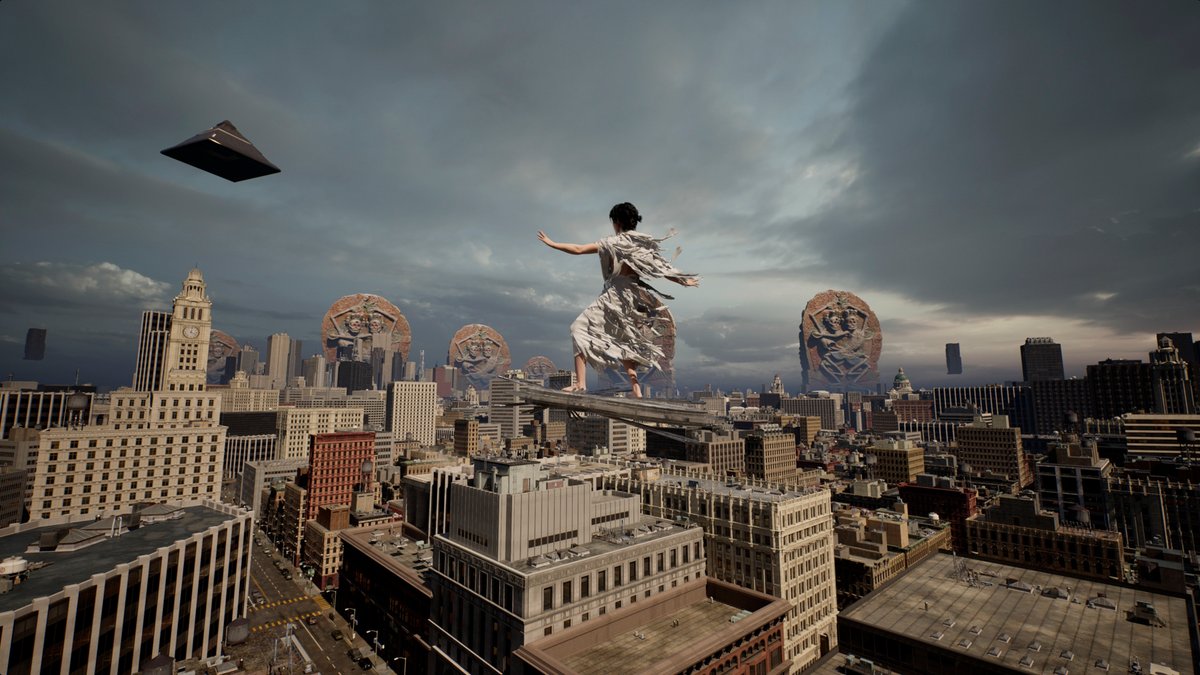
We were so thrilled when we found this building,” says the curator Udo Kittelmann while standing in front of the Variety Arts Theater in downtown Los Angeles, gesturing to its 1924 Italianate façade. It is dusk and, as the sky darkens, videos appear on either side of the entry—Dara Birnbaum’s Technology/Transformation: Wonder Woman (1978-79) on one monitor, Sturtevant’s Pacman (2012) on the other.
Inside the theatre is the first major US exhibition of time-based works from Germany’s lauded Julia Stoschek Foundation. The show’s title is taken from the Louis Armstrong song from 1967; it was ironic even then, coming out at a particularly tumultuous time.
Los Angeles was chosen for this exhibition because of its reputation as “the city of moving images—the historical and emotional epicentre of global cinema”, Stoschek tells The Art Newspaper. “This is where visual modernity began: from early silent film and the Golden Age of Hollywood to the digital dream factories of today. It is precisely here that a media art collection like mine, with works dating from the 1960s onwards, encounters its natural counterpart.”
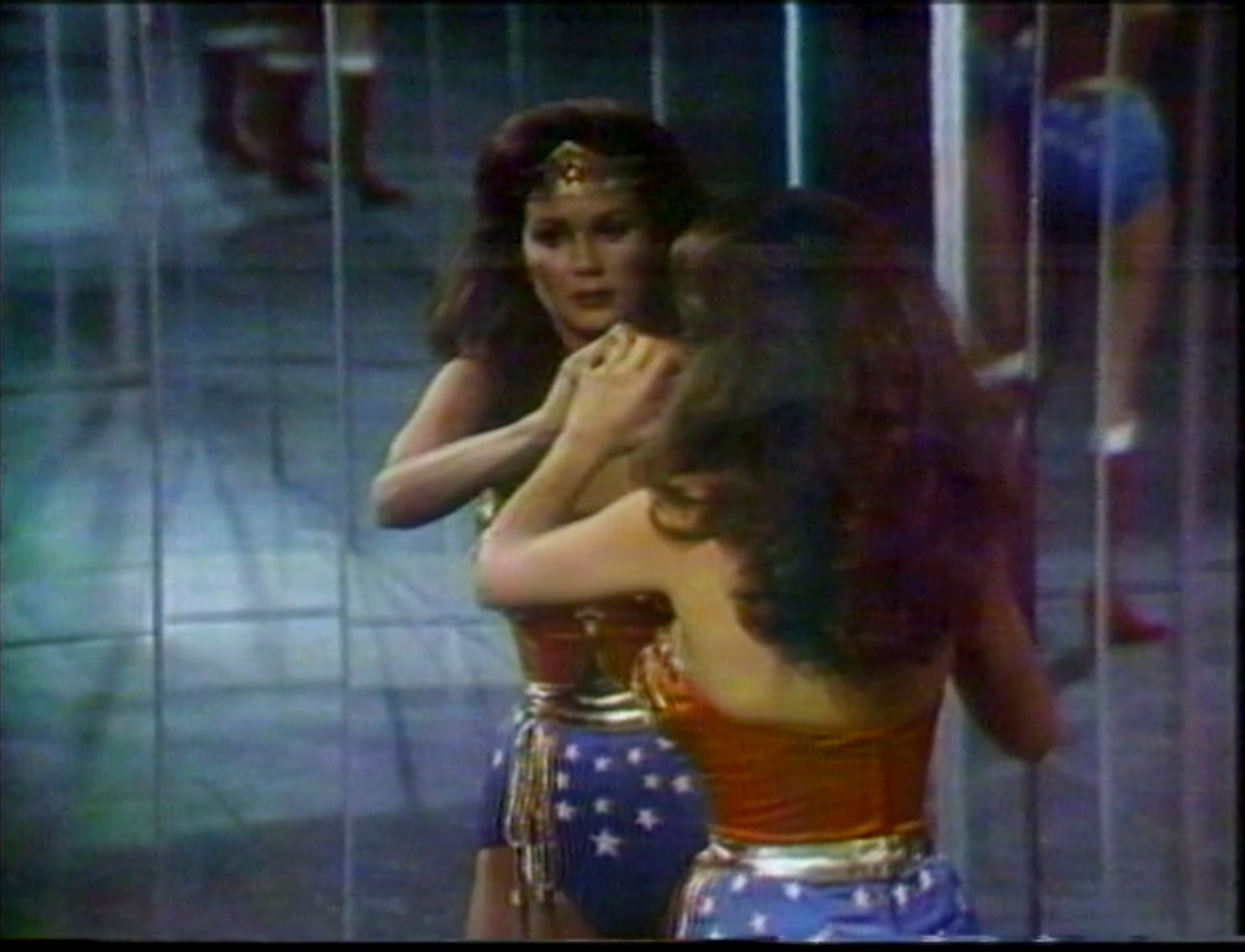
A still from Dara Birnbaum’s Technology/Transformation: Wonder Woman (1978-79), which uses imagery of the female superhero to explore concepts of identity
Courtesy of the artist and Electronic Arts Intermix, New York
More than 40 works are on view—some on monitors, others projected onto walls—throughout the labyrinthine theatre. The works were chosen by Kittelmann, who likes to refer to himself as an “editor” rather than a curator, and run the gamut from early motion-picture history (Alice Guy-Blaché and Georges Méliès) to contemporary works by Doug Aitken and Arthur Jafa. Pieces from the foundation’s collection are shown alongside a selection of borrowed and archival materials. (Admission is free; reservations are recommended.)
The building’s main theatre is a cavernous space screening a blurred image of a teeming crowd of people surging back and forth in Jon Rafman’s Oh, the humanity (2015). “You might take this as a metaphor to understand the whole project,” Kittelmann says. “It mirrors the times we are now confronted with.”
‘Magic and tragic’ works
Works on the mezzanine include two that can be seen from the floor of the theatre. Ana Mendieta’s Anima, Silueta de Cohetes (Firework Piece) (1976) features a burning effigy; meanwhile, found footage shows Nina Simone singing Sinnerman—about a man trying to run from Judgment Day. Kittelmann says that he has a particular interest in works that are “both magic and tragic”.
In an excerpt from the silent film Steamboat Bill, Jr. (1928), the side of a house falls on Buster Keaton—fortunately, he is standing in the open doorway and just misses being flattened. On the wall opposite is Monica Bonvicini’s Hammering Out (an old argument) (1998-2003), showing a close-up of a hammer taking out a brick wall.
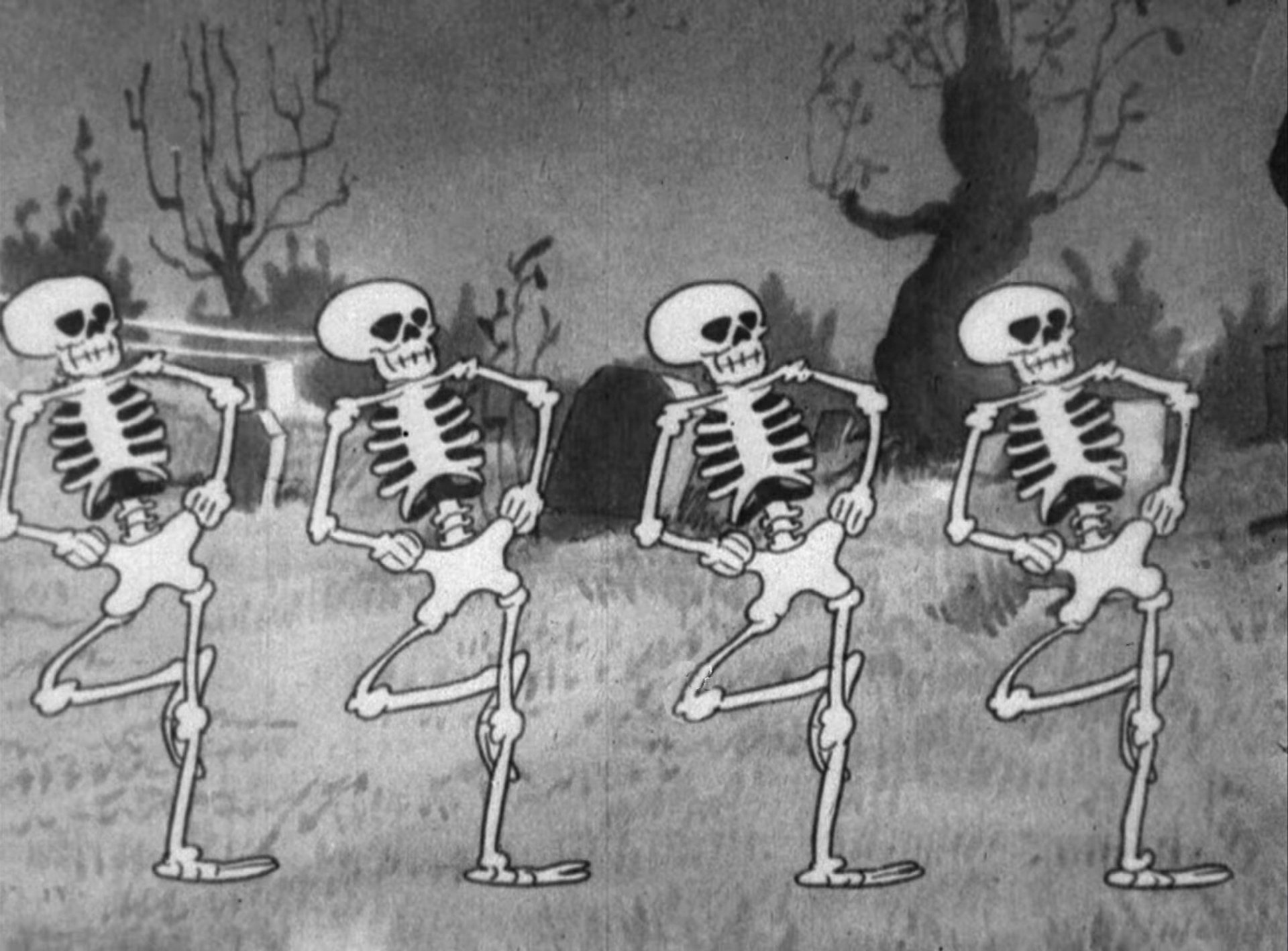
Among the early works from the foundation that are on show is Walt Disney’s 1929 The Skeleton Dance
Silly Symphonies / Walt Disney
One of the most startling works is the oldest film in the show. In Mister Delaware and the Boxing Kangaroo (1895) by Max Skladanowsky, a human boxer slugs it out with a kangaroo. Another eye-opener is Guy-Blaché’s The Consequences of Feminism (1906), an early and humorous take on a role reversal of the sexes—although it assumes that feminism means men will start sewing and ironing while women start smoking.
Sharing the basement level with Guy-Blaché are contemporary pieces that are more critical, ironic, even cynical. An early work by Chris Burden shows the artist sitting in front of the camera, making a Full Financial Disclosure (1977). In a deadpan voice, he talks about how much he earned in the past year minus his expenses for art supplies, yielding a net profit of just $1,054 (the equivalent of less than $7,000 today).
Nearby is one of the most emotional works, a Bunny Rogers animation. In Mandy’s Piano Solo in Columbine Cafeteria (2016), a young woman plays a melancholy tune while red wine is splattered on the ground. The piece references the 1999 Columbine High School massacre, when two students killed 13 people in a violent rampage. Shown in its own room, the installation features fake snow falling as visitors enter, mirroring the snow falling in the video.
- What a Wonderful World: An Audiovisual Poem, Julia Stoschek Foundation at Variety Arts Theater, Downtown Los Angeles, until 20 March