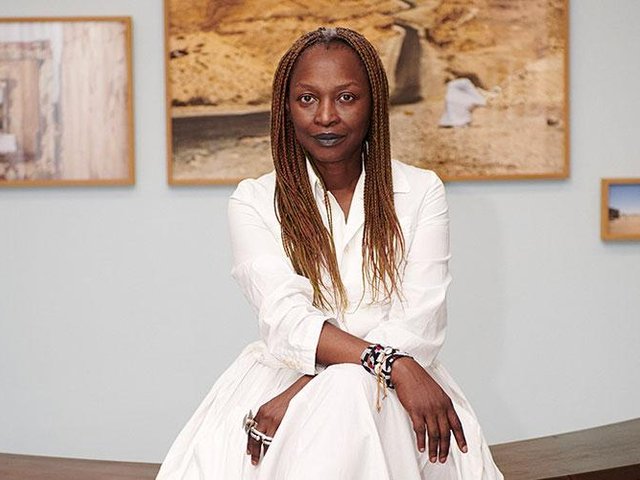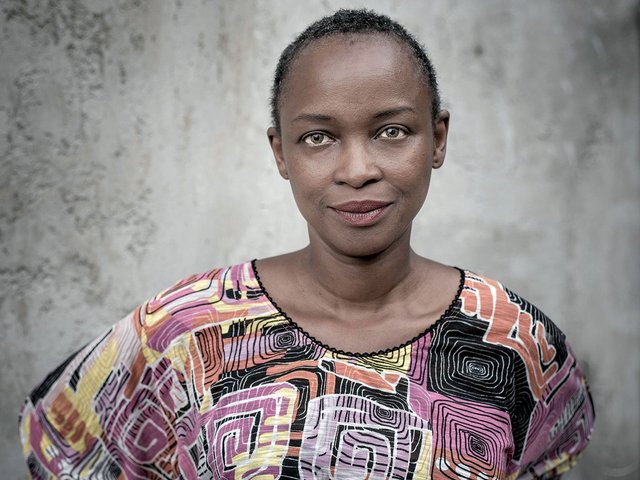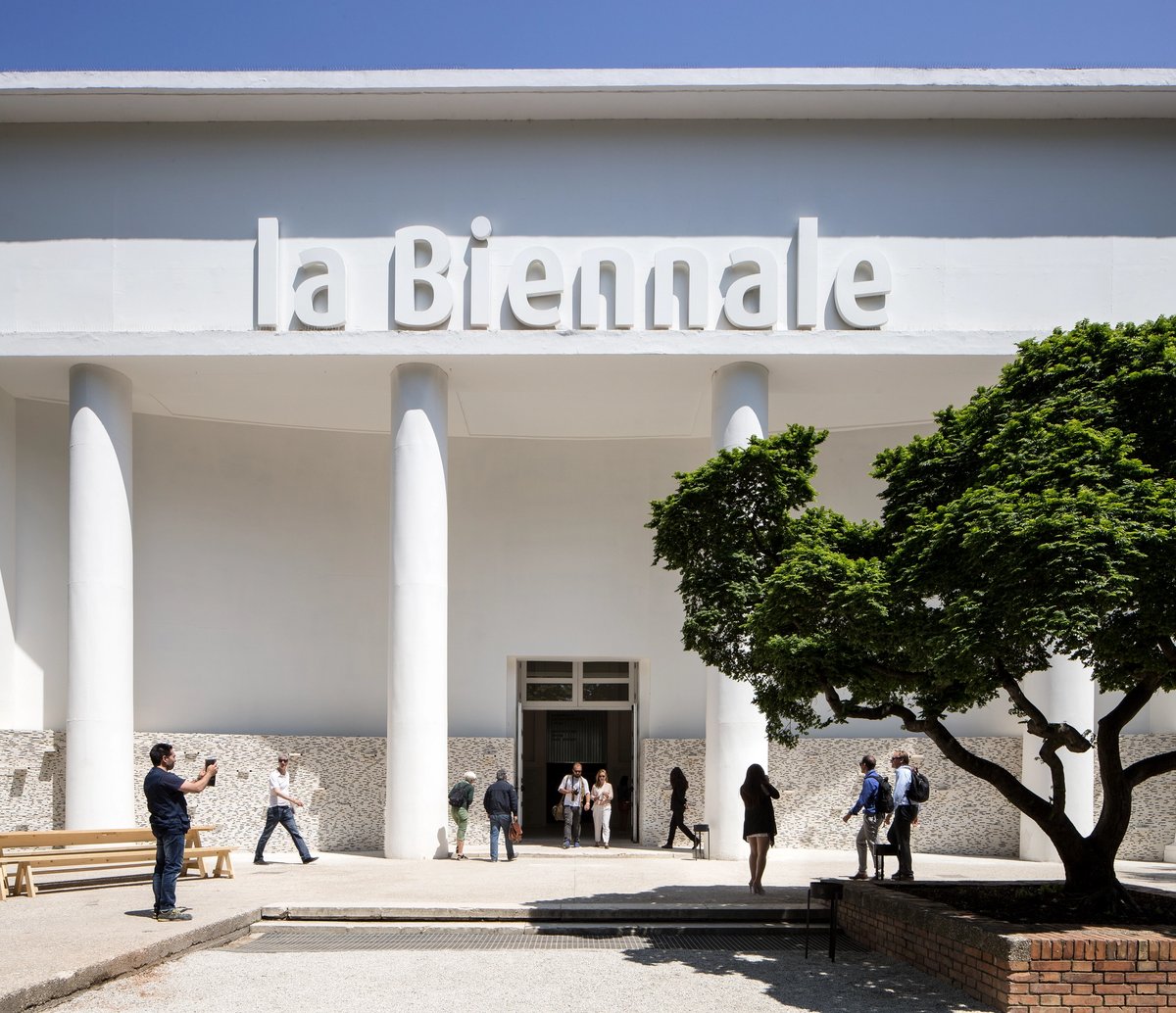
The curatorial vision of Koyo Kouoh, the late artistic director of this year’s Venice Biennale, has been announced at a briefing in the city. The 61st International Art Exhibition, titled In Minor Keys, will include 111 artists and artist collectives, with many participants coming from the Global South. The 2026 Biennale is scheduled to run from 9 May to 22 November.
Kouoh, a giant of the contemporary art world who tirelessly championed African artists, was the first woman from the continent to be selected to curate the Venice Biennale; she died last May in Basel, Switzerland.
At the briefing, Kouoh’s five-strong curatorial team elaborated on the themes of In Minor Keys, which was described as “neither a litany of commentary on world events, nor an escape from compounding or continuously intersecting crises”. Rather, it “proposes a radical connection with art’s natural habitat and role in society”.
“The artists [selected] are channels to the minor keys,” said one of the team, research assistant Rory Tsapayi. “[They all] stand as a collective score… artists who work at the boundaries of form. These are artists whose practices seamlessly bleed into society.” Gabe Beckhurst Feijoo, another member of the team, said that the the structure is “not abstractly determined… it is not organised in sections but in respect to undercurrent priorities.”
Another curator, Rasha Salti, described how the curatorial structure was devised. “After months of meeting online to discuss artists, [Kouoh] convened us in Dakar [at the arts centre she founded, Raw Material Company]. We gathered in April for an intense week of work. She was our conductor… she composed as we improvised. We noticed that fruit fell [from a mango tree] when the name of an artist was spoken. This happened often enough that when a name was spoken and no fruit fell, we paused, in expectation.”
The motifs of Kouoh’s show, which will be held in the Arsenale and Central Pavilion in the Giardini, are Shrines, Procession/Invocation, Schools, Enchantment, Physical and Spiritual Rest, the Threshold and the Creole Garden. Toni Morrison’s novel Beloved and Gabriel Garcia-Márquez’s One Hundred Years of Solitude are touchstones for the exhibition also.
The Shrines area will be in the Central Pavilion with tributes to the late Senegalese artist Issa Samb and the late African-American artist Beverly Buchanan. Artists whose work relates to the motif of Procession/Invocation include Nick Cave, Alvaro Barrington, Daniel Lind-Ramos, Ebony G. Patterson, Johannes Phokela, Tammy Nguyen and Kaloki Nyamai of Kenya. “Visitors are invited to become part of these assemblies,” said another curator, Marie Hélène Pereira.
The Schools motif will incorporate organisations dedicated to “networks that sustain artists” added Pereira. These bodies include the Nairobi Contemporary Art Institute, the GAS Foundation in Lagos founded by the artist Yinka Shonibare and Denniston Hill in New York State.
“Can an exhibition on the scale of the Biennale offer a place to rest your body?” asked Tsapayi, referring to the Creole Garden motif. Artists named here include Wangechi Mutu, Otobong Nkanga, Carsten Höller and Sandra Knecht.
“Performance and innovation” will also be a curatorial strand. A procession of poets will take place in the Giardini, drawing inspiration from Koyo’s Poetry Caravan, a voyage of nine African poets that she curated in 1999. “Poetry was to her the guiding light of curatorial gesture,” said Salti.
Special mention was also given to the catalogue which will highlight a “collaborative mode of making”, said editor-in-chief Siddhartha Mitter. Each artist will have a four-page spread with sketches and photographs highlighting studio spaces and artistic processes.
Born in Douala, Cameroon, Kouoh was the executive director of the Zeitz Museum of Contemporary Art Africa in Cape Town. She gained recognition as a champion of Black artists from Africa and the diaspora. Her death in a hospital in Basel prompted a wave of tributes from across the art world. Pietrangelo Buttafuoco, the president of the Biennale, described her as “a thinker who whispers from another place” and “a drawer of new maps”.