Eternal rest has proven elusive for deceased members of the Hohenzollern family, the dynasty that spawned Prussian electors and kings who helped shape European history over 500 years. Their sarcophagi have been relocated several times over the centuries, subjected to water damage, mould and, during the Second World War, to bombs.
The most recent final resting place for 91 members of the family is Berlin Cathedral’s crypt, which opens to the public this weekend after a €29m, six-year renovation. Sonja Tubbesing, the cathedral official responsible, describes it as the church’s biggest building project since its post-war reconstruction. The cathedral itself was built by Kaiser Wilhelm II around the turn of the 20th century.
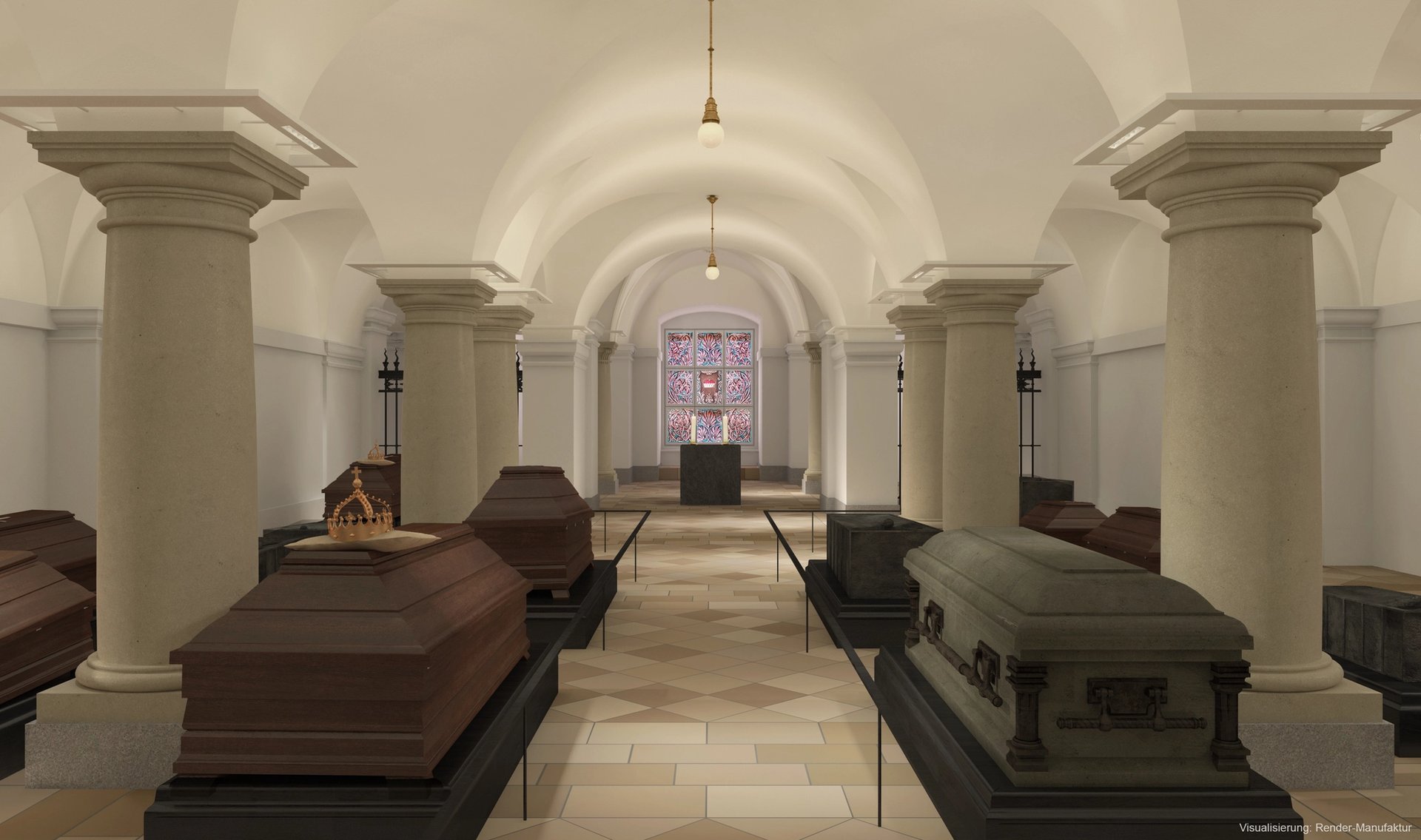
A rendering of the prayer room in the Hohenzollern Crypt Image: BASD Architects
As one of the biggest dynastic burial sites in Europe, the crypt is comparable to the Capuchin Crypt in Vienna or the Escorial in Madrid. The cathedral’s central location on Unter den Linden, Berlin’s main boulevard, means it also attracts crowds—in 2019, the year before the crypt closed for renovation, it drew around 765,000 visitors. The route through the church takes visitors (who from March pay €15 admission, an increase from €10) down to the crypt, as well as up to the dome offering views over the city.
But the increasing number of visitors had created climate problems in the crypt. Before the restoration, moisture and heat had damaged the sarcophagi—many of which are extraordinarily ornate—and mould had formed. The crypt was, the cathedral said in its press release, “in urgent need of renovation worthy of its wonderful furnishings”. It also needed barrier-free access for wheelchairs.
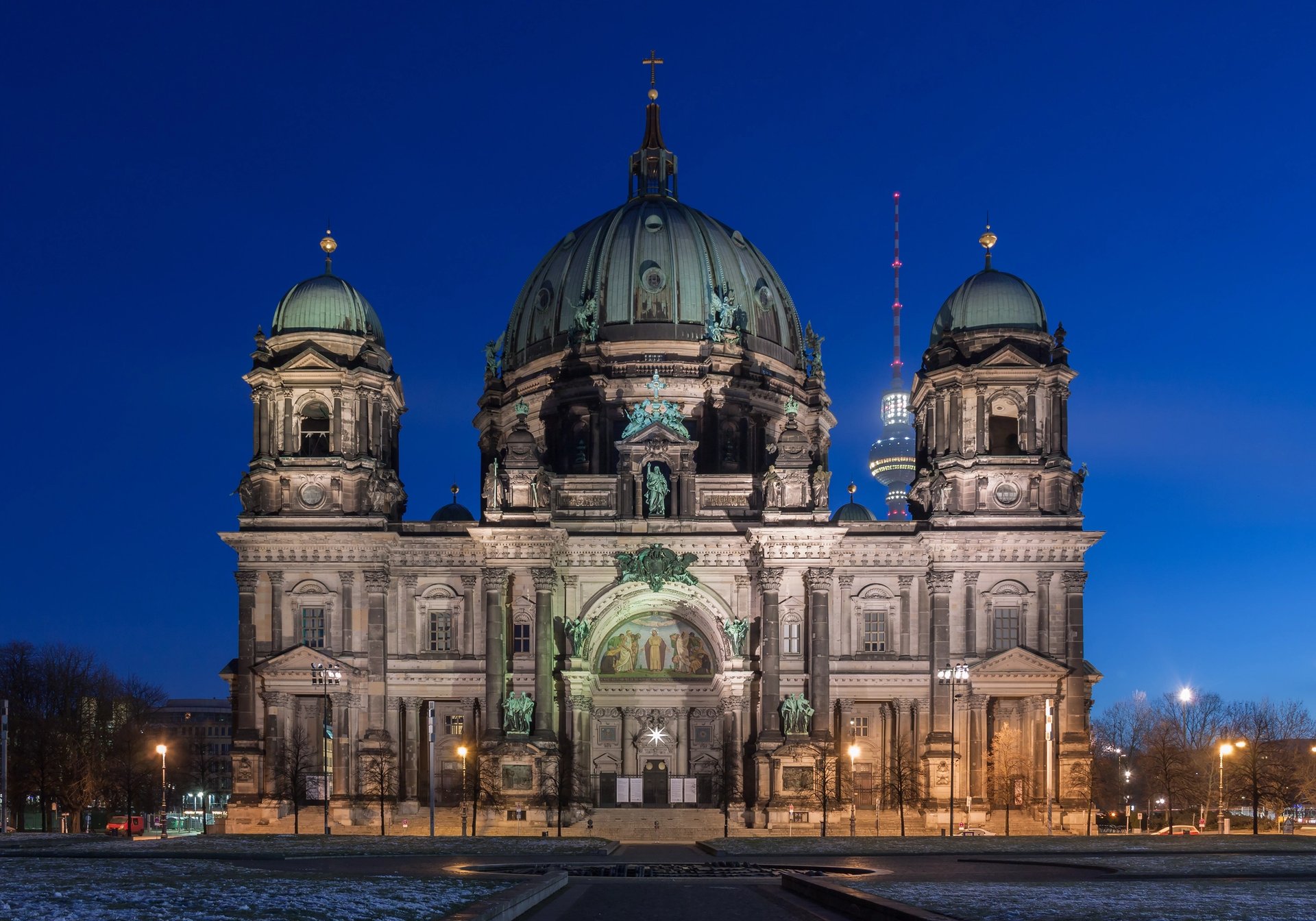
Berlin Cathedral Photo: Ansgar Koreng
The crypt now has a new ventilation and air conditioning system. But perhaps the biggest innovation is a small exhibition in an “education room” that visitors enter before encountering the lines of coffins. Touch screens allow visitors to call up information on the inhabitants of individual sarcophagi and learn how they died. Anna Sophie von Braunschweig-Wolfenbüttel, Margravine of Brandenburg, for instance, was buried in a beautifully wrought pewter sarcophagus after her death in 1659. She was, the touch screen tells visitors, “an energetic woman who advanced many projects” at the cost of her health. She died of overwork and stress, it says.
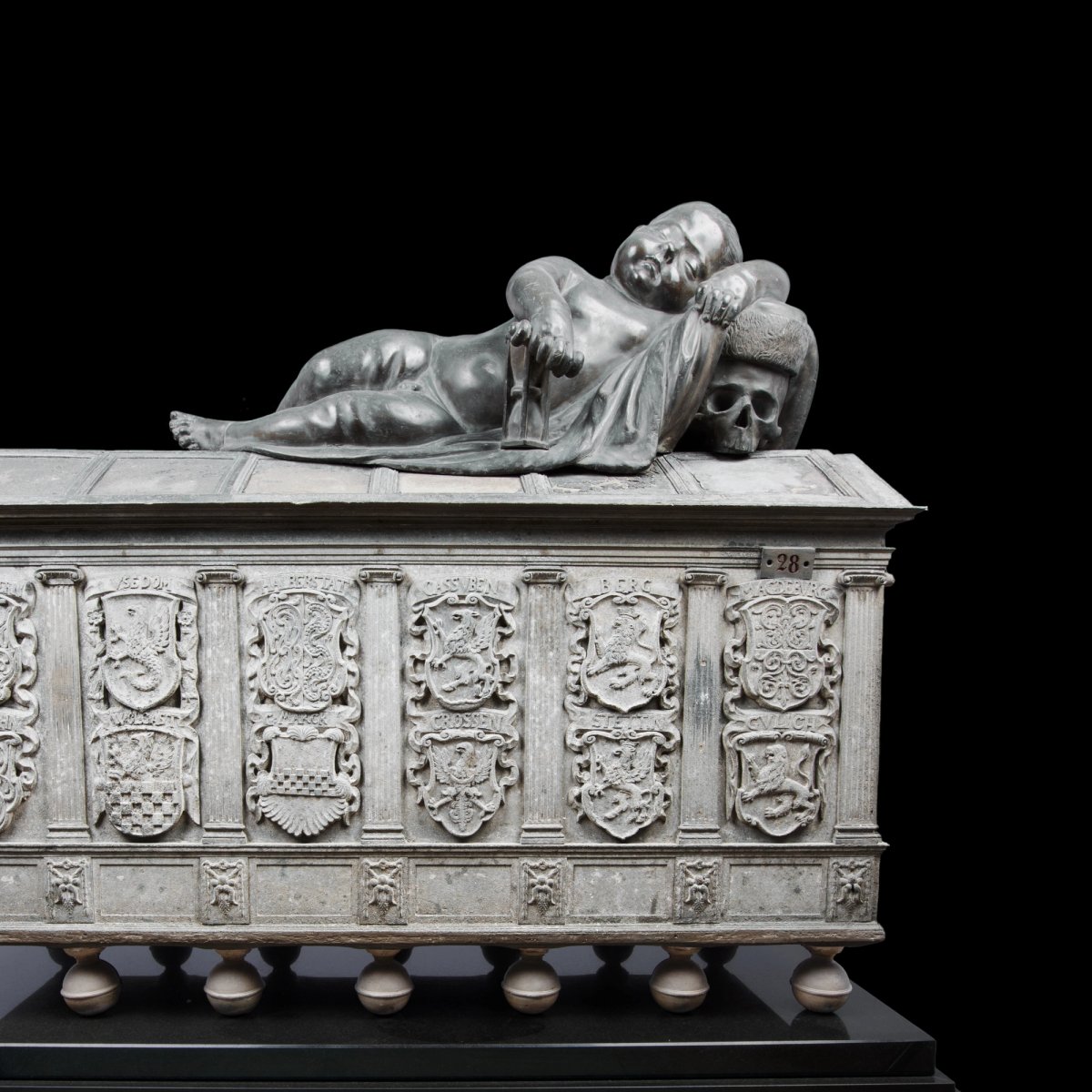
Many of the coffins are very small: that of Wilhelm Heinrich, a Brandenburg prince who died aged one in 1649 and is buried in a pewter casket with a sculpted cherub resting on the lid. A panel in the display informs visitors that infant mortality was no lower among the Hohenzollerns than among the general population.
The crypt is open to the public from 28 February, and on 1 March dignitaries including the Berlin mayor and German culture minister will take part in a festive service in the cathedral.