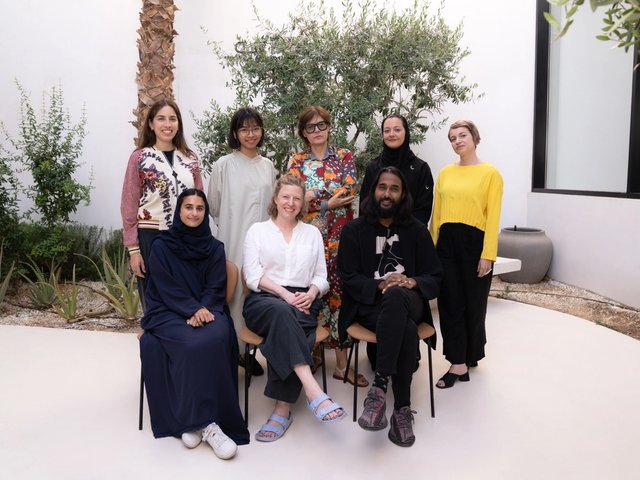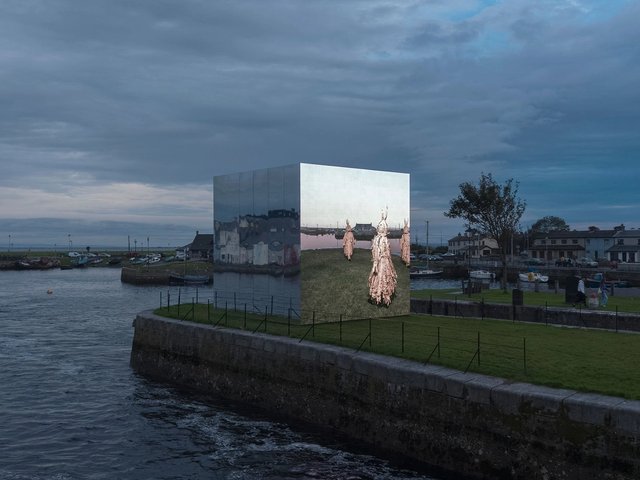
The world is in a constant state of movement, not just in the physical sense of migrations across lands, but also the philosophical sense with the travel of ideas, narratives, stories, languages and traditions. Such a multilayered topic is the central theme of the third edition of the Diriyah Contemporary Art Biennale (until 2 May), taking place in the Saudi capital of Riyadh. Entitled In Interludes and Transitions, the international event is held under the artistic leadership of the UAE-based, Saudi-raised curators Nora Razian and Sabih Ahmed, and includes more than 65 multidisciplinary artists from over 35 countries.
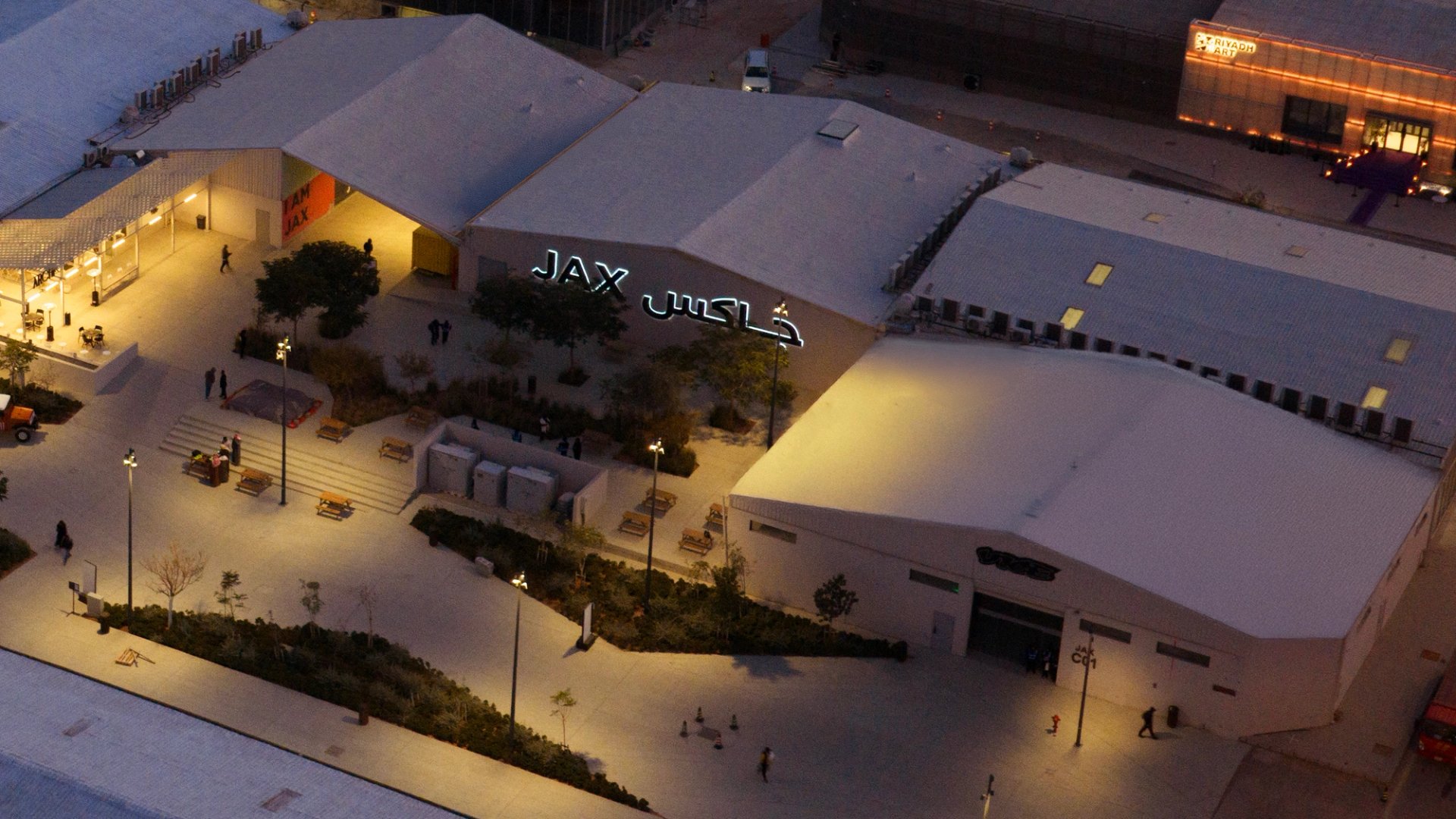
The JAX District Courtesy of the Diriyah Biennale Foundation
“The starting point was to start thinking outward from here, meaning looking at what’s happening around us today, but also the histories that have also shaped this region," Razian explained during a roundtable discussion. She also added that a key idea that sparked the theme of the biennale is the ceremonial act of marching-like processions, which has long been practiced in the region. "We are looking at the oral modes of storytelling [poetry, literature]. Some of them literally emerged through processions. They were producers of cultural forms," Razian said.
The Arabic translation of the biennale's title is Fil Hil Wal Terhal, a colloquial saying that indicates connection through fluctuating times of change and transition. That sense of connection in the world is played out through the biennale, which took a year to plan. "While I agree that biennales do feel like an international survey of sorts, they are discursive platforms to test what are the ideas that are shaping the present moment and the most important pressure points of thought right now," Ahmed said.
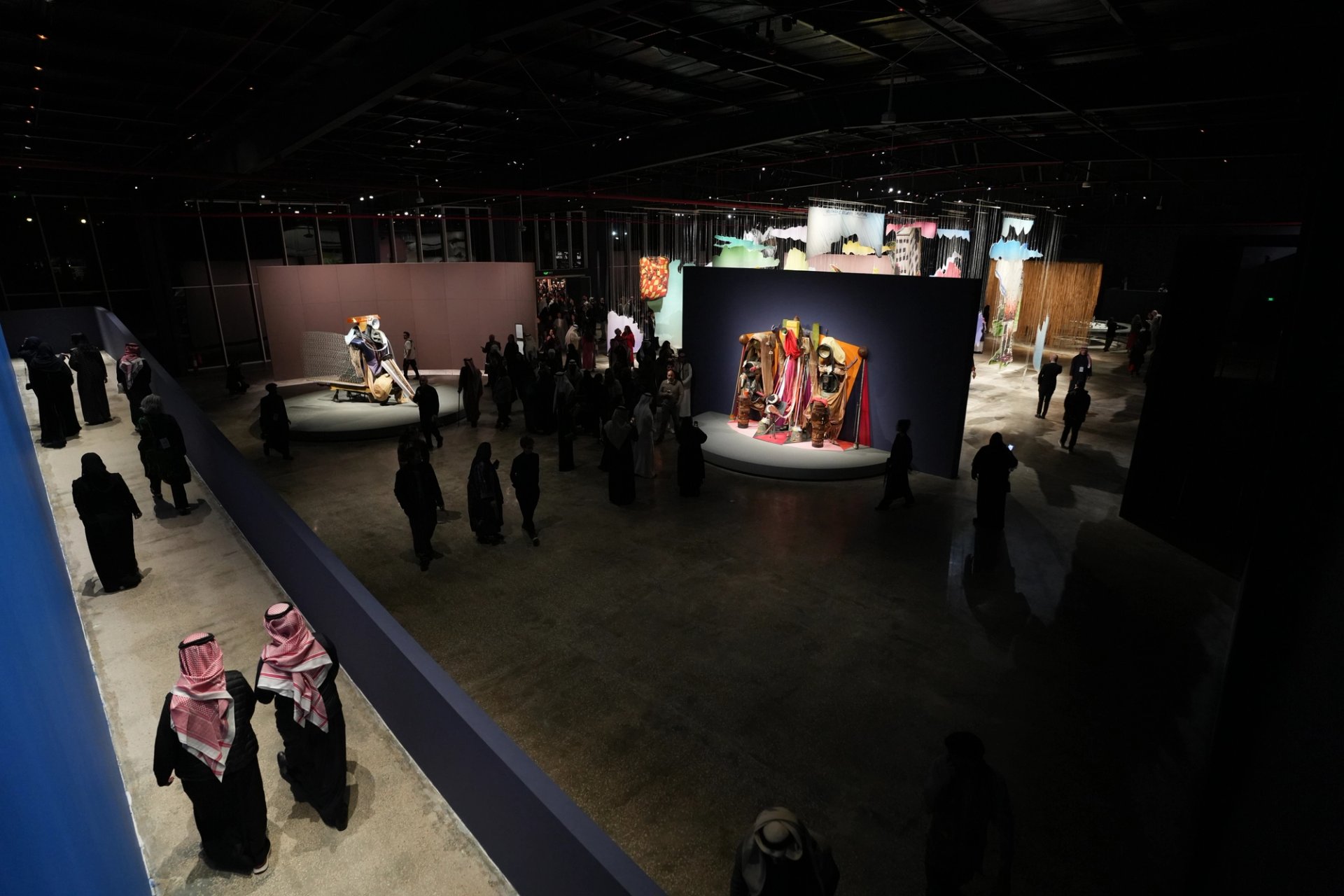
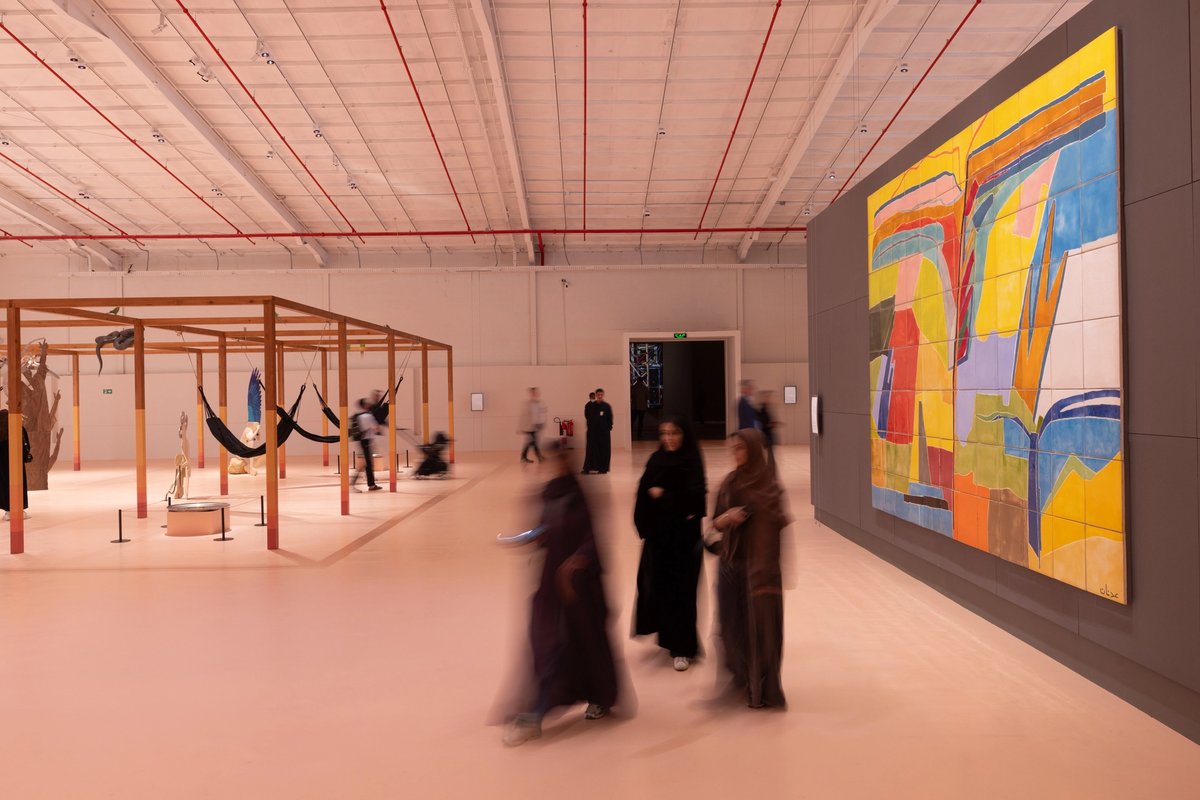
Installation view of In Interludes and Transitions showing the scale of the works on show Photo: Alessandro Brasile, courtesy of the Diriyah Biennale Foundation
The biennale, divided into four sections, is spread across a connected series of enormous halls in the JAX district, where 1970s-built industrial warehouses have been transformed into contemporary art spaces. There is a sense of calm and contemplation in the scenography, staged by Milan-based design studio Formafantasma. “We didn’t want people to feel overwhelmed,” Razian tells The Art Newspaper. “The spaces are huge when you come in and you don’t want to see everything out there [at once], but to give both a sense of scale and intimacy at the same time. Fundamentally, we didn’t want white walls and we didn’t white floors. We wanted colour, we wanted conversation.”
The curatorial team was aiming "to create a story within one central space, but allow visitors to kind of experience each work almost in its own terms," Razian adds. "Obviously, we had very intentional pairings that we wanted to put together and art histories that we wanted to have in dialogue."
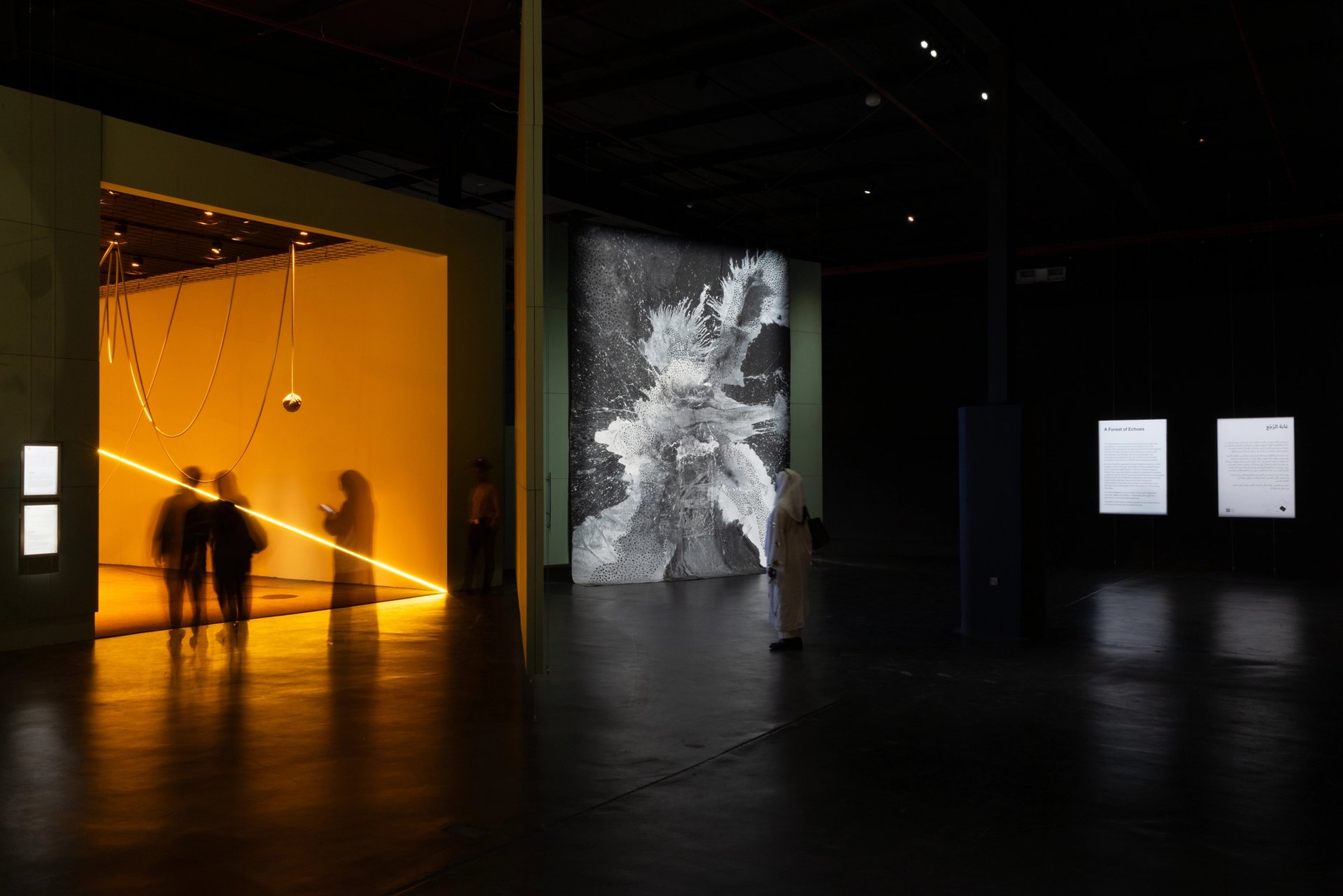
Faisal Samra's Immortal Moment III (Post Shock Creatures 02) (2026) Photo: Alessandro Brasile, courtesy of the Diriyah Biennale Foundation
The team commissioned more than 25 new artworks for the biennale, which was a chance for artists to revisit previous practices or work with different mediums and scale. Like the Saudi artist Shadia Alem, born in 1960, who presented a series of 22 detailed drawings that she began back in 1996 of fantastical female spirits associated with the dormant Lar River, believed to be located in Iran. Another massive commission was a ‘performance painting’ by the Saudi-Bahraini artist Faisal Samra, who created a creature-like figure from buckets of paint, manipulated by hand movements and airblowers.
Among the participants, there is a noticeable presence of pioneering female artists who were born in the mid-20th century, such as the Palestinian abstract artist Samia Halaby, the Lebanese poet and painter Etel Adnan, Pacita Abad from the Philippines, and Kamala Ibrahim Ishag from Sudan. The latter has a few of her swirly paintings at the biennale, demonstrating scenes of women performing the traditional African zaar ceremony, warding off evil spirits.
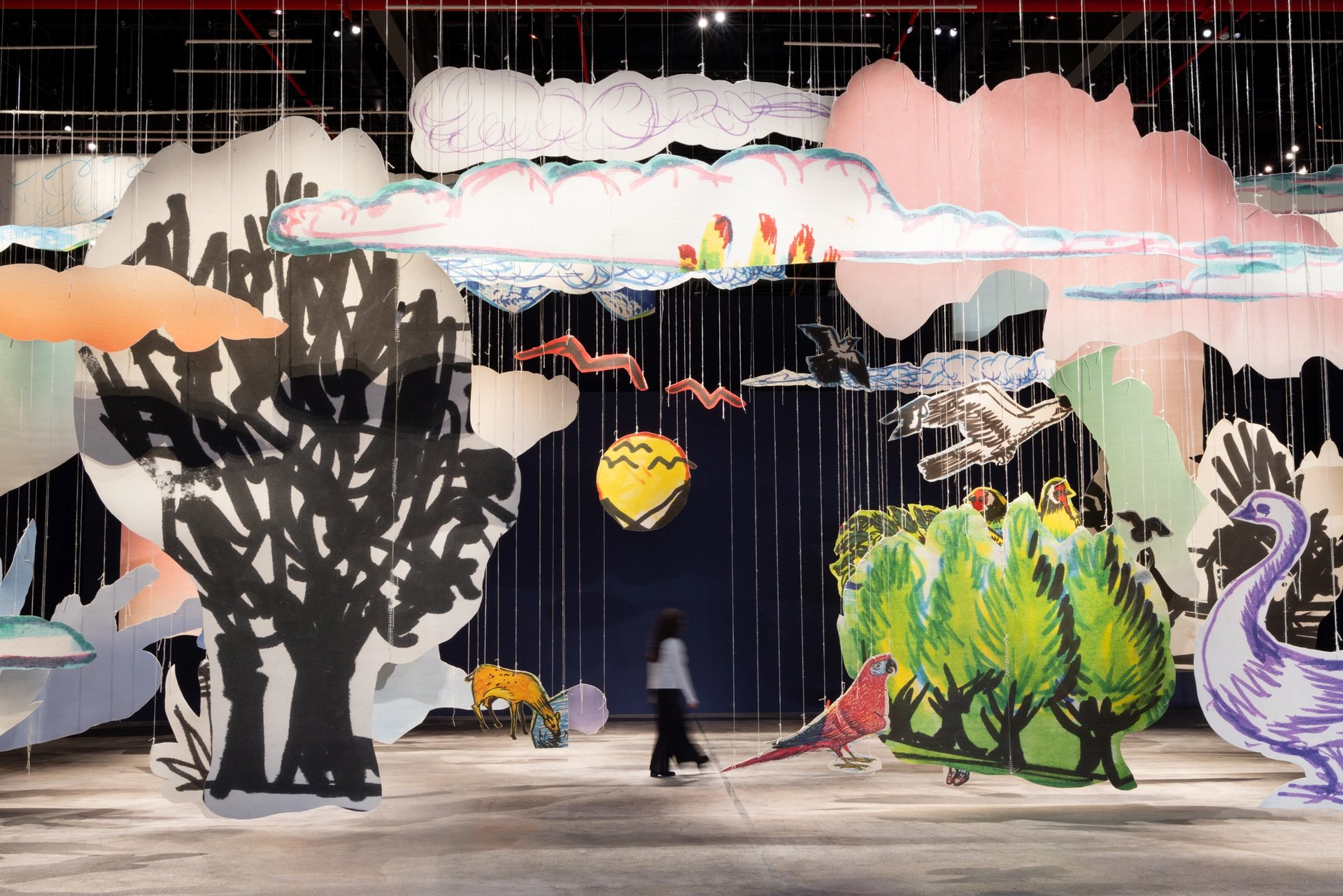
Petrit Halilaj's Very volcanic over this green feather (2021) at In Interludes and Transitions, Diriyah Contemporary Art Biennale 2026 Photo: Alessandro Brasile, courtesy of the Diriyah Biennale Foundation
The display also featured large-scale showstoppers, such as Kosovo-born artist Petrit Halilaj’s installation, reflecting his youth as a refugee due to the Kosovo war in the 1990s. The work, entitled Very volcanic over this green feather, has suspended felt-made pieces that are replicas of Halilaj’s childhood drawings, featuring birds, mountains, trees, refugees and soldiers. Exuding life and vibrant colours, the drawings act as a reminder of how joy and terror can strangely coexist in the most difficult of circumstances.
For the artistic directors, a key criterion in their artist selection process was more than just about “ticking boxes of geographies”, but rather what kind of experiences and narratives can the artists and their creations push forward. “We’ve been interested in artists who are asking deep questions for a long time in their practice,” says Ahmed. “There are two types of questions: Where are you from and where are you headed? We were looking at artworks and where they can be headed, where they can take us.”