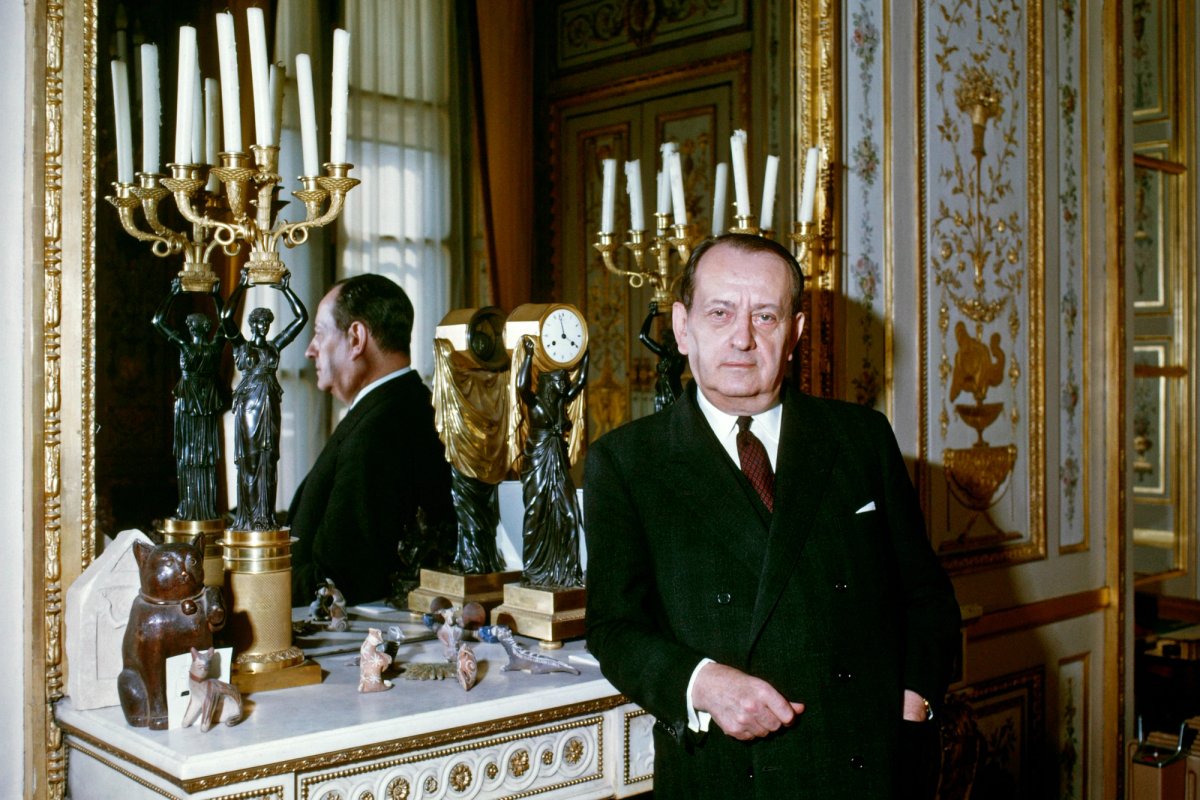
France is one month into what the French ministry of culture is calling the année Malraux—or as the more pedantic of scholars would have it, the année Malrucienne. To mark the 50th anniversary of André Malraux’s death, publishers, curators and broadcasters have put together a year-long series of more than 130 events, exhibitions and books.
At the official launch last November, the current culture minister Rachida Dati described the imperative behind the programme as not just celebrating an uncommon visionary but the “burning relevance” of his legacy: “a commitment to continuing to nurture this demanding idea of what culture is”.
Malraux is ubiquitous in the French urban landscape. Throw a stone in any major French city and you will hit a sign with his name on it, from auditoriums and bookshops to cinemas, cultural centres, libraries, playgrounds, parks, roundabouts, streets and schools. Before the Second World War, Malraux was a high-school drop-out and grandson of a Flemish Viking who dabbled in Surrealism. He taught himself art history, became a pataphysician and married rich at 20, because in his own words—and to his own wife, Clara Goldschmidt—“You don’t actually think I’m going to work, do you?”
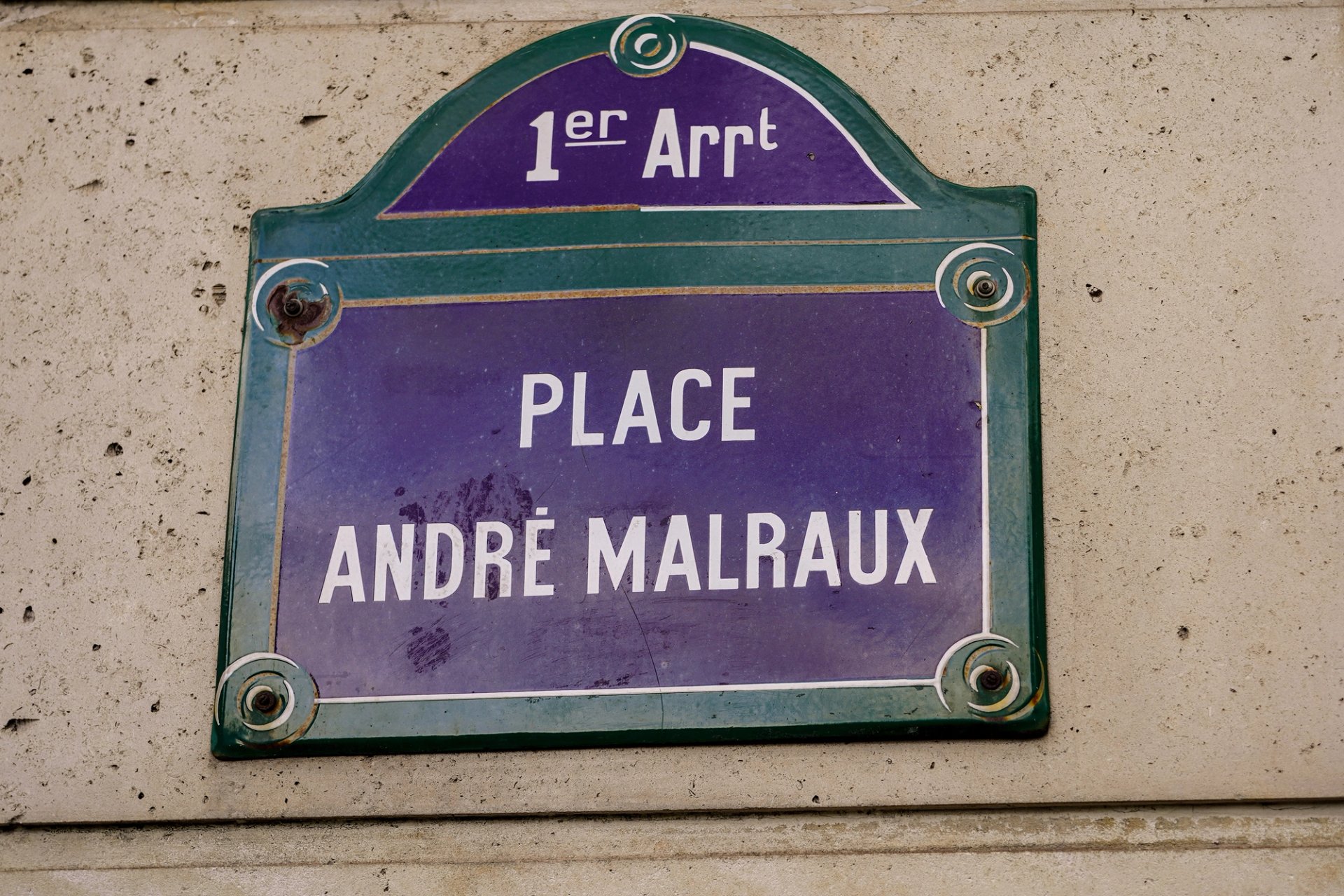
Many streets, schools, libraries and cultural centres in France are named after Malraux eric/adobe-stock
Work he did, though, becoming, after the war, Charles de Gaulle’s minister of information and then, from 1958, the first minister of culture. It is to him that the country owes the concept and network of the maisons de la culture and the enshrining in law of cultural heritage protections.
But as the philosopher Michaël de Saint-Chéron highlights, it is what Malraux did in between those two phases of his life—his anarchist and statesman eras—that has not only sustained his legacy but ensures its continuing relevance.
De Saint-Chéron was just 18 when he met Malraux in 1973 and, as he puts it, “52 years later, here I am”, still fully immersed in the great man’s thinking. He is the author of 30 books, including the comprehensive 2011 Dictionnaire Malraux. His new book, Malraux, une vie au miroir de l’art et du sacré, will be published in March by Actes Sud. To his mind, Malraux was “the very model of a committed intellectual, not just the kind of intellectual who spends their time, like Sartre did, in cafés, or who goes on TV, but one who was ready to take up arms to defend what he believed in”.
‘Fraternity’ above all
Malraux was involved with the anti-fascist Popular Front in France in the 1930s and fought alongside the Republican forces in Spain during the Spanish Civil War, then later joined the French Resistance. Some historians, including Antony Beevor, have disputed Malraux’s actual martial track record and struggled to reconcile his anti-fascism with his post-war proximity to De Gaulle’s conservatism. But for De Saint-Chéron, the dominant principle that runs through his storied life is that of fraternity. His insistence on art being that which does not die went hand in hand with an egalitarian commitment to the universal notion of humanity’s grandeur and nobility of spirit.
Fêting the actual anniversary of his death on 23 November 1976, the Musée d’art moderne André-Malraux in Le Havre will inaugurate a complete ten-month overhaul of its collections display, moving from a traditional chronological take to the now-ubiquitous thematic approach, which Malraux envisioned long before the wider curatorial corps did, with his Musée imaginaire.
“For art historians, Malraux is precious because he makes you take a step back and look at things differently,” says the curator Clémence Poivet-Ducroix. Mostly, he stands as a beacon of 20th-century utopian, idealist thinking, bright-eyed and stalwart in his belief that art matters and is for everyone. “It is thinkers of his ilk who carried the post-war world and who believed in peace,” she says. “Their fight gives us courage today.”