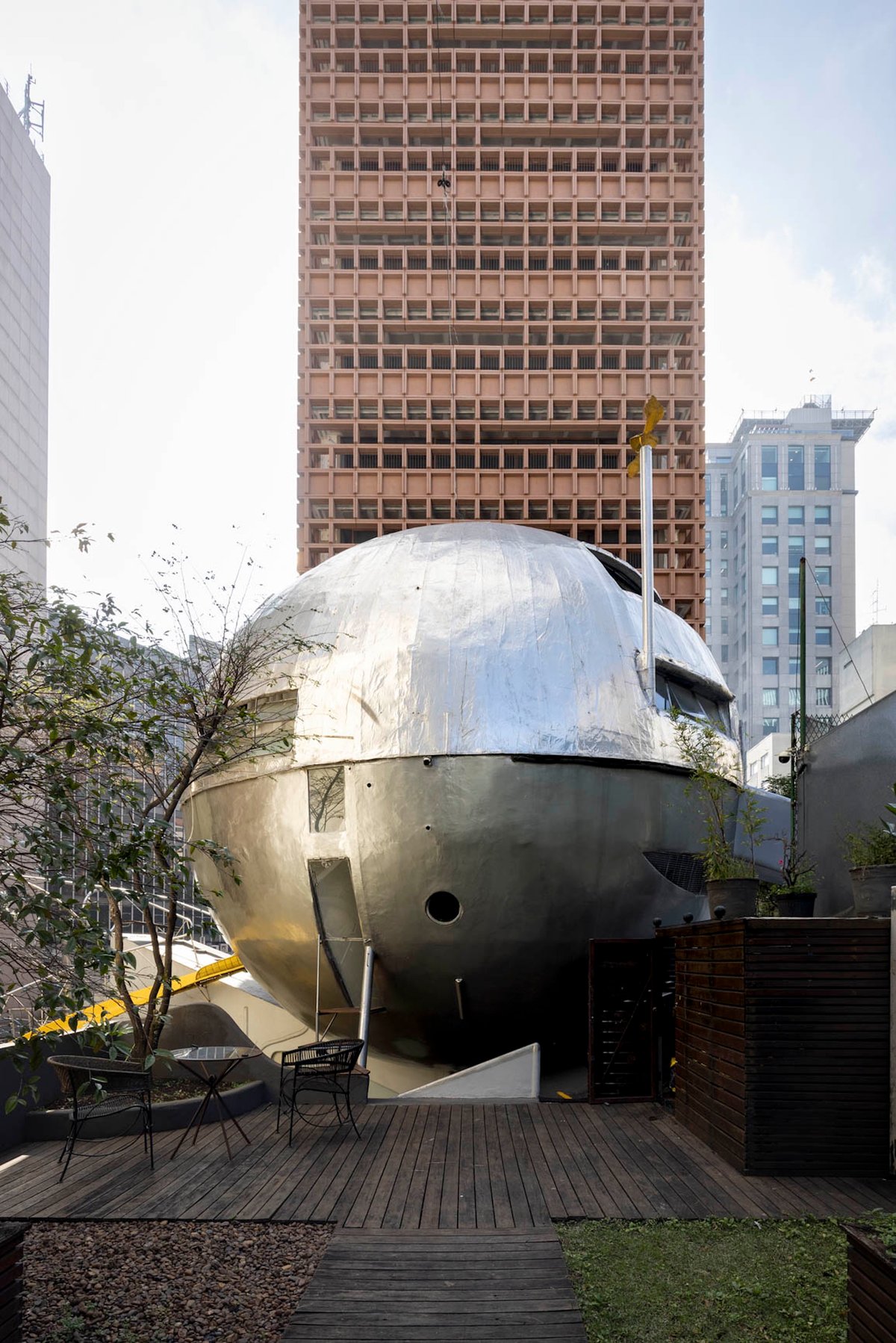
The fifth edition of Aberto, an annual exhibition merging art, architecture and design, opened its most ambitious instalment to date in São Paulo this month. The exhibition features six galleries and more than 50 artists and unfolds across two landmarks in São Paulo: the Casa Bola, a spherical home designed by the architect Eduardo Longo, and the Avenida Faria Lima, a main thoroughfare in the city.
Participants in the fifth edition (until 31 May) include the Brazilian galleries Fortes D’Aloia & Gabriel, Mendes Wood DM, Luisa Strina, Nara Roesler and Almeida & Dale. Gladstone Gallery, which has spaces in New York, Brussels and Seoul, is joining for the first time.
Most of the works in this edition were newly commissioned, with the works at Casa Bola selected to reflect the home’s own bespoke and futuristic qualities. The co-curator, Kiki Mazzucchelli, describes the home as “part Flintstones, part Jetsons”. Due to space constraints in the 135-sq.-m home, Casa Bola is featured as an artwork itself, while the main exhibition takes place in an adjoining three-storey warehouse.
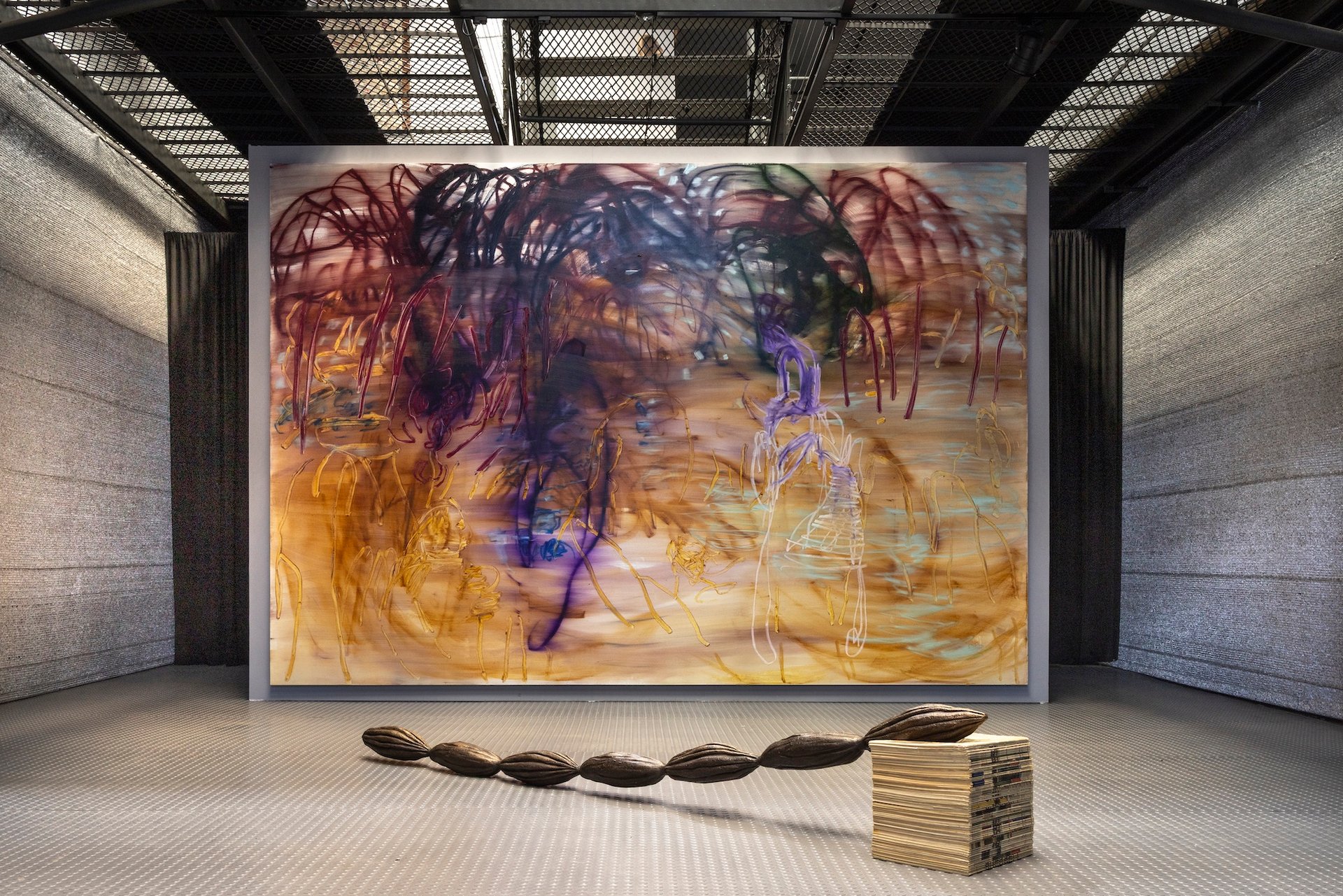
Installation view of Aberto5 featuring Erika Verzutti's Torre de Cacau com Notícia (2025, foreground) and a painting by Janaina Tschäpe Photo © Ruy Teixera
Visitors will encounter a mix of works with “contrasting organic and industrial characters”, including pieces by Daniel Steegman Mangrane, Marina Simão, Leonor Antunes, Vivian Caccuri and others. On the top floor, the guest curator Fernando Serapião has organised a presentation on Longo’s practice and Casa Bola, which Longo built in the 1970s and where he still resides. These materials are combined with Pop-era works by Claudio Tozzi and Rubens Gerchman that “bring the prevailing aesthetics in the years leading up to Casa Bola’s conception”, Mazzucchelli says, and contemporary works that respond to Longo’s experimental approach, like an anthropomorphic sculpture made with found aluminium pots and pans by Marepe.
Longo envisioned Casa Bola, or the “Ball House”, as a prototype for sustainable living and constructed the home with the least possible materials, incorporating debris from the demolition of a neighbouring home into the mortar that covers the steel structure. The co-curator of Aberto, Claudia Moreira Salles, says the home and its surrounding complex have been in constant transformation since the 1970s, and the team’s curatorial approach aimed to reflect “this restlessness and way of living” with a roster of artists “who embody a sense of utopia”.
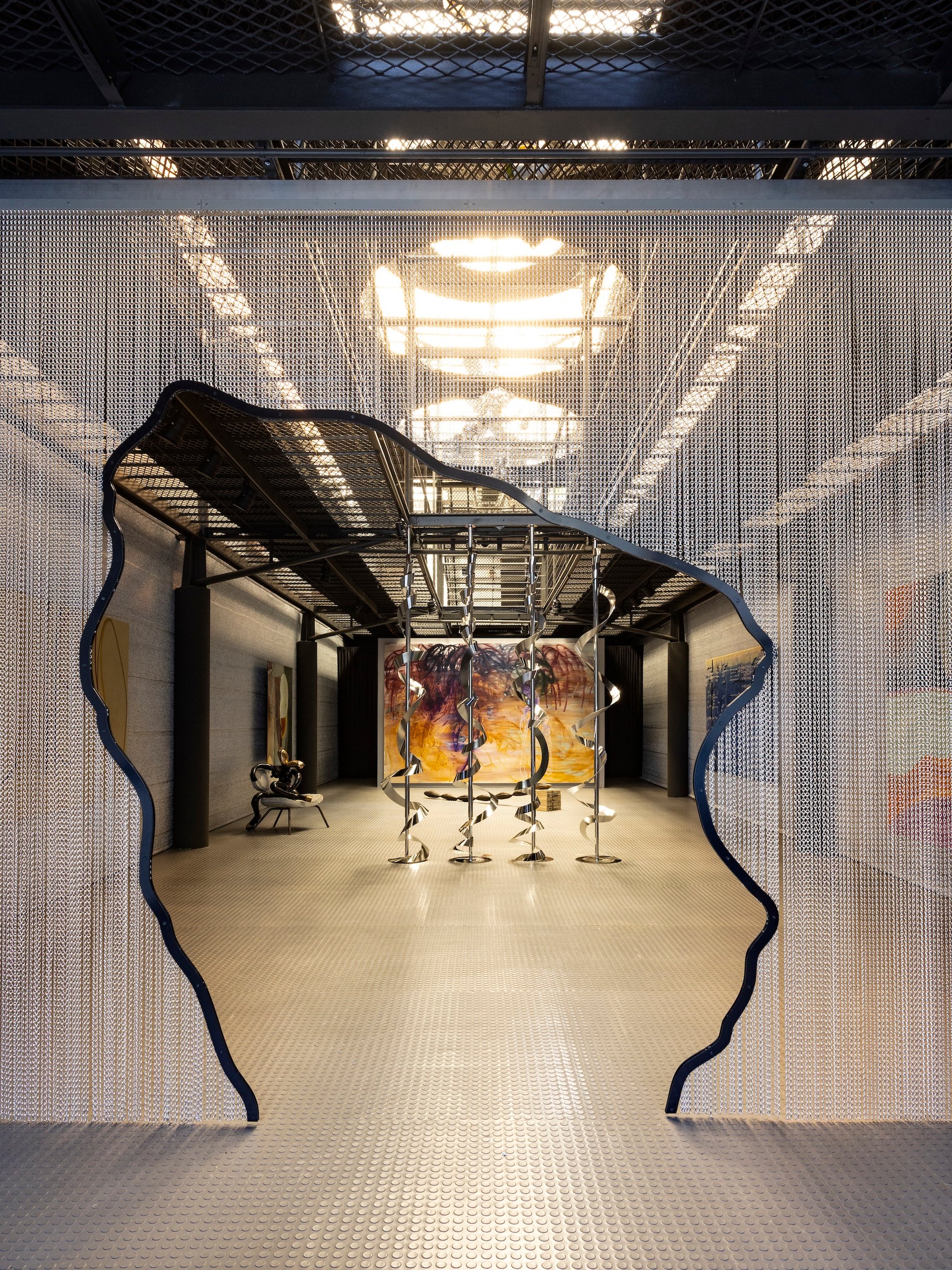
Installation view of Aberto5 featuring an untitled 2024 installation by Daniel Steegmann Mangrané Photo © Ruy Teixera
Salles adds: “Longo conceived Casa Bola at the height of the Counterculture period and was strongly influenced by that movement’s spirit of rupture. He set out to create a dwelling that would question the dominant principles of Modernism and Brutalism—not only in its form, but also in its very concept of living and building.”
Since its inception, Aberto, which means “open”, has offered the public rare opportunities to experience Modernist architectural spaces in São Paulo that are mostly confined to residential buildings. Filipe Assis, the founder of Aberto, says there is a “growing awareness around the fragility and invisibility of important Modernist houses in São Paulo”, including many that “face uncertain futures” as they are demolished to make room for newer buildings. The project aims to “transform private or under-recognised spaces into platforms for contemporary dialogue”, and “contribute not only to artistic production but also to cultural preservation and raising public awareness” about historic architecture.
Assis founded Aberto in 2022 in a private home designed by Oscar Niemeyer with an exhibition centred on furniture designed by the Brazilian architect and his daughter, Anna Maria Niemeyer. The series has grown considerably since then, evolving from “from an experimental initiative into a consolidated cultural platform”, Assis says. It made its international debut last year in Paris with an exhibition about Le Corbusier and Brazil held at the Le Corbusier-designed Maison La Roche. Attendance has also grown tenfold since the first edition, which received around 3,000 visitors, according to the organisers.
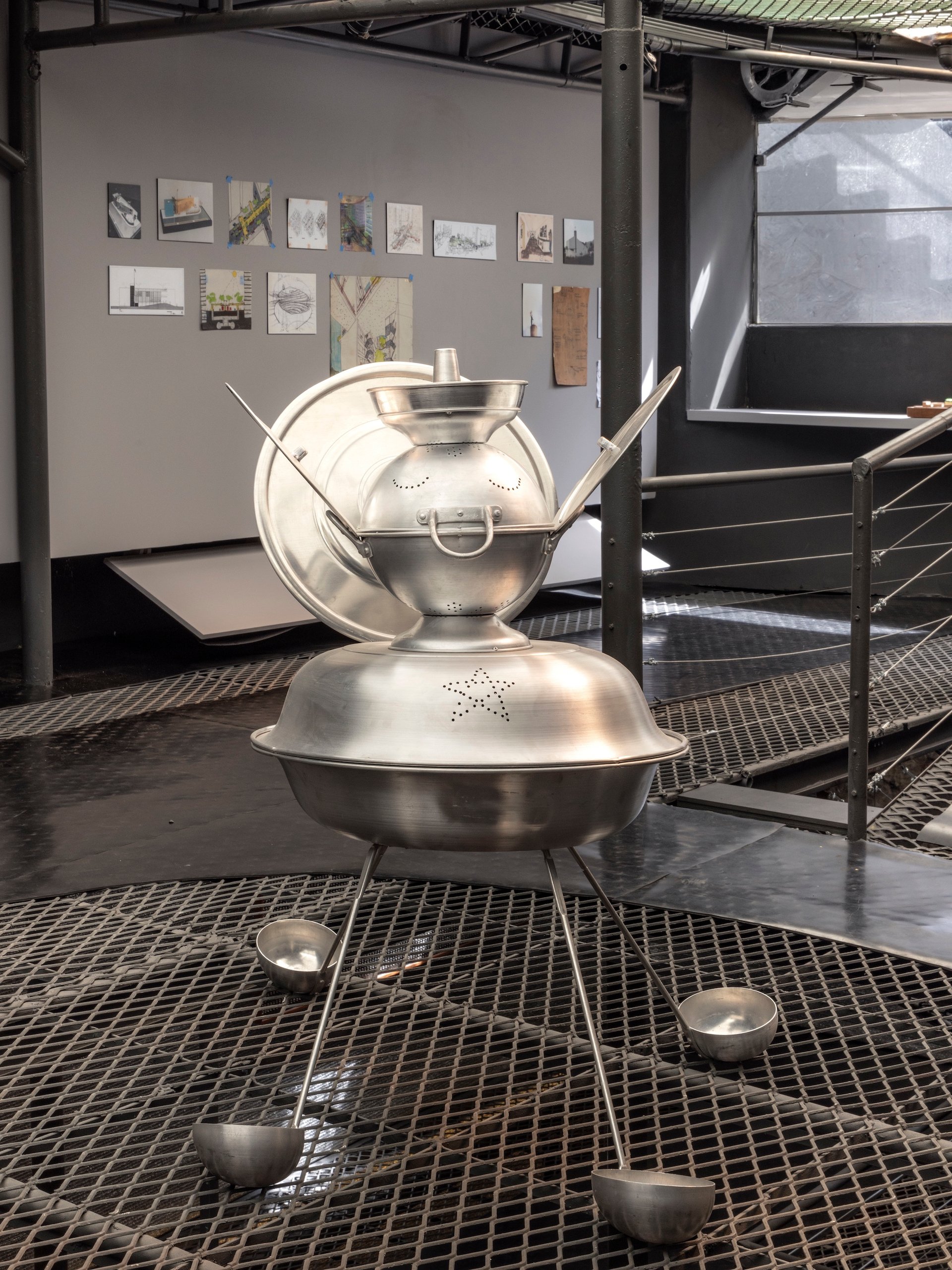
Installation view of Aberto5 featuring O pato (2025) by Marepe Photo © Ruy Teixera
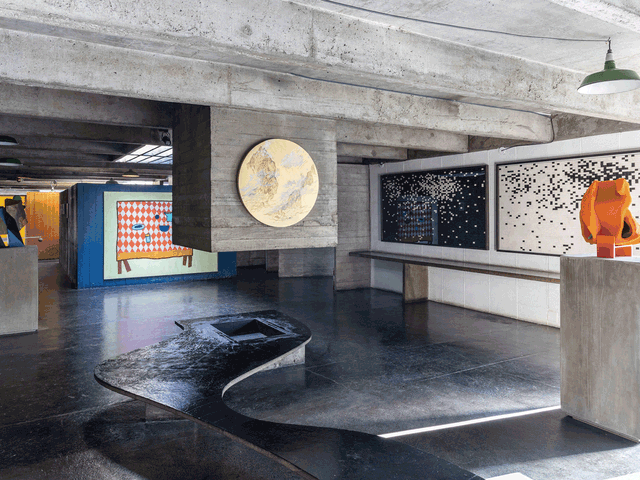
The presentation on Avenida Faria Lima features more than 15 commissioned works by artists including Erika Verzutti, Paulo Nimer Pjota, Regina Silveira and Daniel Jorge that engage with architecture by Brazilian Modernists like Ruy Ohtake and Isay Weinfield. Expanding the exhibition into public space for this edition is intended to create a “moment of interruption” for those traversing the bustling avenue and “shift art from a destination to an encounter”, Assis says. “It activates the urban fabric itself.”
Assis adds that Aberto’s growth reflects a “broader transformation within Brazil’s cultural landscape, one that is increasingly interdisciplinary, experience-driven and conscious of its architectural heritage”. He hopes the exhibition fosters “dialogue between art and architecture while expanding Brazilian contemporary production both locally and internationally”.
- Aberto5, Casa Bola and Avenida Faria Lima, São Paulo, until 31 May