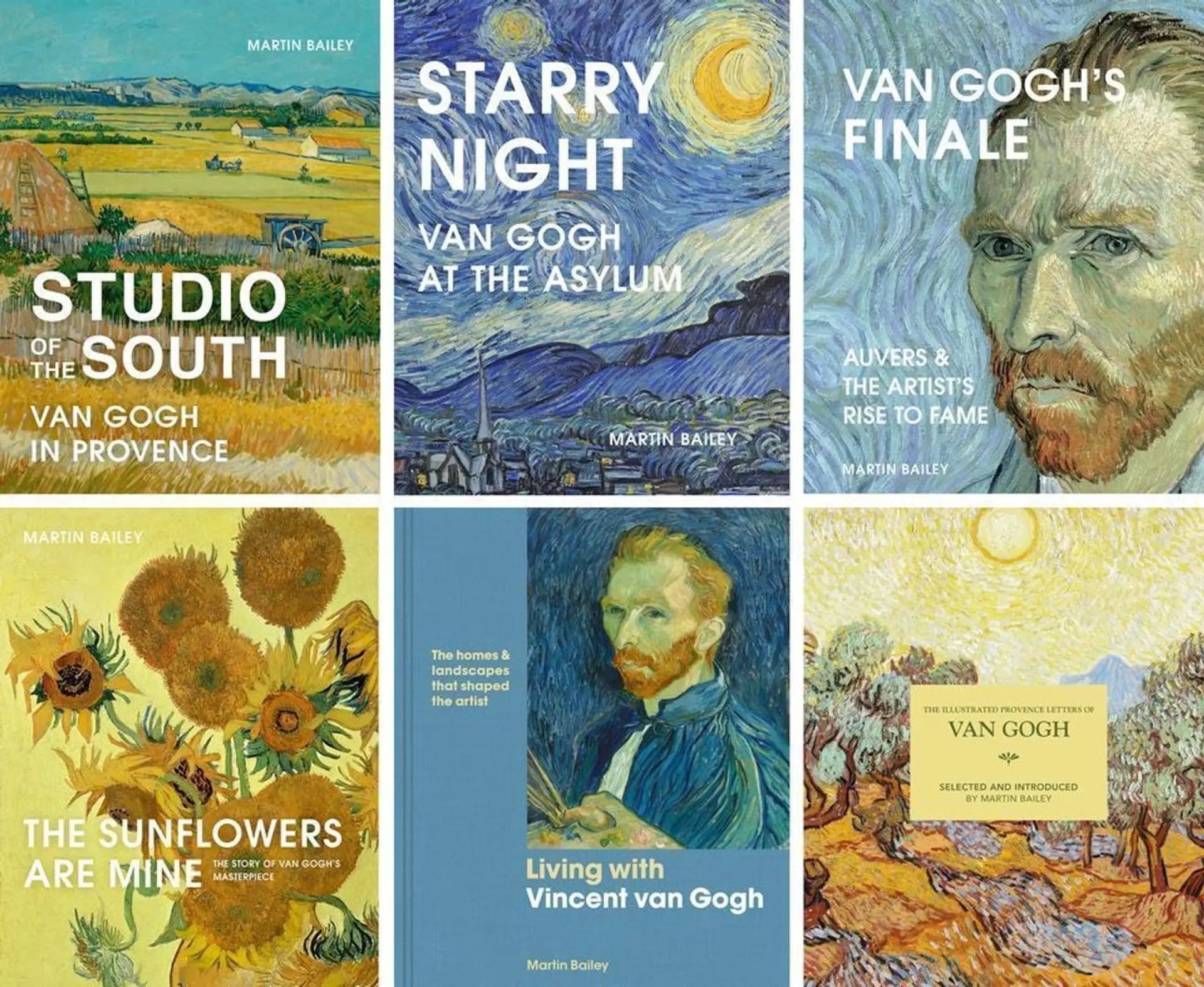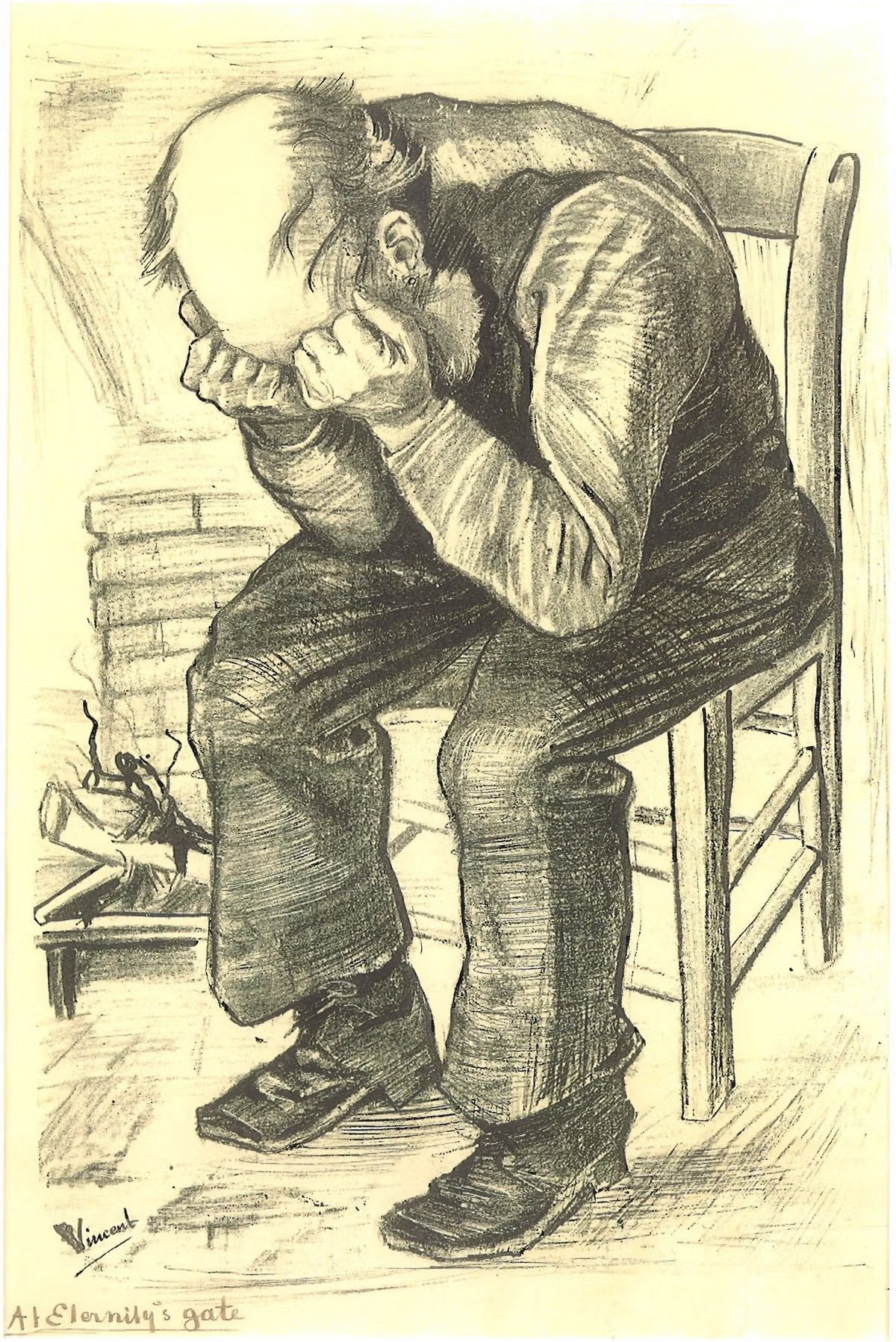

At a time when the eyes of the world are turned towards the suffering in the Middle East, a Van Gogh print locked away in the vaults of the Tehran Museum of Contemporary Art has assumed a new symbolism. Van Gogh inscribed his title on the lithograph: At Eternity’s Gate.
Dating from November 1882, when Van Gogh was living in The Hague, the print depicts what he called an “orphan man”, a resident of the local Old Men’s Home. Only seven examples of this lithograph survive, and on one of them the artist added the inked title. Van Gogh wrote it in English because he was then applying for work as an illustrator in London (any approaches, however, were rebuffed).
The elderly man with the prominent side-whiskers who served as Van Gogh’s model has been identified as 72-year-old Adrianus Zuyderland. He posed for quite a number of drawings and, despite his age, there is no evidence that he was at death’s door when Van Gogh was making sketches for his lithograph. Zuyderland went on to live until 87, a very long life at the time.
Van Gogh gave the inscribed print to his Dutch artist friend Anton van Rappard. After passing through several private collections the lithograph was eventually bought in the early 1970s by the New York businessman Nelson Rockefeller and his wife Mary. Rockefeller was then the US vice president.
Rockefeller soon sold on the Van Gogh to the New York dealer Eugene Thaw, who in turn sold it in 1975 for $65,000 to the Shah of Iran's wife, Farah Pahlavi. She was supporting the planned Tehran Museum of Contemporary Art, which opened in October 1977. Just over a year later, in February 1979, the Shah was overthrown, to be succeeded by Ayatollah Khomeini and the present Islamic Republic. Most of the collection, including the Van Gogh, has since lain unseen for much of the time in the museum’s stores. There have been strong anti-Western feelings in Iran and the regime considered some of the artworks indecent.
In May 1890, seven years after he made the print, Van Gogh was inspired to create a larger, coloured version as a painting. It was among the last pictures which he completed at the asylum on the outskirts of Saint-Rémy-de-Provence.
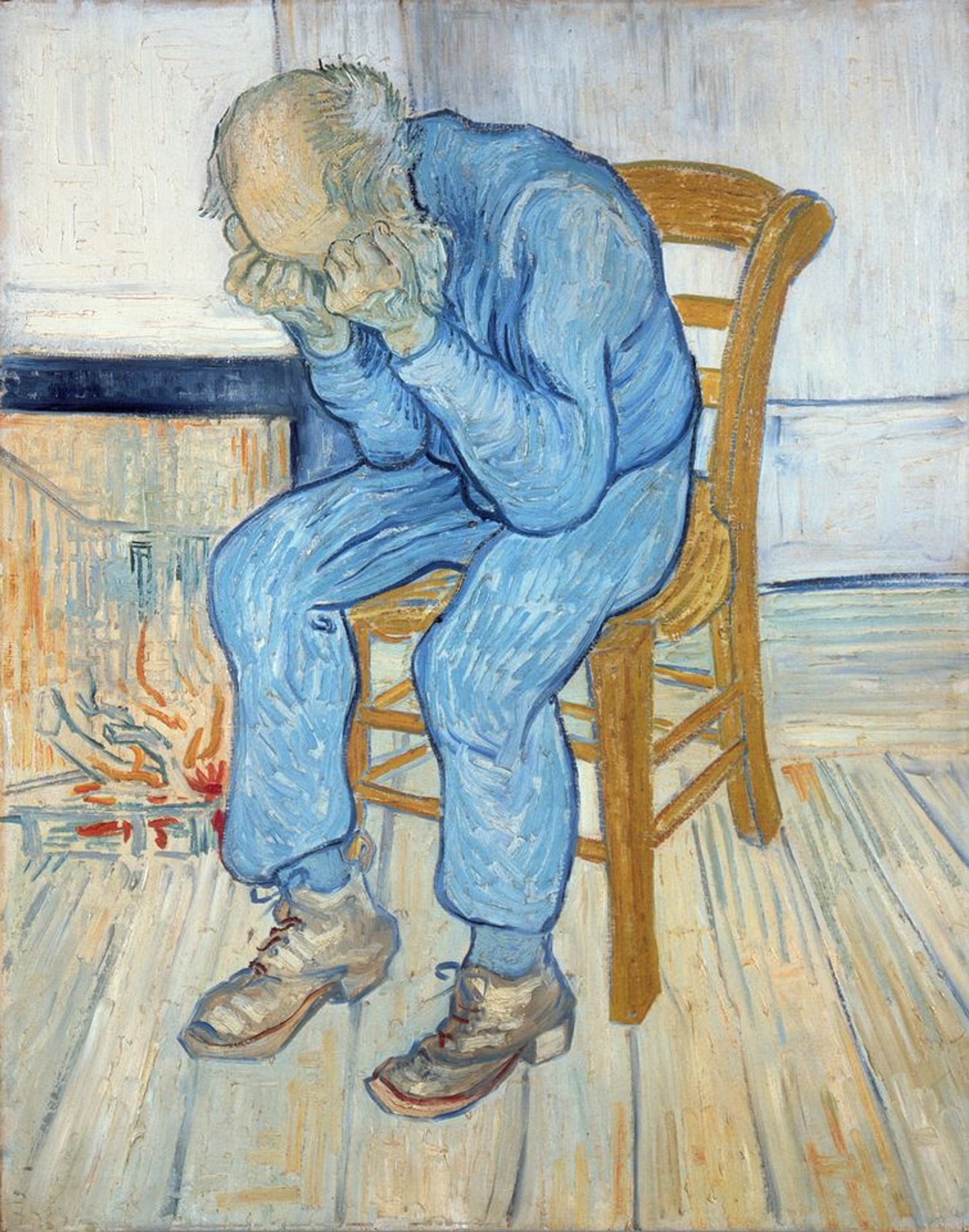
Van Gogh’s painting At Eternity’s Gate (May 1890)
Kröller-Müller Museum, Otterlo
The sitter’s clenched fists suggest the anguish that Van Gogh himself must have been feeling, hemmed in by the asylum’s walls. Two weeks before starting work on the picture Dr Théophile Peyron, who ran the institution, had written to the artist’s brother Theo, saying that Vincent remained depressed: “He usually sits with his head in his hands, and if someone speaks to him, it is as though it hurts him, and he gestures for them to leave him alone.”
At Eternity’s Gate represents a self-portrait, not in terms of physiognomy, but posture. Just under three months later the artist was dead, after shooting himself in a moment of despair.
Hopefully the Van Gogh print is still safe in a secure storeroom of the museum, which was immediately closed after the American and Israeli attack on 28 February.
Following the April military ceasefire, the Tehran Museum of Contemporary Art reopened in early May with a limited display, a weekly series entitled Art & War. The number of works on show has been limited to around half a dozen, in order to facilitate their rapid removal in case a resumption of hostilities threatens the museum.
Although the Tehran museum has survived unscathed, there has been extensive damage to museums, archaeological remains and historical sites across Iran.