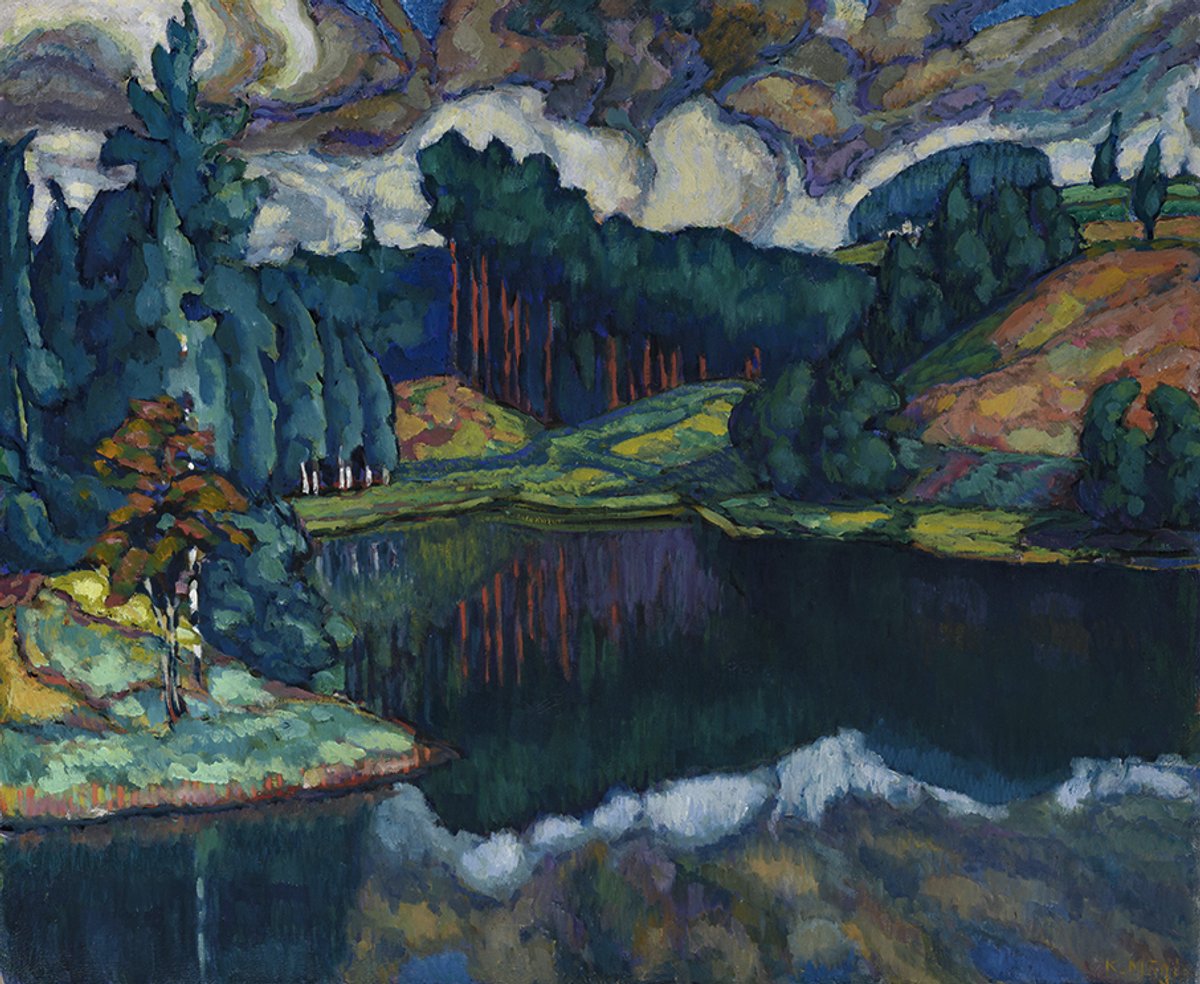
The first UK exhibition to be dedicated to Estonia’s pioneering Modernist painter Konrad Mägi (1878-1925) opens at Dulwich Picture Gallery this month. Distinguished by his use of vibrant colour combinations, pattern and texture, Mägi’s landscapes are imbued with a romantic mysticism heightened by his restlessly experimental style.
Curated by Kathleen Soriano, who previously introduced Dulwich audiences to the Lithuanian painter M.K. Čiurlionis and the Norwegian Harald Sohlberg, the exhibition brings together more than 60 works, many of which have never been seen outside Estonia.
“We’re at a really important moment where we’re re-evaluating what our western art history canon actually is, understanding that it stretches way beyond France, Germany and Italy, and trying to absorb the achievements of those artists that were otherwise regarded as being on the outskirts of the central canon,” Soriano says. “What Dulwich’s brilliant, revelatory programme does is it allows us to look at some of those artists in greater detail and understand where they fit in that context,” the curator adds.
Despite lifelong ill health, Mägi travelled extensively, first to St Petersburg and then to the Åland Islands off the Finnish coast, where aged 27, he made his first paintings, of which just one survives. Unlike Mägi himself, his paintings largely remained in Estonia, with the Art Museum of Estonia in Tallinn, Tartu Art Museum, the Museum of Viljandi, the National Archives of Estonia and Estonian private collectors being the source for every loan in the exhibition.
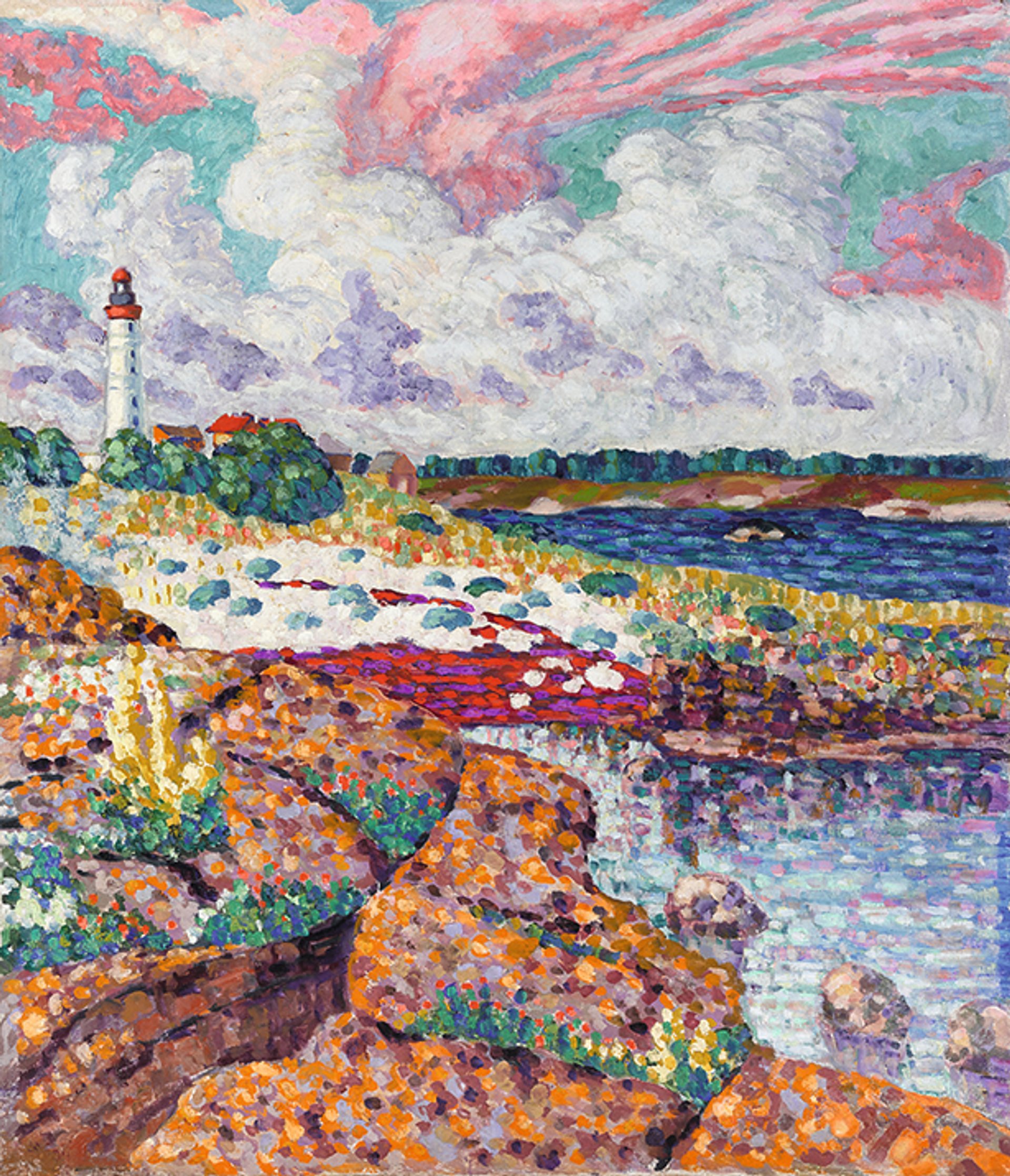
Mägi’s Vilsandi Motif (1913-14) Courtesy of the Art Museum of Estonia
He absorbed so much of the different styles he encountered around the worldKathleen Soriano, curator
Arranged chronologically and thematically, the show will begin with the artist’s time in Norway, where he began to paint in earnest and had his first exhibition. This came after a period in Paris, which Mägi seems to have been mostly unimpressed by. And yet the influence of Cubism and Pointillism, as well as the decorative planes of Henri Matisse are evident in his work. “He absorbed so much of the different artistic styles he encountered around the world,” Soriano says. “But he made them very much his own—he is a phenomenal colourist”.
Mägi is celebrated for his landscapes, which share the visionary qualities of Sohlberg and Nokolai Astrup and, at times, the abstract tendencies of Hilma af Klint. Meanwhile, his portraits, such as Young Rom (1915) and Portrait of a Lady (1916-17), show the influence of artists like Édouard Manet and Edvard Munch.
It will be the landscapes that frame the show though. As Mägi’s health deteriorated, he became further immersed in nature, using neo-Impressionist techniques to depict the reverberating life of the Baltic islands Saaremaa and Vilsandi.
• Konrad Mägi, Dulwich Picture Gallery, London, 24 March-12 July