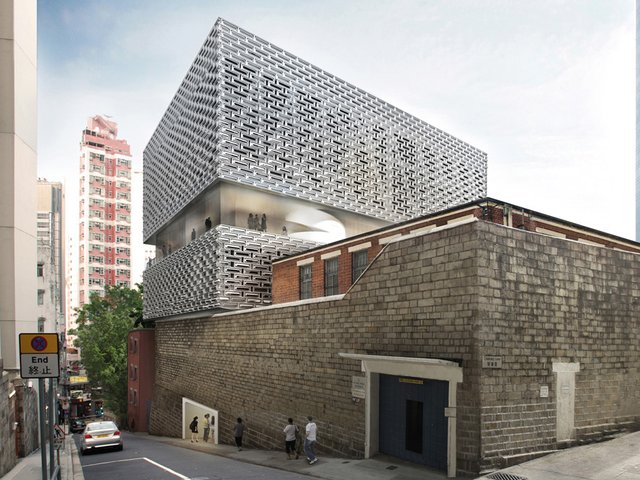
The past can be a foreign country, as the saying goes, and for China even recent history can seem stunningly distant. With its two-part exhibition Stay Connected: Art and China Since 2008, Hong Kong's Tai Kwun explores how China’s artists were shaped by the monumental changes to their society from 2008, both online and offline. The first instalment, Stay Connected: Navigating the Cloud (26 September 2025-4 January 2026), looked at the foreshadowing wildness of China’s early internet. The second part, Stay Connected: Supplying the Globe (until 31 May), switches focus to the physical world, particularly the human labour behind China’s manufacturing juggernaut.
The show has been split in two due to its scope, says Pi Li, Tai Kwun’s departing head of art and the show’s co-curator: “We want to make this the most comprehensive historical survey of Chinese art in the first quarter of the 21st century.” Pi views the exhibition in the context of major Chinese shows reaching back to China’s New Art, Post-1989 at the Hong Kong Arts Centre in 1993. “That was the first exhibition to introduce Chinese experimental art to the international art world, right after the end of the Cold War,” Pi says.
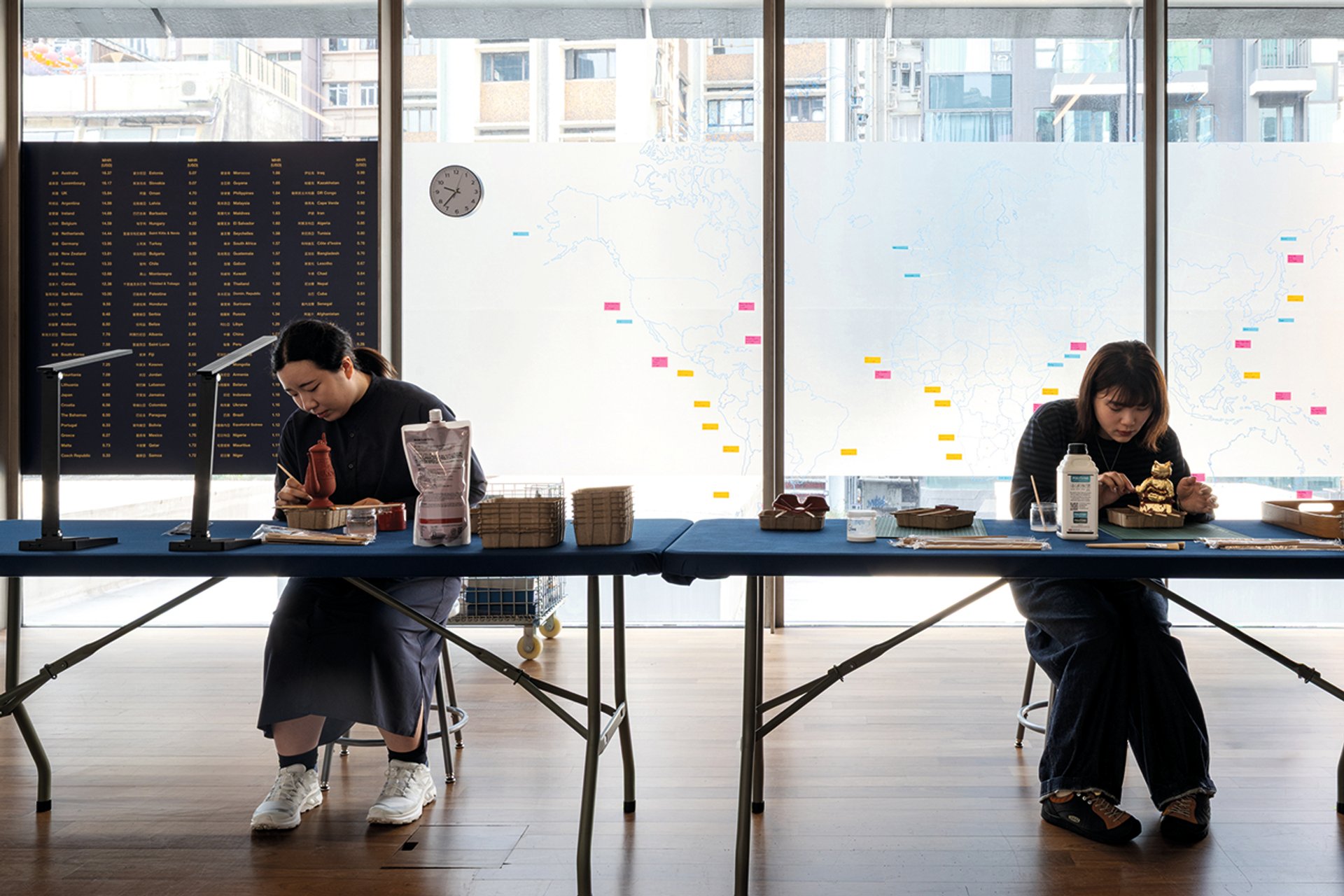
The participatory project Wanted, Unwanted and Wanted Again: The Alchemy Project (2026) is part of the show © Tai Kwun Contemporary
He says that 2008 “was when the whole world changed dramatically”. For him, that year has become “a symbol of the peak of globalisation, when China proclaimed ‘One World, One Dream’. That was really a global dream.” The Wenchuan earthquake before the Beijing Summer Olympics predicated the subsequent US subprime crisis, then Occupy Wall Street, “and then all the global social unrest, from the Yellow Vests to Black Lives Matter, and then the pandemic. I think the first major change after 2008 was the shift from an optimistic feeling towards something very sceptical and also very uncertain.”
The show opens with a section titled “Ecological Footprints”, about the tensions between development and preservation. It then continues with “Labour Reconfigured”, which considers the meanings of labour, says Ying Kwok, the senior curator at Tai Kwun, who co-organised the exhibition. It “focuses on the people behind the supply chain, the labourers who help make our lives comfortable and functional—but how much do we know about them? We might picture them in a certain kind of uniform, but that is a stereotypical impression. Everyone has their own story,” Kwok says. The section, he says, delves into “the way artists embed themselves in production lines—using their own time and labour to explore the idea of value”, including that of “the human body as flesh, its fragility and limits, set against the demands of an intense factory and production environment”.
The exhibition continues through themes of production and consumption in “Networks of Exchange”, followed by “Global Realignment”, which puts the Chinese supply chain in the geopolitical context and brings the global back to the personal with “migration, diaspora, shifting power and the distribution of capital and resources, and how these forces reshape identity and lived experience across borders,” Kwok says.
Each part of the exhibition included three new commissions. In the current show, Ocean Leung’s Smile Unit exchanges a badge for visitors’ stories that make them smile. Mark Chung’s installation Grayout uses the sound of breathing to elicit how ostensibly optimal environments manipulate us into overwork. For Why Not Dance 1, Li Yifan animated a factory job-hopping influencer.
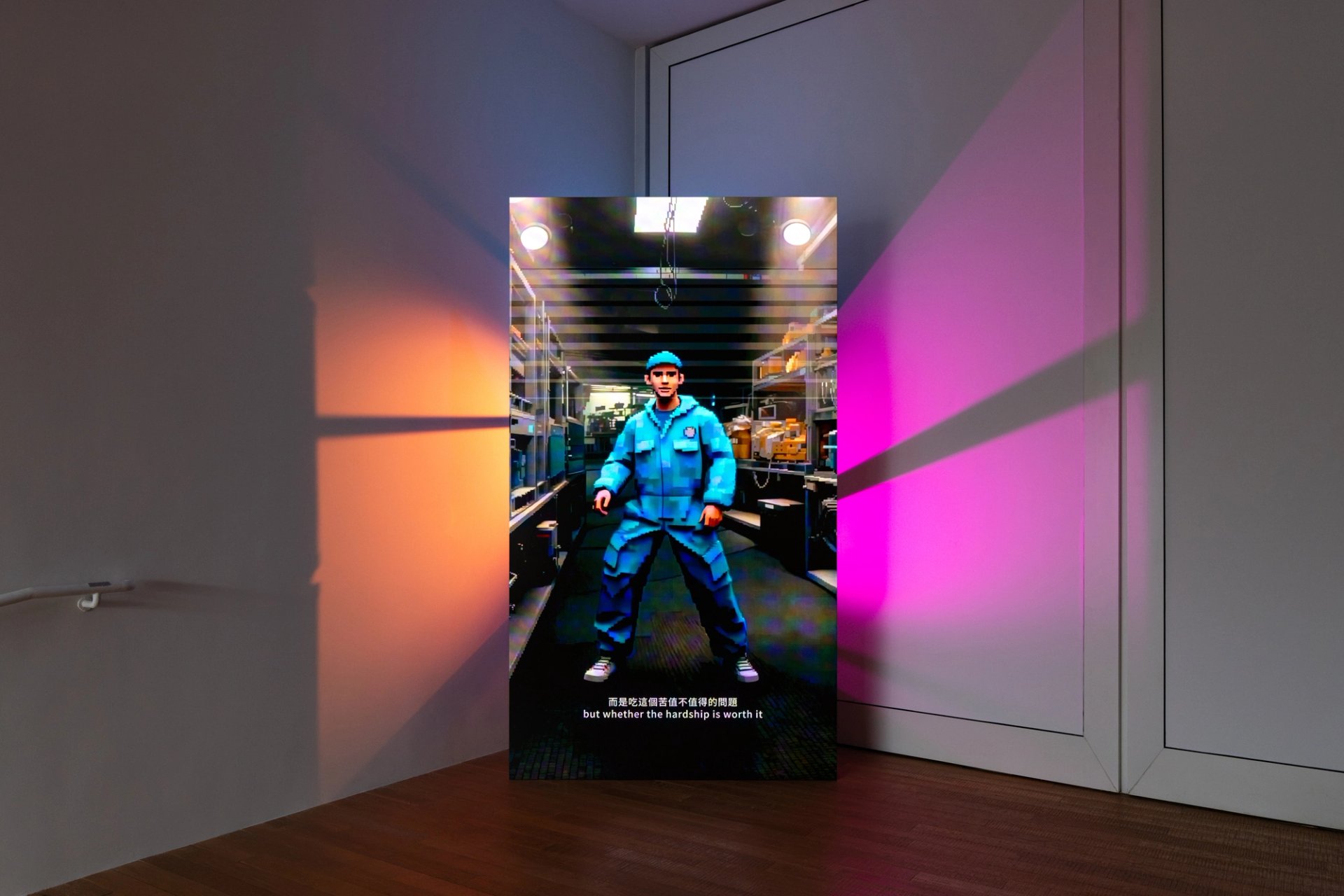
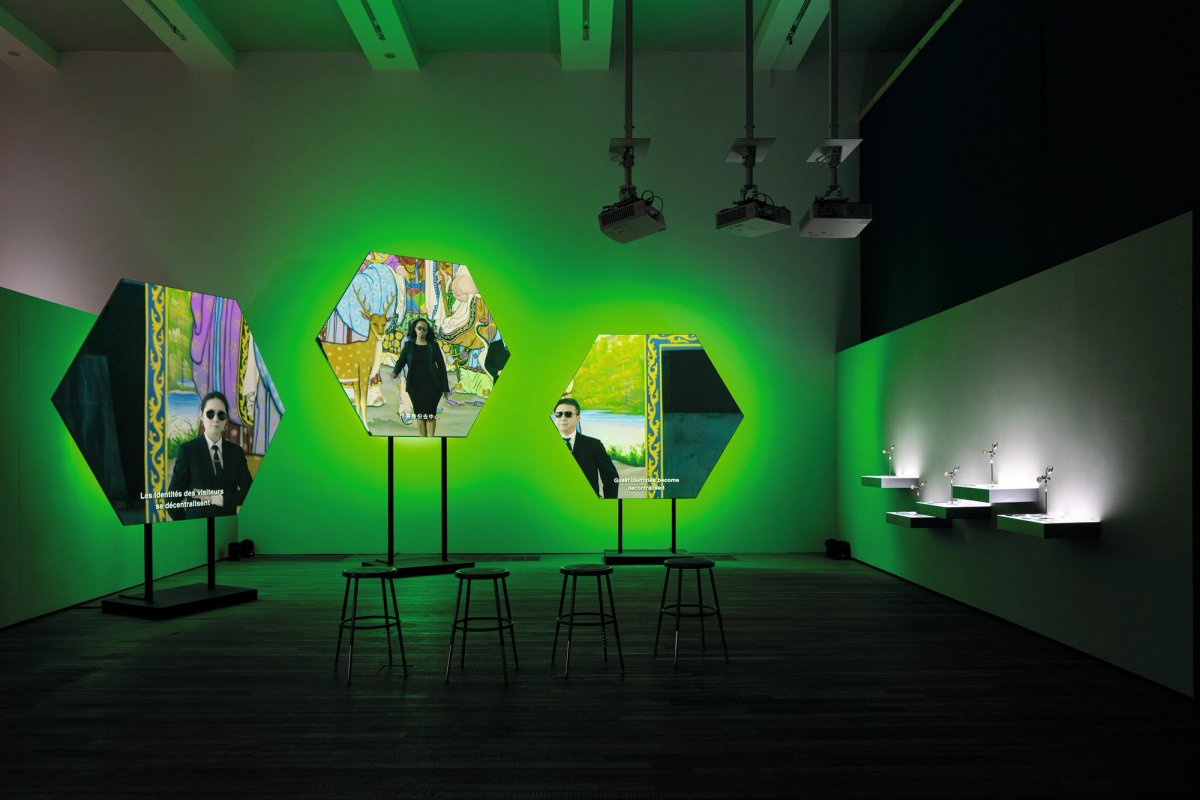
Li Yifan’s video installation Why Not Dance 1 (2025) © Tai Kwun Contemporary
The first instalment, meanwhile, commissioned projects from Lu Yang, Zhang Yibei and Shao Chun. Lu, along with artists like Miao Ying and Guan Xiao, are part of China’s so-called “post-internet” era, Pi says, wherein “the internet not only influences the artist’s style and aesthetics, but also impacts their methodology”. China’s issues with online censorship, surveillance capitalism and algorithmic information cocoons proved prescient for the whole world. “Chinese artists have really developed something very special through these constraints. The restrictive nature of the internet is not only happening in China—it’s global,” Pi says.
• Stay Connected: Supplying the Globe, JC Contemporary, Tai Kwun, 10 Hollywood Rd, Central, Hong Kong, until 31 May