As another Hong Kong Art Week unfurls across the city, its increasingly confident art scene has much to be proud of—including an embrace of queerness. For the past few years LGBTQ+ topics have become increasingly common in exhibitions at the city’s museums and galleries, providing a current of optimism at a time when other political subjects are being increasingly avoided.
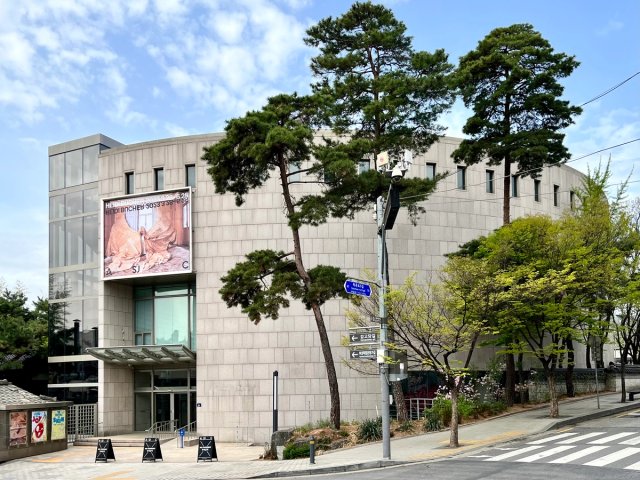
Among the recent accelerants of this trend in the local art scene was the Hong Kong edition of Sunpride Foundation’s exhibition Myth Makers—Spectrosynthesis III, which ran from December 2022 to April 2023 at Tai Kwun Contemporary. The subsequent show of Spectrosynthesis opened on 20 March in Seoul (until 28 June), with a fifth edition slated for Tokyo in 2027.
“Hong Kong remains one of the most open, dynamic cities in Asia for queer artistic expression,” says Sunpride’s Hongkonger founder Patrick Sun. “Our concerns are no different from those of our counterparts in other major Asian cities. We all navigate the balance between cultural traditions and social norms, yet Hong Kong distinguishes itself as a place where international dialogues unfold, different perspectives converge and queer art has found a genuine audience.”
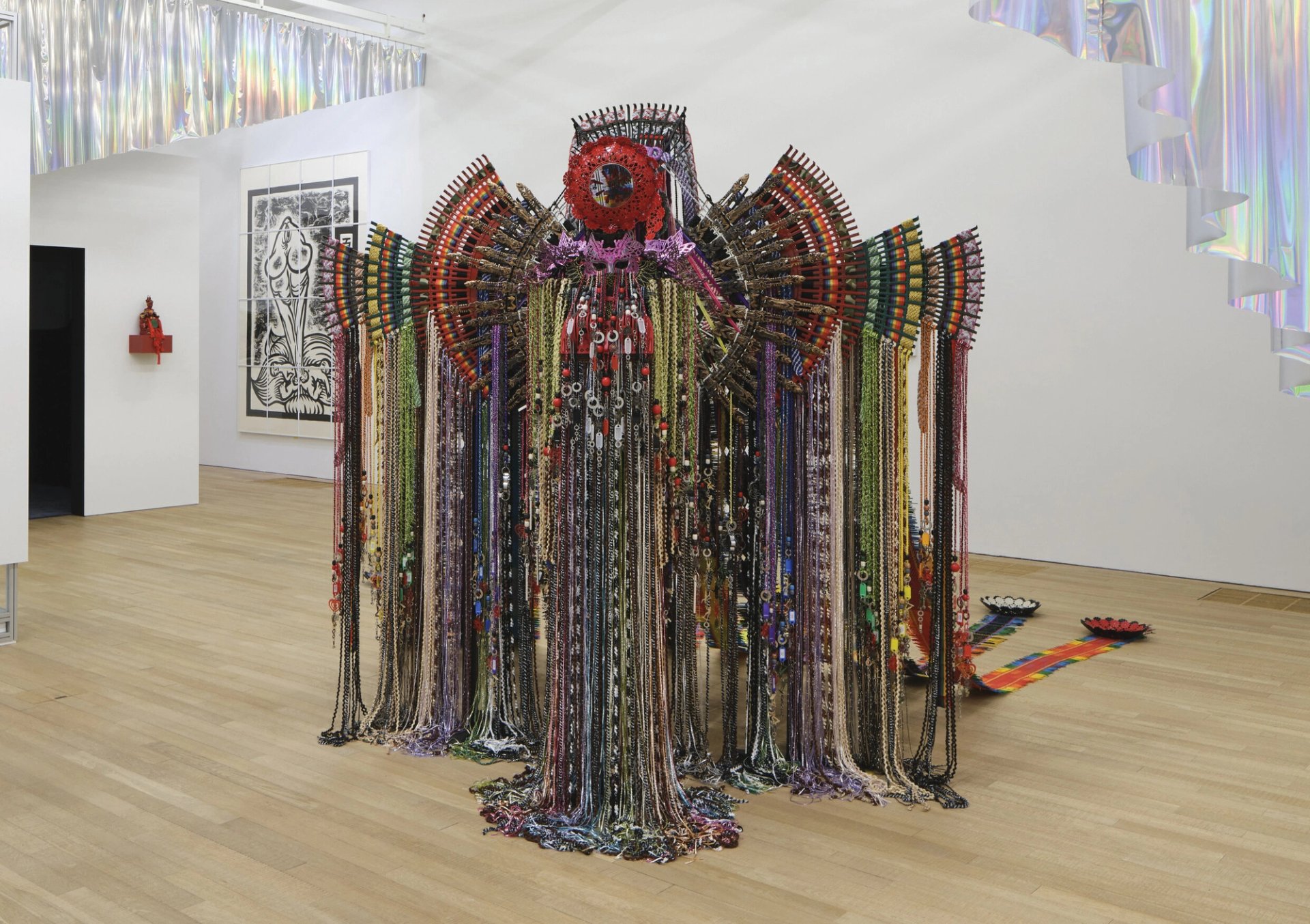
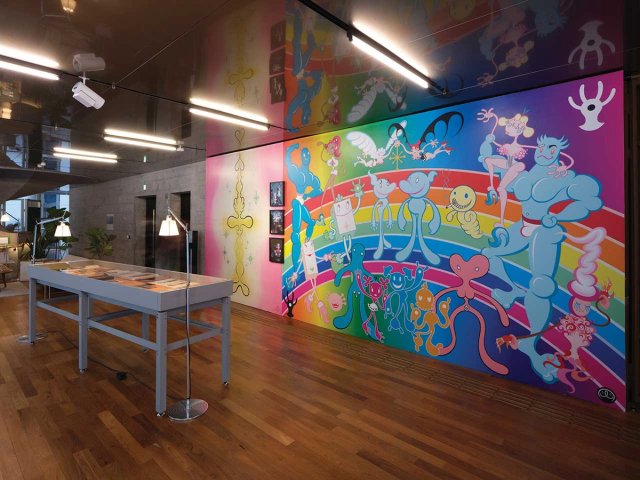
An installation view of Conundrum Ka Sorga/To Heaven (2019) by Malaysian artist Anne Samat, which was part of the 2022 show Myth Makers—Spectrosynthesis III in Hong Kong Photo: South Ho
Sun observes that each and every city, country and culture is unique, and the impact of his projects has reflected these differing social landscapes.
“For Hong Kong, the legacy of Myth Makers is the space it created for queer artists and audiences to see themselves and each other, building a foundation of solidarity that will be essential for the future,” he says.
Comparatively, the inaugural 2017 Taipei show, Spectrosynthesis—Asian LGBTQ Issues and Art Now, “arrived at a moment when Taiwan was already on a clear path toward marriage equality, which was legalised only two years later. In Bangkok, the exhibition [Spectrosynthesis II: Exposure of Tolerance, in 2019] opened up a more nuanced conversation about the gap between social acceptance and legal rights.”
Cusson Cheng, the co-founder and curatorial director at Podium, a Hong Kong gallery that focuses on LGBTQ+ and women artists, sees Myth Makers “less as an isolated cause and more as an accelerator and touchstone. It consolidated a regional conversation that had been building in Taipei and Bangkok that allowed Hong Kong audiences and artists to see themselves within an Asian queer constellation.”
In 2022, Cheng says, “LGBTQ+ themes were already visible in Hong Kong’s art scene, but largely within semi‑private or coded contexts.” For example, the career of the bisexual singer-actor Leslie Cheung built upon a gender-bending tradition in Cantonese opera; Hong Kong University held a 2007 exhibition of LGBTQ+ art; and a long scene of underground queer publications has continued with Kary Kwok’s community zine Ta, named after the gender-neutral Romanisation of Chinese pronouns.
Mimi Chun of Blindspot Gallery, which has staged several shows on LGBTQ+ themes, says she has yet to encounter any challenges, even for more explicit works. “However, local culture remains quite conservative, and homosexuality is not yet widely accepted across all generations.”
What Spectrosynthesis shifted, Cheng says, “was the visibility of queer discourse in an institution whose stated remit is to serve the public. That matters deeply: most commercial galleries are, at the end of the day, private entities that speak primarily to a specific demographic, whereas Tai Kwun’s mission is to curate a programme that [encompasses] school visits, families, tourist itineraries and mainstream media. Staging a major LGBTQ+ exhibition there signalled that queer histories and futures are not a niche concern but part of the public cultural record.”
The artist and curator Wong Ka Ying, who participated in Spectrosythesis III, says for Asian LGBTQ+ artists, “the show secured vital space and resources, some with brighter career paths: high-profile visibility at institutionalised and elite venues, professional curators and resources for queer Asian mythmaking”. During Hong Kong Art Week, Wong is organising and showing her work in Ve(ry)nice at Jacomax Pizzeria (until 29 March), a 15-artist exploration of the echoes of Venice in Hong Kong.
Wong notes that since the tightening of the National Security Law in 2021, community activism has become more “muted” and the Equal Opportunities (Sexual Orientation) Funding Scheme has “dwindled”, which “demoralises activists and signals non-prioritisation of sexual minorities”, she says.
Still, there have been judicial wins, such as for public housing and a same-sex partnership framework in 2023, as well as affirmation of housing and inheritance rights in 2024. “We have seen meaningful progress,” Sun says, pointing to the 2023 Court of Final Appeal ruling, which led to administrative changes, including same-sex couples being able to file joint tax returns, apply for public housing together and have their inheritance rights recognised in ways “that would have been unthinkable just a few years ago”, he says.
For artists in particular, the art world remains a space where the gap between legal recognition and lived queer experience can be examinedPatrick Sun, Sunpride Foundation
Sun says he remains “cautiously optimistic, as progress continues through shifting public sentiment. For artists in particular, the art world remains a space where these complexities can be explored, and where the gap between legal recognition and lived queer experience can be examined, and where the resilience of our community can be expressed and celebrated.”
Cheng believes that LGBTQ+ Hong Kong artists “are uniquely positioned to explore that ambiguity, because ambivalence, doubleness and code‑switching are already built into queer survival. I imagine more works that refuse neat resolution, that embrace partial visibility, that hold nostalgia and futurity in the same gesture.”
He says that, as artists become “even more entangled with questions of home, displacement and belonging”, they will eschew simple narratives. “The most compelling practices will, I think, continue to stretch our imagination of what a queer city can be—one that is constantly re‑negotiating its borders, its intimacies and its right to remain undecided,” Cheng says.