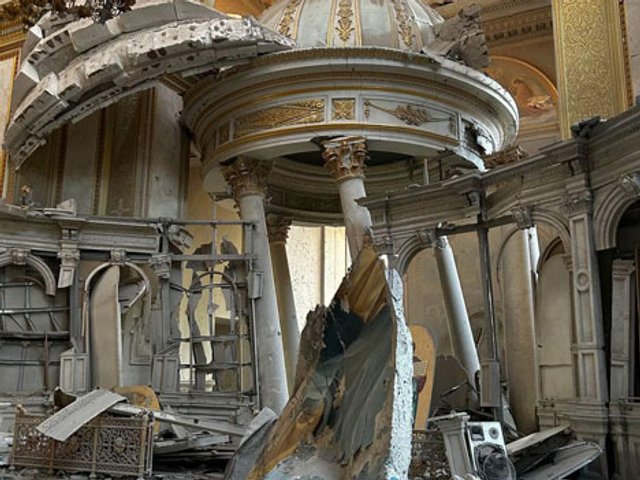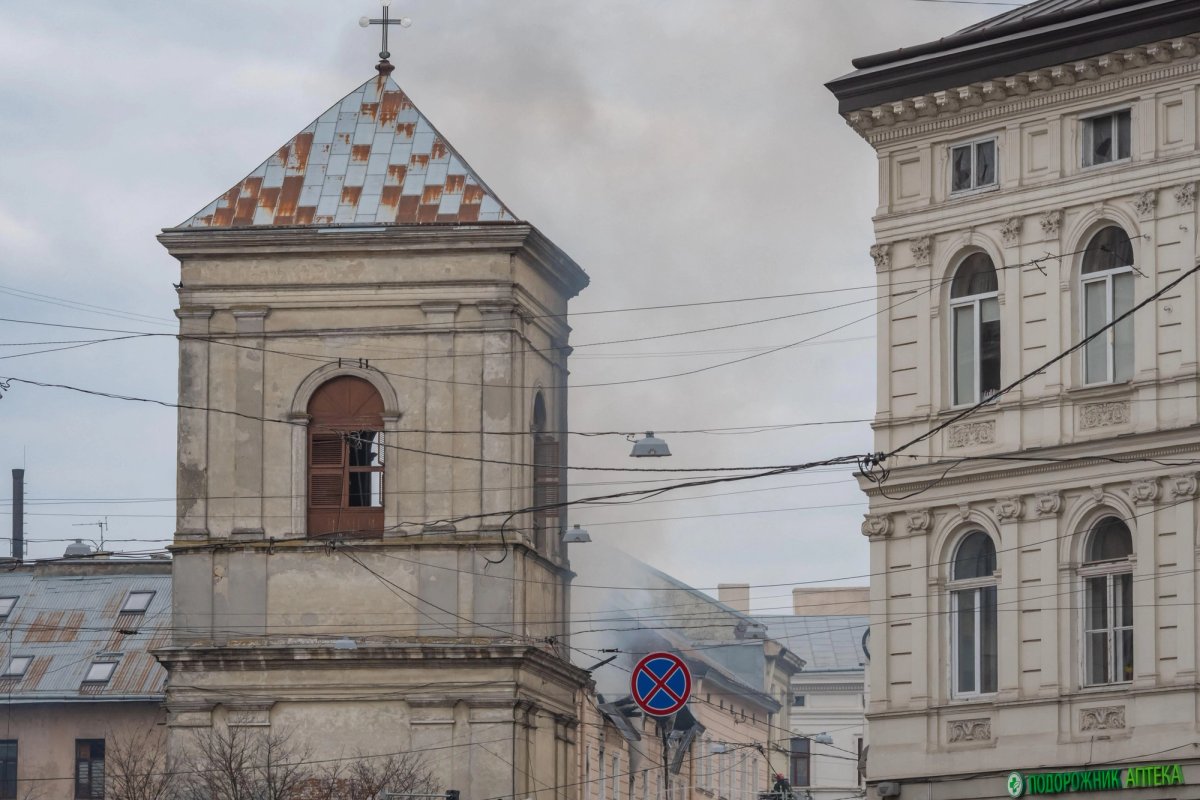
A Russian drone strike on the historic centre of Lviv in western Ukraine on 24 March damaged multiple buildings, including a Unesco-protected 17th-century monastery. At least 27 were injured in the attack, according to the city’s mayor.
Unesco said in a statement posted on X on 25 March that it is “deeply alarmed” by the “strikes that hit a building in the area of Bernardine Monastery within the World Heritage property of ‘L’viv—the Ensemble of the Historic Centre’.”
Social media posts by officials and residents showed drones flying into Lviv and flames around the monastery’s St. Andrew’s Church. The monastery church and other present-day buildings were commissioned by the Bernardine Order in the early 17th century, and designed by Italian architects in a Mannerist style. Today it is part of the Ukrainian Greek Catholic Church.
A large part of Lviv’s historic centre, including the area the monastery is in, was inscribed as a Unesco World Heritage Site in 1998 and added to the organisation’s List of World Heritage in Danger in 2023. The city, which is central to Ukrainian cultural identity, has over the centuries also been under the rule of Poland and the Austro-Hungarian Empire.
The strike was part of a Russia’s largest and most prolonged aerial assault on Ukraine since its full-scale invasion of the country in February 2022. Nearly 1,000 drones and missiles were launched against targets across the country, killing multiple people, officials said. Many of the strikes took place in broad daylight, indicating a shift in tactics following a brutal winter of nighttime strikes targeting Ukraine’s energy infrastructure.
Unesco did not name Russia as perpetrator of the strikes in its statement, saying instead that “all parties must safeguard heritage and refrain from any acts harming cultural property”.
Ukraine’s president Volodymyr Zelenskyy has said that Russia used Iranian-designed drones in the attack. “Iranian “shaheds” enhanced by Russia hit a church in Lviv—this is utterly perverse, and only the likes of Putin could take pleasure in it,” he said in a post on X. “In Ivano-Frankivsk, a maternity hospital was damaged. The scale of today’s attack strongly indicates that Russia has no intention of really ending this war.”
Ukrainian Minister of Foreign Affairs Andrii Sybiha used his post on Xfollowing the Russian strike on Lviv to address organizers of the Venice Biennale, who are being urged to reconsider their decision to allow Russia to participate.
“Don’t look away, @la_Biennale,” he wrote on 24 March with a photo of flames around the monastery. “This is the ugly face of barbaric Russia—destroyed Unesco World Heritage in the protected centre of Lviv. This is the barbarism you wish to normalise at the Biennale. Get real!”
Responding to the strikes, the Ukrainian Institute of National Remembrance called for Russia’s membership of Unesco to be revoked.
“Constant attacks on the cultural heritage of Ukraine, which is under Unesco protection, are a deliberate policy of the Kremlin, aimed at destroying Ukrainian national memory and cultural identity,” it said in an open letter published on Facebook. “We call on the international community to take consolidated action to end the unprovoked war against Ukraine: the murder and abduction of children, civilians and soldiers, Russia's destruction of European cultural heritage in Ukraine, and to put an end to its systematic disregard for international law.”