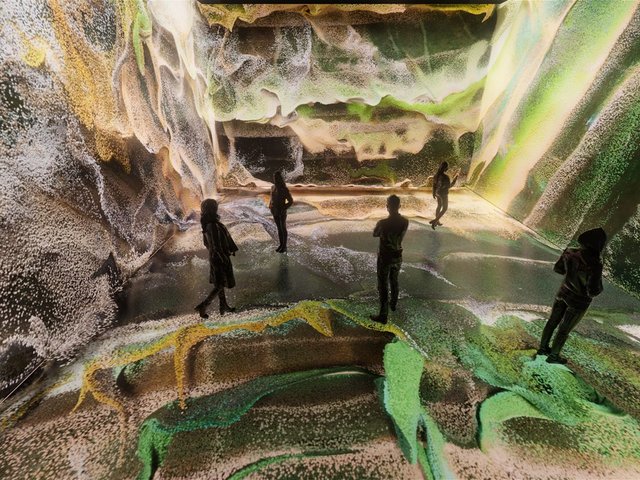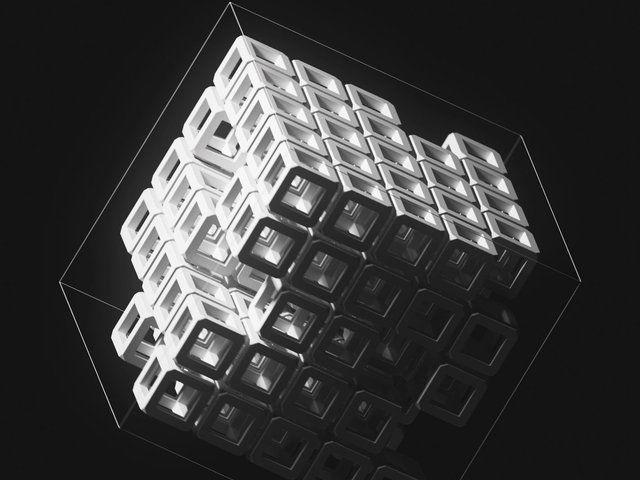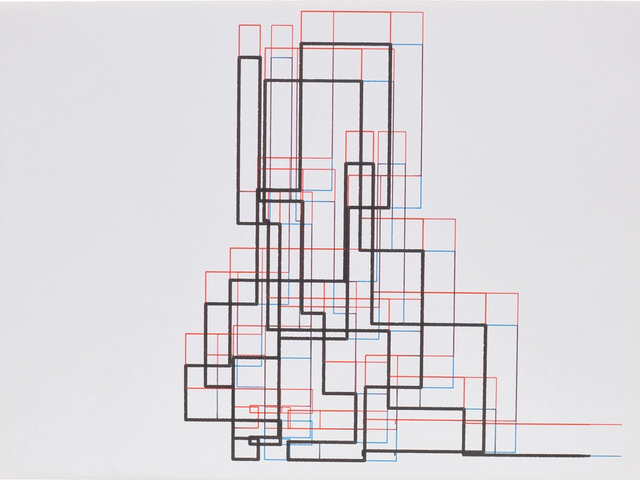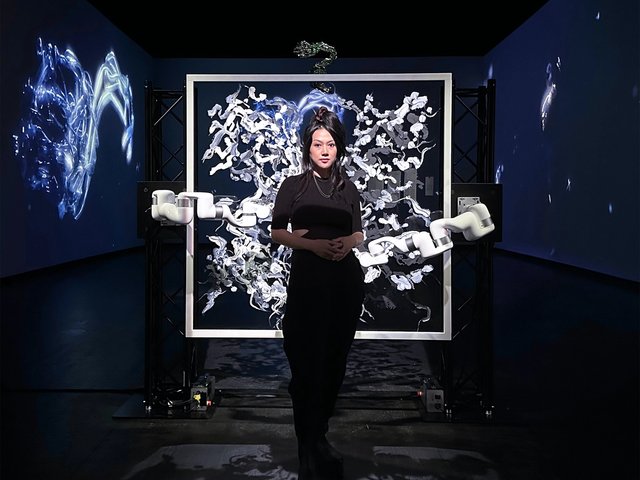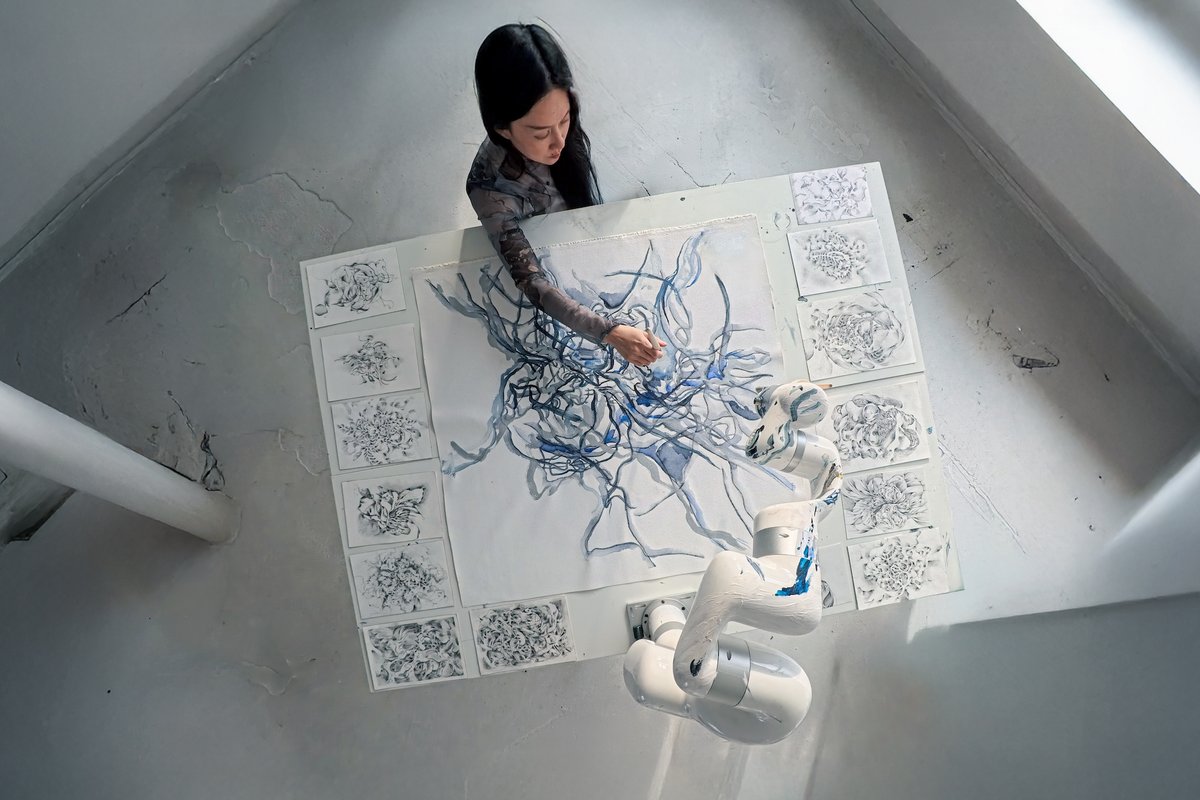
Sougwen Chung is presenting new works as part of Art Basel Hong Kong’s inaugural Zero 10 sector, dedicated to art of the digital age. Her centrepiece, Recursion 0, is a 10-metre scroll created with the help of brainwave data, which will be completed live at the fair. She tells us about how humans meet machines in her art.
“I’ve been thinking lately about how art reveals the writing on the wall. When I began developing the concept of human-machine collaboration it was 2015, years before the current wave of generative AI entered public consciousness. It stemmed from research into neuroscience, computer vision and HCI (human-computer interaction). But “interaction” felt insufficient, too transactional. “Collaboration” felt truer. In collaboration, there is always change. Mutual exchange. Promise. Peril. It implies a relational risk, an entanglement: a kind of (ex)change.
That dynamic exchange is what underpins the D.O.U.G. (Drawing Operations Unit: Generation) series. D.O.U.G. now spans multiple generations and has been presented everywhere from the Victoria and Albert Museum in London (where the work entered the permanent collection) and the National Art Center in Tokyo to the World Economic Forum in Davos.
Chung says that “Human experience defies computation yet can be expressed in new ways through these tools” Alex Kwan
Perhaps that’s why the work often suggests shared creative agency between human and machine. I’m drawn to this idea of creative agency, what it means today, how it is granted or revoked. It’s a question of authorship and value, but also of concealment and erasure. What does our desire—or refusal—to assign authorship to a machine say about us?
My interest has never been in replacing human collaboration, but challenging our assumptions about what machines are and what humans can become through them. With each iteration of D.O.U.G., I explore temporality and embodiment through machine bodies, systems, sensors and data. Human experience defies computation yet can be expressed in new ways through these tools.
The process itself is the space between categories. “Human” and “machine” as categories. The between as the creative practice. That relational space has turned out to be socio-technically prescient. We now live in a world of blended mediation. In each generation of D.O.U.G., I reflect on themes of mimicry, memory, spectrality, multiplicity, assembly, spatiality, recursion. These systems have become mirrors that are sometimes distorting, sometimes clarifying. A way to sit with different rhythms: urban, gestural, internal.
The feedback I receive from the machine isn’t verbal or emotional, like it might be from a human collaborator. It’s a feedback loop that is differently embodied, rhythmic, recursive. I draw with decades of my own movement data or create proprioceptive mappings triggered by alpha waves. These systems don’t possess agency in a mystical sense, but they reflect back our own: our choices, biases, knowledge. I’ve started to see them as us in another form.
To make a machine collaborator, I’ve had to become machine-readable. It’s a paradox: to move beyond the self, I’ve had to rigorously quantify the self. It’s a contradiction, an existential tension that has become a universal condition that is central to the work and to our wider relationship with technology. It’s a tension I explored in my TED talk, “Why I Draw with Robots”, and one that led to my inclusion in Time’s inaugural Time100 AI list in 2023, a recognition that this question of human-machine creative entanglement has moved from the margins to the centre of cultural discourse.
The history of human collaboration is written. The future of machine collaboration isn’t. As an artist, I’m interested in writing, exploring in all mediums these uncertain modalities, these undiscovered countries.”
• Interview by Peter Bauman