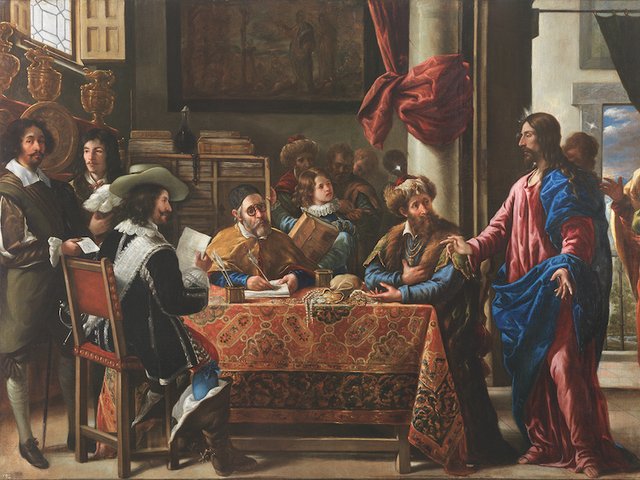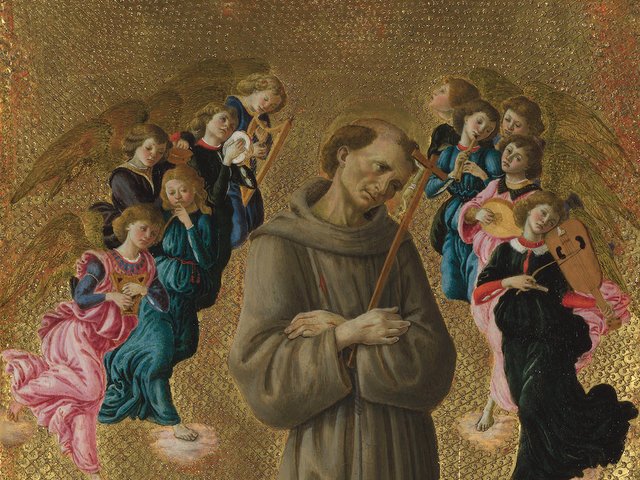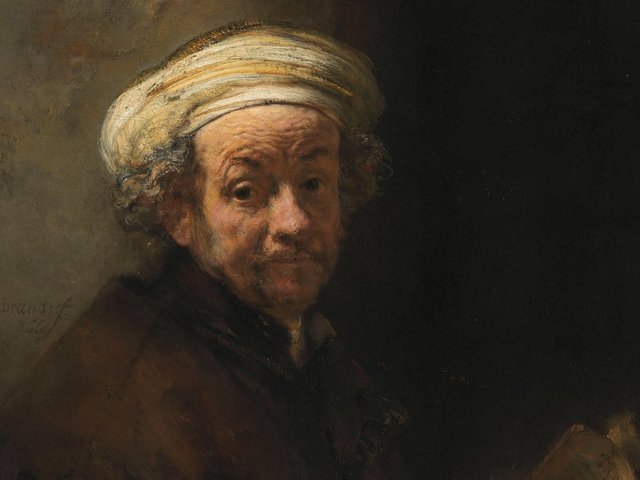
The Spanish painter Francisco de Zurbarán (1598-1664) is best known for his austere, contemplative paintings of saints. But a new exhibition at the National Gallery in London will show that the 17th-century artist’s range extended much further than is commonly thought. As well as his signature portraits of saints in shadowy cloaks, the show will include intimate still-lifes, which best express his spare aesthetic; his late work, where the artist’s technique softens to smaller, private devotional paintings; and vast multi-painting projects for religious confraternities—“when he’s the toast of all of Andalucía, taking commissions from everywhere”, says the show’s co-curator Daniel Sobrino Ralston.
The last Zurbarán exhibition on the scale of this survey was in 1987 and there have been some discoveries in the intervening years. “One of the real highlights of the exhibition,” Ralston says, “will be the opportunity to see two newly discovered paintings.” These freshly attributed pictures, including Alcarraza on a Plate (around 1650 or earlier), individually depict ceramic objects that feature together in one of the Spaniard’s great paintings, the Still Life with Four Vessels (around 1650), a version of which, lent by the Museu Nacional d’Art de Catalunya will feature in the exhibition. The new paintings “suggest that Zurbarán, and possibly his son [Juan], who he was training in the art of still-life, is painting these very individual small, detailed studies that he then transposes at exactly the same scale into larger pictures,” Ralston says. “You get a sense of how he worked as a still-life painter.”
Ralston argues that Zurbarán’s precision and poise appear not just in the intimate still-lifes but in the religious paintings for which he was much in demand during his lifetime. “There is that same kind of quality of attention,” Ralston says, so that “when you get up to them there are all these little details that make them of a piece with the still-lifes.”
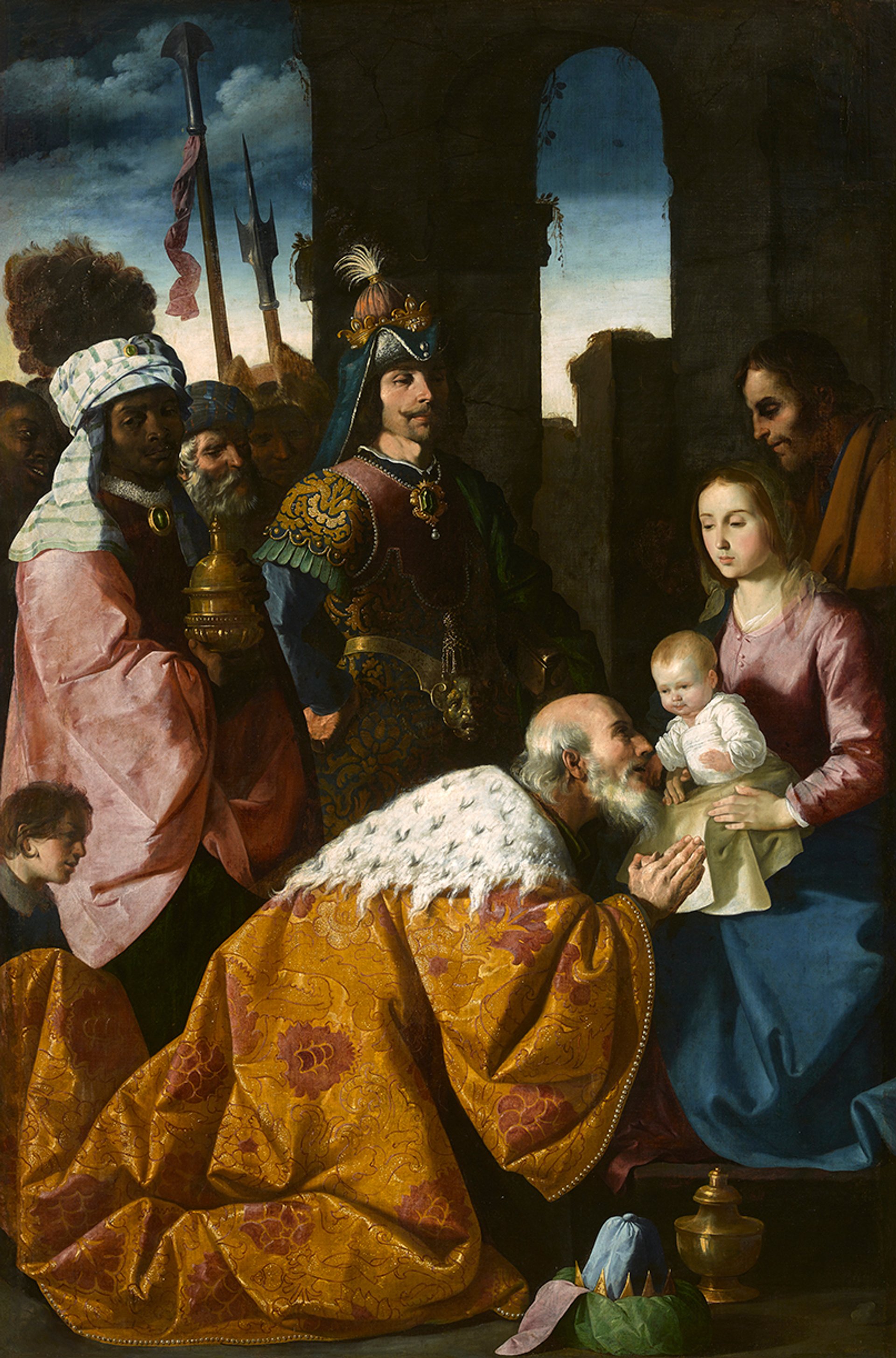
Zurbarán’s Adoration of the Magi (1638-39)
© Ville de Grenoble/Musée de Grenoble—J.L. Lacroix
How, though, can the exhibition reflect the enormous commissions the artist made for religious brotherhoods in Seville—where he lived for many years—and wider Andalucía? “One of the great achievements is to bring together a single tier of this amazing altarpiece from the Charterhouse of Jerez de la Frontera, which would have been 15m tall,” Ralston says. “[It] would have been absolutely spectacular.” For the first time in about 175 years, the second tier of that altarpiece will be reconstructed, with The Adoration of the Magi (1638-39) and The Circumcision (1639) being lent by the Musée de Grenoble, and the Virgin of the Rosary with the Carthusians (1638-39), measuring about 4m in height in its frame, coming from the National Museum in Poznań. “With that, you get a sense of the scale of how these paintings might have been received, walking into that church.”
Another focus of the show is on the artist’s much misunderstood late period. Ralston points out that Zurbarán is often perceived as having declined in his final years, after his imperious oeuvre of the 1630s, and especially after the great plague that struck Seville in 1649 and killed Juan. Rather than declining, Ralston says, the show argues that “he moves in quite a different direction”. Smaller in scale, the late works are “softer and more intimate in tone. These are things that were made to hang in houses or in private chapels.”
A spiritual experience
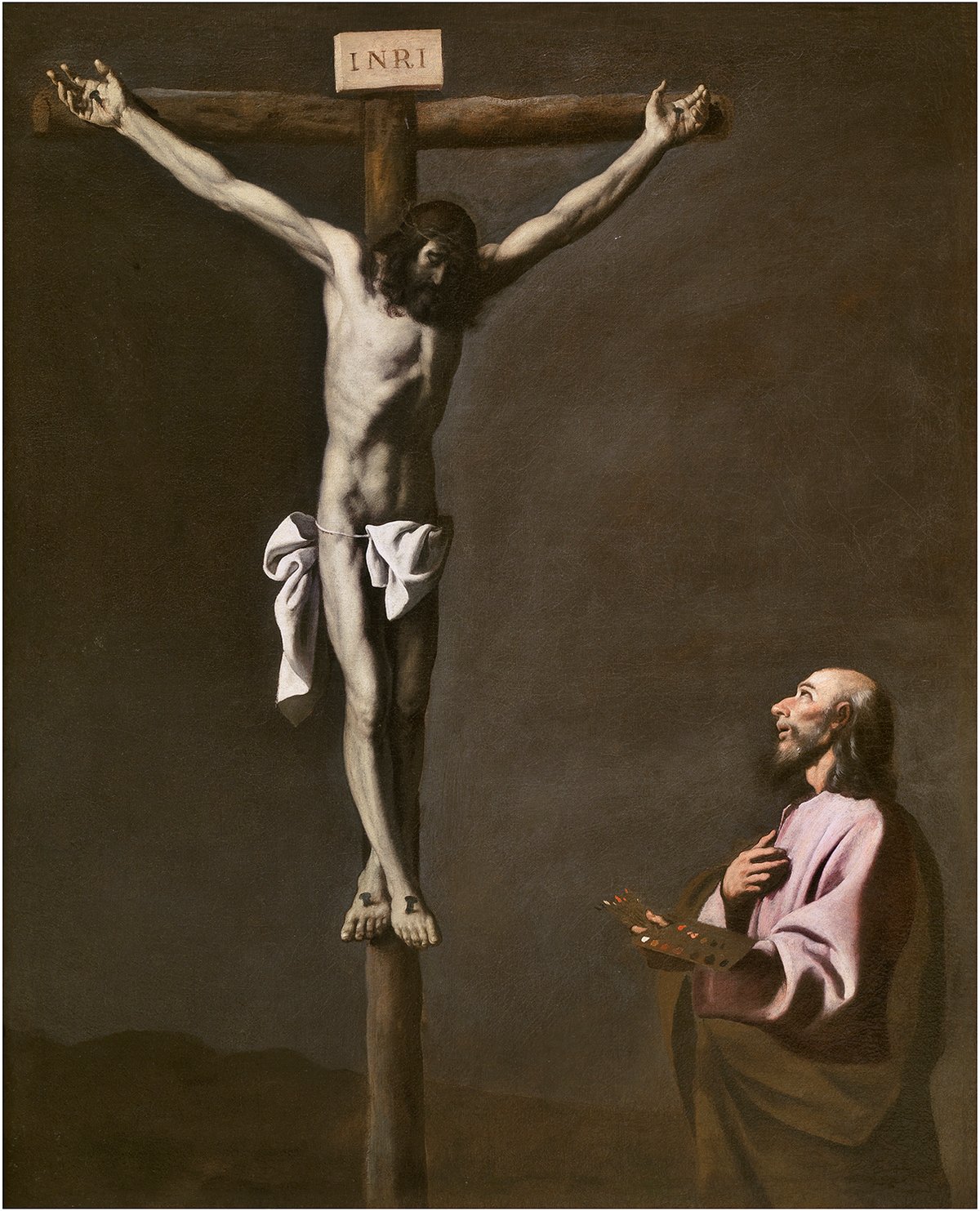
In his final years, Zurbarán was “more self-aware than he’s been given credit for”, Ralston says. He painted cartellini, “fictive pieces of paper on his canvases, announcing authorship”. One is present in The Veil of Veronica (1658), created in the tradition of Santa Faz (“holy face”) showing Christ’s portrait in blood and sweat imprinted on the cloth. The picture is “an almost witty game of illusion and allusion with a cloud-like representation of the stain on the veil,” Ralston says. “He’s trying to suggest what painting can do.” This is reinforced spectacularly in the work that ends the show, Crucified Christ with a Painter (around 1650). Interpreted as a self-portrait or a depiction of Saint Luke with the painter’s likeness, it is a remarkable statement about the Spaniard’s craft. “If the purpose of painting—and certainly the purpose of his paintings—is to leave you with a spiritual or religious experience,” Ralston says, “then showing that allows us to understand more about him.”
• Zurbarán, National Gallery, London, 2 May-23 August