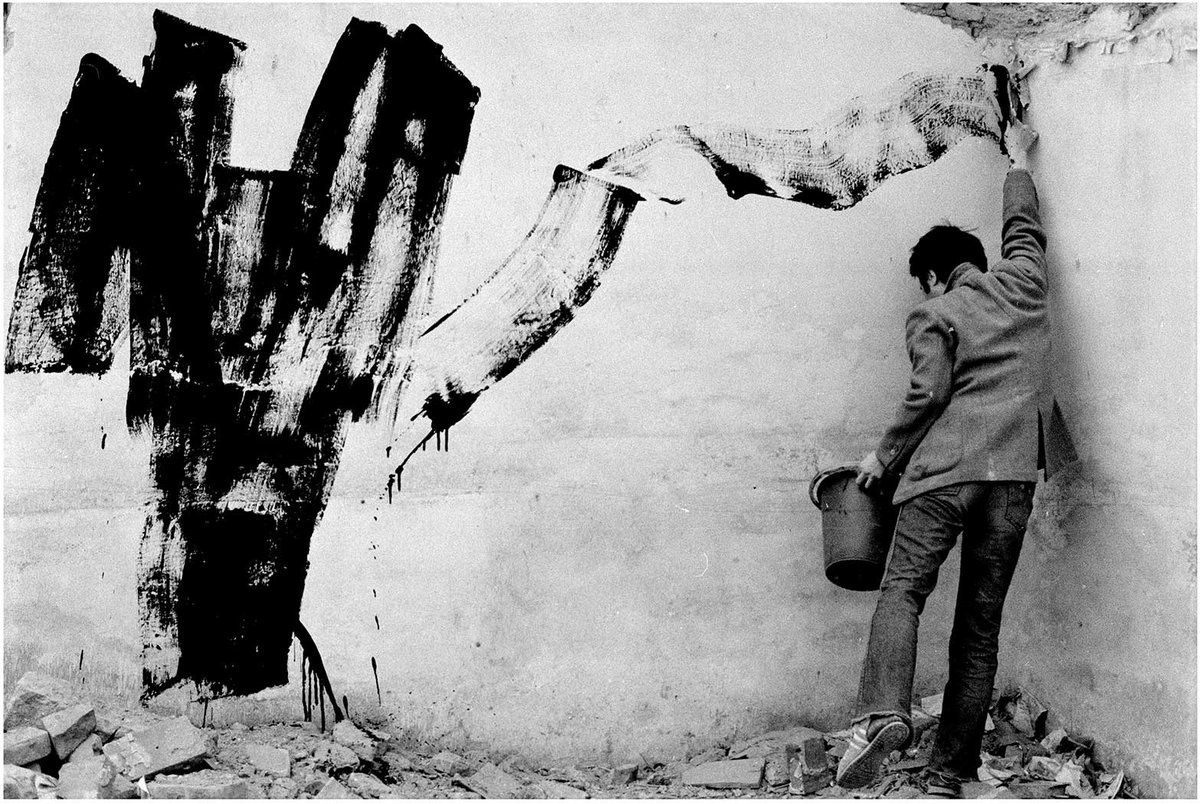
When two leading exponents of Chinese conceptual art, the Shanghai-based artist Qian Weikang and the Beijing-based New Measurement Group, both ceased making art in the mid-1990s, their actions unintentionally contributed to the obscurity surrounding the emergence of conceptual art in China, says Carol Yinghua Lu, the director of Beijing’s Inside-Out Art Museum. By ending their practices, and with Qian destroying all his work in 1995, awareness of these pioneering artists “gradually faded”, Lu says.
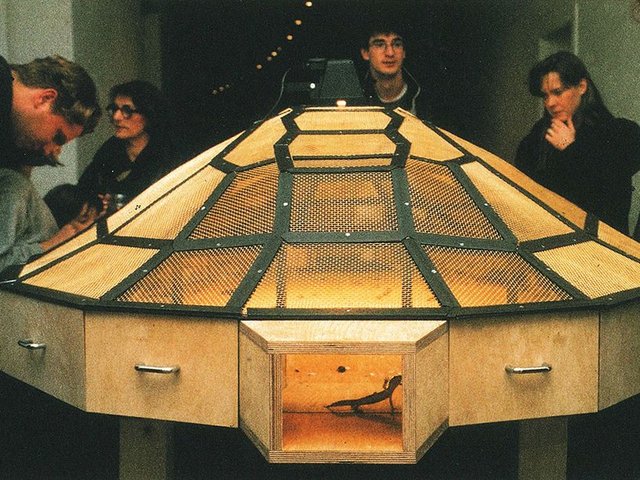
The exhibition Poetry Goes No Further Than Language: a Historical Moment of Art Becoming Art Again at Buxton Contemporary in Melbourne, curated by Lu and the artist Liu Ding, will attempt to reassess and reassert the importance of early Chinese conceptual art. The show will bring together the entire artistic output of New Measurement Group (Chen Shaoping, Gu Dexin and Wang Luyan), including five dense publications explaining the collective’s artistic methods, along with four conceptual experiments by Qian. These works will be situated within a broader exhibition context that includes pieces by three leading exponents of the New Wave art movement of the mid 1980s—Southern Artist Salon, Xiamen Dada and M Art Group—alongside paintings and prints produced by individual members of New Measurement Group, and three new commissions made in response to their work by the Melbourne-based contemporary artist Darcey Bella Arnold.
Of all the artists that emerged from New Measurement Group, Gu Dexin is arguably the most well-known. Continuing his solo art practice until 2008, Gu attained a mythic status in Chinese art circles after he rejected an invitation to participate in the planning of a major retrospective of his work and opted out of visiting the exhibition when it opened at the Ullens Center for Contemporary Art in Beijing in 2012.
Locating works by New Measurement Group for the exhibition was “challenging”, Yu says, as none of the group’s members owned all five books they produced during their six-year existence. After tracking down their publications, including one purchased from eBay in Europe, the curators Lu and Liu formed a “quasi New Measurement Group” to test their use of rules, measurements and analysis as a method to remove “individual behaviours and consciousness” in their collaborative experiments.
Re-enacting the works
One such work, Tactile Art (1988), has been reprised for the exhibition. Originally conceived of by Gu, it proposed a series of experiments in which the sensation produced by touch would be recorded as drawings or text.
During the work’s development, Wang Luyan suggested that real touch be substituted by the subjective understanding of touch, and Gu and Wang then produced a series of 16 drawings that describe various sensations, such as “bubbles on face” or “temperature 39”, both of which are written in white Chinese characters on black photographic paper.
To restage Qian’s four installations in the exhibition, the curators used photographs and notes to reverse-engineer his work. “Re-enactment and re-fabrication became a key working method in this art historical inquiry,” Lu says. To replicate Ladder Poem (1990), the curators recreated Qian’s original experiment, which involved dropping pieces of paper with randomly selected Chinese words on them onto lines on the ground, and these were then transcribed onto corresponding lines on the wall.
In this exhibition, Ladder Poem will occur twice, once on the ground floor in Chinese and then again in an upstairs gallery using words selected from Australia’s Macquarie Dictionary. Qian has never thought of Ladder Poem as a work of art, Lu says, but instead sees it “as an experimentation of writing methods within his poetry writing and art criticism practice”.
• Poetry Goes No Further Than Language: a Historical Moment of Art Becoming Art Again, Buxton Contemporary, Melbourne, 1 May-3 October