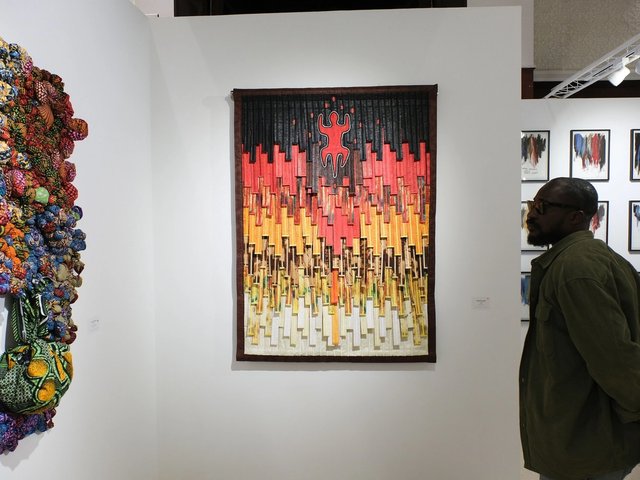
The 1-54 Contemporary African Art Fair is back at the Starrett-Lehigh Building in Chelsea for its 12th edition in New York, with 20 exhibitors from 12 countries. The fair features a special section foregrounding Afro-Brazilian artists called Brazil Beyond Brazil, which includes ten artists and six galleries, organised by the Brazilian art historian and curator Igor Simões, a specialist in the field.
The presentation expands on Simões’s research for exhibitions like Dos Brasis: Art and Black Thought at the Sesc Belenzinho in São Paulo in 2023, a show he co-curated that was the largest presentation of Afro-Brazilian art ever held in the country. It was additionally informed by his fellowships at the Getty Foundation and the Clark Art Institute, where he sought to examine why Afro-Brazilian artists were largely excluded from the global discourse around African diasporic art.
“Brazil is the largest Black country outside the African continent. We were the primary destination for the objectified bodies of Black people for three centuries,” Simões tells The Art Newspaper. “My question is: how is this absence possible and what does it reveal?”
He says the presentation at 1-54 aims to challenge reductive readings of Afro-Brazilian art, moving beyond stereotypical motifs like samba or the orixás (divine spirits associated with the Yoruba religion) to give US audiences a better understanding of the artists shaping the canon today.
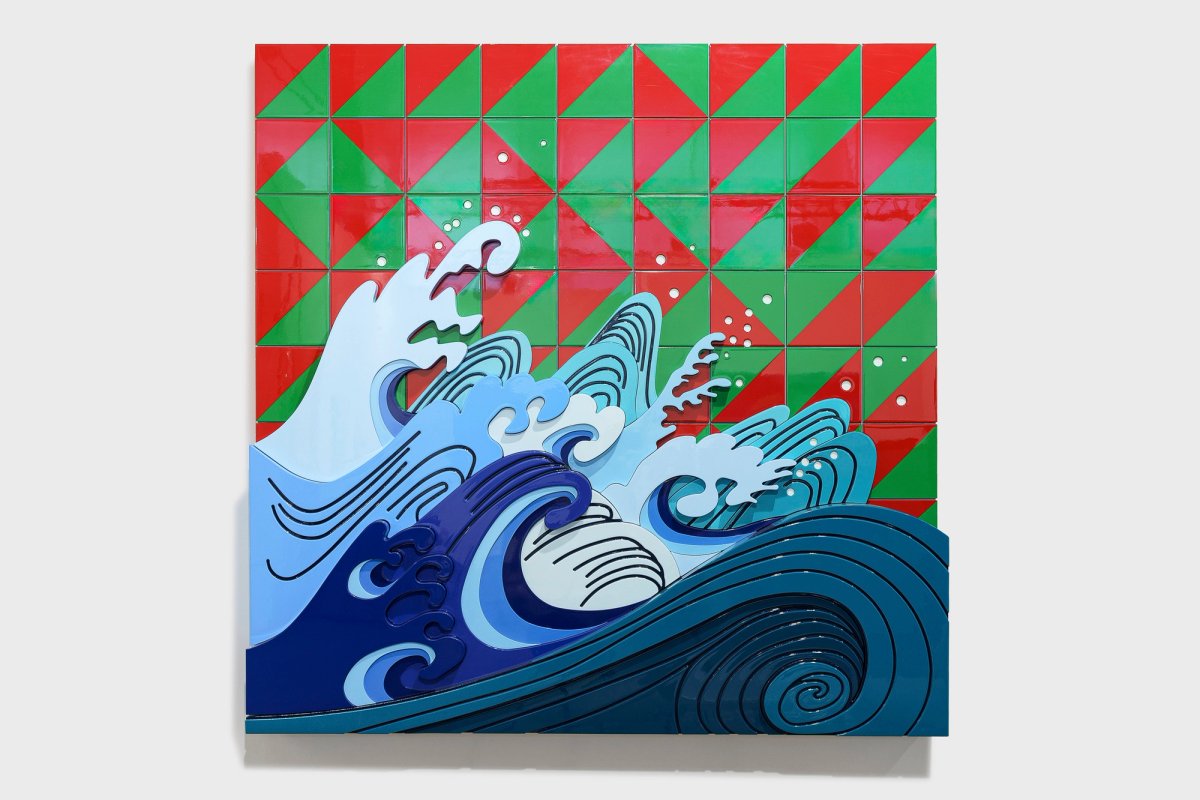
Highlights of the section include Luana Vitra’s Geological suture 3 (2024), a wall-mounted sculpture made from materials associated with the mining industry in her native state of Minas Gerais that critiques extractive practices and the labour of Black communities. Helô Sanvoy’s Parabrigar (2022), named after the words for shelter (abrigar) and struggle (brigar), appropriates materials like brick and glass that are used in the construction of makeshift homes in Brazilian favelas, reflecting on how a lack of access to housing forces marginalised communities to fight for basic rights.
“We are not rejecting the strength of our religiosity, the powerful Yoruba heritage of Brazil’s north-east, nor the importance of artists who have been read as ‘primitive’ or ‘naïve’, and who were represented that way in the international context,” Simões says. “These artists, galleries and the fair aimed to go beyond a recurring selection of what a certain ‘authenticity’ of Black art produced in Brazil should be.”
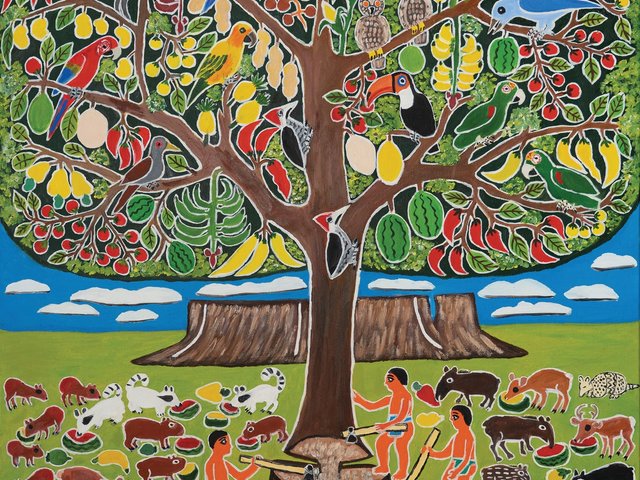
This edition of the fair features several first-time exhibitors, including Adegbola Gallery from Lagos, Aura from São Paulo, Black Pony Gallery from Bermuda, Blond Contemporary from London, Picture Theory Projects from Manhattan, Tanya Weddemire Gallery from Brooklyn and the Current: Baha Mar Gallery & Art Center from Nassau. The fair includes special projects like Entanglements, presented by TM Arthouse, which brings together artists from the Caribbean and the Amazon who explore ecological themes.
Diverse audiences
The fair was founded in London in 2013 and expanded to New York City in 2015, with a Marrakech edition launching in 2018. It has become a “space for long-term structural change” over the years, says its founder Touria El Glaoui, and has affected “how galleries build collector relationships, how institutions engage with African and diasporic art, and how new audiences find their way into these conversations for the first time”.
El Glaoui adds that there has been significant evolution in the demographics of collectors drawn to the fair over the past decade. “Early on, interest often came from collectors with a personal or cultural connection to Africa, but today the audience is far more diverse, both geographically and in terms of collecting experience,” she says. “We are seeing first-time buyers alongside more established collectors deepening their collections. There is also stronger institutional involvement, with museums and foundations building more sustained relationships with galleries.”
Last year’s New York edition drew more than 8,000 visitors, representing a steady increase from previous years. This edition includes ten fewer exhibitors, which El Glaoui argues does not mean fewer offerings. “This reflects something we feel on the ground each edition: the interest is not spiking and falling but building consistently,” she says. “The goal is not to scale for the sake of it but to hold the quality of conversation that makes those visits count.”
• 1-54 Contemporary African Art Fair, Starrett-Lehigh Building, until 17 May