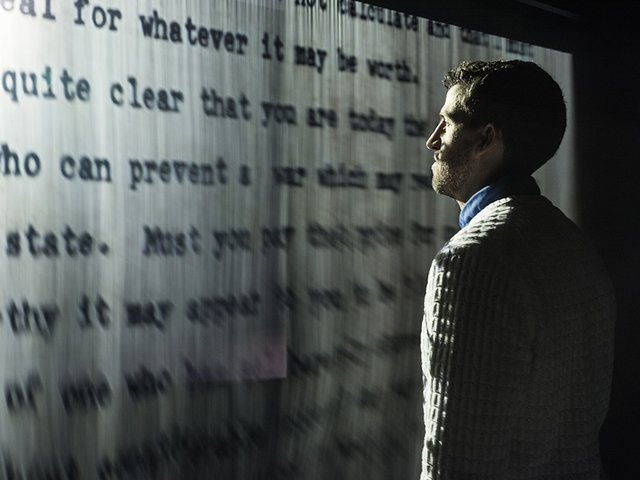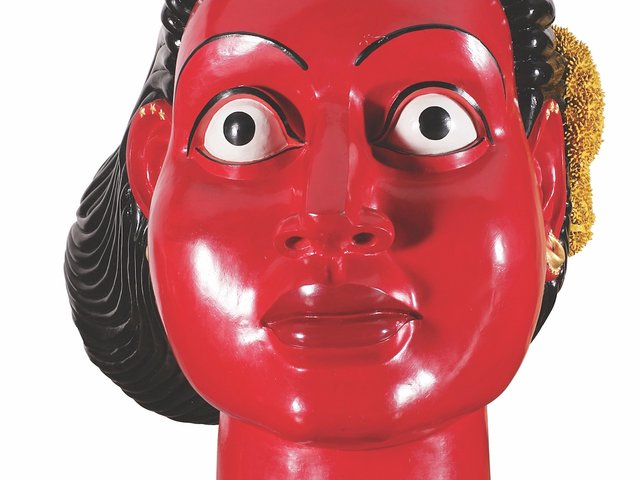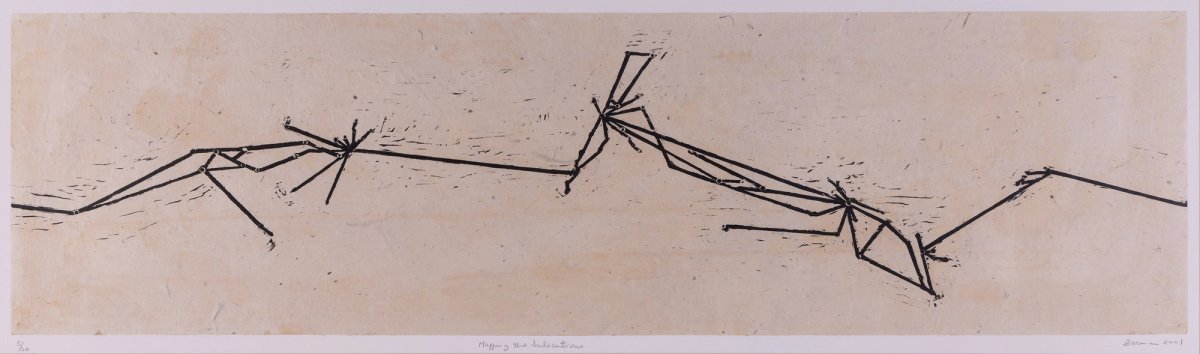
The Kiran Nadar Museum of Art in New Delhi will take over Christie’s London headquarters in St James's this summer for a month-long non-selling exhibition of South Asian Modern and contemporary art.
Kiran Nadar, the Indian billionaire who owns perhaps the world’s largest collection of South Asian Modern art, tells The Art Newspaper that the Christie’s exhibition is “the perfect stage” for demonstrating “a kind of institutional openness, particularly at a time when so many cultural institutions around the world are becoming more defensive.” After more than 30 years of buying art, she says, her collection “is strong enough…to sustain that openness”.
The Meeting Ground: Scenes from the KNMA Collection (16 July-21 August) is the latest in Christie’s series of London summer exhibitions of global Modern art, held in partnership with private foundations and free to attend. The exhibition anticipates the long-delayed relocation of Nadar's Delhi museum to a vast new 100,000 sq. m space near the airport in the first half of 2028. Designed by the British-Ghanaian architect David Adjaye, the building is now “about 60%" finished, Nadar says.
Manuel Rabaté, the former director of the Louvre Abu Dhabi, was appointed in February to run the museum.
According to Nadar, the 180 works on display in London this summer will be “just a glimpse of the depth of the collection,” covering 60 Indian, Pakistani, and Bangladeshi artists working from the 1950s to the present day. She describes it as “a slice of our own exhibition history”, featuring five distinct curatorial strands. One, for example, will feature Nalini Malani, the subject of the KNMA-backed collateral exhibition at this year’s Venice Biennale.
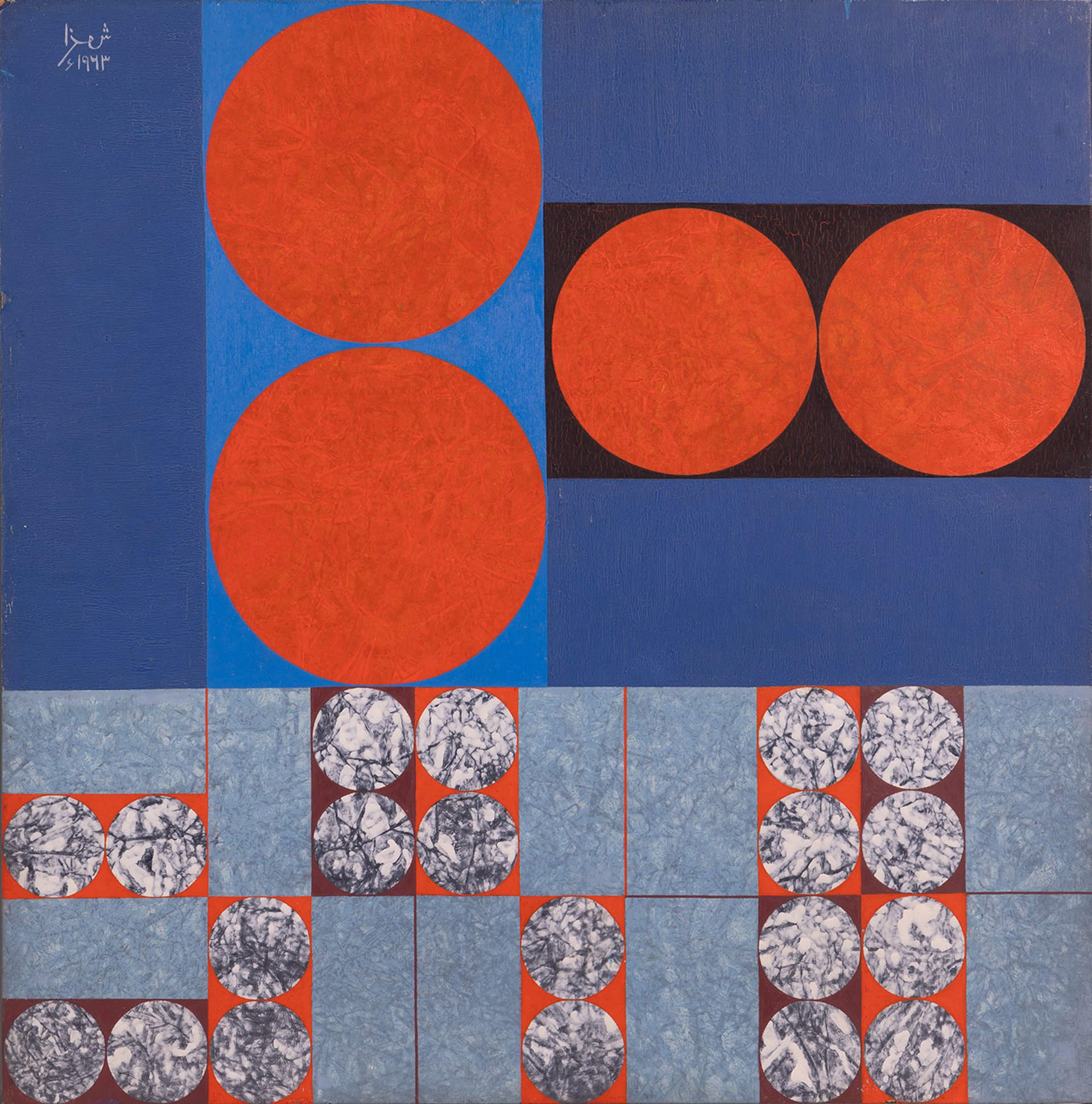
Anwar Jalal Shemza, Square Composition 2 (1963)
Image courtesy of the artist and KNMA
Other strands will focus on Indian tribal art, which Nadar says has "never been shown in the way that it deserves to", and the mid-20th Modernists who were “a key part of the development of the culture of India in the post-British era” and are now most highly sought after on the international art market.
Nadar is keen for the exhibition—and her museum—to showcase the links that exist across national boundaries in the unbounded cultural sphere of post-colonial South Asia. “We have [Anwar Jalal] Shemza in this show, we have Sadequain, we have Zainul [Abedin],” she says, referring to Pakistani and Bangladeshi artists who worked at the same time as Indian Modernists like Francis Newton Souza, Sayed Haider Raza, and Maqbool Fida Husain. “India is part of a wider South Asia”, Nadar says. “These artists were constantly in touch with each other—artists were not subject to the same conflicts that apply to borders and governments.”
For Nadar, the exhibition is “a statement that this shared history exists, that it is rich, complex, and unresolved”, and, now, “at a time of increasing geopolitical division, it feels especially important to present those exchanges". The 20th century, she says, was a “better time” for those links: “I still collect Pakistani artists”, she says, although, with geopolitical a matter of fevered domestic controversy in India, “I am being a little careful,” she acknowledges. “I don’t want to get into conflict.”
The Christie’s exhibition is one of a series of international and institutional collaborations that KNMA is planning in the period before the new museum site opens.
Nadar is gathering photographic and documentary material from the families and estates of artists like Hussain and the late photographer Raghu Rai, to open a "digitised resource that will be free to access".
And, as one of the largest buyers in the history of the Indian art market—and someone in large part responsible for the boom in prices—she is entering a new phase as a collector. “I’m going to be more discriminating,” she tells The Art Newspaper. “I need to focus on filling the gaps in the story.”