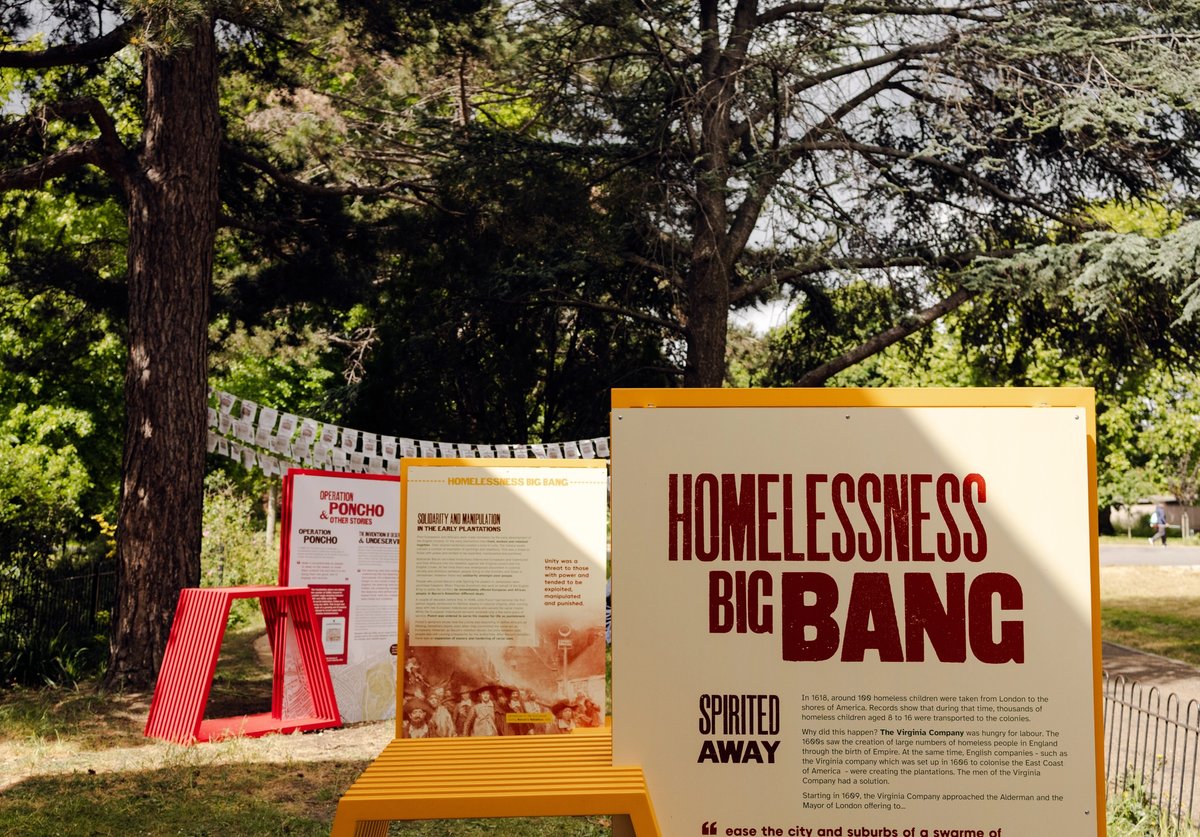
The origins of homelessness in the UK and how it has come to be criminalised are explored in a new exhibition opening at the Museum of Homelessness in London this week. Typically, the 19th-century Vagrancy Act, which criminalised rough sleeping in England and Wales and is currently being repealed, is seen as a turning point in history when unhoused people began to be penalised for their circumstances. However, researchers at the institution have looked back to the “Homelessness Big Bang” of the early 1600s as the beginning of homelessness—a period when land enclosures, economic shifts and early colonial expansion began to fundamentally change how society treated unhoused people.
Staged in an English perennial meadow at the museum’s site in Finsbury Park in north London, Criminal: The Untold History of Homelessness (until 25 July), brings together artists and activists including the anonymous graffiti artist known as 10 Foot and the designer Matt Bonner. Also featured is the poet and performance artist Gemma Lees, whose works explore the intertwined histories of people made homeless and transported from England, Ireland and Africa to the early plantations.
The museum’s director Matt Turtle says that the exhibition has particular resonance today given “the rise of the far right all over the world is being matched by increasing rates of homelessness”. Far right politics, he says, typically leads to dangerous, and inaccurate rhetoric around unhoused people—a subject explore in a report by the Museum of Homelessness in 2022. He adds: “We have put this exhibition on as a cautionary tale and an act of resistance.”
Turtle invited 10 Foot to create a new work for the exhibition—the artist’s first sculpture—last autumn. The work, Fairie Newbuild, consists of a skip-shaped object constructed from palisade fencing, inside which is planted a hawthorn tree, a sacred symbol in Celtic mythology and European folklore said to mark the boundary between our world and the supernatural realm. Turtle describes the tree as the “palisade's predecessor”.
The sculpture, Turtle says, is “a powerful statement” on the main themes of the exhibition, “connecting palisade fencing to mass displacement and the sacredness of the hawthorn tree to Britain’s obsession with security”. While the work is temporary, another hawthorn tree planted by 10 Foot in March will permanently remain in the museum’s garden.
Known for being the most prolific graffiti writer in London, 10 Foot thinks that understanding the “commons”—land held in common by all and the rights people had to grow and harvest their own crops on such land— “is the single pill that can cure late-stage capitalist psychosis”. He adds: “The process of enclosing the commons, of the land and our minds, is walking us towards a cliff edge, and we’re not even at the precipice—Reform is only the lower slopes.”
Having spent a year in prison for criminal damage in 2010, 10 Foot has first-hand experience of being temporarily displaced and the longer-term effects of incarceration on housing and personal stability. For the artist, installing his work at the Museum of Homelessness is also logical “because they are socially ambitious and radical at a time when other cultural institutions and political players are so on the fence”.
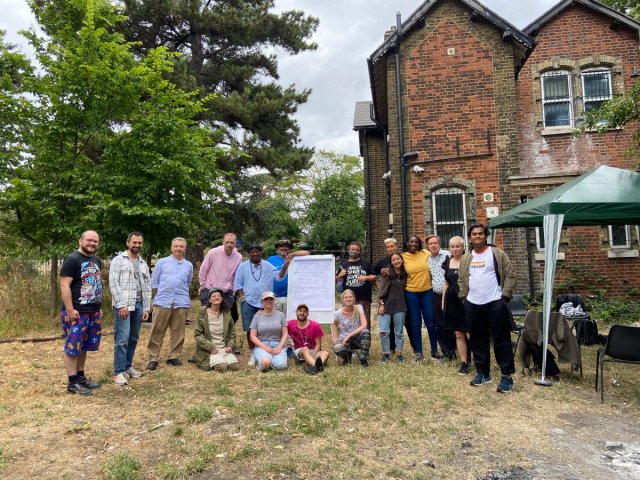
The Museum of Homelessness was founded in 2015 by Turtle and his wife, Jessica—both of whom had experience working in the British museum sector. The museum was born from personal experience for Jessica, who grew up in a homeless family and often felt she had to hide that part of her upbringing from the art world. In 2024, the museum found its permanent home in a derelict groundsman’s lodge in Finsbury Park and is now building the national collection for homelessness, acquiring objects that reflect the realities of homelessness.
During the winter the museum transforms into an emergency cold weather shelter.