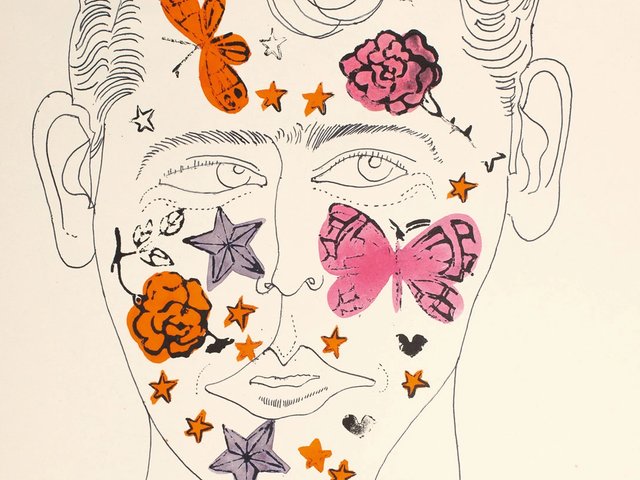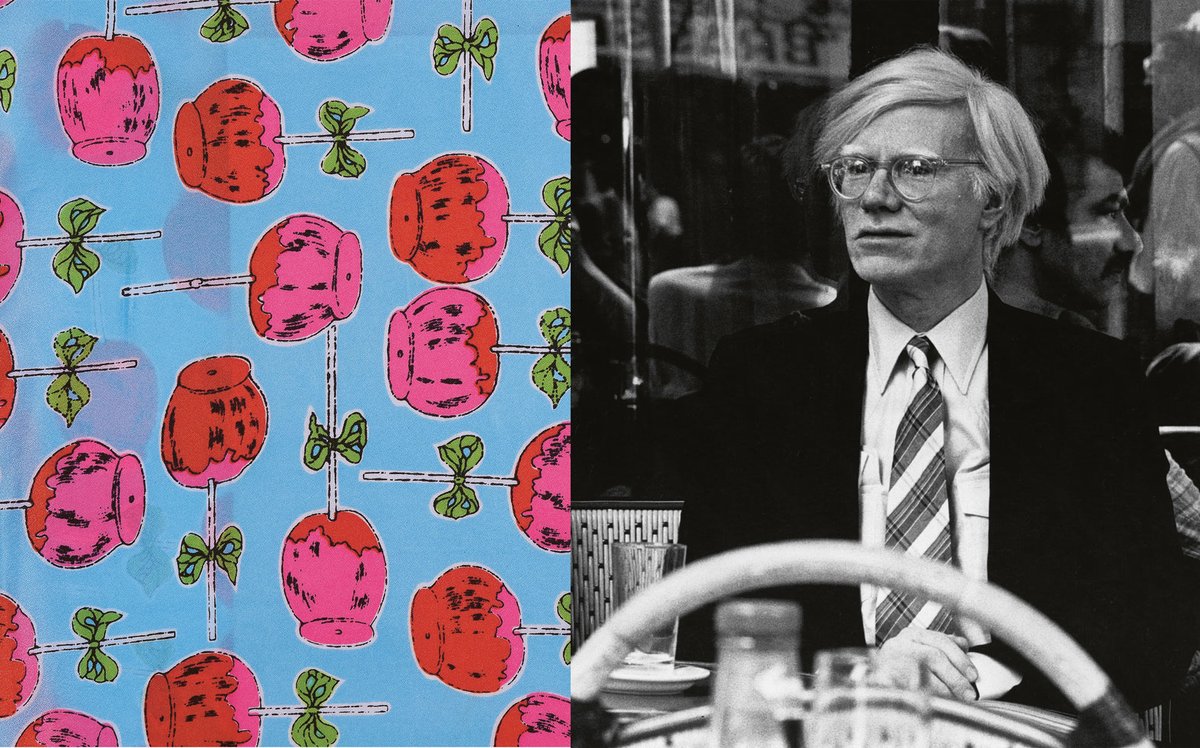
In a new publication, the Montreal-based curator Paul Maréchal explores an under-the-radar aspect of Andy Warhol’s canon: his textiles, printed fabrics and clothing. Warhol created just over 200 textile designs, all of which are catalogued in the book. These include border patterns in the 1950s, along with screen-printed garments from the 1960s to the 1980s. Warhol’s textiles paved the way for his “Pop aesthetic”, according to the book’s publisher. Here we have selected three key takeaways from the publication.
A patron and his snake inspired early Warhol
Maréchal writes that Warhol concluded his textile work from the 1950s with the acceptance of a major commission: an awning for the storefront of the Fleming-Joffe boutique in St Louis, Missouri. Owned by the brothers Arthur and Teddy Edelman, the company also commissioned Warhol to create advertising illustrations in the late 1950s and early 60s, and even a colouring book on the same theme (The Wonderful World of Fleming-Joffe, 1960). The book featured drawings of lizards, snakes and crocodiles, inspired by the brand’s footwear, which was made from reptile skins. Arthur Edelman also acquired a boa constrictor named Noa, which he took everywhere to promote the boutique. “Noa inspired many of Warhol’s drawings. For the awning, Warhol painted 11 intertwined snakes in pastel colours on a bright yellow cotton background, creating a dynamic pattern that captured the attention of passers-by,” Maréchal says.
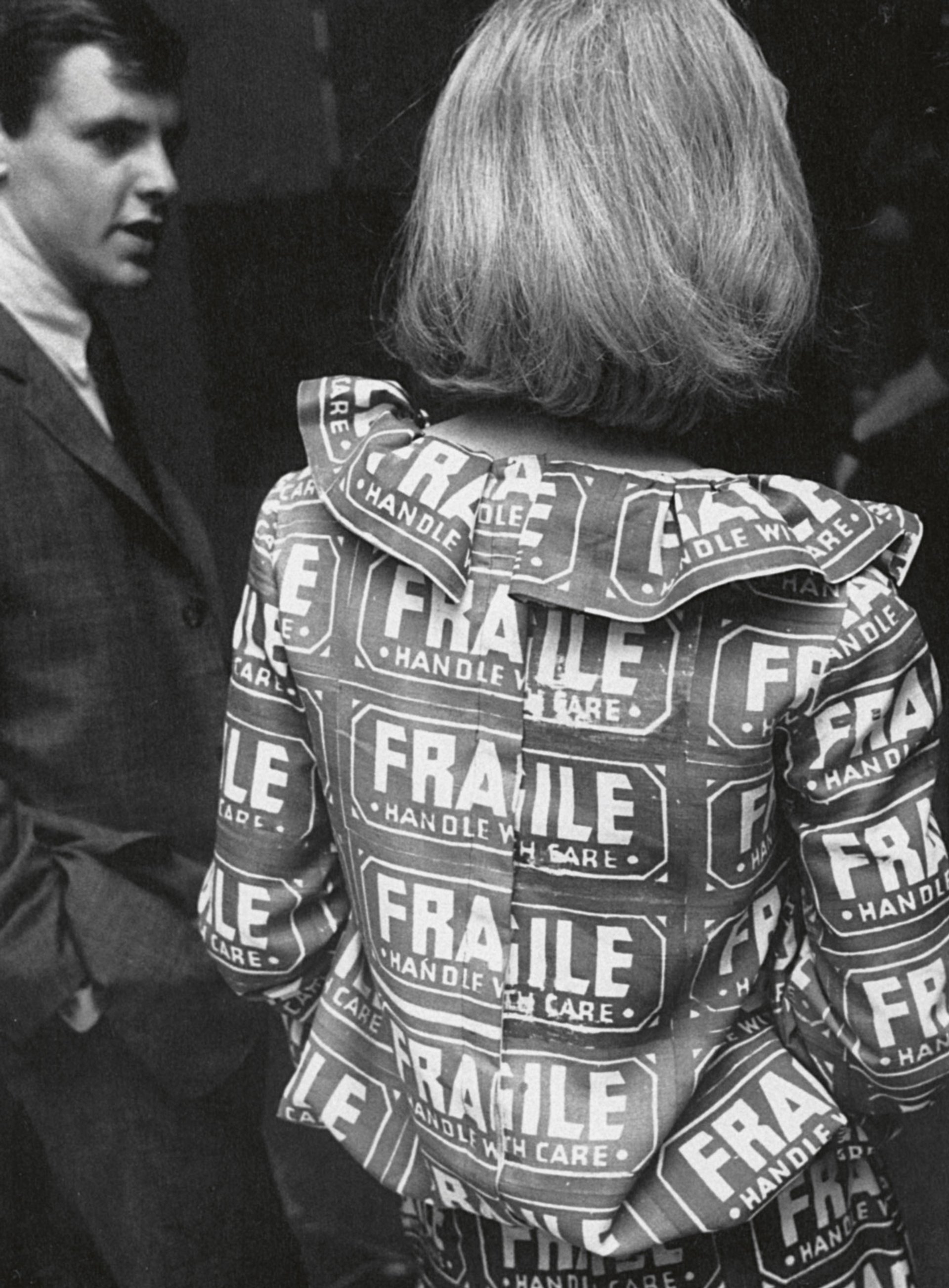
Sarah Dalton wearing Warhol's silkscreened Fragile-Handle with Care dress in 1964 at the Silver Factory © The Andy Warhol Foundation for the Visual Arts, Inc.
Cheap dresses became a fashionable canvas
Maréchal highlights that around 1963, Warhol had entirely abandoned producing textiles for manufacturers. But in 1966 he discovered a new textile medium: cellulose (paper) and cotton dresses sold at the Abraham & Straus department store in Brooklyn. These garments provided an ideal blank canvas for silk-screening, the author writes. Some dresses showcased prints of Warhol’s most celebrated works, such as Fragile, Open This End and Handle with Care, which were effectively textile adaptations of his paintings. That same year, 1966, Warhol live silk-screened a dress beig worn by Nico, singer with The Velvet Underground. “His later use of cellulose and cotton garments as silk-screen supports therefore reflects not only a change of medium, but also a new level
of artistic independence and authorial control,” Maréchal tells The Art Newspaper.
When the Warhol brand machine got going
In 1979, Warhol refined his approach to hand-printed T-shirts, incorporating logos from brands he previously featured in his 1960s works of art, writes Maréchal. The artist subsequently created unique screen-printed T-shirts featuring Brillo, Hershey, Campbell’s soup and Coca-Cola logos, first in black and white, and later in black with the Brillo logo in red. Maréchal highlights six T-shirts dating from 1978 to 1979, which were made while Warhol was working on his Big Retrospective Painting series—large-scale canvases acquired by his Swiss gallerist Bruno Bischofberger—that combined some of his most famous logos and motifs of the 1960s. “What my book really emphasises is how Warhol’s textiles anticipate his later Pop art language—repetition and everyday imagery,” Maréchal says.
• Paul Maréchal, Andy Warhol: The Complete Textiles and Fashion, Prestel, 272pp, £45 (hb)